The John Wesley Powell River History Museum sits on the east bank of the Green River in Green River, Utah, about three hours from Provo, and it tells one story from several angles: how people have crossed, floated, mapped and lived off the rivers of the Colorado Plateau. Powell's 1869 expedition is the anchor, but the boats, the River Runners Hall of Fame, the fossils downstairs and the town's own history are what fill an hour or two. It is open Tuesday through Saturday, which is the first thing to plan around.
| Address | 1765 E. Main St., Green River, UT 84525 |
| Hours | Tuesday to Saturday, 10 a.m. to 5 p.m. (last admission 4 p.m.) |
| Closed | Sunday and Monday (not listed as open) |
| Admission | $8 adults, $6 seniors 62+, $3 ages 7 to 17, $25 family |
| Free | Under 7, members, Green River residents |
| Phone | (435) 564-3427 |
| From Provo | About 140 miles, just under 3 hours (OSRM estimate) |
Hours and prices above are from the museum's own site, johnwesleypowell.com, as checked in November 2026. Visit Utah's listing for the museum still shows different summer hours and lower prices, so treat the museum's site as the one to trust, and call before a holiday trip, since no holiday closures are posted.
What the museum is, and who runs it
The museum opened in 1990. According to its history page, community organizing began in 1987, ground was broken in September 1988, the project cost about $1.5 million, and Betsy Hatt donated the grounds. Mayor ReyLloyd Hatt pictured it as a regional center in a "museum corridor" across southeastern Utah.
It is not a purely city-run museum. An independent nonprofit, John Wesley Powell River History Museum, Inc., formed in 2008, now does business as the Friends of John Wesley Powell River History Museum and operates the museum under a formal partnership with the City of Green River. Its stated mission is to celebrate "the significance of river history" through the cultures and landscapes of the Colorado Plateau.
The building also works as an information center. The museum says visitors can browse maps and brochures about Green River, the San Rafael Swell and destinations across Emery County. If you are heading into the Swell or toward Goblin Valley afterward, this is a sensible place to pick up paper information before cell coverage gets thin.
What the exhibits cover
The museum describes five permanent areas plus general collections. In the order a visitor is likely to meet them:
The Boat Room. Formally "The Evolution of River Boats and River Running on the Colorado Plateau," this is the room most people remember. It traces how men and women have traveled these rivers and how the boats changed over time. The museum's line is that "each boat offers insight into the unique spirit of river running in the U.S. West." The page does not say how many boats are on display.
Powell himself. The museum says it honors Major John Wesley Powell "with special exhibits that highlight his life" and his work on the Colorado Plateau, alongside displays on early explorers, mountain men and river runners.
The River Runners Hall of Fame. Added in 2015, according to the museum's history page, the Hall of Fame honors people and groups for their contributions to the history and protection of the Colorado River system. Inductee biographies are spread through the museum tour rather than kept in one room. The list starts with a 1990 class that includes Powell and his first and second crews, Emery and Ellsworth Kolb, Bert Loper, Georgie White Clark, Norm Nevills, Nathaniel Galloway, Buzz Holmstrom, Julius Stone, Denis Julien, William Ashley, William Manly and the Stanton Survey. Later classes add names such as Ken Sleight (2012), Katie Lee (2016), Martin Litton (2023), Don and Ted Hatch (2024) and Bessie and Glen Hyde (2025). The 2026 class includes Linda Wittkopf, Kenton Grua, Mildred "Millie" Davis and the kayakers Roger Paris, Ulrich Martins and Walter Kirschbaum. The museum says inductees are typically recognized at an annual ceremony in October, its largest fundraiser of the year.
Geology, Green River history and archaeology. These displays cover the geologic processes that shaped southeastern Utah, the archaeology of Range Creek, and, fittingly for this town, Green River's melons.
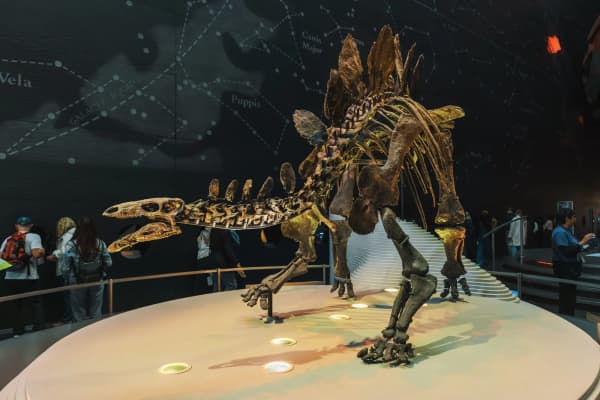
Paleontology. On the lower level, the museum keeps what it calls "a fine collection of fossil and dinosaur specimens." The page points out that southeastern Utah "is prime territory for finding fossils" and that the museum sits in the "Dinosaur Diamond" region. It does not list specific specimens, so do not promise a child a particular dinosaur.
Crossroads of the West. Outside the front of the building, an outdoor pavilion looks out on Green River's mesas and buttes, with room for a picnic and panels on local history.
Visit Utah's listing also describes a 170-seat theater showing a short film about the 1869 expedition, The Great Unknown, plus sculptures depicting Powell's two expeditions. The museum's own exhibit pages do not mention the theater or film, so if the film is part of why you are going, call and ask whether it is showing.
The current temporary exhibit: Kayak Revolution
The museum's temporary exhibit, Kayak Revolution, opened on Oct. 3, 2026. The museum describes it as a walk-through history of whitewater kayaking on the rivers of the Colorado Plateau, running from the original Indigenous Arctic kayak through European recreational and competitive development to American innovation in boats, gear, organizations and exploration. Its theme is "innovate. explore. play. repeat."
Featured figures include Walter Kirschbaum, Uli Martins and Roger Paris, European kayakers who taught students to build fiberglass kayaks and paddle rivers, and the French friends who brought kayaks to these rivers in the 1930s. Historical photos include Colorado Rocky Mountain School students on the Upper Black Canyon of the Gunnison in 1963. Kayaking historian Kent Ford led content development.
No closing date is posted. The museum's past exhibit list (Moments That Made Us in 2026, Glen Canyon Exposed: Now and Then in 2025, Crossing the Green in 2024) suggests the temporary space changes roughly yearly, so check the site if you want to catch this one.
The Powell story, in short
You will get the long version inside. The short version, from the National Park Service and the Utah Geological Survey:
- Who he was. Powell commanded a Union artillery regiment in the Civil War and lost his right arm after being wounded at the Battle of Shiloh, the NPS says. After the war he joined expeditions across the Southwest and heard about the unmapped canyon country of the Colorado Plateau.
- The departure. On May 24, 1869, Powell's party left Green River Station, now Green River, Wyoming, two weeks after the Golden Spike was driven at Promontory, the Utah Geological Survey notes.
- The party and boats. Ten men, including Powell, in four modified Whitehall rowboats built in Chicago and shipped by rail: the Maid of the Cañon, Kitty Clyde's Sister, the No Name and the Emma Dean, named for Powell's wife and rigged for him to command one-handed. They carried about 10 months of supplies and instruments including sextants, chronometers and barometers.
- The losses. The No Name was wrecked at Disaster Falls, in what is now Dinosaur National Monument. The NPS says the party lost a boat, a third of its supplies and dealt with rotten food and fistfights. One man left near Vernal. Three left near the end, in the Grand Canyon, tried to hike out and were never seen again.
- Names on the map. The UGS dates many names to that summer: Desolation Canyon on July 8, Labyrinth Canyon on July 15, the confluence with the Grand (now the Colorado) on July 17 at the foot of what Powell named Stillwater Canyon, Cataract Canyon on July 23 and Glen Canyon on Aug. 3.
- The second trip. Conditions on the first trip were so hard that no photographs were taken, the NPS says. A second expedition in 1871 and 1872 produced every surviving photograph of the Powell expeditions and the first accurate map of the region.
The NPS is careful to say the 1869 trip was not the first exploration of these canyons, but it was the first to float them in their entirety. It also notes Powell's warning that most western land could not be farmed except where scarce water was used carefully, which is a useful thought to carry into a town that exists because of irrigation.
Why Green River matters on the river
The museum is here, and not in Moab or Vernal, because this is one of the few places in hundreds of miles where the Green can be crossed easily.
It is the crossing. The Utah Division of State History notes that the deep canyons of the Green and Colorado have been a barrier to travel "for thousands of years," and that the crossing here lies in a roughly 10-mile stretch used by early trails and trade routes. The Old Spanish Trail crossed the Green just above the present town, according to Utah History to Go, which calls it the old Spanish Crossing, "also known as Gunnison's Crossing." The NPS says pack mule caravans used the trail between Santa Fe and Los Angeles from 1829 to 1848.
Then the mail, then the railroad. The Division of State History says the crossing was first settled as a postal station in 1878, named Blake after the man who ran it. In 1883 Blake became a station on the newly completed Denver and Rio Grande Railroad, which included a bridge across the river. Utah's Emery County history page says the railroad turned Green River from a "little mail station" into an important town. Green River grew up across the river from Blake, and the two have since grown together.
The bridge that mattered. In 1946, the state history page says, the wagon bridge collapsed under an overloaded truck. Highway traffic was sent north through Duchesne, and farms on the east side could not get melons to the train station. The current bridge, beside the museum, is still in use. The same page notes the riverbed shifted in the early 20th century, setting off a long court fight between two counties over the county line. The city is now officially in Emery County.
Missiles, for a while. From 1964 to 1979, the Utah Launch Complex near Green River assembled, tested and fired missiles toward White Sands, New Mexico, according to Utah's Emery County history page, which says it boosted the town's economy and population for about 15 years.
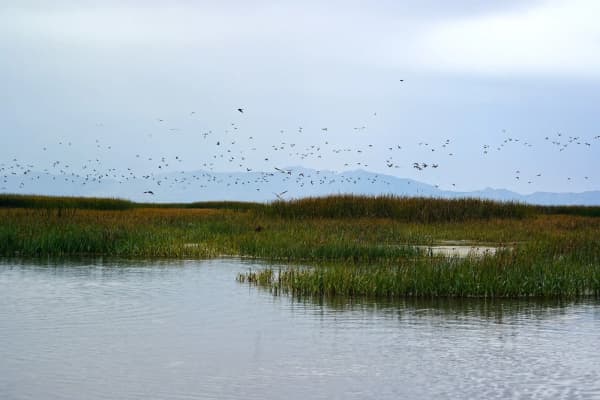
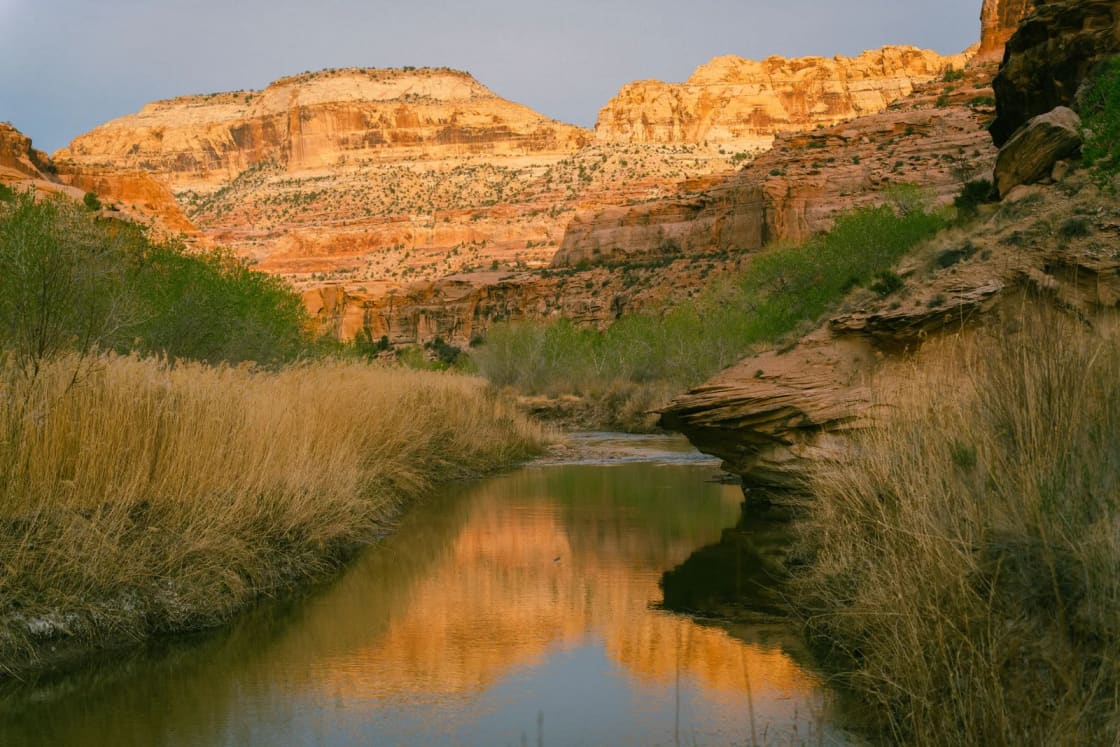
It is where river trips start. Below town the river runs through open country before entering Labyrinth and Stillwater canyons. Green River State Park, in town, is a launch point for boaters headed downstream, and the BLM lists it as one of two launch options for Labyrinth Canyon.
And it waters the melons. Green River's melons, which get a display inside the museum, come out of the same hot, dry valley floor. A 2024 Deseret News feature on the Vetere family described the desert's hot days and cool nights as ideal, and noted that the water has to be applied in just the right amount because too much can ruin a crop.
The drive from Provo
From downtown Provo to the museum is about 140 miles and just under three hours by an OpenStreetMap (OSRM) routing estimate without traffic. The route:
- South on I-15 to Spanish Fork, then US-6 up Spanish Fork Canyon over Soldier Summit.
- Through Helper and Price, the largest towns along the way and a good place to fuel and eat.
- Continue on US-6 (joined by US-191) southeast to the I-70 junction and into Green River.
The museum is on Main Street at the east end of town near the river, so you will drive past most of Green River's gas stations and restaurants to reach it. Soldier Summit can see winter storms, so check UDOT road conditions before a winter trip. For stops on the way, our Nine Mile Canyon, Helper and Price guide covers both towns.
Pairing it with Goblin Valley and the San Rafael Swell
Three hours each way is a long drive for one museum, so most Utah Valley visitors will want to build a day around it.
Goblin Valley. Goblin Valley State Park is about 50 miles and roughly an hour from the museum by an OSRM estimate, west on I-70 and south on State Route 24. Utah State Parks lists its hours as 6 a.m. to 10 p.m. daily. Fees are on the park's fee page, not its main page, so check there. A simple day: leave Provo around 7, reach the museum when it opens at 10, eat lunch in Green River, and spend the afternoon and the evening light at the goblins. Our Goblin Valley and San Rafael Swell guide has the park details, and the Little Wild Horse and Bell Canyons guide covers the slot canyon loop nearby.
The Swell's north side. If you are coming from Price, Buckhorn Wash and its pictograph panel sit off the route between Castle Dale and I-70. See our Buckhorn Wash guide.
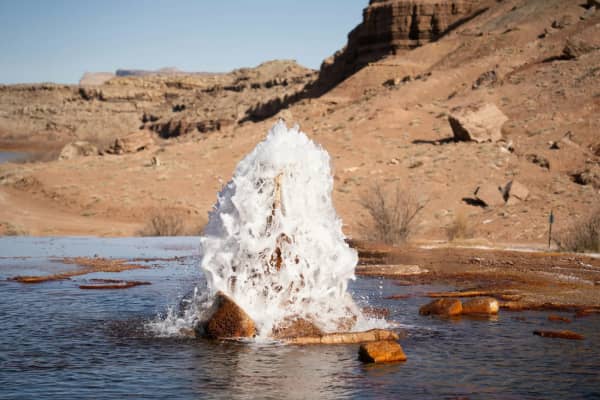
Crystal Geyser and the melon stands. Our Green River, Crystal Geyser and Melon Days guide covers the cold-water geyser south of town and the growers' stands on Main Street.
Green River Gap. For a walk close to the museum, the NPS lists the Green River Gap trail, a 5-mile one-way route off Highway 6 between Green River and Cisco, managed by the BLM Moab Field Office. It follows an alternate route Old Spanish Trail travelers used to reach water, and the NPS says Col. William Wing Loring and more than 200 troops passed through the gap in 1858. There is no water or shade, and the west trailhead cannot take trailers or large vehicles.
Continuing east. Green River is the natural stop on the way to Moab, and the Utah Geological Survey notes that Stillwater Canyon and the confluence Powell reached on July 17, 1869, lie downstream in Canyonlands National Park. See our Moab guide and Island in the Sky guide.
Melon Days, if you are timing a trip
The melon festival is the one time Green River fills up. The festival's site listed Sept. 18 and 19, 2026, at O.K. Anderson Park, 100 Solomon St., billed as "celebrating 120 years." Utah State Parks' Green River page describes Melon Days as the third weekend of September. No 2027 dates were posted when we checked. Melon Days falls on a Friday and Saturday, both museum days, so the museum can fit around the parade and the melon. Expect a busier town and book a room early if you stay over.
Floating from Green River: the Labyrinth Canyon permit
Some visitors leave the museum wanting to get on the water. For a private trip through Labyrinth Canyon, the BLM's rules are:
- Permit. Download the Labyrinth Canyon permit from BLM.gov, email it to blm_ut_labyrinth@blm.gov, and keep a copy with the trip leader. Follow the stipulations on the permit, which include camping rules. Utah boating and fishing regulations apply.
- Launch. Green River State Park, or Ruby Ranch, which is private, charges a fee and is open sunrise to sunset. Ruby Ranch is about 23 miles downstream, and most land between the two is privately owned.
- Takeout. Mineral Bottom boat ramp. From US-191, go west about 12 miles on SR-313, then about 16 miles on the signed Mineral Bottom Road. The BLM recommends four-wheel drive for the steep switchbacks and says the road can be slick and impassable when wet.
- Distance. Green River to Mineral Bottom is 68 river miles, a minimum of three to four days. Launching at Ruby Ranch cuts it to about 45.
- Self-reliance. There are no services and no cell service in the canyons. Carry all your drinking water and check weather and fire restrictions first. The BLM lists commercial shuttle operators on its site.
- Contact. BLM Moab Field Office, (435) 259-2100, weekdays 7:45 a.m. to 4:30 p.m.
Green River State Park itself has camping, cabins, a nine-hole golf course on the river and an 18-hole disc golf course. Utah State Parks lists park hours as 7 a.m. to 10 p.m. in summer and 8 a.m. to 5 p.m. in winter, with the main line at (435) 564-3633. Fees are on the park's separate fee page.
What families need to know
- The price works for families. A $25 family ticket, free entry under 7 and $3 for ages 7 to 17 keep the cost of a stop low for a larger family.
- Downstairs is the dinosaur room. Kids who are not interested in boats tend to need a goal, and the lower-level paleontology room is the obvious one.
- The kayak exhibit is visual. Kayak Revolution is built around boats, gear and old photos, which is easier going for children than text panels.
- Use the pavilion. The outdoor pavilion is set up for picnics, which helps on a day with three hours in the car each way.
- Ask about kids' programs. The museum ran summer kids programs in 2025, according to its events list. Check the calendar or call for current offerings, and ask about group and school rates if you are bringing a class or a scout troop.
- Military families. The museum says it participates in the Blue Star Museums program, which offers free admission to military families. Confirm the current terms with the museum.
Accessibility, parking, restrooms and photography policies are not listed on the museum's visit page, so call (435) 564-3427 if any of those decide whether you go.
Who should skip it, or change the plan
- Sunday and Monday travelers. The museum is not listed as open those days. If your Green River pass falls on one, see Crystal Geyser or Goblin Valley instead.
- Late arrivals. Last admission is 4 p.m. If you are leaving Provo after lunch, you will arrive too late to do it justice.
- Visitors who want hands-on science. This is an exhibit museum of boats, photographs, panels and fossils, not an interactive science center. Children who need buttons and screens may run out of patience quickly.
- Anyone who only wants the film. The 170-seat theater and the Great Unknown film appear on Visit Utah's listing but not on the museum's own pages. Call first.
What to check before you go
- Hours and holidays on johnwesleypowell.com or at (435) 564-3427. No holiday closures are posted.
- The temporary exhibit, if Kayak Revolution is the draw, since no closing date is listed.
- Events. The museum's calendar listed the 2027 Bowline Film Festival for March 19 and 20, 2027, and the Hall of Fame induction usually falls in October.
- Road conditions on US-6 and I-70, especially Soldier Summit in winter.
- Goblin Valley fees and hours on the Utah State Parks fee page if you are pairing the trip.
- BLM permit and fire restrictions if you plan to float Labyrinth Canyon.
The short version
The John Wesley Powell River History Museum is a two-hour stop that explains why a small town at a river crossing became the gateway to Labyrinth Canyon, a railroad stop and a melon capital, with Powell's 1869 expedition and a century and a half of river runners as the thread. Go Tuesday through Saturday, arrive by early afternoon, pay $25 for the family, and pair it with Goblin Valley an hour away. For more trips by distance, see day trips from Provo.
Related Guides
- Goblin Valley & the San Rafael Swell from Provo
- Green River, Crystal Geyser and Melon Days from Provo
- Buckhorn Wash and the Pictograph Panel: Easy Rock Art Near I-70
- Nine Mile Canyon, Helper and Price From Provo
- Dinosaur National Monument: The Quarry Wall, Harpers Corner and the Canyons
- Moab from Provo
- Best Day Trips from Provo
Frequently Asked Questions
Where is the John Wesley Powell River History Museum?
What are the museum's hours?
How much does admission cost?
What is in the museum?
How long is the drive from Provo?
Can I combine the museum with Goblin Valley?
Did John Wesley Powell stop in Green River, Utah?
Do I need a permit to float Labyrinth Canyon from Green River?
Sources
The facts in this guide were checked against these sources. Hours, fees and rules change, so confirm anything time-sensitive with the source before you go. How we make Provo.com.
- John Wesley Powell River Museum, Visit Utah (Utah Office of Tourism). Checked November 26, 2026.
- John Wesley Powell, National Park Service, Dinosaur National Monument. Checked November 26, 2026.
- Powell's 1869 Journey Down the Green and Colorado Rivers, Utah Geological Survey. Checked November 26, 2026.
- Green River Gap, National Park Service. Checked November 26, 2026.
- Green River State Park, Utah State Parks. Checked November 26, 2026.
- Goblin Valley State Park, Utah State Parks. Checked November 26, 2026.
- Labyrinth Canyon River, Bureau of Land Management. Checked November 26, 2026.
- Utah History to Go, Utah Division of State History: Green River, Utah History to Go, Utah Division of State History. Checked November 26, 2026.
- The River Divides, Utah Division of State History, Peoples Online. Checked November 26, 2026.
- I Love History, Utah Division of State History: Emery County, I Love History, Utah Division of State History. Checked November 26, 2026.
- John Wesley Powell River History Museum (home page, hours and admission), Friends of John Wesley Powell River History Museum. Checked November 26, 2026.
- Permanent Exhibitions, John Wesley Powell River History Museum. Checked November 26, 2026.
- About the Museum, John Wesley Powell River History Museum. Checked November 26, 2026.
- Plan Your Visit, John Wesley Powell River History Museum. Checked November 26, 2026.
- Kayak Revolution, John Wesley Powell River History Museum. Checked November 26, 2026.
- River Runners Hall of Fame, John Wesley Powell River History Museum. Checked November 26, 2026.
- Green River Melon Days: Melon Days, Green River Melon Days. Checked November 26, 2026.
- Farmers help a small town thrive with a big assist from a river, Deseret News via KSL.com. Checked November 26, 2026.