
A haunted attraction is a strange thing to buy. You are paying a business to build a space that deliberately defeats your ability to see, orient yourself and leave — and then to fill it with people whose job is to startle you.
That works because the whole arrangement is a controlled performance. This guide covers what is on offer in and near Utah Valley, how to judge whether a haunt is well run, and the one body of law that governs the category, which turns out to be the fire code.
First, the distinction that keeps people out of trouble
There are two completely different things in this valley that both get called "haunted," and conflating them is how people end up somewhere they should not be.
Haunted attractions are businesses. Staffed, ticketed, insured, built to be entered, and designed to frighten you on a schedule. That is this guide.
Haunted places are locations with stories attached. Many of them are private property, active institutions, or closed grounds where entry is not lawful and where the interesting part is the history rather than the ghost. Our guide to haunted places in Utah Valley covers those and is explicit about which sites can be visited.
If you want to be frightened in October, buy a ticket. The urge to go and look at the real thing is precisely the urge that produces trespass charges.
The Utah County option
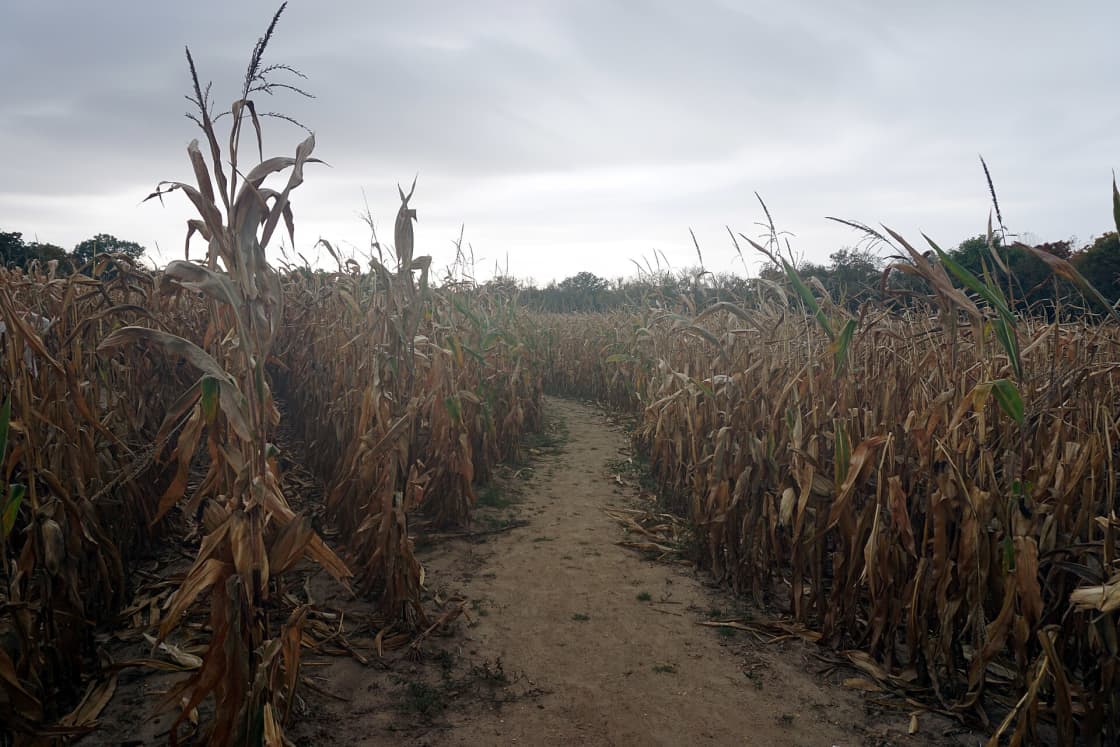
Frightbelly's, at Cornbelly's Lehi on the Thanksgiving Point grounds, is the serious haunt in this county and one of Utah County's longest-running. It runs 23 haunted scenes along a roughly 30-minute trail through the corn.
What the 2026 ticket included, at the operator's listed price of $37.99: the haunted trail itself, plus general Cornbelly's Lehi admission, hayrides, campfires, and the separate non-haunted 10-acre corn maze. Since a standalone Lehi admission was $19.99, the actual premium for the haunt was about eighteen dollars — which is a materially better deal than the headline number suggests, and it is why the bundle is the sensible purchase for a mixed group.
Two operator rules matter before you go:
- A PG-13 haunt, in the operator's words, with flashing lights and scary scenes; guests 12 and under must be accompanied by a parent or guardian, and the call beyond that belongs to the parent.
- Service animals are permitted on the farm but not at Frightbelly's.
The attraction was formerly called Insanity Point, which is worth knowing because older listings and word-of-mouth still use that name.
Beyond Frightbelly's, Utah County's haunt scene is thin. The large, heavily produced attractions are in the Salt Lake area, roughly forty-five minutes north up I-15, and a substantial share of Utah Valley's haunt traffic drives to them. That is the honest picture rather than a gap in this guide.
The fire code is the law that applies
Most writing about haunted houses treats safety as vibes. There is a real regulatory regime here, and it is more interesting than people expect once you see why it exists.
Utah Code § 15A-5-103(1) incorporates the International Fire Code, 2024 edition, excluding appendices, as issued by the International Code Council, into the State Fire Code — subject to the statewide amendments and additions set out in Part 2 of that same chapter. The section was most recently amended by Chapter 34 of the 2026 General Session, so this is current law rather than a legacy citation. The same section also incorporates several NFPA standards, including NFPA 1 Chapter 38, NFPA 54 and NFPA 58, all 2024 editions.
Utah's framework sits in the State Construction and Fire Codes Act, Title 15A, with the adoption mechanism at § 15A-1-403 and the code itself at Chapter 5. Enforcement runs through local fire authorities, and Title 53, Chapter 7 — the Utah Fire Prevention and Safety Act — sits alongside it.
Here is why this is the relevant body of law rather than an aside.
Ordinary fire safety assumes three things about the people inside a building: that they can see exit signage, that they can understand the layout well enough to move toward an exit, and that they can distinguish an emergency from normal conditions.
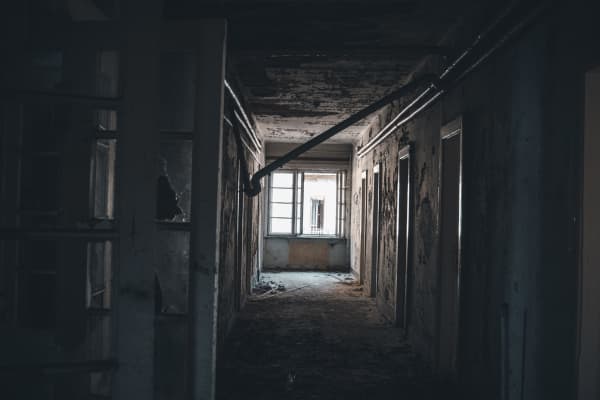
A haunted attraction removes all three deliberately. Darkness is the product. Disorientation is the product. And a great deal of screaming that is not an emergency is very much the product. That combination is why fire codes treat intentionally dark, mazelike amusement spaces as their own regulated category with heightened requirements, rather than as ordinary assembly occupancies — and why the category exists at all is a documented international history of fatal fires at temporary amusement attractions.
None of this is legal advice, and a guest cannot audit a building. But it does tell you what the visible signs of a properly run attraction are, which is useful.
How to judge a haunt from inside it
Four things are observable by an ordinary guest, and they are the ones worth noticing.
Staff along the route, not just at the ends. A well-run haunt has attendants stationed inside it. Some of them are in costume and some are not, and their job is not only to scare you.
Exit routes that stay readable. Theming is heavy in these spaces by design, and the marked exits should still be identifiable through it. If you cannot tell how you would get out of a room, that is information.
A stated way to leave early. Most well-run attractions have a phrase you can say to be escorted out, and they will tell you what it is at the entrance or on their rules page. The existence of that mechanism is one of the better single indicators of a professional operation.
Managed queue capacity. Groups sent through in controlled intervals rather than a crowd allowed to pile into the entrance.
An attraction that fails all four is worth walking away from. Being frightening is not evidence of being well run; the two are unrelated.
The contact question
At mainstream haunted attractions in this region the standard is no contact in either direction. Actors do not touch guests, and guests must not touch actors.
That second half is the part people forget, and it matters more than the first. The performers are working a four-hour shift in the dark in a costume, being startled themselves, and a guest who swings at a shape in a corridor is the most common way anyone gets hurt in one of these places. The no-touch rule is a labor protection as much as a customer one.
Touch haunts — where contact, restraint or separation from your group is part of the experience — are a distinct category. They are clearly labeled as such, they require a signed waiver, and they are not what you encounter at a family fall festival. If you have not signed something specific, assume no-contact.
Taking children, honestly
The age number on the sign is a starting point, not a test. The better test has two parts.
Can the child distinguish a performer from a threat while frightened? This is a developmental question rather than an age one, and the answer changes under stress. A child who knows perfectly well in the car park that the monsters are actors may not retain that in a dark corridor.
Can the child choose to stop? A child who cannot say "I want to leave" while frightened should not be somewhere leaving requires saying so.
If either answer is no, the daytime version of the same site is a different place. A corn maze at eleven in the morning is a pleasant walk through corn.
The alternatives, which are not consolation prizes
The non-haunted corn maze at Cornbelly's Lehi runs on the same site as Frightbelly's, so a mixed group can split at the gate and rejoin afterward. This is the most practical solution for a family where the teenagers want the haunt and nobody else does.
Escape rooms deliver tension, atmosphere and a genuine adrenaline response with no jump scares, full lighting control, and the ability to stop whenever you like. For a lot of adults who dislike being startled but enjoy being unsettled, this is simply the better product. See escape rooms in Utah Valley.
Historical and low-sensory options are covered in the Halloween in Utah Valley guide, which sets out the wider October circuit including the free community layer.
Practical notes
Closed shoes with grip. A haunt trail through corn is uneven farm ground, frequently wet, and occasionally muddy enough to be slippery.
Layers. Late October evenings in Utah Valley drop toward freezing after dark, and a queue is stationary. The queue is where people get cold, not the trail.
No full-faced masks. Cornbelly's prohibits them outright as a condition of entry, which catches out people arriving in costume at a Halloween attraction. Face paint is the workaround.
Expect to put your phone away. Light discipline is part of the experience and staff will ask.
Go on a weeknight. The last ten days before Halloween are the busiest of the season and the queue can exceed the attraction. Early October on a Tuesday is the same trail with a fraction of the wait.
Watch 31 October specifically. BYU hosts Arizona State at LaVell Edwards Stadium that Saturday, so check the kickoff time; that traffic uses the same I-15 corridor between Provo and Lehi.
The short version
Frightbelly's at Cornbelly's Lehi is Utah County's real haunt — 23 scenes, a 30-minute corn trail, rated PG-13 by the operator with a parent required for 12 and under, and the ticket bundles in general admission so the true premium is smaller than it looks. The bigger productions are in Salt Lake, forty-five minutes north. The governing law is the fire code: Utah adopts the International Fire Code 2024 edition at § 15A-5-103(1), because a space built to be dark, confusing and full of screaming is a hard evacuation problem. Judge an attraction on staffing, readable exits, a stated way out and a managed queue. No contact in either direction unless you signed something saying otherwise. And if a child cannot say "stop," take them in the daytime instead.
What a haunt costs, and how the pricing works
Haunt pricing in this region follows a pattern that is worth understanding before you buy, because the headline number is rarely the number that matters.
Bundled admission is the norm at farm-based haunts. Frightbelly's at $37.99 includes general Cornbelly's Lehi admission, which was $19.99 on its own. The haunt itself is therefore priced at roughly eighteen dollars, and a group containing people who do not want the haunt can buy the cheaper ticket and still spend the whole evening on the same site.
Timed entry and fast passes are standard at larger productions and are the main lever on how long you queue. On peak nights in the last week of October the queue is frequently the majority of the visit, and this is the one upsell that reliably changes the experience rather than padding it.
Season passes exist at the farm festivals — Cornbelly's listed a $99.99 pass covering both locations, unlimited visits, one person, non-transferable — and the maths only works for households treating the fall festival as a recurring ritual rather than a single outing.
The genuine hidden cost is food and parking at scale. A family evening at a large attraction with dinner on site runs well past the ticket price. Cornbelly's permits outside food and has picnic tables, which is the single largest saving available at that site.
When to go, in order of usefulness
Early October, weeknight. The same attraction, a fraction of the queue, and the actors are fresher and less worn down than they are in the final week. This is the best experience-per-dollar window of the season by a clear margin.
Mid-October, weekend. Busy but manageable. The full production is running by this point, which is not always true in the opening week — haunts frequently soft-open with partial casts.
The last ten days before Halloween. Peak everything. Longest queues, largest crowds, and the highest chance of a timed-entry sellout. Go only if you want the atmosphere of a packed house, which is a legitimate reason.
31 October itself. Avoid, unless the date is the point. This year it is a Saturday, and BYU hosts Arizona State at LaVell Edwards Stadium, so check the kickoff time, because the I-15 corridor between Provo and Lehi carries stadium traffic on top of Halloween traffic.
Opening week, late September. Underrated. Quiet, cool but not cold, and the trail is intact before six weeks of foot traffic have worn it.
Working a haunt, since a lot of Utah Valley students do
Seasonal haunt work is a genuine part of the student economy here, and the jobs are advertised in late summer for a season that runs six weeks.
What the work involves: four to six hour shifts, standing, in costume and often in prosthetics, outdoors or in unheated structures, repeating a short performance several hundred times a night. Makeup call is typically well before opening and teardown runs past closing. The physical toll is real and the most common complaints are voice strain and cold.
What makes it a decent seasonal job: the hours are evenings and weekends, which fits around class in a way retail often does not; the season is short and defined; and the work is fun for people who like performing.
What to check before taking it: whether breaks are scheduled and covered, whether the venue provides or reimburses makeup and costume, how the no-contact policy is enforced from the performer's side, and what the procedure is when a guest becomes aggressive. That last one is the question that separates a well-run operation from a poorly-run one, and it is the same question a guest is answering when judging staffing levels from the inside.
Anyone hiring should be published on the operator's own careers page rather than through an aggregator.
Why Utah County's haunt scene is thin, and where the traffic goes
It is worth being straight about the shape of the market here rather than padding a short list.
Utah County supports one substantial haunt — Frightbelly's — and a scattering of smaller church, school and community efforts that are not commercial attractions in the same sense. The large, heavily produced haunted houses with year-round build teams and multi-story sets are in the Salt Lake area, and a real share of Utah Valley's haunt-going population drives north for them.
Two structural reasons, and neither is an accident:
The economics need volume. A serious haunt is a six-week revenue window against a year of build, storage, insurance and casting. That maths works at Salt Lake metropolitan density and works far less comfortably against Utah County alone, particularly when the county's own audience will happily drive forty-five minutes.
The farm-festival format got there first. Utah County's fall attraction market is dominated by the agritourism model — corn mazes, pumpkin patches, family daytime programming — and Frightbelly's exists as an evening add-on to exactly that. The corn is already planted, the parking already exists, and the haunt is an upsell on a site that is busy anyway. That is a much better business than building a standalone haunt, and it is why the county's one real haunt sits inside a pumpkin festival.
The practical consequence for a visitor is that planning a full haunt night in Utah County means either building the evening around Frightbelly's or accepting the drive. Both are reasonable; the thing that wastes an evening is assuming a Salt Lake-scale attraction exists locally and going looking for it.
Accessibility, and asking before you go
Haunted attractions are among the harder venues to assess for accessibility from a website, and the honest position is that you should call rather than infer.
Mobility. A corn-trail haunt is uneven, unpaved farm ground, frequently wet, with narrow passages and occasional low clearances. Purpose-built indoor haunts vary enormously. Neither format is reliably navigable with a wheelchair or a walking aid, and the answer differs by attraction and sometimes by night.
Sensory load. Strobe lighting, fog, sustained loud audio and sudden compressed-air effects are standard equipment. For anyone with photosensitive epilepsy this is a direct medical question rather than a comfort one, and attractions can generally tell you specifically whether strobes are in use and where.
Service animals. Policies differ sharply from the rest of a site. Cornbelly's permits service animals on the farm but explicitly not at Frightbelly's — a pattern common across haunts, since the environment is unsuitable for a working animal.
The escort-out mechanism doubles as an accessibility feature. Knowing before you enter how to signal that you need to leave, and roughly how far apart the exit points are, is worth the thirty seconds it takes to ask at the ticket window.
Related Guides
- Cornbelly's: the complete guide to both locations
- Every haunted attraction on the Wasatch Front, ranked by scare level
- Halloween in Utah Valley: the October circuit
- Haunted places in Utah Valley: the stories and the history underneath them
- Escape rooms in Utah Valley
- Pumpkin patches and fall farms in Utah Valley
- Fall in Provo: the complete autumn guide
- Trick-or-Treat Hours by City in Utah Valley: why nobody sets them, and what each city publishes
Frequently Asked Questions
What is the biggest haunted attraction in Utah County?
What age is a haunted house appropriate for?
Can the actors touch you?
Is there a law that governs haunted houses in Utah?
Why does the fire code matter for a haunted house specifically?
What should I look for to know an attraction is properly run?
Are there non-scary options for people who want the atmosphere without the fear?
What should I wear and bring to a haunted attraction?
Sources
The facts in this guide were checked against these sources. Hours, fees and rules change, so confirm anything time-sensitive with the source before you go. How we make Provo.com.
- Utah Code 15A-5-103: Nationally recognized codes incorporated by reference, Utah State Legislature. Checked October 12, 2026.
- Utah Code 15A-1-403: Adoption of State Fire Code, Utah State Legislature. Checked October 12, 2026.
- Utah Code 53-7-101: Short title, Utah State Legislature. Checked October 12, 2026.
- BYU, Big 12 announce 2026 football schedule, BYU Athletics. Checked October 12, 2026.
- Cornbelly's: Frightbelly's, Cornbelly's. Checked October 12, 2026.
- Cornbelly's. Checked October 12, 2026.
- Cornbelly's: FAQ, Cornbelly's. Checked October 12, 2026.