
The most famous haunted attraction Provo ever had was run by the state mental hospital, staffed partly by its own patients, and shut down deliberately by the people who ran it.
That is the story most lists of Utah Valley's haunted places manage to miss, and it is more interesting than anything they include.
The short version
Utah Valley's haunted reputation rests on about six places. One is an active hospital you must not visit. One is a genuine ghost town you can see from the highway. Two are canyon sites tied to real and documented violence. One is a theater with the same ghost every theater has. And the rest is copy-paste from a handful of unverified aggregator sites.
This page separates those, because the history is better than the folklore and most of the folklore is downstream of the history anyway.
The Utah State Hospital, and the Haunted Castle
The hospital opened in east Provo on 15 July 1885 as the Utah Territorial Insane Asylum. The siting tells you most of what you need to know about the period: it was placed roughly eight blocks from the nearest residence, separated from the city by swampland and the municipal dump.
The names changed as the language did. At statehood in 1896 it became the State Insane Asylum. In 1903 it became the Utah State Mental Hospital. In 1927 it dropped "mental" and became the Utah State Hospital.
The building's appearance changed for a related reason. After Dracula and Frankenstein reached theaters in the early 1930s, the administration remodeled to move away from the castle-like architecture — because the movies had made that silhouette mean something the hospital did not want to mean.
Then, in the early 1970s, the hospital leaned into it
For about 25 years, the hospital ran a Halloween attraction called the Haunted Castle, set up in the castle on the east Provo hillside. Reporting at the time put the fundraising at roughly $100,000 a year.
It was staffed by employees and by patients. That was part of the point — participation as activity, and the money went back into the hospital.
And in 1998 it ended, on purpose
State officials ended the Haunted Castle in 1998 after the National Alliance for the Mentally Ill pressed concerns about the stigma the event reinforced. An institution that had spent seventy years renaming itself to get away from the word "mental" had spent a quarter century running a haunted house in its own back yard.
There is a straight line from that decision to why this page exists in the shape it does. The single largest source of "haunted asylum" imagery in Utah is not a legend. It is a fundraiser that the institution itself eventually judged to be doing harm.
Do not go there
The Utah State Hospital is an operating psychiatric facility with several hundred beds and a secure forensic population. Patients live there. There is no tour, no public access, and no version of showing up with a camera that is either legal or decent.
If the history interests you, the hospital publishes its own account, and the Deseret News ran a substantial piece for the 140th anniversary in July 2025. That is the way in.
Rock Canyon
Rock Canyon appears on nearly every Utah haunted list, and unlike most entries it is anchored to events that are documented.
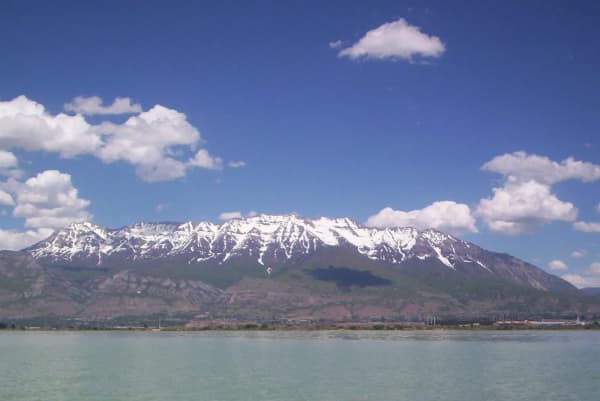
In February 1850 the Timpanogos, who revered the canyon, were forced up it as an escape route from a military campaign to remove them from the valley, following the conflict at Fort Utah. Settlers afterward named the peak north of the canyon in memory of Chief Big Elk's wife, who fell from a cliff during the conflict. That name stood for over a century and a half; the peak is now Kyhv Peak, from a Ute word for mountain.
People have also died in the canyon in falls and climbing accidents across the decades since. It is a popular climbing area with real exposure.
The reported experiences — figures on the trail, sounds with no source, drums — are what they are. We are not in a position to verify them and we are not going to pretend otherwise. What we can say is that the canyon's reputation is not a random attachment. Something happened there.
Our Rock Canyon trail guide covers the route, the geology and the trailhead's own interpretive marker in detail.
Fort Utah, where that story starts
The canyon events do not begin in the canyon. They begin on the flat ground west of downtown, at the stockade the first settler party built in 1849 after arriving on the Provo River — the fort that gave the conflict its name and that the modern replica off Geneva Road commemorates.
Nothing about the fort site reads as sinister today. It is a park with a playground. That is precisely why it is worth naming here: the valley's darkest documented episode has no eerie building attached to it, and the eerie buildings people drive to have far less behind them.
If you want the settlement history in order rather than in fragments, our Provo history guide lays out the sequence.
Thistle: the county's real ghost town
If you want an abandoned place in Utah County, this is it, and it is a twenty-five minute drive from Provo.
Thistle sat in Spanish Fork Canyon and grew as a railroad town — a resupply and helper-engine stop on the Denver and Rio Grande Western, with a school, a tavern and eating houses. Sources disagree about the founding, giving dates ranging from the 1840s to 1883, so we are not going to print one as settled.
The end is not in dispute. Record precipitation in the fall of 1982, a deep snowpack and a fast warm spring set off a landslide in April 1983. Per the Utah Geological Survey the slide reached about 1,000 feet wide, nearly 200 feet thick and over a mile long, moving at a maximum of around three and a half feet per hour, and it dammed the Spanish Fork River within days.
The water backed up over the town. Residents had hours to leave.
The numbers are the reason people still talk about it
The slide severed rail service between Denver and Salt Lake City, flooded U.S. 6 and U.S. 89, and produced Utah's first Presidential disaster declaration. Direct damage exceeded $200 million in 1983 dollars, which made it the most expensive landslide in United States history.
The highway was closed for close to a year.
What is left, and how to look at it
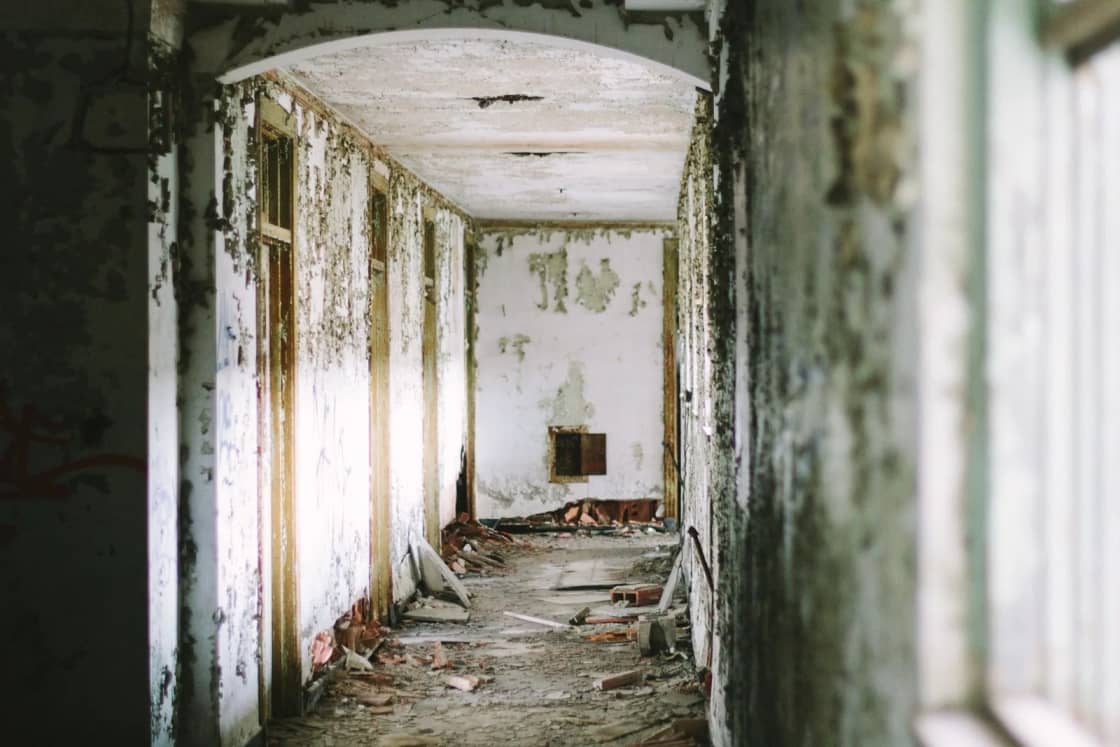
A half-submerged house, foundations, scattered debris and the remains of the railroad machine shop.
The site is private property. The way to see Thistle is from U.S. 6/89 and from the pullout above the slide, which gives the better overview anyway — you can read the shape of the whole event from up there in a way you cannot from ground level. Do not walk in.
Camp Floyd and Fairfield
Out at the west desert edge of the county, Fairfield holds the older history. A United States Army post was built there in 1858 after President Buchanan sent 3,500 troops to Utah Territory to put down a rebellion that turned out not to exist.
The troops left in 1861 for the Civil War and the post was dismantled. What survives is the Commissary Building, the Stagecoach Inn across the street, an 1898 schoolhouse and the Camp Floyd Cemetery.
The ghost stories here are the ones you would expect around soldiers' graves and a nineteenth-century inn, and the state park museum has long been comfortable with that reputation. Unlike most sites on this page, this one is a museum with posted hours that actively wants visitors.
Full detail on the town, the vanished county it once governed and the park's hours is in our Cedar Fort and Fairfield guide.
The Grove Theatre, Pleasant Grove
The Grove Theatre carries the county's most durable theater ghost — a presence long referred to as Charlie, with the standard reports of footsteps, voices and things moving after the house is dark.
Worth knowing before you get excited: resident ghosts are close to a professional tradition in theaters. A great many old houses have one, they usually have a name, and the tradition of leaving a ghost light burning on stage overnight is older than most of the buildings in this county. That does not make the reports insincere. It does mean a theater ghost is the least remarkable claim on this list.
Academy Square
The Provo City Library occupies the restored Brigham Young Academy building downtown, which is the oldest and handsomest institutional building in the city and turns up in the haunted lists on that basis alone — usually with a vague report about a presence in the music section.
Provo City bought Academy Square in 1994, and the building was restored and reopened as the city library.
It is a public building with generous hours. If you want to spend an evening in the most atmospheric old room in Provo, you can simply go, and the library guide covers what is there.
The old county jail, and why we are not giving you directions
An abandoned Utah County jail appears on most of the aggregator lists, with the usual inventory: slamming cell doors, footsteps, lights behaving oddly. The submissions typically date it to the early 1970s and describe it as abandoned since the late 1990s.
We are leaving it as an example rather than an entry, because it is the exact shape of claim this genre gets wrong most often. Abandoned-building listings in Utah are frequently years out of date — buildings get demolished, redeveloped, fenced, or turn out to be in active government use — and the aggregator pages are rarely updated when that happens. An entry that tells you a structure is empty is not evidence that it is empty now.
Before driving to any derelict site you read about, check the current parcel and current use. The county records are public. It is a ten-minute job that prevents the two most common outcomes: an empty lot, or a trespassing citation.
Why this valley produces so many of these
Three things stack here that do not stack everywhere.
The history is compressed and violent at the start — a settlement founded in 1849, a military campaign in 1850, an army of occupation in 1858, all inside nine years and all inside one county.
The institutions are large and old. A territorial asylum, a nineteenth-century army post and a university founded in 1875 generate exactly the kind of building stock that accumulates stories, because a story needs somewhere to live.
And the geography does half the work unassisted. Steep canyons that go fully dark an hour before the valley does, a shallow lake that fogs, and a highway corridor with a drowned town beside it. Atmosphere is not evidence, but it is reliably mistaken for it.
The tour option
A commercial walking ghost tour operates downtown, running roughly an hour across about a mile. For most people this is the sensible version of the activity: someone else has done the collecting, you stay on public sidewalks, and nobody ends up explaining themselves to a police officer at midnight.
Check the operator's current schedule and start point directly. Tour seasons in this valley are heavily weighted to September and October.
How to read a haunted-places list, including this one
There is a small number of aggregator sites that publish user-submitted paranormal reports without verification, and nearly every other page on this subject is downstream of them. This is why you will notice the same four sentences about the same buildings, sometimes word for word, across a dozen results.
Three habits help:
Count sources, not pages. Ten sites carrying identical wording is one source. Look for who first published it and when.
Separate the history from the haunting. The 1850 events in Rock Canyon, the 1858 army post, the 1983 landslide and the 1885 asylum are all documented in the archival record. The apparitions are not, and mixing the two categories in one paragraph is how a folklore claim borrows the credibility of a fact.
Watch for buildings that have been demolished. Abandoned-site lists in this state are notoriously out of date; the old county jail entries that circulate are a good example of an item worth checking against current reality before driving anywhere.
Doing this without becoming a problem
Most of what makes local news about ghost hunting is trespass, not ghosts.
- Active facilities are not sites. The state hospital is the clearest case in the valley.
- Private property stays private even when the structure is derelict. Thistle is the local example.
- Cemeteries have posted hours and in most Utah County municipalities they close at dusk.
- Canyon roads at night are canyon roads at night. Rock Canyon's trailhead lot and the Spanish Fork Canyon pullouts are dark, cold after sundown for most of the year, and have no cell reliability in places.
- Take the museum version where one exists. Camp Floyd is open Monday through Saturday and would rather have you inside.
If you want the seasonal version instead
This page is about places with year-round history. The October attractions — haunted houses, corn mazes, pumpkin patches and the rest of the fall circuit — run on a completely different calendar and are covered in our Halloween in Utah Valley guide, with the fall festivals themselves in the Cornbelly's guide and the pumpkin patches guide. For the wider autumn season — foliage, harvest and the drives — see fall in Provo. For the ticketed haunt circuit specifically — Frightbelly's and the attractions people drive to — see haunted attractions in Utah Valley. For indoor scares that are open all year and involve no trespassing whatsoever, the escape rooms in Utah Valley roundup is the more reliable answer.
The one that stays with you
Everything on this list is somebody's story except one item, and the one that is documented is the strangest of them.
An institution built at the edge of town, behind a swamp and a dump, because the county did not want to look at the people inside it. Seventy years of renaming itself to escape a word. Then thirty Octobers of inviting the public in to be frightened by the building — and the patients helping run it. Then a decision, in 1998, that this was doing harm, and it stopped.
You do not need a ghost for that to be a haunting.
Related Guides
Frequently Asked Questions
What is the most famous haunted place in Utah Valley?
Can you visit the Utah State Hospital?
Is Rock Canyon haunted?
What is Thistle and can I go there?
Are there ghost tours in Provo?
Where do these haunted-place lists come from?
Is there anything haunted in Pleasant Grove or American Fork?
When is the best time of year for this?
Sources
The facts in this guide were checked against these sources. Hours, fees and rules change, so confirm anything time-sensitive with the source before you go. How we make Provo.com.
- Utah State Hospital, Utah Department of Health and Human Services: Our History, Utah State Hospital, Utah Department of Health and Human Services. Checked October 12, 2026.
- GeoSights: Thistle Landslide Revisited, Utah County, Utah, Utah Geological Survey. Checked October 12, 2026.
- Camp Floyd State Park Museum, Utah State Parks. Checked October 12, 2026.
- Utah State Hospital timeline, Deseret News. Checked October 12, 2026.
- Castle closure dismays patients, patrons, Deseret News. Checked October 12, 2026.