
Utah Valley families treat Salt Lake's animal attractions as a single category, which is a mistake. Hogle Zoo and Tracy Aviary are about an hour from Provo and a short drive from each other, and they suit completely different days.
One is a large, hilly, half-day zoo. The other is a compact, calm, ninety-minute aviary in a city park. Knowing which you want saves a family a lot of money and a lot of arguing in a car park.
Prices, hours and discount programs at both change regularly. Everything below describes how they work and what has been published recently; confirm current figures with each institution before you drive up.
The drive, honestly
Both are roughly 45 miles from Provo. The freeway portion is straightforward; the final stretch is not, because neither sits directly off I-15.
Hogle Zoo is on the far east side of Salt Lake City at the mouth of Emigration Canyon, which means crossing the city after leaving the freeway. Budget an hour in good conditions and considerably more at peak times.
Tracy Aviary is in Liberty Park, south of downtown, which is a shorter cross-city run than the zoo.
Traffic through the Point of the Mountain is the variable. Leaving Utah Valley after about 9 a.m. and returning before about 3 p.m. avoids the worst of it in both directions — which happens to align well with a zoo day anyway.
What each one is
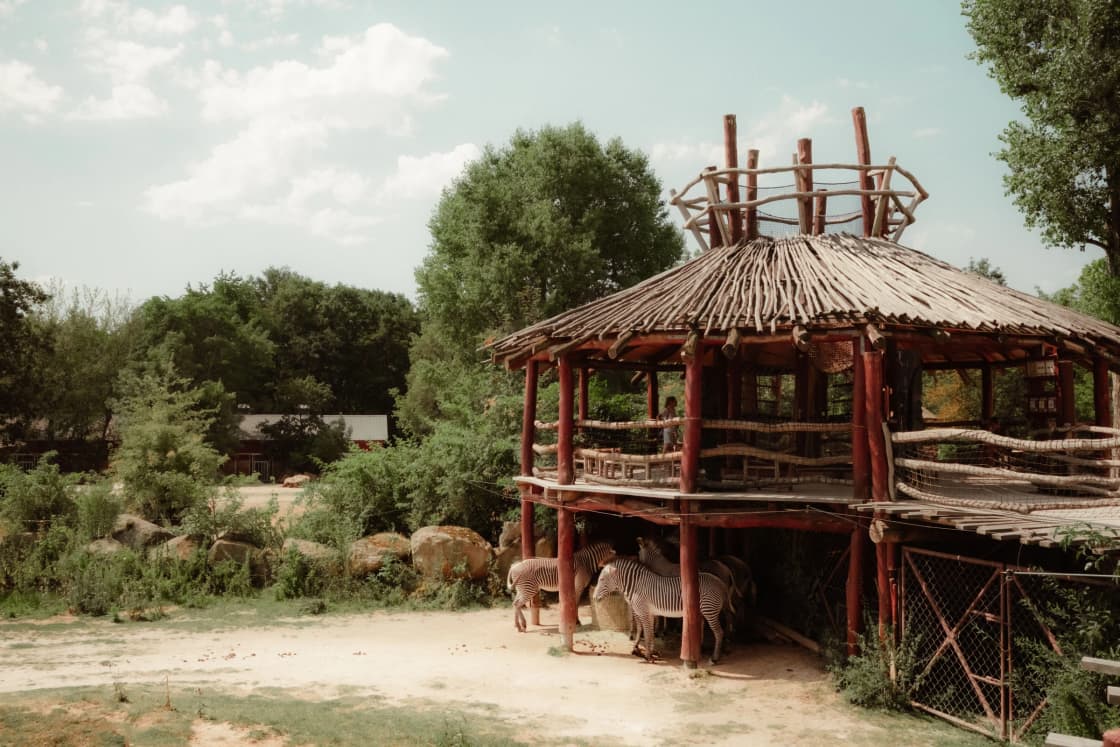
Hogle Zoo is a full-scale zoo with hundreds of animals across themed areas — African savanna, great apes, primates, Asian highlands, a rocky shores area and a Utah-focused exhibit. It has been an accredited member of the Association of Zoos and Aquariums since 1974 and dates back to the early 1930s.
It is also hilly. The site climbs, and a full loop involves real walking. This matters with a stroller, with small children, and with anyone who tires easily.
Tracy Aviary is a bird collection in a corner of Liberty Park, founded in 1938 from a private collection donated to the city. It holds several hundred birds across roughly 135 species, and it is one of the oldest institutions of its kind in the country.
It is small, flat, shaded, and calm. There are free-flight bird shows and keeper programs included with admission, and a lorikeet feeding experience for a small extra charge when it is running.
Cost, and the shape of the pricing
Hogle Zoo prices by season. Published daytime rates have run higher from 1 May through 30 September and lower from 1 October through 30 April, with a discount for buying online instead of at the gate and free entry for children two and under.
The seasonal split is worth planning around. A visit in October costs meaningfully less than the same visit in September, and the animals are frequently more active in cooler weather anyway.
Tracy Aviary is cheaper, with a straightforward adult and child rate plus separate reduced rates for seniors, students, veterans and military. Those discounted rates have required ID and in-person purchase rather than online booking, so bring identification if you intend to use one.
The aviary has also run a reduced evening rate after 5 p.m. on Mondays during the summer months when it stays open late, purchased in person.
The discount routes families miss
Buy online for the zoo. The published saving per ticket applies to every ticket, which for a family is not trivial.
Wild Wednesdays. Hogle Zoo has run substantially reduced admission on the last Wednesday of the month through the winter, with a lower price online than at the door. Winter zoo visits are underrated — fewer crowds and more active animals.
Military. The zoo has offered a per-ticket discount year-round with valid ID, plus free admission for military personnel and immediate family on designated appreciation days including Armed Forces Day, Independence Day and Veterans Day.
EBT and SNAP. Hogle Zoo has run a reduced-rate admission program for benefit recipients, purchased at the ticket window, covering a limited number of tickets per visit.
Foster families. The zoo has offered a heavily reduced family membership rate for licensed foster families.
Library passes. Several Utah library systems circulate passes to museums and attractions. Availability varies by system and passes are in demand, but it is worth checking with your own library before paying full price for anything.
Attraction passes. Salt Lake visitor passes bundle multiple attractions including both of these, which only makes sense if you are doing several in a short trip.
All of these are subject to change. Verify before you count on one.
Memberships, and the reciprocity angle
If you would visit more than twice in a year, a Hogle Zoo membership generally pays for itself on admission alone.
The stronger argument is reciprocity. Hogle Zoo participates in the national AZA reciprocity program, which gives members free or discounted admission at a large number of participating zoos and aquariums around the country. For a family that travels, that can be worth considerably more than the local visits.
Zoo members have also received a discount on Tracy Aviary admission on Thursdays, which is a small but genuine bonus if you plan to do both.
Membership tiers are structured around the ages of children in the household, and children age out of the cheaper tiers — check which tier you need rather than assuming.
How long each takes
This is the planning fact that matters most.
Hogle Zoo: three to four hours for a reasonably thorough visit. More if children are young and stop at everything, less if you skip areas deliberately.
Tracy Aviary: about an hour and a half, and many visitors do it comfortably in that. It is not a half-day destination and it does not pretend to be.
Trying to give both equal time produces a bad day. Treat the zoo as an anchor and the aviary as an addition, or do the aviary alone as a short outing.
Doing both in one day
It works, with the right order.
Do the zoo first, in the morning, when children have energy and the animals are more active. Eat afterward. Then do the aviary in the afternoon as the shorter, calmer, sit-down-occasionally stop.
Reversing the order means arriving at the larger, hillier site with tired children, which is how a good day ends badly.
With children under about four, consider not doing both. One attraction plus Liberty Park itself — which has playgrounds, open grass and space to run — is a better day than two paid admissions.
Liberty Park, which is half the point
Tracy Aviary sits inside Liberty Park, and the park is a substantial free amenity in its own right: playgrounds, large lawns, paths, picnic areas and space.
This makes the aviary a good option for a shorter trip, because you can pair ninety minutes of paid admission with an afternoon in the park for nothing. Bring a picnic and the whole outing costs the admission plus fuel.
For families weighing a day trip against the cost, that combination is one of the better value propositions in the Salt Lake area.
Seasons, and when to go
Spring and autumn are the best zoo months. Mild temperatures, active animals, smaller crowds than summer, and at the zoo the lower seasonal rate applies from October.
Summer is busiest and hottest. If you go, go early — animals are most active in the morning and least active in the afternoon heat, which is exactly when most families arrive.
Winter is underrated at the zoo. Cold-adapted animals are lively, crowds are thin, admission is at the lower seasonal rate, and the discounted winter Wednesdays fall in this window. Dress properly and it is a good visit.
The aviary is open year-round, closing only for Thanksgiving and Christmas, and its sheltered scale makes it more weather-tolerant than the zoo.
Practical logistics
Both are outdoor-walking attractions, so shoes matter more than anything else you bring.
The zoo's hills argue for a stroller with young children, and for planning a route rather than wandering, since backtracking uphill is unpopular.
Food is available at both and priced accordingly. Liberty Park makes bringing your own straightforward for the aviary; check the zoo's current policy on outside food if that matters to your budget.
Both have after-hours seasonal events — the zoo runs a large winter lights event and members-only evening events — which are ticketed separately from daytime admission and are not covered by a standard visit.
What is at each one
At Hogle Zoo, the draws for most Utah Valley families are the large mammals — the African savanna animals, the great apes and primates, and the big cats in the Asian highlands area. The rocky shores area covers cold-water species. There is also a Utah-focused exhibit covering native wildlife, which lands differently when the animals in it live an hour from your house.
The zoo runs keeper talks and animal demonstrations through the day, and these are included with admission. They are worth building the visit around rather than stumbling into — check the daily schedule when you arrive.
At Tracy Aviary, the collection spans several hundred birds across roughly 135 species, including large and charismatic ones — pelicans, eagles, macaws, cranes and hornbills. Free-flight bird shows run daily at set times and are included with admission.
The aviary also operates a second site, a nature center area along the Jordan River, which functions differently from the Liberty Park location and hosts community programming. If you are making a special trip, the Liberty Park site is the one you want.
The conservation angle, briefly
Both institutions frame themselves around conservation work rather than display alone, and both fund it partly from admission — the aviary has directed a set amount from every ticket to its conservation fund.
Whether that matters to you is a personal question, but it is relevant to families weighing the ethics of zoo visits with children. Both are established, accredited or long-standing institutions rather than roadside attractions, and both do education and species work alongside the public-facing side.
It is also a reasonable conversation to have with older children on the drive up, and both sites give you plenty of material for it.
With children of different ages
Under two. Free at both. The aviary is the better visit — shorter, flatter, birds at eye level. The zoo is a lot of pushing a stroller uphill for a child who will not remember it.
Two to five. The aviary plus Liberty Park is close to an ideal outing. The zoo works but plan for half of it, not all of it, and accept that you will spend twenty minutes at one enclosure and walk past six others.
Six to eleven. The zoo's sweet spot. They can walk it, they engage with the keeper talks, and the large animals land properly. This is the age at which the drive and the admission clearly pay off.
Twelve and up. Both still work, and older children get more out of the conservation and species material than younger ones do. Teenagers who have outgrown the zoo often find the aviary more interesting than they expect, because it is calmer and closer to the animals.
The rainy-day question
Neither is a good rainy-day destination, which surprises people who assume a paid attraction means indoors.
Hogle Zoo is almost entirely outdoors with some indoor buildings, and animals are frequently less visible in bad weather. Tracy Aviary is outdoors too, with sheltered sections but no substantial indoor circuit.
In bad weather, an indoor aquarium or museum is the better call. Our guide to indoor activities in Provo and Utah Valley covers the local options that hold up when the weather does not.
The exception is light rain in the shoulder seasons, which thins crowds dramatically and makes some animals more active. A drizzly October Tuesday at the zoo can be one of the best visits of the year.
Parking and getting in
Hogle Zoo has its own parking at the site, and it fills on busy summer days and during major events. Arriving before mid-morning largely solves it.
Tracy Aviary parks in Liberty Park, which has park parking rather than dedicated aviary parking. On a warm weekend the park itself is busy, so allow time to find a space and walk.
Salt Lake transit reaches both, and the zoo is served by a route running up toward the canyon mouth. For a Utah Valley family this generally means driving to a Salt Lake station and transferring, which adds complexity — but it is a genuine option for anyone who would rather not drive across the city. Our guide to UTA fares and passes for Utah County covers how the fare side works.
Last admission at the aviary has been an hour before closing, which catches people who arrive late in the afternoon assuming they can slip in. Check closing times before a late start.
What to bring
Water, more than you think, particularly in summer — Salt Lake summers are hot and the zoo has limited shade in parts.
Sun protection. Both are outdoor sites at altitude.
Layers in shoulder seasons, because the zoo's position at the canyon mouth means it can be noticeably cooler and windier than the valley floor.
Cash or card for the extras — the lorikeet experience at the aviary, carousel or train rides at the zoo where operating, and food.
And a plan for the stroller question at the zoo. The hills are the single most-mentioned surprise in visitor feedback, and families who bring a carrier for a toddler instead of a stroller frequently have a better day.
How this compares with staying closer to home
Before driving to Salt Lake, it is worth knowing what Utah Valley already offers.
The Loveland Living Planet Aquarium is closer than either of these and is a comparable half-day for a family. Thanksgiving Point in Lehi includes a farm, gardens and a museum complex, and is closer still. The Bean Life Science Museum on the BYU campus is free.
The honest case for driving to Salt Lake is that Hogle Zoo has large mammals nothing in Utah County has, and Tracy Aviary has a bird collection with no local equivalent. If that is what your family wants, the drive is worth it. If the goal is simply a day out with animals, closer options may serve as well for less.
Our broader guide to things to do with toddlers and little kids in Utah Valley covers the local alternatives, and day trips from Provo covers other northbound options.
A workable plan
Leave Utah Valley around 9 a.m. to miss the northbound peak.
Zoo from mid-morning, three to four hours, with the hilliest sections done first while everyone is fresh.
Lunch, then decide whether there is appetite for a second stop. If yes, the aviary and Liberty Park. If no, drive home early and count the day a success.
Return before mid-afternoon or after about 6 p.m. to avoid the worst southbound traffic through the Point of the Mountain.
And buy the zoo tickets online the night before, because that saving is the easiest money you will make all day.
Frequently Asked Questions
How far is Hogle Zoo from Provo?
How much does Hogle Zoo cost?
How much is Tracy Aviary?
How long does each take?
Can you do both in one day?
Are there discount days?
Is a membership worth it?
Which is better for toddlers?
Sources
The facts in this guide were checked against these sources. Hours, fees and rules change, so confirm anything time-sensitive with the source before you go. How we make Provo.com.
- Admission Tickets | Hogle Zoo, Utah's Hogle Zoo. Checked October 12, 2026.
- Tracy Aviary - Salt Lake City's Home For Birds & Nature, Tracy Aviary. Checked October 12, 2026.