
The nearest ocean is seven hundred miles away, which is one reason the Loveland Living Planet Aquarium in Draper draws more than a million visitors a year and holds more than thirty thousand memberships. It is Utah's aquarium, it is thirty minutes from Provo when the freeway cooperates, and it is one of the few day trips out of Utah Valley that works equally well for a two-year-old, a teenager and a grandparent in January.
This is the Provo version of the visit: the drive, the tickets, what each hall holds, how to pace it, and how to make the day worth the point of the mountain.
The drive
The aquarium sits at 12033 South Lone Peak Parkway in Draper, just off Interstate 15 at exit 291, on the west side of the freeway. From downtown Provo it is about 35 miles: north on I-15 through Orem, Lehi and over the Point of the Mountain, then off at 291 and a short loop to the parking lot. Off-peak the drive is 30 to 35 minutes. On a weekday morning between seven and nine, or a weekday evening between four and six, the Point of the Mountain can double that. On a Saturday morning it is usually fine.
The building is impossible to miss from the freeway. It is large, blue and shaped like nothing else, and since the science building was added the campus includes what looks like a jetliner parked beside the road, which is exactly what it is.
Parking is free and plentiful in the lot in front of the building. Arrive at opening on a school holiday and the near rows are full; the far rows are a two-minute walk.
For a car-free trip, FrontRunner from Provo Central to the Draper station and then a rideshare or a UTA bus is possible but slow, roughly an hour and a half each way with the transfer; the aquarium is, for practical purposes, a car destination for Utah County, and a family without a car will do better renting one for the day than assembling the transit legs.
Tickets: how the pricing works
The aquarium prices admission by demand. Each date and, for some dates, each time slot has its own price, published in advance, and the aquarium's own guidance is that prices for a given day never drop once posted, so the best price is the one you see first. Daytime adult admission ran in a published range of roughly $18 to $28 when this was written. Children 3 to 12 get the largest discount, teens, students, seniors and military a smaller one, and children 2 and under are free. Buying online before you go is reliably cheaper than the door.
Practically, that means weekdays in the school year are cheapest, holiday weeks and Saturdays are dearest, and a family of five can save a real sum by choosing a Wednesday over a Saturday. Last entry is one hour before closing, and the closing hour varies by day and season; check the day's hours rather than assuming.
A membership pays for itself for most families in two or three visits, includes reciprocal admission at some partner aquariums and zoos, and is the standard Utah County grandparent gift. Reduced pricing on certain weekday evenings has been offered in the past; whether it is on offer the week you go is a website question.
What is inside: the five halls
The aquarium organizes itself into five main exhibit areas, and walking them in order takes about two hours.
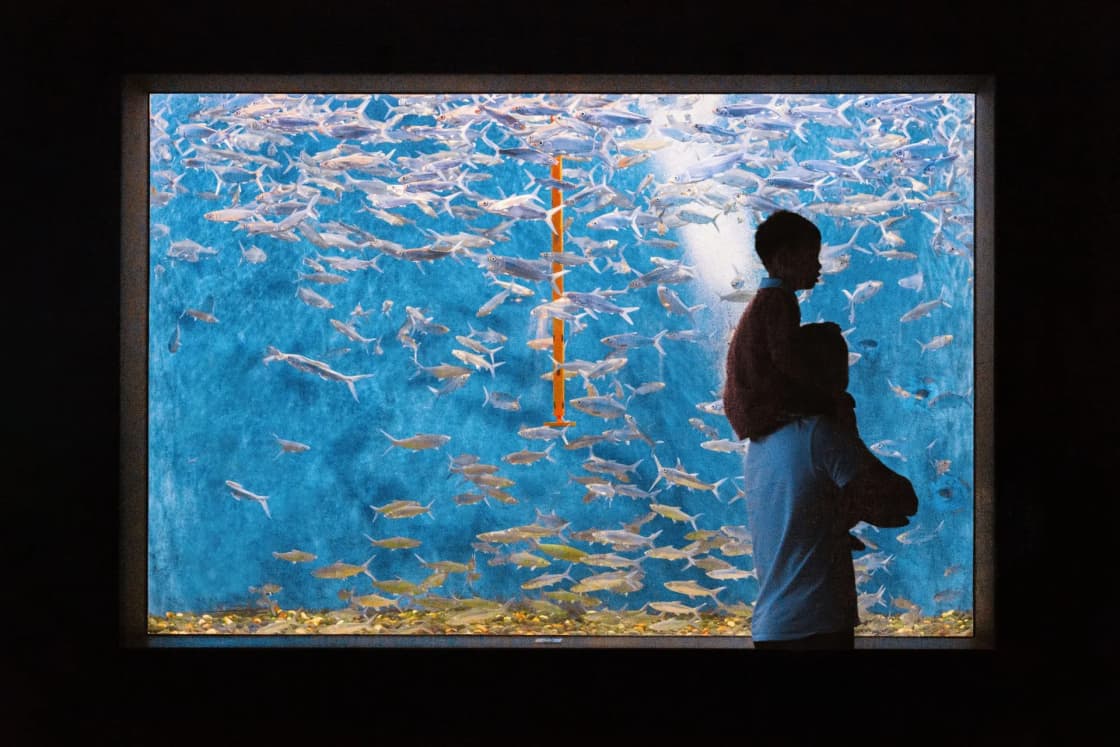
Ocean Explorer is the reason people come. Its centerpiece is a 300,000-gallon shark habitat with a forty-foot acrylic tunnel through it, so you walk beneath sand tiger and other sharks, sea turtles and rays. Around the tunnel are reef tanks, a large jellyfish gallery that is the most photographed room in the building, and touch pools with rays and small sharks. Budget the most time here, and if the crowd is thick in the tunnel, do the rest of the hall first and come back.
Journey to South America is the rainforest hall, warm and humid, with a yellow anaconda, piranhas, caiman, electric eels, poison dart frogs and free-flying birds overhead. It is the hall small children remember, mostly because of the snake.
Antarctic Adventure is the penguin habitat, staged as a Falkland Islands research station, with gentoo penguins and, since 2025, macaroni penguins. There are keeper talks and feedings at posted times; find the schedule when you arrive and build the visit around one.
Discover Utah is the hall Provo visitors should not skip. It is built around Utah's own ecosystems, from the Great Salt Lake's brine shrimp to the fish of the Colorado River drainage and the wetlands of Utah Lake, with river otters as the star. It is the only place in the state to see the native fish that live in the water you drive past every day, and it makes the aquarium a local institution rather than a tropical import.
Expedition Asia, the newest hall, holds clouded leopards, Asian small-clawed otters, Asian species of fish and reptiles, and a design that puts the mammals at eye level. Otters are the crowd favorite and the leopards are worth the wait for a moment when one moves.
The aquarium houses on the order of 4,500 animals across roughly 550 species, in about 136,000 square feet, and it is arranged on one level with ramps rather than stairs.
How it got here
The aquarium is a Utah story rather than a franchise. Brent Andersen, a Utah native and marine biologist, founded the Living Planet Aquarium as a nonprofit in the late 1990s and ran it for years as a traveling exhibit in schools before it had a building of its own. Its first fixed home was a storefront space at the Gateway in downtown Salt Lake City in the mid-2000s, small enough that regulars remember it as a single long room with a shark tank at the end. In 2006 it moved to a converted retail building in Sandy, where it outgrew itself within a few years. The Draper building, purpose-built and opened in 2014 with a naming gift from the Loveland family, was the leap: a 136,000-square-foot structure with the shark tunnel as its anchor, and the reason the annual visitor count crossed a million. The Expedition Asia hall, the outdoor play area and the EECO science building were added in the years since. The trajectory matters for a visitor because it explains the layout: the building was designed for crowds by people who had spent a decade watching how families move through a smaller one, and the halls are sequenced so that a stroller can do a loop without backtracking.
Conservation, and the part that is not a show
Behind the exhibits the aquarium runs programs that a casual visitor never sees: coral propagation, breeding of threatened species, rescue and rehabilitation work with partner institutions, and field work on Utah's own rivers, including the native fish that Discover Utah displays. It is accredited by the Association of Zoos and Aquariums, which sets standards for animal care and requires participation in cooperative breeding programs. The education side is large, with school field trips filling weekday mornings in the school year, which is the practical reason a Wednesday at eleven can be louder than a Saturday at nine. Keeper talks are the way into this side of the building; ask a question at a feeding and you will get an answer from someone who has spent years with the animal in front of you.
EECO and the plane
The Ecosystem Exploration Craft and Observatory is the aquarium's science and education building, on the campus beside the main aquarium, and it is designed around an actual airliner fuselage, which is the aircraft you see from the freeway. Inside are science exhibits and the EECO Voyager, a full-motion virtual-reality experience that takes riders through coral reefs and rainforests and is included with aquarium admission. It is a separate stop with its own line, and the line is shortest first thing in the morning and in the last hour before closing.
A plan for the day, by age
With toddlers: arrive at opening, go straight to Ocean Explorer while the tunnel is empty, then the penguins for a feeding, then the touch pools, then the outdoor play area and a snack, and leave before naptime. Two hours. Admission is free under three and the stroller rolls everywhere.
With school-age children: all five halls in order, with the penguin talk and a touch-pool stop, then EECO and the Voyager, then lunch. Three to four hours. Discover Utah is where the homework happens; the river otters will do the persuading.
With teenagers: the jellyfish gallery, the shark tunnel, the leopards, the Voyager, and an honest conversation about whether the rest is worth their time. Two hours, and the Traverse Mountain outlets on the way home.
Adults without children: a weekday afternoon, unhurried, with the keeper talks and the Discover Utah hall read rather than skimmed. The aquarium also hosts after-hours adult events at various points in the year; those are announced on its calendar.
The outdoor play area and the logistics nobody mentions
Outside the main building, on the campus between the aquarium and EECO, is a free outdoor play area with climbing structures and open ground, which is where a family with a toddler recovers between halls and where the picnic lunch happens on a warm day; you can bring food onto the campus even though outside food is not served inside the exhibit halls. Lockers near the entrance hold coats in winter, which matters because the rainforest hall is warm and the penguin hall is cold and a January visitor is dressed for neither. The gift shop is at the exit, unavoidably, and a family that wants to leave without a plush shark should have that conversation in the parking lot rather than at the register. Restrooms with changing tables are in every hall. Re-entry on the same day is generally allowed with a hand stamp or ticket, which makes the play-area-and-lunch break workable without paying twice; confirm at the desk when you enter.
Eating
The aquarium has a café inside with the usual family menu. Draper's commercial district around exit 291 has every chain restaurant a road trip could want within a mile. The better plan for a Provo family is to eat on the way home: Thanksgiving Point in Lehi is fifteen minutes south with sit-down and fast options, and the Traverse Mountain area at the top of Lehi has a full strip. Provo itself is another twenty minutes.
Combining it with the rest of Draper
The aquarium is the anchor of a Draper day. Across the freeway, the Draper Corner Canyon trail system is one of the best mountain-bike and hiking networks on the Wasatch Front, with a paved path along the canyon mouth for strollers. Thanksgiving Point's museums, gardens and Butterfly Biosphere are one exit south. The Traverse Mountain outlets are two exits south. And Salt Lake's own attractions, the Hogle Zoo and the Natural History Museum on the east bench, are another twenty-five minutes north, which is a very long day but a possible one.
Seasonal events and the calendar
The aquarium's calendar has a rhythm worth learning. Fall brings a Halloween-themed run of evenings. December has holiday programming and the building stays busy through the school break. Spring break week in Utah County and the Salt Lake districts, which do not always fall on the same week, is the single most crowded stretch of the year. Summer is steadier, with the outdoor play area open and the crowds spread across a longer day. Adult-only evenings, with the building open late and the children gone, appear a few times a year and sell out. Sensory-friendly hours, with lowered lighting and sound, are scheduled periodically. None of these dates repeat exactly from year to year, and the aquarium's own calendar is the only reliable source; a Provo family that wants a specific event should check it a month ahead and buy early.
The membership math
A family membership costs, in a typical year, roughly what two and a half visits at weekend prices would cost for a family of four, and it includes unlimited admission for a year, reciprocal admission at partner institutions in other states, discounts at the café and gift shop, and early entry on some days. For a Utah County family with young children, who will use it on the inversion days in January, the rainy days in April and the too-hot days in July, it pays for itself by spring. It is also the standard grandparent gift in the valley for a reason: it gives a grandparent an outing with the grandchildren that costs nothing at the door. Prices for memberships change annually; treat the ratio, not any dollar figure, as the useful fact.
Accessibility
The building is on a single level with ramps, wide aisles and accessible restrooms; wheelchairs and strollers move easily. The shark tunnel has a gentle grade. The Voyager has height and health restrictions like any motion ride. The aquarium publishes sensory-friendly hours at various points in the year for visitors who need a quieter building; the calendar is the source.
What not to expect
It is not a marine park. There are no dolphins, no whales and no shows in the performing sense; the animal presentations are keeper talks and feedings. It is not enormous by the standards of coastal aquariums, and a determined adult can walk it in ninety minutes. And it is not empty: on a snow day, a school holiday or a Saturday afternoon in January, every family in the Salt Lake Valley has had the same idea, and the shark tunnel becomes a slow shuffle. The cure is a weekday, or arriving at the doors when they open.
Why it matters for a Provo family
Utah Valley has the mountains, the lake and the canyons, and it has almost nothing to do indoors with a small child on a January afternoon when the inversion has settled and the temperature is in the teens. The aquarium is the answer to that afternoon, thirty minutes away, with a shark tunnel that makes a three-year-old go silent and a hall full of the fish that live in Utah Lake. Buy the Wednesday ticket, leave after the morning rush, eat in Lehi on the way home, and it is the easiest day trip in the county.
Before you go: the checklist
Check the day's hours and price online and buy ahead. Note the penguin feeding and keeper talk times. Bring a jacket for the Antarctic hall and expect humidity in the rainforest. Plan the drive around the Point of the Mountain. Leave the parking lot before four on a weekday. And if you have a library card, ask your Utah County branch whether it is circulating attraction passes this season; the answer changes, and when it is yes it is the best deal in the valley.
Related Guides
- Things to Do in Draper, Utah, From Provo
- Thanksgiving Point: The Complete Visitor Guide (2026)
- FrontRunner from Provo: What to Know Before You Ride
- The Bean Museum: Provo's Free Natural History Collection
- Paragliding at Point of the Mountain: The World-Class Flight Site at the Top of Utah County
- Kids Eat Free in Utah Valley: Deals & Free Summer Meals (2026)
- Lagoon from Provo: The Drive, the Tickets, the Days to Avoid
- Draper, Sandy and South Jordan From Utah County: The Near-North Day
- Hogle Zoo and Tracy Aviary from Provo — the two Salt Lake animal attractions, costed and timed
Frequently Asked Questions
How far is the aquarium from Provo?
How much do tickets cost?
How long does a visit take?
Is it good for toddlers?
Can I see the animals from Utah's own rivers and lakes?
Is there a place to eat?
Are there discounts?
What is EECO?