
More on Lehi: every guide we have published there, in one place.
Lehi has changed almost beyond recognition in twenty years. The tech corridor arrived, the traffic arrived, and a town that used to be a stop between Provo and Salt Lake became a destination with its own gravity.
Jack and Jill Lanes opened in April 1957 and was already old news by the time any of that happened.
That is the interesting thing about it, and it is the part nearly every listing leaves out.
The name is not the nursery rhyme
Start here, because it is the fact that surprises people.
John and Pat Keysor, of Salt Lake City, established the alley in 1957. They had two daughters — Jackie and Jill Keysor — and they named the business after them. "Jack" is short for Jackie.
The nursery rhyme is a coincidence the name has been living off ever since, and it is a good enough coincidence that most people never think to ask. But the origin is a family one, and knowing that changes how the sign reads on the way in.
There is something worth noticing in the choice, too. In 1957, naming a bowling alley after your two daughters was not the obvious move. Bowling in that era was marketed heavily at men and at league play, and the industry's imagery was not aimed at families. A husband-and-wife pair naming the business after their girls reads, in hindsight, like an early bet on the family-entertainment model that the whole industry eventually converted to.
Sixty-nine years, and the alleys that did not make it
Bowling centers are unusually fragile businesses. They occupy a great deal of floor space, the equipment is expensive and specialized, and the land underneath them tends to become more valuable than the business on top of it. Utah Valley has lost several.
Jack and Jill has now been operating for close to seven decades on the same premise. That is long enough to have survived the collapse of league bowling as a mass activity, the arrival of home entertainment that was supposed to kill it, and — most dangerous of all for a Lehi business sitting on developable land — the Silicon Slopes land boom happening around it.
It is worth being precise about what this does and does not mean. Longevity is not a promise of quality, and an old business can coast. What it does tell you is that the place has adapted more than once, and the current mix of lanes plus laser tag plus arcade is the visible result of the most recent adaptation.
What is there now
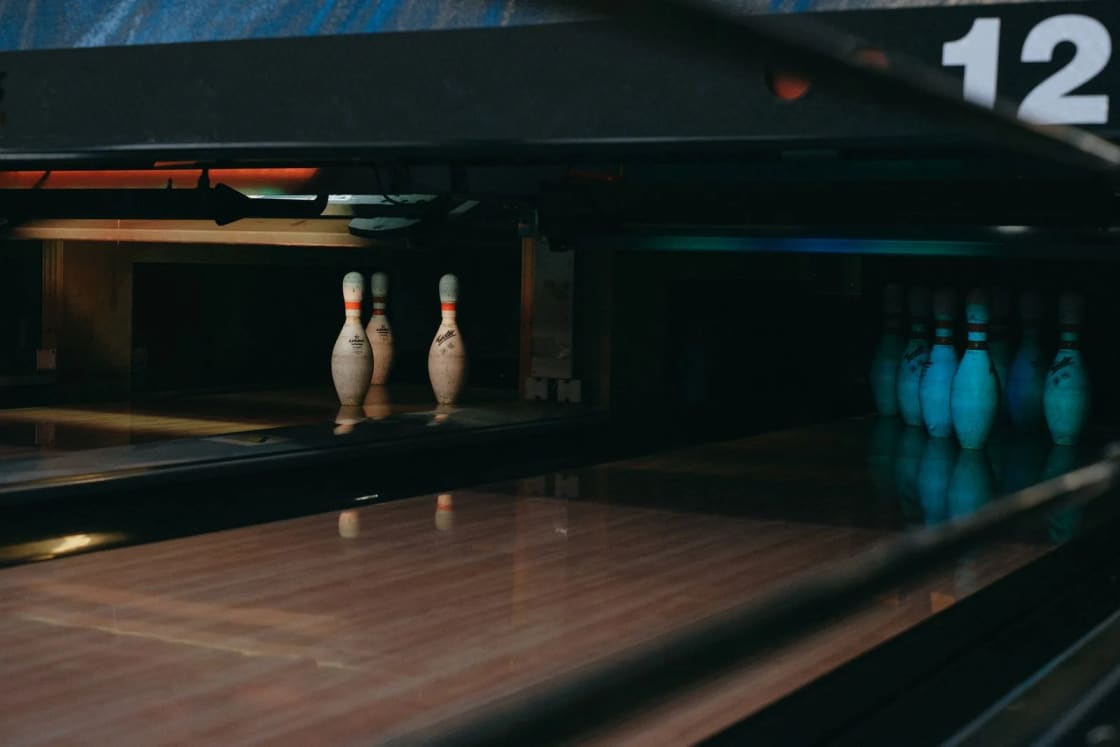
Thirty-two lanes. That is a large house by Utah County standards and the single most useful fact for anyone organizing a group. Twenty people is a normal Friday booking here rather than a negotiation.
Laser tag. A separate arena, and the thing that makes mixed-age groups work.
A full arcade with ticket redemption. The prize-counter model, which children treat as the actual destination and the bowling as the warm-up.
A cafe, which has served Noble Roman's pizza — a licensed pizza program of the kind common in entertainment venues. Food offerings at bowling alleys rotate, so treat the specific brand as current-at-time-of-writing rather than permanent.
A VIP area, bookable at extra cost, with its own lanes.
The four-activity problem, solved
Here is the practical case for driving to Lehi rather than bowling closer to home.
The standard failure of a bowling outing is that bowling is not fun for everyone in the group. Someone is too small to lift the ball with dignity. Someone is a teenager who considers the whole thing beneath them. Someone bowls two frames, loses interest, and spends the next hour on their phone.
A venue with one activity cannot absorb that. A venue with lanes, a laser tag arena and a redemption arcade can — the group splits, does different things for forty minutes, and reconvenes. Nobody has to pretend.
That is the specific thing Jack and Jill is good at, and it is why it survives as a birthday destination in a county with a lot of competing options for children's parties. Our Utah Valley birthday party guide sets it against the alternatives.
A note on the VIP lanes
The VIP area is bookable for a premium and is a nicer environment — the appeal is a separated space rather than a lane in the middle of a busy house.
One practical thing to know if you book it: the approach is shorter than on the main lanes.
The approach is the run-up area between the seating and the foul line. Bowlers who have any kind of consistent delivery develop a step count without thinking about it, and a shorter approach means that step count no longer fits. The result is arriving at the line a half-step out of position on your first few frames.
This is easy to manage once you know. Walk the approach before your first ball, start further back than feels natural, and give yourself a frame or two to recalibrate. Lanes are also polished — that is normal and correct for scoring, not a defect — so the foul line is a real line and not a suggestion. Do not slide past it.
League play, and why it affects your Tuesday
Jack and Jill hosts organized league bowling, including a scratch league that has run Wednesday evenings, starting in the early autumn and running through the season.
"Scratch" means bowlers compete on raw scores with no handicap applied — it is the more competitive format, and a scratch league tends to attract the serious end of the local bowling population. That is worth knowing for two opposite reasons.
If you are a competitive bowler who has moved to the area, this is a real league in a real house and it is how you find the local scene.
If you are a family of four turning up at seven on a league night, a block of lanes is spoken for and the atmosphere is different from what you pictured. Call first.
When to go
Bowling has sharper peaks than most activities, and a badly timed arrival means standing at a desk being told the wait is ninety minutes.
Weekday mornings and early afternoons are the quietest stretch and the best time to bring small children — the house is calm, the noise level is manageable, and nobody is waiting for your lane.
Weekday evenings are league territory in season. Not closed to the public, but tighter.
Friday and Saturday nights are the busy block, running late. This is when the thirty-two-lane count earns its keep: a large house absorbs a Friday crowd in a way a twelve-lane alley cannot, so Jack and Jill is a better walk-in bet on a weekend night than most of the valley's smaller options.
Saturday afternoons are the birthday-party window. If you are not attending one, this is the slot to avoid; if you are booking one, it is the slot that fills first.
School holidays flatten all of this. During the long summer break and the winter holidays, weekday afternoons behave like weekends.
If you have not bowled in a while
A few things that make the difference between an enjoyable two games and a sore forearm.
House ball weight. The common mistake is going too heavy. The old rule of thumb — roughly ten percent of body weight — tops out around a fifteen-pound ball for most adults, and plenty of people are better served lighter than that. A ball you can swing smoothly beats a ball you have to heave.
Check the finger holes, not just the weight. House balls are drilled for a generic hand. If your fingers jam in or slide out, that is the wrong ball regardless of what the number on it says. Try three.
Shoes are not a rental upsell. Bowling shoes have a sliding sole on one foot and a braking sole on the other, and street shoes both damage the approach and stop you sliding, which is how ankles get hurt. Wear the rentals. Bring socks.
Aim at the arrows, not the pins. The arrows set into the lane about fifteen feet out are there because targeting something close is far more accurate than targeting something sixty feet away. This one change improves most casual bowlers more than anything else they could do.
Bringing your own gear
If you own a ball, this is a house where that makes sense — a full-size center with league play maintains its lanes to a standard that rewards a proper ball and a consistent delivery.
Lanes are oiled in a pattern, and the pattern is not uniform down the lane. That is why a hook that worked at one house behaves differently at another, and why serious bowlers ask about the pattern before they start. A house running competitive league play will typically be able to tell you something useful if you ask at the desk.
For everyone else, none of this matters and the house balls are fine.
Laser tag, practically
The laser tag arena is the release valve for the members of your group who did not want to bowl, and it is worth understanding before you buy a package.
Sessions run on a timed round rather than continuously, so there is a wait for the next round to start — factor that in when you are splitting a group across activities. Vests and phasers are issued at the door. The arena is dark, loud and full of corners, which is exactly the appeal for most nine-year-olds and exactly the problem for a few. A child who dislikes sudden noise and low light will not enjoy it, and finding that out inside a dark maze is worse than asking first.
It works well for the eight-to-fifteen range, and adults who commit to it enjoy it more than they expect to.
What it costs, and the deals that come and go
Bowling is priced by the game or by the hour depending on the house and the night, with shoe rental separate. Jack and Jill has generally read as reasonably priced to the people using it, with the large-group case being where it looks best.
The center has run promotional packages — a Monday family night bundling a pizza, a pitcher, an arcade card and an hour of bowling into a single price has appeared on its social channels — and this is exactly the kind of offer that changes seasonally or disappears.
Do not plan a budget around a promotion you read about in an article. Confirm what is running this month before you go. That applies to this page as much as any other.
Getting there, and what to combine it with
Jack and Jill sits at 113 South 600 East, on Lehi's older east-side grid rather than out on the newer commercial strip. It has a private lot, which is the detail that matters on a busy evening.
From Provo or Orem it is a straight run north on I-15 and then east. That puts it within a short drive of several things worth pairing it with:
- Thanksgiving Point, with its gardens, museums and the seasonal Cornbelly's operation in autumn
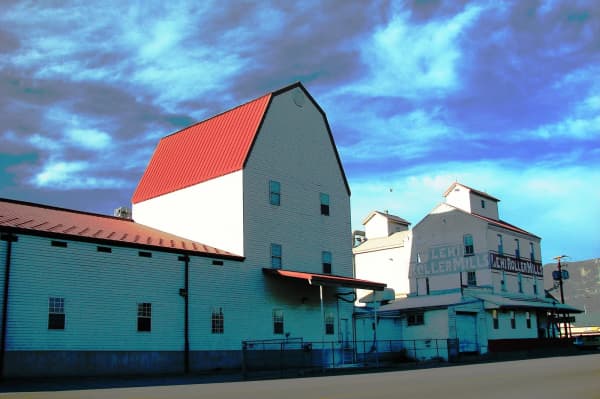
- Lehi Roller Mills, the flour mill with a longer history than the bowling alley
- The restaurant cluster that has grown up along the tech corridor
A morning at one of those and an afternoon of bowling is a reasonable full day out with children, and it is a better use of the drive than bowling alone.
Accessibility and the practical details
The center is listed as wheelchair accessible, accepts cards, and has that private lot. It is described as good for children, which is consistent with the arcade-and-laser-tag mix.
Bowling itself is more adaptable than people assume. Ramps for children and for bowlers who cannot manage a conventional delivery are standard equipment at most houses, and bumpers turn a frustrating game for a five-year-old into a fun one. Ask at the desk rather than assuming — these are normal requests.
How it fits the valley's bowling picture
Jack and Jill is in Lehi, at the north end of the county, and that is the main thing that distinguishes it from the rest of the options.
If you are in Provo or Orem, you have closer choices — the university-adjacent houses, the family entertainment centers, and the smaller alleys further south. Our Provo and Orem bowling guide covers those in detail, including which ones close Sunday and where to go if you want a lane on a Friday without waiting.
The case for driving north instead is scale, the four-activity mix under one roof, and — if you care about this sort of thing — the fact that you are bowling in a room that has been a bowling alley since Eisenhower's second term.
Why bowling held on in Utah
Bowling declined nationally as a league activity through the late twentieth century, and the sociologists made it famous as a shorthand for community decline. Utah is a partial exception to that story, and the reason is structural rather than sentimental.
The state has an unusually high proportion of large families, a strong culture of organized group activity through congregations and community organizations, and a substantial population of teenagers looking for somewhere to go that costs little and does not involve alcohol. Bowling alleys fit all three. A ward activity, a youth group outing and a family with six children are all easier to accommodate on thirty-two lanes than almost anywhere else in a small city.
That is the demand base Jack and Jill has been serving since 1957, and it explains why a business model that struggled elsewhere kept working here.
The short version
Thirty-two lanes, laser tag and an arcade in one building, closed Sunday, private parking, and a family history that goes back to 1957 and two girls named Jackie and Jill.
Call ahead on a league night. Walk the VIP approach before you throw.
Hours, packages and food offerings at entertainment venues change frequently. Confirm current details with the center before making a trip.
Last updated: August 2026.
Related Guides
- The Grid: Inside Pleasant Grove's Three-Story Indoor Kart Track
- Arcades in Provo & Orem: The Nickel Arcades, the Redemption Floors, and Which Is Which
- Axe Throwing in Provo: What It's Actually Like, and Where to Go in Utah Valley
- Escape Rooms in Utah Valley: Which Ones Are Worth It, and Which Room to Book
- Lehi Roller Mills: The Footloose Landmark That Quietly Changed Its Name
- Dinosaur Museums in Utah Valley: The Big One in Lehi, the Free One in Provo, and Which Your Kid Actually Wants
- Mini Golf in Utah Valley: Where to Putt, and Why Provo Doesn't Have a Course
- Things to Do in Lehi, Utah (2026): Thanksgiving Point, the Outlets & the Mill
Frequently Asked Questions
Where is Jack and Jill Lanes in Lehi?
How old is Jack and Jill Lanes?
Where does the name Jack and Jill come from?
How many lanes does Jack and Jill Lanes have?
Is Jack and Jill Lanes open on Sunday?
Does Jack and Jill Lanes have laser tag?
Can you book Jack and Jill Lanes for a birthday party?
Are there bowling leagues at Jack and Jill Lanes?