
Memorial Day in Utah does not look like Memorial Day in most of the country, and people who move here notice it in their first year. The cemeteries fill up — not with a ceremony and a crowd at a monument, but with families, all weekend, carrying flowers to individual graves.
The federal holiday honors the American military dead, and that observance is very much alive here. Layered on top of it is a broader local practice: Utah families use this weekend to visit and decorate the graves of all their dead, military or not, and to do it as a family outing across several cemeteries in a day.
This covers where that tradition came from, which Utah Valley cemeteries matter, how to plan around the crowds, and what else the weekend is used for. Event dates and cemetery rules change annually — confirm with the specific city or cemetery before you go.
Why Utah observes it this way
The practice has deep roots here and is best understood through two features of Utah's population.
The first is genealogy. Utah has an unusually strong culture of family-history research, institutionally and personally, and knowing exactly where your great-grandparents are buried is far more common here than it is elsewhere. If you know, you can visit.
The second is that families stayed. Utah Valley was settled by people whose descendants largely remained in the same valleys, which means a great many households have four or five generations of ancestors buried within a half-hour drive. Elsewhere, family graves are scattered across states and a visit is a pilgrimage. Here it is a Saturday.
Put those together and Memorial Day becomes a practical, achievable family ritual rather than an abstract one.
What it looks like
If you have never seen it, the scale is the surprising part.
Cemeteries that are quiet all year are full of parked cars. Flower vendors set up at the entrances. Grandparents point out headstones to grandchildren and tell them who the person was, which is really the function of the whole exercise. Some families bring lawn chairs and stay. Many run a circuit — one cemetery for one side of the family, another twenty minutes away for the other.
The flowers are the visual signature. By Monday afternoon a Utah Valley cemetery is vividly colorful, and the contrast with the same ground in February is striking.
The flags, and the military observance
Alongside the family tradition, the holiday's original purpose is observed directly.
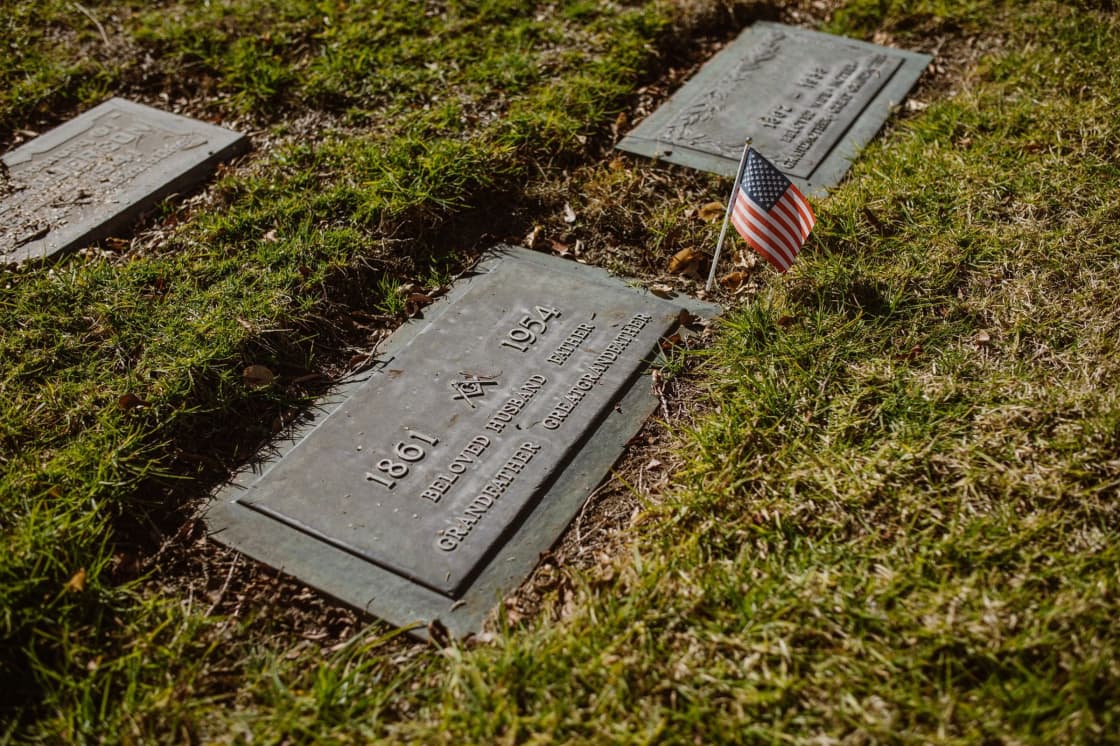
Flag placement on veterans' graves is widespread across Utah Valley cemeteries, typically organized locally rather than centrally — cities, veterans organizations, Scout units, church groups and volunteers each handle particular cemeteries, often by long-standing arrangement. The work usually happens in the days immediately before the holiday.
Formal ceremonies are also common, generally on Monday morning, and generally short: a program, a flag ceremony, sometimes a rifle salute and taps. They are held at cemeteries and veterans memorials around the county rather than at one central location.
If you want to help with flag placement, the route is to contact the specific cemetery or city, because there is no single sign-up covering the valley.
Provo City Cemetery
The Provo City Cemetery, established in 1853, is one of the county's oldest burial grounds and one of the busiest Utah Valley destinations on the holiday. America's Freedom Festival has held its Memorial Day ceremony there on Monday morning.
It holds the city's earliest settlers and a great deal of Provo's documented history, and its records are unusually good, which matters if you are trying to locate a specific grave rather than a familiar family plot. The grounds hold roughly 38,000 burial spaces, so finding an unfamiliar headstone without looking it up first can take a frustrating amount of time.
Look up the plot location before you drive over. The city's searchable web map makes this straightforward, and it converts an hour of wandering into a five-minute walk.
Provo's rules are a good example of how specific these get: artificial decorations are normally allowed only from November 1 to April 1, with Memorial Day the one exception, and the cemetery office can tell you when holiday decorations will be picked up.
The other Utah Valley cemeteries
Every city in the county has one, and most families' Memorial Day route touches two or three.
The older municipal cemeteries — in Springville, Spanish Fork, American Fork, Pleasant Grove, Payson, Lehi and Alpine among others — carry the founding families of those towns, and their layout tends to reflect the settlement pattern: the oldest sections nearest the original entrance, expanding outward through the twentieth century.
Smaller communities have smaller grounds that are correspondingly easier to navigate and far less crowded. If your family connection is to one of the south county towns or a bench community, you will likely have a calmer morning than anyone heading to Provo or Orem.
Several are still actively maintained by the cities themselves, which is why decoration rules differ from one to the next.
Where the holiday came from
The national holiday grew out of the aftermath of the Civil War, when communities across the country began decorating the graves of the war dead. In 1868 the Grand Army of the Republic designated May 30 for decorating the graves of the fallen, and the day was widely known as Decoration Day for a long time before Memorial Day became the standard name.
That older name is the key to understanding Utah's version. The original practice was literally about decorating graves, and in much of the country it narrowed over time to a military observance centered on ceremonies. In Utah the decorating half stayed broad and stayed domestic.
You can still hear the older usage here from older residents, who will talk about going to decorate rather than about Memorial Day. It is a small linguistic survival of what the day used to be everywhere.
The holiday's placement on the last Monday in May is a later development. The Uniform Monday Holiday Act, signed in 1968 and effective in 1971, moved it from May 30 and created several three-day federal weekends, which is also why it functions as the start of summer.
The flowers, which are their own economy
Anyone driving past a Utah Valley cemetery on the Friday before will notice the temporary flower stands.
Demand concentrates into about three days, and it supports a seasonal trade — permanent florists running at capacity, temporary roadside stands, and supermarkets giving over substantial floor space to bucket flowers. Prices rise, and the good arrangements go early.
Households split between two approaches. Fresh flowers look better and last days. Artificial arrangements survive the weather and stay until the cemetery clears them, which for families visiting from out of state is often the practical choice.
Ordering ahead is standard for anyone wanting something specific, and by Sunday afternoon the selection is visibly picked over.
The genealogy connection
The reason this tradition is stronger here than elsewhere is worth drawing out, because it explains something about the whole state.
Utah has a global reputation in family-history research, supported by major institutional infrastructure, and the practice of knowing your ancestry in detail is unusually widespread. A household here is far more likely than average to know the names, dates and burial locations of people four generations back.
Memorial Day is where that abstract knowledge becomes physical. A name in a database becomes a headstone you can stand in front of and a story told to a child. For many families the weekend is when genealogy stops being a hobby and becomes a visit.
It also runs the other way. People who cannot find a grave often spend the weekend researching, and cemetery offices field a spike in records requests around the holiday.
Cemeteries as local history
There is a version of this weekend for people with no family connection at all, which is to read the cemeteries as documents.
Utah Valley's older burial grounds record the settlement of the valley with unusual clarity — the founding families, the epidemic years visible as clusters of small headstones, the wars marked by the ages of the men, and the ethnic communities that arrived for mining and railroad work.
The Provo City Cemetery is the best example and rewards an hour of walking with no agenda. The older sections of the Springville, Spanish Fork and American Fork cemeteries do the same for their own towns.
It is a quiet way to understand a place, and this is the one weekend of the year when the grounds are alive with people who can tell you who somebody was.
Travel, if family is elsewhere
Memorial Day weekend is one of the heaviest travel periods of the year, and Utah Valley feels it in both directions.
If you are driving, the I-15 corridor is busiest on the Friday afternoon and the Monday afternoon, and the return leg on Monday is reliably the worst of the three days. Leaving early or late beats leaving at the obvious time.
If you are flying, the airport is at its most congested, and the drive north is affected by ongoing construction. Our road construction guide covers the current projects on that route.
The canyon routes east — Provo Canyon and Spanish Fork Canyon — carry recreation traffic rather than commuter traffic on this weekend, which shifts the busy hours later in the morning than usual.
Timing, if you want to avoid the crush
The peak is Monday morning into early afternoon. That is when the ceremonies happen and when families who work weekdays make their visit.
Saturday and Sunday are substantially quieter and many local families decorate then deliberately. Early morning on any of the three days is calmest of all, and the light is better for photographs, which a lot of people are taking.
If mobility is a consideration for anyone in your group, the off-peak advice matters more than usual — the closest parking near the older sections goes early on Monday and the walk from the overflow can be long.
Decoration rules, which catch people out
Most cemeteries publish rules on what can be placed at a grave, what containers are allowed, and how long items may remain before grounds crews clear them.
The clearing schedule is the part that upsets people. Cemeteries generally remove decorations within a defined window after the holiday so mowing can resume, and something left in place is not stored — it is disposed of. If an item has sentimental value, plan to collect it.
Glass is commonly prohibited, and there are often rules about staking anything into the ground. These vary enough between cities that the safest approach is to check the specific cemetery's posted rules rather than assume the one you used last year applies here.
What is open, and what is not
Memorial Day is a federal holiday. Government offices, courts, banks and post offices close, and there is no regular mail delivery. City offices and libraries generally close, though some run holiday hours at recreation facilities.
Most retail and restaurants stay open, frequently on reduced holiday hours, and grocery stores generally operate. Transit typically runs a reduced schedule — UTA fares and service shift on holidays, so check rather than assume your usual route runs normally.
The practical planning point is that the weekend is busy at anything recreational and quiet at anything administrative.
The other thing this weekend is: the season opener
For a lot of Utah Valley households the holiday is less about cemeteries than about the first camping trip of the year, and both things happen in the same three days.
Memorial Day weekend is when campgrounds, reservoirs and canyons take their first heavy load of the season. Reservations at the popular sites go months ahead, and arriving without one on this particular weekend is optimistic. Our camping guide covers the booking windows.
The recurring disappointment is elevation. Late May in Utah Valley is warm, and late May at 8,000 feet often is not. High-country campgrounds may still be closed, and seasonal roads including the Alpine Loop may not have opened yet. Check before towing anything up a canyon.
Where the crowds go
If you want to be outdoors and not among a crowd, it helps to know where everyone else is.
The reservoirs are busiest — Deer Creek and Jordanelle both take heavy holiday traffic, as does Utah Lake. The accessible canyon destinations fill early: Bridal Veil Falls, Tibble Fork, and the picnic grounds up Provo Canyon are all at capacity by late morning.
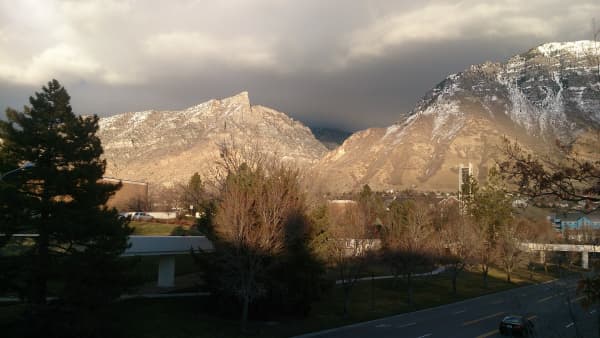
The quieter options are the south county canyons, the Nebo Loop if it has opened, and any trail requiring more than twenty minutes of walking. Crowds here concentrate hard at whatever you can drive to.
Doing it with children
The cemetery tradition works better with children than people expect, and it is worth doing deliberately rather than as an errand.
What makes it land is the telling. A headstone means nothing to an eight-year-old, and a story about the person means a great deal. Families who do this well arrive with something to say about each grave — what the person did, what they were like, how they are related.
Keep it short, bring the flowers early so the child has a job, and pair it with something else in the day. The point is not endurance; it is that a child learns these people existed and are theirs.
If you have no graves here
Plenty of Utah Valley households are new to the state and have no local family plot, which can make the weekend feel like a tradition happening to other people.
The military observance is open to everyone, and the Monday ceremonies at cemeteries and memorials around the county are public. Flag placement volunteering is a straightforward way in, and the organizers are generally short-handed.
Alternatively, treat it as the season opener it also is, and go early to beat the people who are doing the other thing.
The weather, which is not guaranteed
Late May in Utah Valley can be summer or it can very much not be, and Memorial Day plans get rearranged by weather more often than people expect.
Snow at elevation in late May is unremarkable, and a cold, wet holiday weekend happens regularly enough that experienced locals hold a backup plan. That matters most for camping trips at altitude, where an optimistic forecast in Provo can mean something quite different at a high campground.
For cemetery visits it matters less, though it is worth noting that fresh flowers placed in a hot, dry, windy weekend do not last long, which is part of why artificial arrangements are so common here.
A note on tone
One thing that surprises people who grew up with Memorial Day as a solemn, exclusively military occasion is how unsomber Utah Valley cemeteries feel on the holiday.
There are children running between headstones, families visiting with each other across plots, and a general atmosphere closer to a reunion than a vigil. That is not disrespect; it is what happens when a whole community turns up in the same place on the same morning to remember people they loved.
The ceremonies are solemn. The rest of the weekend is warmer than that, and newcomers usually find it a relief.
The short version
Utah observes Memorial Day twice over — as the national day for the military dead, and as a family day for visiting every grave you have. In Utah Valley that means full cemeteries all weekend, peaking Monday morning. Look up plot locations before you drive, check the decoration rules for the specific cemetery, go Saturday if you want quiet, and remember that the canyons above the valley may still be in a different season entirely.
Related Guides
- Provo City Cemetery
- Camping Near Provo
- Spring in Provo & Utah Valley
- Utah Valley Events Calendar
- Alpine Loop Scenic Drive
Frequently Asked Questions
Why is Memorial Day such a big deal in Utah?
Is decorating non-military graves the normal practice here?
When should I go to avoid crowds?
Are flags placed on veterans' graves?
What is open on Memorial Day in Utah Valley?
Is it the start of summer recreation season?
Do cemeteries have rules about decorations?
When is Memorial Day?
Sources
The facts in this guide were checked against these sources. Hours, fees and rules change, so confirm anything time-sensitive with the source before you go. How we make Provo.com.
- Provo City. Checked October 12, 2026.
- Provo City. Checked October 12, 2026.
- U.S. Department of Veterans Affairs. Checked October 12, 2026.
- VA National Cemetery Administration. Checked October 12, 2026.
- National Archives. Checked October 12, 2026.