
Spring is the season Utah Valley is worst at explaining to newcomers, because two contradictory things are true at once. The valley floor can be warm, green and in full blossom while the mountains three miles away are still holding several feet of snow and the road you wanted to drive is gated shut.
People who have lived here a while navigate this without thinking about it. People who moved here in the autumn spend their first spring making plans that do not work — driving up canyons that are closed, hiking to trailheads still under snow, and putting the snow shovel away in March.
This is the guide to what happens, in what order, and what to do about it. Conditions vary enormously between years, so treat specific timings as patterns rather than promises and check current status before committing to a drive.
The one thing to understand: elevation is a calendar
Utah Valley sits at roughly 4,500 feet. The canyon trailheads above it start around 5,000 and climb quickly, and the high country behind them runs well past 10,000.
Spring moves up that staircase slowly. When Provo is at seventy degrees in April, the ground at 8,000 feet is still frozen and snow-covered, and the trail you remember from last September may be under drifts for another six weeks. This is not a technicality — it is the single most useful thing to know about the season here.
The practical rule is to add weeks as you add elevation, and to check conditions rather than the calendar. A trail report from a week ago in spring is close to worthless, because a week is long enough for a great deal to change in either direction.
The blossom sequence
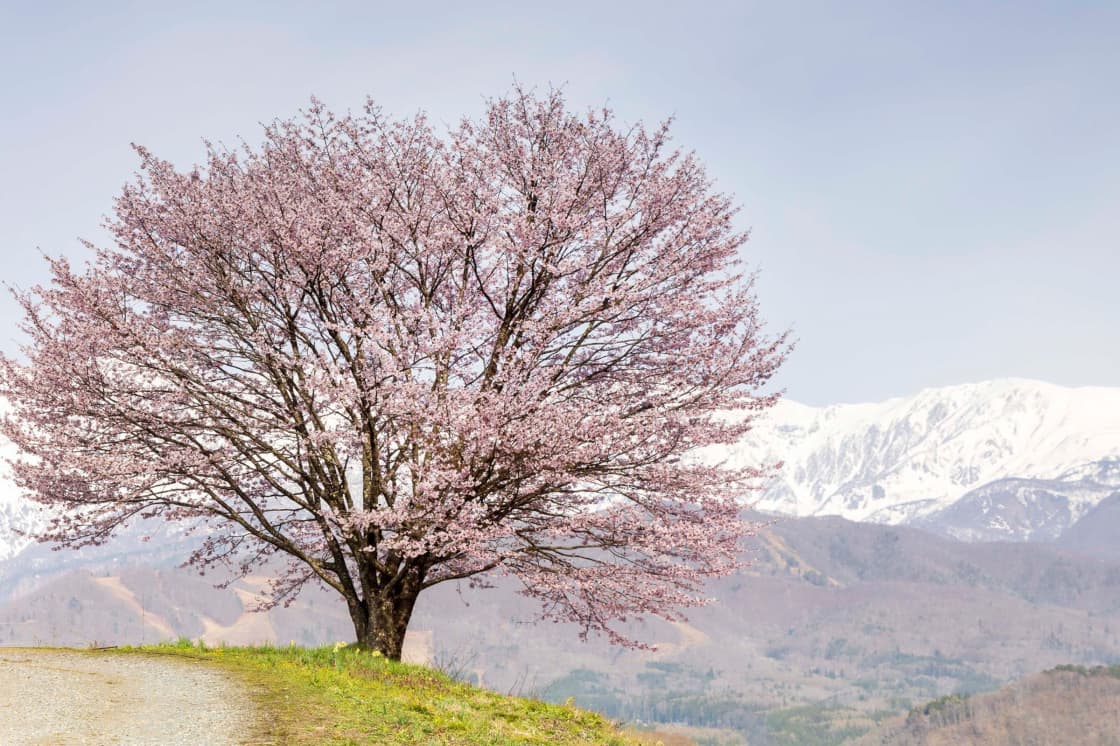
Utah Valley's spring visual signature is fruit blossom, a legacy of the orchards that shaped the county's agriculture and still survive in pockets, particularly at the southern end.
The sequence generally runs from the warmer, lower, more southern parts of the county northward and upward. That means the south county — Payson, Santaquin, Spanish Fork — tends to turn before the benches above Provo and Orem. Ornamental flowering trees in the older neighborhoods follow their own schedule and often lead the show in town.
The window is short and weather-dependent. A hard late frost can end it early, which is a real agricultural risk here and not just an aesthetic disappointment. If blossom is the reason for an outing, go when you hear it has started rather than scheduling it three weeks out.
Tulips, and the season's biggest single draw
The Tulip Festival at Thanksgiving Point is the valley's best-known spring event and the one most likely to be somebody's only spring outing.
It runs in the Ashton Gardens across several weeks in spring, and the timing shifts because the flowers decide it. That variability is worth planning around: early in the run, later-blooming beds are not up yet; late in the run, the earliest are finished. Mid-run tends to be the fullest and also the busiest.
Weekday mornings are meaningfully quieter than weekend afternoons, which is the whole trick to enjoying it.
Runoff, and the waterfalls at their best
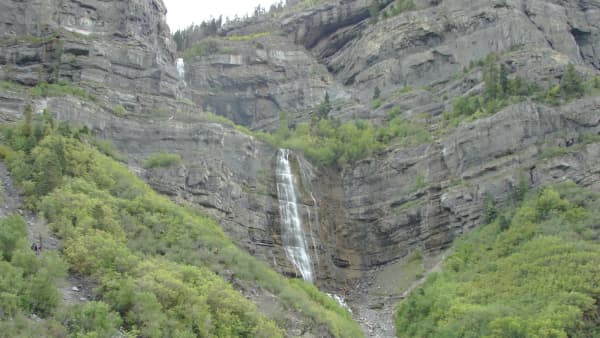
Snowmelt drives the rivers and creeks hard from late spring into early summer, and it is the reason to see the waterfalls in this window rather than any other.
Bridal Veil Falls in Provo Canyon is the accessible one — paved approach, no real hike, and dramatic when the water is up. Stewart Falls takes an actual hike and rewards it. Aspen Grove sits below the Alpine Loop's winter gate, so the trailhead is reachable before the loop reopens; check trail conditions before you go.
The caution is not decorative. Runoff water is cold enough to incapacitate quickly, it moves faster than it looks, and creek banks undercut. Every year people underestimate this. Stay back from swollen water, and keep children and dogs well away from edges.
The flooding question
Utah Valley has a documented history of runoff flooding, and it is a live consideration in heavy snowpack years rather than a historical curiosity.
The variable that matters is not how much snow fell but how quickly it comes off. A cool, gradual spring melts a huge snowpack safely. A sudden warm spell on the same snowpack does not. That is why official messaging in high-snow years focuses on the rate of warming.
If you live near a creek or on the benches, our spring runoff and flood risk guide covers what matters locally. In most years this is a non-event. In some years it very much is not.
The trails that work in spring, and the ones that do not
The low, dry, south-facing trails come into condition first and are the answer for most of the season.
The Bonneville Shoreline Trail and Y Mountain sit on open, sun-exposed slopes that shed snow early, and both are pleasant in spring precisely because they are miserable in July. Rock Canyon works from the mouth upward, with conditions deteriorating as you climb.
What does not work is anything at altitude. Mount Timpanogos is a summer hike, not a spring one, and attempting it early is how people get into trouble on steep snow with no equipment. Cascade Springs and the Alpine Loop destinations wait on the road opening.
The other spring trail condition is mud. Hiking a saturated trail damages it and widens it, and the local ethic is to turn around when you are sinking rather than walk the margins.
The seasonal roads
Several of the drives that define Utah Valley recreation are closed for winter and open on their own schedule.
The Alpine Loop is the big one, and its reopening is a genuine local event. The Nebo Loop above Payson is the other, and it typically opens later than people assume given how warm the valley below it is.
Neither has a fixed date. Both depend on snowpack, avalanche conditions and clearing schedules, and the Forest Service and UDOT announce them when they happen. Planning a spring drive around either without checking is the most common way to waste a Saturday here.
Utah Lake in spring
Spring is one of the better seasons on Utah Lake, for a specific reason: harmful algal blooms are predominantly a late-summer and early-autumn phenomenon, so the season's defining hazard is largely absent.
The water is cold and the wind is often strong, so this is shoreline and paddling weather rather than swimming weather. Bird activity is high, which makes the shoreline more interesting in spring than at any other time of year.
The lake still deserves an advisory check before contact recreation, particularly as the season warms toward summer. The rule remains that you judge the water by the current advisory rather than by how it looks.
Fishing, and the ice-off window
Spring is when the region's fishing calendar turns over. Ice comes off the high reservoirs, and the weeks immediately after are among the best of the year, as large fish move into shallow water.
Strawberry Reservoir is the marquee example and worth the hour from Provo in this window. Closer to home, the community ponds get spring stocking, which makes them a reliable option for a first family outing when the canyons are still wet.
The Provo River fishes year-round and is at its most variable in spring, because runoff changes it week to week.
The festival calendar restarts
Winter is quiet in Utah Valley's events calendar. Spring is when it turns back on.
Easter fills a weekend with egg hunts and community events across essentially every city in the county. The Tulip Festival runs its several weeks. And by late spring the city-days season that dominates Utah Valley summers is beginning to warm up, with the earliest celebrations arriving in June.
Dates move every year for almost all of it. Our events calendar carries current listings, and the festivals hub covers the annual celebrations individually.
The air, and the season it improves
Spring is when Utah Valley's air gets better, and it is worth naming because winter here is defined by the opposite.
The valley sits in a basin, and in winter cold air settles into it under a lid of warmer air above, trapping pollution near the ground for days or weeks. That is the inversion, and it is the single worst thing about living here.
Spring breaks it. Storm systems move through, the temperature profile stops inverting, and the air clears. For anyone with asthma or a respiratory condition, the improvement is noticeable and it arrives with the season rather than with a date.
The trade is pollen, discussed below, and occasional dust on windy days. On balance spring is the healthiest air of the year here, and it is a good season to be outside for that reason alone.
The yard, and what needs doing
For homeowners, spring in Utah Valley has a specific and fairly demanding checklist, driven by the fact that this is a desert with a real winter.
Sprinkler systems need to be brought back up after winterization, which is the job most likely to reveal a burst line. Timing matters — turning a system on before the last hard freeze risks damage, and leaving it too late stresses lawns as things warm.
Water restrictions and watering guidance are a genuine consideration in this climate, and the guidance from local water providers changes with conditions. Spring is when it is worth checking rather than defaulting to last year's schedule.
Frost is the other variable. Planting on the first warm week is a Utah Valley tradition and a reliable way to lose tender plants to a late freeze. Local experience says wait longer than feels necessary.
Youth sports, and the calendar turning over
Spring restructures a lot of Utah Valley households, because it is when the outdoor youth sports seasons start.
Soccer, baseball and softball all move outside, which means fields, evenings and weekends fill. Registration for most of it happens earlier — often in the depths of winter — which catches families new to the area who assume they can sign up when the season starts.
Our guides to youth soccer and to youth baseball and softball cover the registration windows city by city, and the general rule is that if you are thinking about it in April you are already late for that season.
The upside is that spring evenings at a Utah Valley ballfield, with the mountains still white behind the outfield, are among the better things about living here.
The shoulder-season advantage
There is a specific window in spring that experienced locals plan around and newcomers miss entirely.
For a few weeks, the ski resorts are still running and the valley is warm. That means you can ski in the morning and be somewhere warm and dry in the afternoon, which is a real thing rather than a tourism slogan, and it happens here more reliably than in most places because of the vertical relief.
The same period offers the year's least crowded conditions at a lot of destinations. Southern Utah is at its best before summer heat arrives, so a spring trip to Zion or Bryce beats a summer one on both weather and crowds.
The window is short and it moves. When it arrives, use it.
Graduation, and the season's other rhythm
Spring in a two-university valley means graduation, and it reshapes the place for a couple of weeks.
BYU and UVU both hold commencement in the spring, hotels fill, restaurants are busy at unusual hours, and traffic around both campuses is worse than normal. If you are visiting for anything else, it is worth knowing which weekends these fall on.
It also means the student population drops sharply afterward, which is why Provo feels noticeably emptier from May onward and why some businesses shift hours for the summer.
What to wear, and the mistake everyone makes
The mistake is putting winter clothing away in March.
Utah Valley springs are volatile in a way that catches people out annually. A warm week in March is normal. A significant snowstorm in April is also normal, and May snow at elevation is unremarkable. The two are not contradictory; they are the season.
Layers are the whole answer, along with keeping one warm coat accessible until the storms stop. If you are heading into a canyon, add more than the valley forecast suggests — the temperature difference between the valley floor and a canyon trailhead is real, and the wind up there is worse.
Allergies, honestly
Spring in Utah Valley is difficult for people sensitive to pollen, and it is worth saying plainly rather than leaving as an unpleasant surprise.
The valley's combination of trees, grasses and an enclosed basin that traps air produces a demanding allergy season. Newcomers frequently report developing sensitivities here that they never had elsewhere, which is common enough to be a local cliché.
Practically: the same inversion geography that concentrates winter pollution concentrates spring pollen, and windy days move it around. This is a good season to know what a local pharmacy stocks.
A good spring Saturday, assembled
If you want one plan that works: start early at a low, dry trail while the ground is firm and the light is good. Come down mid-morning while the valley is still cool.
Spend the middle of the day somewhere blossom is happening — the south county orchards, or the gardens at Thanksgiving Point if the tulips are up. Eat outdoors, because the window where that is comfortable rather than either freezing or scorching is short here and spring is most of it.
Finish at the lake shoreline in the evening for the light, or at a waterfall if runoff is up. That sequence uses the season's actual strengths instead of fighting its limitations.
One more thing about the mountains
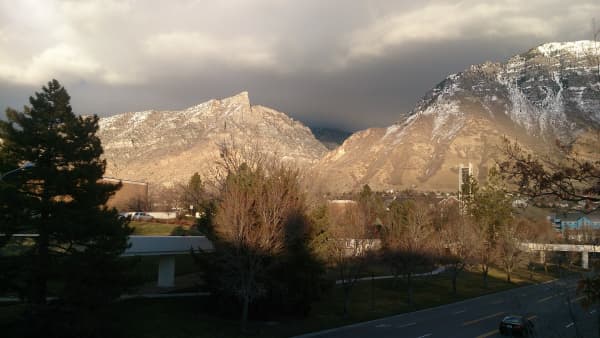
The visual signature of a Utah Valley spring is the contrast, and it is worth going somewhere deliberately to see it.
For several weeks the valley floor is green and in blossom while the Wasatch immediately above it is still white to a sharp line. Standing in a blossoming orchard with a snow-covered eleven-thousand-foot peak directly behind it is a specifically local experience, and it does not last long.
The best vantages are from the western side of the valley looking east, or from the benches looking across. It is the one photograph that explains why people put up with the inversion.
The short version
Spring in Utah Valley is two seasons running simultaneously at different elevations. The valley is early, the mountains are late, and almost every disappointing spring plan here comes from confusing the two. Work low and south early in the season, watch for the seasonal roads opening, see the waterfalls during runoff and stay back from the water, and do not put the coat away until the storms stop lying to you.
Related Guides
- Fall in Provo: The Complete Autumn Guide
- Summer Activities in Provo & Utah Valley
- Winter Activities in Provo & Utah Valley
- Spring Runoff and Flood Risk in Utah Valley
- Alpine Loop Scenic Drive
- Graduation Weekend at BYU and UVU
Frequently Asked Questions
When does spring arrive in Utah Valley?
Is the Alpine Loop open in spring?
When are the waterfalls best?
What blooms first?
What is the weather like?
Is spring a good time for Utah Lake?
What festivals happen in spring?
Do I need to worry about flooding?
Sources
The facts in this guide were checked against these sources. Hours, fees and rules change, so confirm anything time-sensitive with the source before you go. How we make Provo.com.
- Alpine Loop Leaf Peeping Guide, Utah Department of Transportation (Timpanogos Area). Checked October 12, 2026.
- Seasonal Roads, Utah Department of Transportation. Checked October 12, 2026.