Most Utah Valley trips to St. George are built around Zion, Snow Canyon or a golf tee time. The city's pioneer core gets a passing glance on the way to dinner. That is a missed half day, because three of the most significant 19th-century buildings in southern Utah stand within a short walk of one another downtown: the house where Brigham Young spent his last winters, the red sandstone tabernacle that settlers spent 13 years finishing, and the white St. George Utah Temple, the first temple the Church of Jesus Christ of Latter-day Saints completed in Utah.
This guide lays out that route as a walk, with the hours, costs and access rules each site publishes for itself, checked Nov. 13, 2026. It is written for a Provo or Orem family, a BYU or UVU student with a free Saturday, or a visitor from any faith who is curious about the history. It does not assume you are a member of the Church, and it notes clearly where a building is closed to the general public.
For the larger trip, including the drive, Zion's shuttle rules and how a St. George weekend fits together, start with our Zion and St. George from Provo guide. This page is the detail on one downtown half day.
Quick facts
| Item | Detail | Source |
|---|---|---|
| Drive from Provo | About 259 miles, roughly 4 hours 20 minutes | OSRM routing |
| Brigham Young Winter Home | 67 W. 200 North; Mon.-Sat. 10 a.m.-6 p.m., Sun. noon-6 p.m. | Church of Jesus Christ |
| St. George Tabernacle | 18 S. Main St.; Mon.-Sat. 10 a.m.-6 p.m., Sun. noon-6 p.m. | Church of Jesus Christ |
| Temple Visitors' Center | 490 S. 300 East; Mon.-Sat. 10 a.m.-9 p.m., Sun. 1-9 p.m. | Church of Jesus Christ |
| Admission | Visitors' center listed as free; no fee listed for the Winter Home or Tabernacle | Church of Jesus Christ |
| Phone, historic sites | 435-677-6230 | Church of Jesus Christ |
| Phone, visitors' center | 435-673-5181 | Church of Jesus Christ |
| Temple interior | Members with a temple recommend only | Church of Jesus Christ |
| Town Square park | 50 S. Main St.; sunrise to 10 p.m. | City of St. George |
| November weather | Average high 64, low 37 | UDOT seasonal outlook |
| Wheelchair access | First floor only at the Winter Home and Tabernacle | Church of Jesus Christ |
Getting there from Provo
An OpenStreetMap routing estimate (OSRM) puts downtown St. George about 259 miles from Center Street in Provo, roughly 4 hours and 20 minutes of driving without stops. The route is the same one our Zion guide describes: I-15 south past Nephi, Scipio, Fillmore, Beaver and Cedar City, all the way to the St. George exits. There is no scenic alternative worth the extra time if the goal is downtown St. George.
That distance makes a same-day round trip possible but punishing: more than eight hours in the car for a half day of walking. The historic sites fit best as one piece of a weekend. Arrive Friday night, walk the route Saturday morning while it is cool, and spend the afternoon at Snow Canyon State Park, which is a short drive from downtown. Or reverse it: Zion or Snow Canyon on Saturday, and the historic sites Sunday afternoon on the way out of town, since all three main sites keep Sunday hours.
Before leaving, check UDOT's traffic site at udottraffic.utah.gov or its app for closures, wind warnings and construction. Our Zion guide notes that I-15 crosses high stretches south of Scipio and near Beaver that get snow and wind in winter. St. George may be in the 60s while those summits are icy, so a December or January trip should be planned around the forecast for the whole route. Our Utah winter driving guide covers the traction rules.
How the walk fits together
Downtown St. George uses the same kind of numbered street addresses Provo residents already know, and the three main stops line up north to south:
- Brigham Young Winter Home, at 67 W. 200 North, two blocks north of the center and just west of Main.
- St. George Tabernacle, at 18 S. Main St., just south of the center line, with Town Square at 50 S. Main St. beside it.
- St. George Utah Temple, at 250 E. 400 South, with its visitors' center at 490 S. 300 East on the southeast corner of the temple block.
By our measurement of OpenStreetMap coordinates for the three buildings, the Winter Home to the Tabernacle is a short walk of a few blocks, and the full route from the Winter Home to the temple is roughly 1.3 miles following the street grid. That is an easy walk for most adults on a cool day, and a long one for small children in July. In summer, the sensible version is to walk the Winter Home and Tabernacle, then drive the last stretch to the temple and park there; the visitors' center page lists parking among its services.
The order matters for a reason beyond geography. The Winter Home story is about Brigham Young directing the temple's construction and preparing its ordinances. The Tabernacle is the older community project that settlers started first. Seeing them north to south, then finishing at the temple, follows the order in which the town built its landmarks and ends at the building both of the other stops point toward.
None of the Church's location pages describe downtown parking. Town Square's city page lists parking among the park's amenities. Arriving at 10 a.m. on a weekday, when the historic sites open, is the simplest way to avoid hunting for a space.
Stop 1: Brigham Young Winter Home and Office
Pioneers settled St. George in 1861 under Brigham Young's direction as part of a cotton mission meant to test warm-weather crops, according to Visit Utah, the state's tourism office. The cotton plan did not succeed, but Visit Utah notes that Young became one of the area's first "snowbirds," spending winters in the south to escape Salt Lake City's snow.
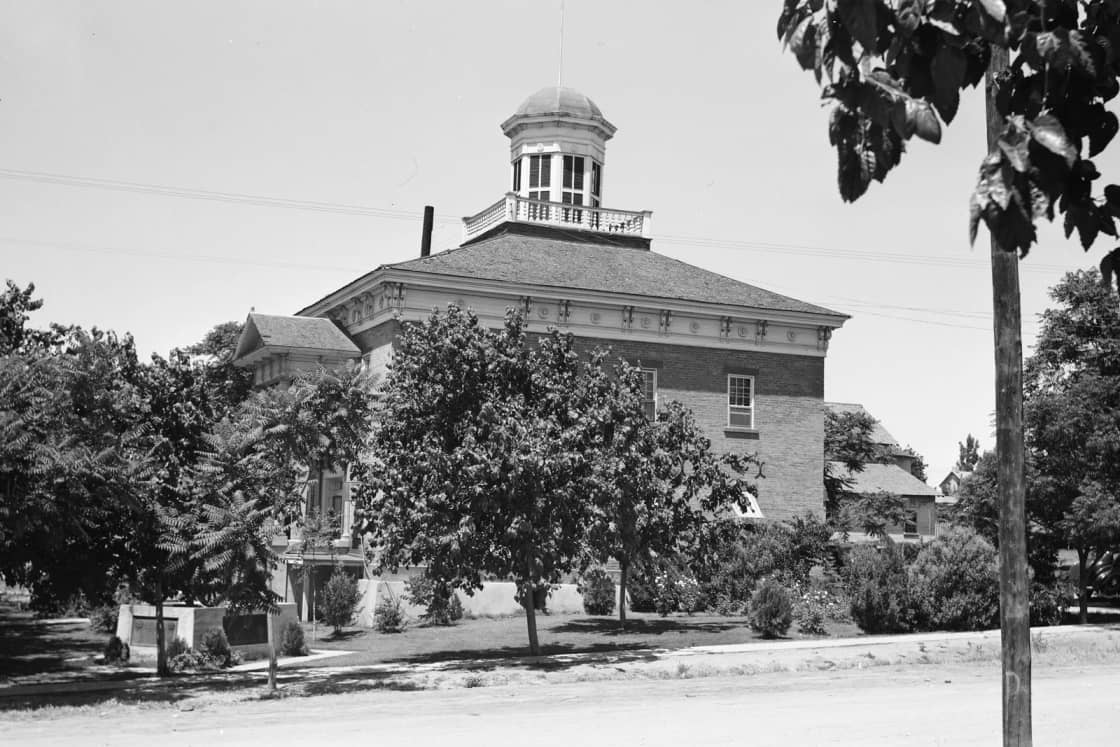
The Church's page for the site says Young lived in the house during the winter months from 1870 to 1877. He bought it in 1872 and remodeled it, doubling its size. While living there, he oversaw construction of the St. George temple and directed the Church's affairs from the home. As the temple neared completion, he built an adjoining office as a private space to meet with selected Church leaders.
That office is the reason the site carries religious significance for Latter-day Saints. The Church says the office was used in restoring temple ordinances, which had not been performed in a temple since members left Nauvoo, Illinois, and that the sealing and endowment ordinances for the dead were performed for the first time in the St. George temple. Visitors who are not members can treat this as context for why the small office matters so much to the guides who show it.
What the tour covers. The Church says tours cover Young's family life in St. George and his role in settling southern Utah, including building the temple. The home and office are restored and furnished to reflect the 1870s. Tours are guided by missionaries, according to the Church's What to Expect page for its southern Utah sites.
Hours. Monday through Saturday, 10 a.m. to 6 p.m.; Sunday, noon to 6 p.m., according to the Church's page as checked Nov. 13, 2026. A differently dated version of the Church's page, shown in search results the same day, listed a 5 p.m. close and closures on Thanksgiving, Christmas and New Year's Day. Treat the last hour of the day and the major holidays as uncertain, and call 435-677-6230 to confirm.
Access. The Church's What to Expect page says only the first floor is wheelchair accessible, and visitors must first climb a few outside stairs. Anyone using a wheelchair, walker or stroller should call ahead to ask how the tour handles that.
Groups. The Church takes group reservations, such as a class, youth group or bus tour, through an online request form linked from the site page. A Utah Valley ward youth trip or a seminary class should use that form rather than arriving unannounced with 30 people.
Stop 2: St. George Tabernacle
The Tabernacle is the older building and, for many visitors, the more striking one. The Church's page says settlers began construction in June 1863 at Brigham Young's direction, using local red sandstone. Labor and materials were donated or paid for through tithing, with settlers from across southern Utah Territory contributing. The building has served as a place of worship and community gatherings since 1869 and was completed in 1876.
The building's uses were broad. The Church lists concerts, celebrations, conferences, memorial services and worship services by both Latter-day Saint and other congregations. A 2018 KSL report on the building's restoration described residents historically worshipping, attending school and holding city meetings there, and said the bell in the tower helped early settlers keep time and gather in emergencies.
The restoration. The Church says structural updates took place from 2016 to 2018, and that the interior and exterior were restored to their 19th-century appearance. KSL reported that the two-year project included seismic upgrades and a refresh of the interior to its original decor, overseen by the Church's history department. KSL also reported that after reopening, the building would host concerts, interfaith services and community events rather than regular Sunday worship.
What the tour covers. The Church says guided tours "highlight features that illustrate the faith, unity, artistry, and industry" of the pioneer builders, and that exhibits show artifacts used in the building's construction and ornamentation. If you have walked through the Provo Tabernacle block history at home, the St. George building is a useful comparison: a pioneer meetinghouse of similar purpose that survived intact rather than being lost and rebuilt.
Hours. Monday through Saturday, 10 a.m. to 6 p.m.; Sunday, noon to 6 p.m., according to the Church's location page checked Nov. 13, 2026. Search results the same day surfaced an older version of the page with different hours, so call 435-677-6230 if timing is tight. Because the building hosts concerts and events, a tour can be affected by a scheduled program; that is another reason to call.
Access. Only the first floor is wheelchair accessible, according to the Church's What to Expect page.
Between stops: Town Square
Town Square, at 50 S. Main St., is the city park next to the Tabernacle, and it is the obvious rest stop on the walk. The City of St. George describes it as sitting within the downtown historic district, surrounded by some of the city's most prominent historic buildings. City parks are open from sunrise to 10 p.m. unless posted otherwise.
For families, this is the stop that keeps children on board with a history walk. The city lists a carousel, a splash pad with jets, a shallow "lazy river" for cooling your feet, a waterfall, a walking path, drinking fountains, picnic tables, a restroom and a Wi-Fi hotspot. It is also where the city holds events such as First Night, the art festival and summer movies on the square, so check the city calendar if you would rather avoid a crowd or are hoping to join one.
The city does not publish splash pad season dates on its Town Square page, so do not promise children water play in November without checking.
Stop 3: The St. George Utah Temple grounds and visitors' center
The temple is the end point of the walk and the reason for the other two stops. Church News, the Church's newspaper, says Brigham Young announced plans for the temple on Jan. 31, 1871, and that ground was broken on Nov. 9, 1871. The Church's newsroom says Young presided at the dedication on April 6, 1877, with Daniel H. Wells of the First Presidency offering the dedicatory prayer. The Church's fact sheet for the temple calls it "the first house of the Lord completed in Utah."
The building's construction story is part of what the visitors' center tells. According to Church News, the site was swampy ground, and early settlers packed it with volcanic rock, using a cannon as a pile driver, to create a firm foundation. The newsroom says the exterior is red sandstone quarried north of the city and then plastered white. Church News describes two rows of long arched windows and two rows of small circular windows, topped by an octagonal tower with a domed cupola, on grounds of 6.5 acres with plazas, lawns and rows of palm trees.
Recent history. The temple closed for extensive renovation on Nov. 4, 2019, according to Church News, and was rededicated on Dec. 10, 2023, by President Jeffrey R. Holland, who grew up in St. George. The Church's newsroom says the project replaced mechanical, plumbing and electrical systems, strengthened the structure and removed architectural inconsistencies left by earlier remodels. It also changed how visitors approach the building: the street on the north side is now a pedestrian plaza, and a landscaped plaza on the east side gives a view of the front facade. That is useful for anyone walking in from downtown, since it means the north side is the natural approach.
Who can go inside. The Church's Inside Temples page says entrance into a dedicated temple is reserved for members who hold a temple recommend, a card issued by a local Church leader. The Church's fact sheet says the public open house for the renovated St. George temple ran from Sept. 15 to Nov. 11, 2023; that window has closed. Visitors of any background can walk the grounds and visit the visitors' center. Our guide to visiting Utah Valley's temples covers grounds etiquette in more detail, and it applies here as well.
Temple closure dates. The Church's temple page lists closures for the temple itself on Nov. 25 (limited operations) and Nov. 26, Dec. 24-25 and Dec. 31, 2026, through Jan. 1, 2027. Those dates apply to temple operations; the page does not say whether the grounds or visitors' center change hours on those days, so call the visitors' center if your trip falls on a holiday.
The visitors' center. The Church's page for the St. George Temple Visitors' Center lists free admission and hours of 10 a.m. to 9 p.m. Monday through Saturday and 1 to 9 p.m. Sunday, the longest hours of any stop on this route. Inside are a replica of Bertel Thorvaldsen's Christus statue, visible from inside and outside the building; an exhibit on families and temples; a stained-glass exhibit on the New Testament ministry of Jesus Christ; and an interactive Book of Mormon activity. The Church's What to Expect page describes the center as two buildings hosted by missionaries, covering the temple's construction and the Church's teachings, and suggests allowing 30 minutes to 1 1/2 hours for both. Both buildings are wheelchair accessible. Phone: 435-673-5181.
Visitors who want only the architecture and the pioneer history can say so; the center is staffed by missionaries, and its exhibits do present the Church's beliefs. Set your own pace.
Other pioneer-era stops nearby
If the three main sites leave you wanting more, the Church and other local organizations list several more within an easy drive. Hours for some of these are harder to confirm, as noted.
- Jacob Hamblin Home, Santa Clara. At 3325 Hamblin Dr., about 7 miles west of St. George, according to the Church. Jacob Hamblin, president of the Southern Utah Indian Mission, moved his family into this stone home in 1863, and it served as the mission's headquarters. The home and furnishings are restored to their 1860s appearance, and missionary-guided tours cover Hamblin's work among American Indians and frontier family life. The Church lists the same hours as the downtown sites: Monday through Saturday 10 a.m. to 6 p.m., Sunday noon to 6 p.m. First floor only is wheelchair accessible.
- Temple Quarry Trail. About 2 miles from the temple, managed by the Sons of Utah Pioneers, according to the Church. It is a 2.2-mile round trip, mostly flat but with a steep start and end and some stairs; allow about 1 1/2 hours.
- St. George Sandstone Quarry and Trail. Under a mile with more climbing and interpretive markers, starting in a residential area next to a golf course. Allow an hour or less, per the Church.
- Pioneer Courthouse and McQuarrie Memorial Museum. Visit Utah lists the Old Pioneer Courthouse at 97 E. St. George Blvd. as completed in 1876, placed on the National Register of Historic Places in 1970 and used as the county courthouse until 1960. Visit Utah also said the interior was closed for structural renovation through 2025, and we could not confirm current hours from an official page on Nov. 13, 2026. Visit Utah says the city's printed historic walking tour map, covering more than 27 points of interest, is available at the McQuarrie Memorial Pioneer Museum directly north of the courthouse. We could not confirm that museum's current hours from an official source either. Treat both as a bonus if they are open.
- Historic Pine Valley Chapel. About 34 miles north of St. George. The Church says tours are offered daily in summer and to check locally for hours; only the lower floor is wheelchair accessible.
- Mountain Meadows Massacre National Historic Landmark. About 32 miles north of St. George, according to the Church, which describes it as a self-guided visit with four stations that usually takes about an hour, with parking and one restroom. It is a memorial site, not a pioneer showcase, and it deserves its own trip and a quieter frame of mind than a family sightseeing day.
What it costs
The Church's visitors' center page lists admission as free. The Church's pages for the Winter Home, the Tabernacle and the Jacob Hamblin Home describe guided tours and list no admission fee or ticketing; the Church's What to Expect page for its southern Utah sites does not mention fees either. Town Square is a city park.
So the real cost of this trip is the drive and the overnight. At about 259 miles each way, a round trip from Provo is a bit over 500 miles of fuel. Lodging and meals in St. George vary widely by season; our Zion guide notes that St. George has the deepest supply of rooms in the area and that Sunday nights tend to be the cheapest of the weekend. For a student or a family watching a budget, this is one of the least expensive half days in southern Utah.
Timing and seasons
Best months. Late fall through early spring. UDOT's fall seasonal outlook, which draws on NOAA normals, lists St. George's November average high and low as 64 and 37 degrees, and October as 80 and 49. That is comfortable walking weather, and it is a strong reason to make this a cold-month trip from Utah Valley, when Provo is gray and St. George is not.
Summer. The same UDOT document reported that St. George's summer 2024 mean high was 102.9 degrees. A 1.3-mile walk on pavement at midday in that heat is a poor plan with children or older relatives. In summer, tour the Winter Home when it opens at 10 a.m., move to the Tabernacle, then drive to the temple. The visitors' center's 9 p.m. close also makes an after-dinner visit to the temple grounds possible once the heat drops.
Time of day. The historic sites open at 10 a.m. Monday through Saturday and at noon on Sunday. The visitors' center opens at 10 a.m. Monday through Saturday and 1 p.m. Sunday. A sensible Saturday: Winter Home at 10, Tabernacle by 11, lunch and Town Square at noon, temple grounds and visitors' center in the early afternoon.
Short days. In November and December, daylight runs out in the late afternoon. If you want photographs of the temple's white exterior in daylight, do the temple before the drive home rather than after dinner.
Holidays. As noted above, one version of the Church's historic site listings shows closures on Thanksgiving, Christmas and New Year's Day, and the temple closes for the holidays listed on its page. If your trip falls over Thanksgiving weekend or the winter break, call before building a day around these stops. For students, the stretch between semesters can be a good time for the trip; our winter break guide has more ideas.
Who this is for, and who should skip it
Good fit:
- Families with school-age children, especially if Town Square's carousel and splash pad are part of the deal.
- Latter-day Saint families for whom the Winter Home office and the temple carry religious meaning.
- Visitors of any faith, or none, who are interested in western settlement history, pioneer building methods or 19th-century architecture.
- Students who want a free, low-effort half day on a St. George weekend, especially in winter.
- Anyone whose group includes people who cannot hike, since the main stops are a city walk rather than a trail.
Consider skipping, or adjusting:
- If you want to see inside the temple itself and you do not hold a temple recommend, this trip will not give you that. The grounds and the visitors' center are open; the temple interior is not.
- If anyone in your group uses a wheelchair and specifically wants to see upper floors, the Church says only the first floors of the Winter Home and the Tabernacle are wheelchair accessible.
- If your only free time in St. George is a summer afternoon, the heat makes the walking version unpleasant. Drive between stops instead.
- If you are uncomfortable with missionary-guided tours that include the Church's beliefs, you may prefer the temple grounds, Town Square and the exteriors of the historic buildings on your own. That still makes a worthwhile walk.
What to bring
- Water, in any season, and more in summer. Town Square has drinking fountains, according to the city.
- Comfortable walking shoes for about 1.3 miles of sidewalk, more if you add the quarry trails.
- Sun protection. St. George is bright year-round, and shade between stops is uneven.
- A light jacket in winter. A 64-degree November afternoon can drop toward the 30s after dark.
- A change of clothes or a towel for small children if Town Square's water features are running.
- A phone with the sites' numbers saved: 435-677-6230 for the Winter Home, Tabernacle and Hamblin Home, 435-673-5181 for the visitors' center.
The Church's What to Expect page notes that trained service animals are allowed, including inside historic buildings, and that emotional support animals, therapy animals and pets are not. Leave the dog at the hotel or with someone in the group while others tour.
Safety and conditions
This is a downtown city walk, so the main hazards are ordinary ones: traffic at intersections, summer heat and uneven historic surfaces. Use crosswalks, and keep small children close near the Town Square water features and the streets around them.
Inside the historic buildings, expect older staircases and thresholds. The Church's note that the Winter Home requires climbing a few outside stairs before entering is the one to plan around for anyone with limited mobility.
If you add the Temple Quarry Trail or the Sandstone Quarry Trail, treat them as real trails. The Church describes a steep start and end with stairs on the Temple Quarry Trail and more climbing on the Sandstone Quarry route. Carry water and avoid the middle of a summer day.
The bigger safety question for a Utah Valley trip is the drive. The return on Sunday afternoon is when I-15 northbound is busiest, as our Zion guide notes, and winter storms can affect the summits between Cedar City and Scipio even when St. George is sunny. Check udottraffic.utah.gov before you leave each direction.
What to check before you go
Hours and access at historic sites change, and some of the details here come from pages that showed different versions on the same day. Run through this list the week you travel:
- The Church's location pages for the Brigham Young Winter Home, the St. George Tabernacle and the Jacob Hamblin Home, for current hours and any closures. Call 435-677-6230 if a page and a listing disagree.
- The St. George Temple Visitors' Center page for hours, and 435-673-5181 for holiday questions.
- The St. George Utah Temple page for temple closure dates, especially around Thanksgiving, Christmas and New Year's.
- The City of St. George events calendar and Town Square page if you want to join or avoid an event, or need to know whether the splash pad is running.
- UDOT Traffic (udottraffic.utah.gov) for I-15 conditions on the drive down and back.
- The National Weather Service forecast for St. George, for heat in summer and cold mornings in winter.
- The Washington County Historical Society or Visit Utah, if you hope to see inside the Pioneer Courthouse, since we could not confirm its current hours.
Putting it into a St. George weekend
The historic route takes a morning or an afternoon, which leaves the rest of a St. George weekend for the outdoors. Snow Canyon is the easiest pairing, a short drive from downtown with its lava tubes and petrified dunes; our Snow Canyon winter guide covers the fees and trails. Zion is the bigger pairing, and in the off-season our Zion in winter guide explains what is open when the shuttle pauses. On the drive home, Kolob Canyons sits right off I-15 and breaks up the four hours north.
If you are thinking about St. George as more than a weekend, our moving to St. George guide compares the climate and commute with Provo's. For other trips out of Utah Valley, see our day trips from Provo roundup.
Related Guides
- Zion and St. George from Provo: The Southern Utah Weekend
- Snow Canyon State Park in Winter From Provo
- Zion in Winter: What's Open
- Kolob Canyons: The Quiet Zion Entrance Off I-15
- Moving to St. George, Utah: Climate, Commute and How It Compares With Provo
- The Provo Tabernacle Block: A Walking History
- Visiting Utah Valley's Temples: A Guide for Everyone
- Day Trips From Provo
Frequently Asked Questions
What are the hours for Brigham Young's Winter Home and the St. George Tabernacle?
Does it cost anything to tour these sites?
Can non-members go inside the St. George Utah Temple?
How long does the walking route take?
How far is St. George from Provo?
Are the historic buildings wheelchair accessible?
Are these sites open on Sunday?
When is the best time of year to do this walk?
Sources
The facts in this guide were checked against these sources. Hours, fees and rules change, so confirm anything time-sensitive with the source before you go. How we make Provo.com.
- City of St. George: Town Square, City of St. George. Checked November 13, 2026.
- A Historic Tour of St. George, Visit Utah (Utah Office of Tourism). Checked November 13, 2026.
- Fall 2024 Utah Temperature and Precipitation Outlook, Utah Department of Transportation. Checked November 13, 2026.
- OSRM route, Provo to St. George, Project OSRM / OpenStreetMap. Checked November 13, 2026.
- Brigham Young Winter Home and Office, The Church of Jesus Christ of Latter-day Saints. Checked November 13, 2026.
- St. George Tabernacle, The Church of Jesus Christ of Latter-day Saints. Checked November 13, 2026.
- What to Expect When You Visit the Church's Historic Sites in Southern Utah, The Church of Jesus Christ of Latter-day Saints. Checked November 13, 2026.
- Visit the St. George Utah Temple Visitors' Center, The Church of Jesus Christ of Latter-day Saints. Checked November 13, 2026.
- St. George Utah Temple, The Church of Jesus Christ of Latter-day Saints. Checked November 13, 2026.
- Inside Temples, The Church of Jesus Christ of Latter-day Saints. Checked November 13, 2026.
- Jacob Hamblin Home, The Church of Jesus Christ of Latter-day Saints. Checked November 13, 2026.
- President Holland Rededicates His Hometown's House of the Lord, Church Newsroom. Checked November 13, 2026.
- St. George Utah Temple, Church Newsroom. Checked November 13, 2026.
- St. George Utah Temple Fact Sheet, Church Newsroom. Checked November 13, 2026.
- St. George Utah Temple (Temple Almanac), Church News. Checked November 13, 2026.
- St. George Tabernacle set to reopen after restoration project, KSL.com. Checked November 13, 2026.