Brigham City sits at the top of the Wasatch Front, just under two hours north of Provo, at the point where I-15 bends away from the mountains and the Bear River spreads into the marshes at the edge of the Great Salt Lake. It is the seat of Box Elder County, and the reason most Utah Valley families know it at all is fruit: the Peach Days festival every September and the old highway of produce stands between Perry and Willard.
That is a good reason to go, but it is a narrow one. Box Elder County also holds one of the most important wetland bird refuges in the West, a state park reservoir that draws wintering bald eagles, the place where the transcontinental railroad was finished, a pioneer tabernacle that burned and was rebuilt in a year, and a small free museum. This guide puts all of it in one place, with drive times from Provo, what each stop costs and when it is open, checked against the official pages on Nov. 22, 2026.
Quick facts
| Details | |
|---|---|
| Drive from Provo | About 102 miles and just under two hours to Brigham City's Main Street, I-15 north (OSRM estimate, no traffic) |
| Peach Days | Weekend after Labor Day; Sept. 9 to 12 in 2026 |
| Bear River refuge | Free; auto tour sunrise to sunset; visitor center Tue. to Sat., 10 a.m. to 4 p.m. |
| Willard Bay State Park | $25 per vehicle regular season, $10 off-season (Labor Day to Easter) |
| Golden Spike | $20 per private vehicle for seven days; card only |
| Fruit Way season | Late June into October or November |
| Best for | Birders, fruit buyers, railroad fans, families who want an easy day north |
Who this trip is for
A Box Elder County day works best for three kinds of Utah Valley visitors. The first is the family that wants a farm-stand-and-festival outing: Peach Days in September, or a drive down the Fruit Way in July or August with a cooler in the trunk. The second is the birder or photographer, for whom the Bear River Migratory Bird Refuge alone justifies the four-hour round trip. The third is anyone interested in western history, who can pair Brigham City's Main Street with Golden Spike National Historical Park out on Promontory Summit.
It is a weaker choice for a group that wants big-city shopping, restaurants with long menus or nightlife, which Ogden covers better on the way up. Our Ogden day-trip guide is the place to start if that is your crowd. And if your car's passengers have no interest in birds, fruit or trains, the drive is long for what is left.
Getting there from Provo
The route is simple: I-15 north through Salt Lake County, Davis County and Weber County. OpenStreetMap routing estimates from Center Street and University Avenue in Provo, with no traffic:
| Stop | Miles | Time |
|---|---|---|
| Willard Bay State Park | About 95 | About 1 hr 50 min |
| Brigham City, Main and Forest | About 102 | About 1 hr 53 min |
| Bear River refuge visitor center | About 101 | Just under 2 hr |
| Golden Spike visitor center | About 130 | About 2 hr 30 min |
Those times assume an empty freeway. On a weekday, the stretch through Salt Lake County and Davis County at rush hour can add a good deal more, so leaving Provo after 9 a.m. or on a Saturday makes the day easier. For a festival day like Peach Days, plan for slow parking near Main Street as well; the chamber runs shuttles from the USU Brigham City campus lot on parade Saturday, covered below.
There is no practical transit option for this trip. Plan to drive.
Peach Days, the weekend after Labor Day
Brigham City Peach Days is the county's signature event. FOX 13 reported that the festival started in 1904 and that the 2026 theme was "As American as Peach Days." The Box Elder Chamber of Commerce, which runs it, describes it as a tribute to the area's farm heritage and says it takes place the weekend after Labor Day.
The 2026 schedule, as the chamber published it, shows the shape of the festival:
- Wednesday, Sept. 9: Junior Peach Queen Pageant, 6:30 p.m., Brigham Academy Center.
- Thursday, Sept. 10: Peach Queen Pageant, 6 p.m., Box Elder High School. A quilt show at the USU Brigham City campus, 989 S. Main St., opened that afternoon and ran through Saturday.
- Friday, Sept. 11: Community Kickoff Parade at 6 p.m. on Main Street from 200 South to 300 North, then free concerts at 7:30 p.m. on the Main Street stage. The carnival on Forest Street opened at 4 p.m.
- Saturday, Sept. 12: a 10K at 8 a.m. from the Main Street stage, the Peach Days Parade at 10 a.m. on Main Street from 300 South to 600 North, a free car show from 10 a.m. to 5 p.m. at Watkins and Pioneer Park, a Harley and custom bike show plus a beard contest from 1 to 5 p.m. under the Main Street arch, and an evening concert.
FOX 13 counted more than 200 vendors on both days. The chamber's page did not list an admission price for the festival grounds, and it described the car show and concerts as free; the carnival rides and food are where the spending happens. On Saturday the chamber ran a west side shuttle from 9 a.m. to 6 p.m. and an east side shuttle from 7 a.m. to 11 p.m., both from the USU Brigham City campus parking lot, which is the easiest way to avoid hunting for a space near the parade route.
For a Provo family, the realistic plan is a Saturday: leave around 7 a.m., park at the USU lot, ride the shuttle in for the 10 a.m. parade, and spend the middle of the day at the car show and vendor booths. The 2027 dates were not posted when we checked; look for them on the chamber's Peach Days page (peachdays.com redirects there) in the summer.
Peach Days does not always mean local peaches. KSL reported on Sept. 12, 2026, that a spring freeze destroyed the local peach crop that year, and that the festival went ahead with peaches from Idaho; Cari Tagge, the festival's CEO, told KSL that "we have friends in Idaho who have our backs." If buying a box of Box Elder fruit is the whole point, call a Fruit Way stand the week before.
The Fruit Way on Old Highway 89
The Fruit Way is the other half of Box Elder County's fruit reputation. Visit Utah describes it as a 10-mile stretch of state-maintained road running south from Brigham City along Old Highway 89, through Perry and Willard, lined with family produce stands. From I-15 it is a parallel route a little east of the freeway, at the foot of the mountains, which makes it an easy detour on the way to or from Brigham City.
The season, by Visit Utah's account, runs roughly like this:
- Cherries through about early August, when the stands post a last-day sign.
- Peaches from late July. Red Haven comes early; Red Fremont, Sierra Gem and Flaming Fury arrive in early August; Sun Prince and J.H. Hale in September; late varieties such as O'Henry and Ryan's Sun into early October. Elbertas usually arrive in late August, or mid-September after a cold, wet spring.
- Berries in early August and Anaheim peppers peaking in August.
- Apples and winter squash usually until mid-November.
Visit Utah's list of stands includes Pettingill's, Nielsen's Produce across from the Maddox Ranch House in Perry, Grammy's Produce, Barkers Fruit Farm, Gray's Orchard, Woodyatt Cherries, Tagge's Famous Fruit and Veggie Farms, Sumida Farm, Matthews Fruit Farm and Paul's Patch. It says most stands are open Monday through Saturday and closed Sundays, from late June until weather closes them in October or November, that Tagge's is open seven days a week in peak season, and that Woodyatt says it is open every day of the year from 9 a.m. to 9 p.m.
Practical notes from the same source: most established stands take cards, but some farmers sell from self-serve coolers on the honor system, so carry small bills. Most stands are on the east side of the road; on a busy day, starting at the south end and working north keeps your turns simple. Late September through October brings peak variety and thinner crowds.
If you are reading this in late November, the season is at its tail. Some stands with apples and squash may still be open, but many will be closed for the year; call before making the drive for produce alone. A Sunday drive will find most of them closed even in summer.
Bear River Migratory Bird Refuge
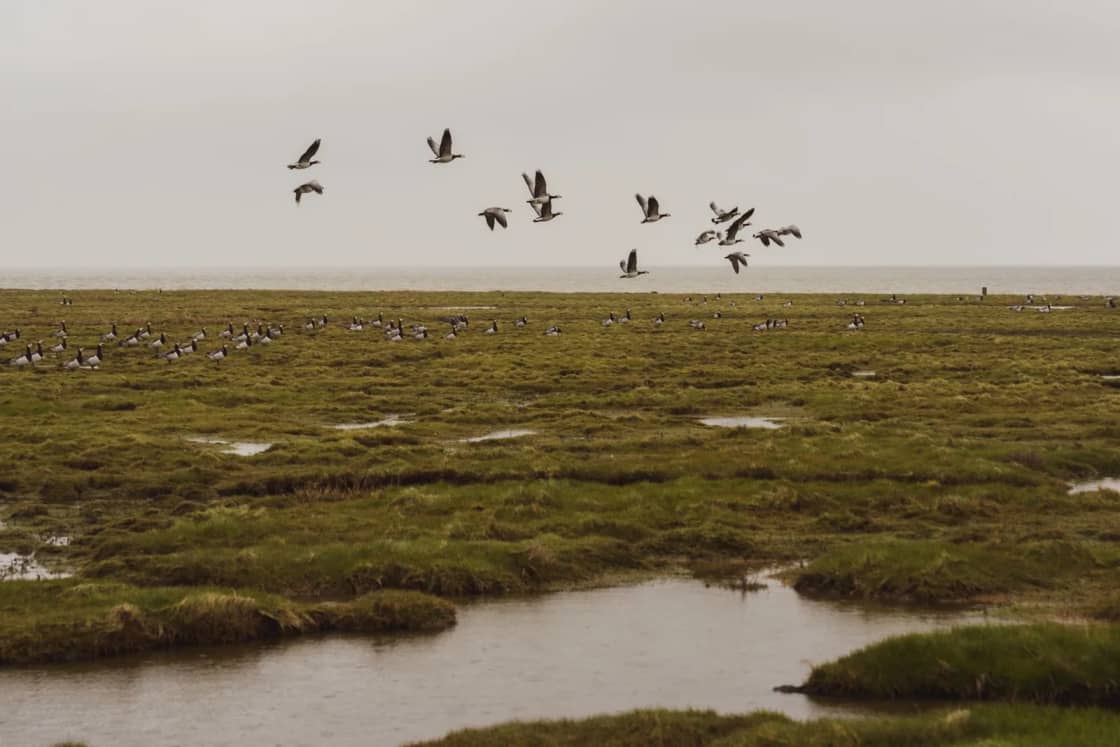
West of Brigham City, the Bear River fans out into the marshes where it meets the Great Salt Lake, and the U.S. Fish and Wildlife Service manages that delta as the Bear River Migratory Bird Refuge. The service says the refuge hosts more than 250 bird species, 67 of which nest there. American avocets and black-necked stilts nest by the thousands along the dikes and roads, white-faced ibis nest in colonies of up to 10,000 birds, and tundra swans can number in the tens of thousands during spring and fall migration.
The essentials, from the refuge's own pages:
- Cost: Visiting the refuge is free.
- Visitor center: 2155 West Forest Street, Brigham City, open Tuesday to Saturday, 10 a.m. to 4 p.m., closed Mondays and federal holidays. The refuge listed closures on Wednesday, Nov. 11, and Thursday, Nov. 26 (Thanksgiving).
- Auto tour route: 12 miles on the Bear River delta, open year-round from sunrise to sunset, weather permitting. It starts at the end of Forest Street, 12 miles past the visitor center, not at the visitor center itself.
- Road: gravel, which the refuge warns can be bumpy, especially in winter, but which buses, two-wheel-drive cars and RVs can drive year-round.
- Rules on the route: drive 25 mph, pull over to let others pass, get out of the car only in designated areas, and keep pets leashed if they leave the vehicle.
- Restrooms: only at the parking area at the start of the route. There are none after you leave it.
- Audio tour: a self-guided audio tour is available through the Friends of Bear River Refuge at fobrr.org.
That 12-mile gap between the visitor center and the start of the loop matters for timing. From Provo, figure about two and a half hours to the first marsh view, then an hour or more on the loop itself if you stop to watch. The refuge also noted that Utah's Northern Zone waterfowl season was underway and that water access may be limited because of drought, so the birds may be concentrated in fewer places in late fall.
We cover the refuge in much more depth, including the best months for each group of birds, in our Bear River Migratory Bird Refuge guide. If you only have time for one stop in Box Elder County outside of fruit season, this is the one most visitors would pick.
Willard Bay State Park
Willard Bay is a reservoir near the east edge of the Great Salt Lake, and the state park around it is the county's main summer water spot. Utah State Parks lists the address as 900 W. 650 N., Willard, about 12 miles northwest of Ogden at 4,200 feet.
Hours and fees. The park is open 6 a.m. to 10 p.m., with the office open 8 a.m. to 4 p.m. The state notes that park hours do not mean the gate is staffed; when no one is there, you pay with a fee envelope or the ParksPass QR code. Fees apply year-round:
| Day use | Regular season | Off-season (Labor Day to Easter) |
|---|---|---|
| Private vehicle | $25 | $10 |
| Senior vehicle | $20 | $5 |
| Walk-in or bicycle | $10 per person | $2 per person |
Camping. The state lists $60 a night for the Cottonwood full-hookup campground, the Willow Creek water and electric sites and the South Marina full-hookup sites, $150 for Cottonwood cabins and $200 for Willow Creek cottages, plus $25 for each extra vehicle. Reservations are at 800-322-3770 or online through Utah State Parks.
What it is good for. In summer: boating, waterskiing, swimming and fishing, with two marinas, North and South. In winter, the state says, Willard Bay becomes a wildlife-watching area for eagles. The Division of Wildlife Resources flyer that our bald eagle guide draws on lists Willard Bay Reservoir as a place where eagles are often seen in trees near the water.
Conditions to check. When we looked on Nov. 22, the park page listed the boat dip tank as closed and winterized, the main reservoir's algae status as "Looks Good," and a harmful algae warning for Willard Peak Pond, the smaller pond in the park, with advice not to swim or water-ski there and not to drink the water. Algae advisories change through the year, so check the park page the day you go, especially with kids or dogs who will get in the water.
At $10 per car off-season, Willard Bay is one of the cheaper state park days near the Wasatch Front in winter, and it pairs well with a refuge visit: the park is about 9 miles and 20 minutes south of Brigham City by an OSRM estimate.
Brigham City's Main Street
Brigham City's downtown is compact and easy to walk, and a few stops are worth an hour between the bigger destinations.
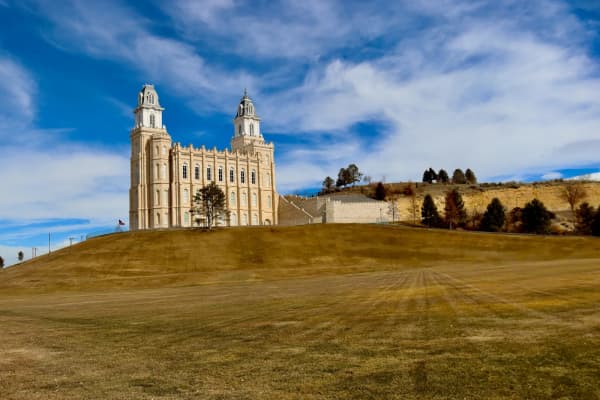
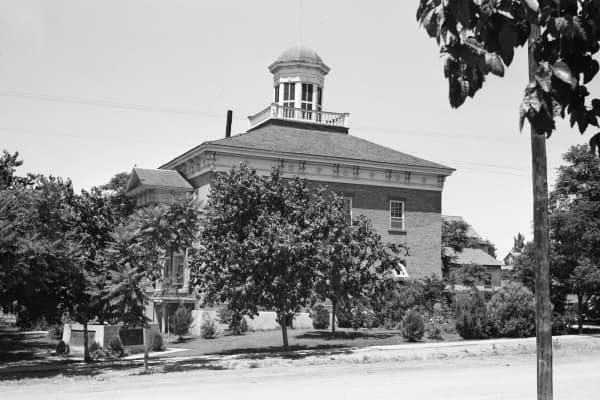
The Brigham City Utah Temple and the Box Elder Tabernacle. The two buildings face each other across Main Street. The Church of Jesus Christ of Latter-day Saints lists the temple at 250 S. Main St., dedicated Sept. 23, 2012, with no visitors' center on site. The church also listed upcoming temple closures on Nov. 25 and 26, 2026, and from Feb. 15 to March 15, 2027. Across the street at 251 S. Main St. is the Box Elder Tabernacle, a Gothic Revival building with a tall tower and 16 pilasters. A Brigham City historic-churches tour produced by a Utah State University public history class says the building burned on Feb. 9, 1896, and that residents rebuilt it within a year, adding electric lighting and steam pipes under the seats. The same source says church leaders discussed demolishing it in the late 20th century, that Boyd K. Packer, a former resident and Latter-day Saint apostle, intervened in 1986, and that it has been used mainly for interfaith meetings and musical productions since 1998. We could not confirm a current public tour schedule; if seeing the interior matters to you, ask locally before you go.
Brigham City Museum of Art and History. A small city museum on the lower level of the Community Center at 24 N. 300 West, at Forest Street and 300 West. The museum lists hours of Tuesday to Friday, 10 a.m. to 5 p.m., and Saturday, 1 to 5 p.m., and says admission is free. It is a good rainy-day or cold-day stop, and an easy one to add to a refuge trip since the visitor center is on the same street.
Food. Visit Utah's Fruit Way article recommends Peach City Drive In in Brigham City for a meal and a raspberry shake. We have not confirmed its current hours; check before you plan lunch around it.
Golden Spike National Historical Park
Out on Promontory Summit, west of Brigham City, is the place where the Central Pacific and Union Pacific railroads met on May 10, 1869. The National Park Service says the park is 32 miles west of Brigham City via Utah Highway 83; northbound on I-15, take exit 365, turn west on Highway 13, and follow the signs. The park warns that several GPS systems have misdirected visitors after leaving Highway 83, and that the road signs are more reliable as you approach.
Key details from the park's pages:
- Fees: $20 per private vehicle, good for seven days; $15 for motorcycles; $10 per person on foot or bike, with ages 15 and under free. A park-only annual pass is $35, and America the Beautiful passes are accepted. The park does not accept cash.
- Visitor center hours: 9 a.m. to 5 p.m. daily from March 1 to Oct. 31. From Nov. 1 to March 1, it is open Thursday to Monday, 9 a.m. to 5 p.m., closed Tuesday and Wednesday. It is closed on Thanksgiving (Nov. 26, 2026), Christmas and New Year's Day.
- Steam locomotives: replicas of the Jupiter and No. 119 run daily from May 1 through mid-October, except on boiler wash days, with a combined demonstration run at 1 p.m.
- Winter: engine house tours, the Big Fill Trail and its audio tour, and the auto tours, though the park says the West Auto Tour is closed November through early June.
From Provo it is about two and a half hours each way, which makes Golden Spike a full day on its own or a long one paired with Brigham City. Our Spiral Jetty and Golden Spike guide covers the park, its events and the gravel road beyond it in detail.
Crystal Hot Springs
North of Brigham City in Honeyville, Crystal Hot Springs is a commercial soaking pool that many Box Elder day trips end at. Its website, when we checked, listed separate pages for hours and swimming prices that we could not open, so we are not quoting either. It did post three notices: no family night on Wednesday, Nov. 25, 2026, no outside food in the facility, and that it no longer offers camping. Check its site directly before you go. For other soaking options north and south of the valley, see our hot springs guide.
Sample days from Provo
The fruit day (late July to September). Leave Provo around 8 a.m. Take I-15 north and exit to Old Highway 89 near Willard, then drive the Fruit Way north to Brigham City with stops at a few stands. Lunch on Main Street, the free museum if it is a weekday or Saturday afternoon, and home by late afternoon with a cooler of peaches. Avoid Sundays, when most stands are closed.
The bird day (spring or fall migration). Leave early enough to reach the refuge visitor center when it opens at 10 a.m. on a Tuesday through Saturday, then drive the 12 miles out and do the auto tour loop. Back in Brigham City for lunch, then Willard Bay on the way home if you want more birds and a shoreline walk.
The history day (May to mid-October). Head straight to Golden Spike to catch the 1 p.m. locomotive demonstration, then come back through Brigham City to see the tabernacle and temple on Main Street. This is the longest of the three; expect five or more hours in the car round trip.
The cheap winter day. Off-season Willard Bay at $10 a car, a free refuge visit, and the free museum. Check that the refuge visitor center and museum are open on your day; both are closed Sundays and Mondays.
What to bring
- Cash in small bills for Fruit Way self-serve stands, and a card for Golden Spike, which does not take cash.
- A cooler if you plan to buy fruit; a box of peaches in a hot trunk for two hours does not travel well.
- Binoculars for the refuge and Willard Bay. A spotting scope helps if you have one.
- Water and snacks for the auto tour route, where there are no services.
- Layers. The marshes and Promontory Summit are open and windy, and they can feel much colder than Provo in winter.
- A full tank. Fill up in Brigham City before heading to Golden Spike or out Forest Street.
Who should skip it
Skip the trip if your group mainly wants restaurants, shopping or indoor entertainment; Ogden and Salt Lake City are closer and offer more. Skip Golden Spike in winter if the steam engines are the point, since they run only from May to mid-October. Skip a fruit-only trip on a Sunday or after mid-November. And skip the auto tour in heavy snow or after a big storm, when the refuge's own "weather permitting" caveat applies to a gravel road with no services.
What to check before you go
- Refuge alerts and hours on the Bear River Migratory Bird Refuge page at fws.gov, especially around federal holidays.
- Willard Bay conditions on the Utah State Parks page: algae advisories, gate status and fees.
- Golden Spike alerts at nps.gov/gosp for winter road conditions, boiler wash days and holiday closures.
- Peach Days dates on the Box Elder Chamber's Peach Days page each summer.
- Stand hours by calling or checking a Fruit Way stand's social media page the week you go.
- Freeway traffic through Salt Lake and Davis counties on UDOT's traffic site before you leave Provo.
More day trips north and south
- Day trips from Provo
- Things to do in Sanpete County
- Logan and Cache Valley from Provo
- Ogden from Provo
- Bear River Migratory Bird Refuge from Provo
- Spiral Jetty and Golden Spike from Provo
- Utah state parks within two hours of Provo
- Bald eagles in Utah: where to see them in winter
Frequently Asked Questions
How far is Brigham City from Provo?
When is Brigham City Peach Days?
Does the Bear River Migratory Bird Refuge charge a fee?
How much does Willard Bay State Park cost?
When are the Fruit Way stands open?
Is Golden Spike open in winter?
Can I visit the Brigham City temple or tabernacle?
What is the best season for a Box Elder County day trip from Provo?
Sources
The facts in this guide were checked against these sources. Hours, fees and rules change, so confirm anything time-sensitive with the source before you go. How we make Provo.com.
- Bear River Migratory Bird Refuge, U.S. Fish and Wildlife Service. Checked November 22, 2026.
- Auto Tour Route, Bear River Migratory Bird Refuge, U.S. Fish and Wildlife Service. Checked November 22, 2026.
- Willard Bay State Park, Utah State Parks. Checked November 22, 2026.
- Willard Bay State Park Fees, Utah State Parks. Checked November 22, 2026.
- Operating Hours and Seasons, Golden Spike National Historical Park, National Park Service. Checked November 22, 2026.
- Fees and Passes, Golden Spike National Historical Park, National Park Service. Checked November 22, 2026.
- Directions, Golden Spike National Historical Park, National Park Service. Checked November 22, 2026.
- Things to Do, Golden Spike National Historical Park, National Park Service. Checked November 22, 2026.
- Visiting in Summer, Golden Spike National Historical Park, National Park Service. Checked November 22, 2026.
- Brigham City Museum of Art and History: Visit, Brigham City Museum of Art and History. Checked November 22, 2026.
- Brigham City Tabernacle, Brigham City History Tours, Utah State University. Checked November 22, 2026.
- Box Elder Chamber of Commerce: Peach Days, Box Elder Chamber of Commerce. Checked November 22, 2026.
- Utah's Fruit Way: Harvest Time Along Old Highway 89, Visit Utah. Checked November 22, 2026.
- Brigham City Utah Temple, The Church of Jesus Christ of Latter-day Saints. Checked November 22, 2026.
- Crystal Hot Springs. Checked November 22, 2026.
- The Peach Queen from Brigham City Peach Days shares a recipe for peach shakes, FOX 13. Checked November 22, 2026.
- Brigham City Peach Days continues despite local peach crop loss, KSL. Checked November 22, 2026.