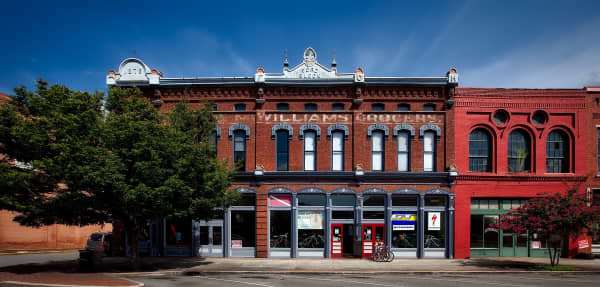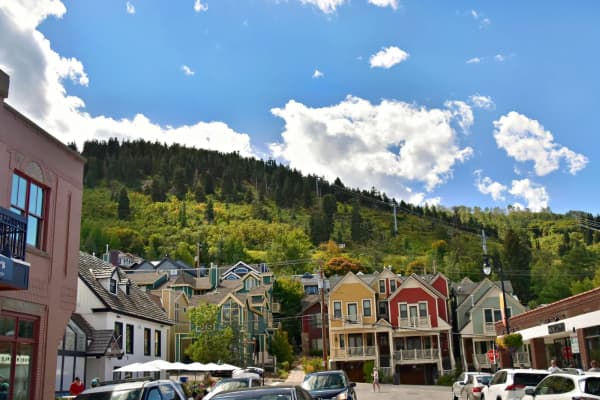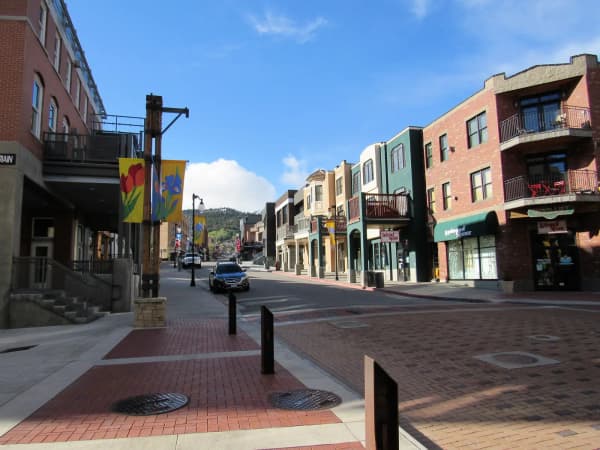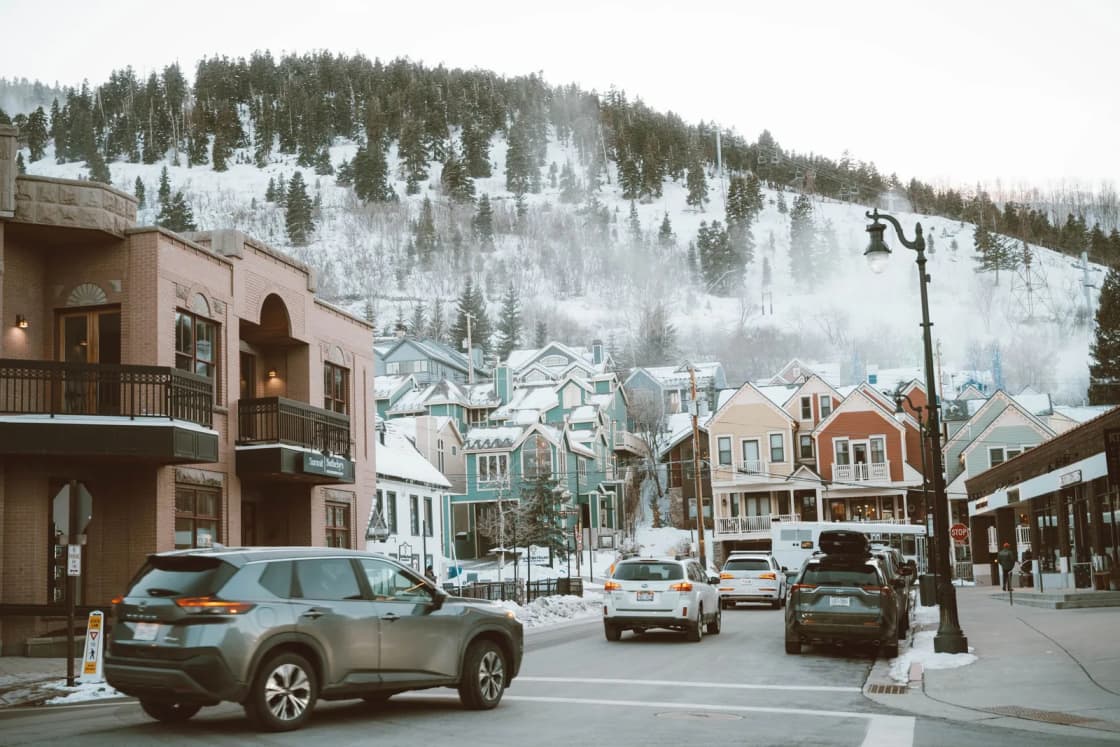
If you grew up in Utah Valley, you probably know Park City as a place with ski lifts and a lot of parking tickets. It is also one of the best-preserved silver towns in the state, and the old business street is still there. Main Street was listed on the National Register of Historic Places in 1979, and the nomination, written by Philip Notarianni, called it the best remaining metal mining town business district in Utah. The register's own description of the street is plainer and more interesting than most tourist copy: narrow lots, buildings pushed up to the sidewalk, false fronts, brick that went up in a hurry after a fire.
This guide is a self-guided walk built around what the primary sources say. It leans on the Park City Museum, which is run by the nonprofit that began as the Park City Historical Society, on Utah State History's National Register paperwork and its History To Go site, and on Park City's own transit and parking reporting. Where we could not confirm something for this season, we say so and tell you where to check. It is a companion to our broader Park City from Provo day-trip guide, which covers skiing, the Olympic venues and the Sundance question.
Quick facts
| Item | What we confirmed | Source |
|---|---|---|
| Starting point | Park City Museum, 528 Main Street | Museum |
| Museum hours | Daily 10am to 5pm, last admission usually 4:15pm | Museum visit page |
| Closed | Thanksgiving Day and Christmas Day | Museum visit page |
| Museum admission | Adults $15; seniors, students, military $11; 17 and under free | Museum visit page |
| Time needed | About 1 hour in the museum, about 2 hours on the street | Museum, our estimate |
| Bus | Free, Old Town Transit Center is across from the museum | Museum, KPCW |
| Parking | Main Street, Swede Alley lot behind the museum, China Bridge garage | Museum visit page |
| Last winter's Old Town rates | Lots and garages $1/hour, 8am to 5pm; street $3/hour | KPCW, Dec. 2025 |
| Drive from Provo | About 65 miles, 75 to 85 minutes by I-15 and I-80 | Our Park City guide |
| National Register listing | March 7, 1979 | Utah State History |
Who this walk is for
This is a good half day for people who like buildings, old photographs and the stories behind a place, and it works for most ages if kids can handle a museum with a mine, a jail in the basement and a fire truck. It suits history-minded couples, grandparents who want something other than skiing, teachers looking for a field trip that connects to Utah history, and anyone from Utah Valley who has driven past Park City a hundred times without stopping.
It also pairs with a ski day if you are on the fence. Sleep in, take the bus to the street in the afternoon, and let a short walk replace the last run of the day.
Who should skip it
Skip it if you expect a theme park. The street is a working shopping and dining district, and much of what you see is storefronts with modern businesses in historic frames. The National Register paperwork itself notes that the street has changed a good deal. A boundary-increase nomination counts 31 properties in the Modern Era (1981 to present) in the expanded district, and says at least 16 buildings that stood in 1978 have since been demolished or substantially altered. If what you want is a preserved ghost town, you will be disappointed. If you want a lived-in historic street with a very good local museum, you will not be.
It is also a poor fit if you have serious mobility limits and a winter ice forecast. The museum is ADA accessible with an elevator serving all three levels, and the street has concrete sidewalks, but Main Street ascends from north to south, and winter ice and packed snow are an issue (more on that below).
How to get there from Provo
The short version, from our Park City day-trip guide: there are two routes.
I-15 north to I-80 east through Parley's Canyon. About 65 miles and 75 to 85 minutes. This is the all-weather choice, with freeway the whole way, and the one we would pick after dark or in snow.
Provo Canyon on US-189, then US-40 past Heber. About 46 miles and 75 to 90 minutes. It is the better drive in clear weather, and it passes Deer Creek Reservoir and Heber Valley and Midway. It is also the route that gets ugly first in a storm. Our Provo Canyon guide covers the canyon itself.
Those times are estimates for normal traffic, not guarantees. For the day you go, use UDOT's own tools. UDOT's Connect site says the agency provides statewide conditions through the UDOT Traffic website and app, with cameras, message boards and sensors, and advises checking before hitting the road. If snow is in the forecast, read Utah winter driving, the traction law and chains and winter tires and canyon driving before you leave the driveway.
Parking, buses and the shortest way in
Parking is the real constraint in Old Town. The museum's visit page points drivers to three options: parking on Main Street itself, the lot behind the museum on Swede Alley, and the China Bridge parking garage, and it links to the city's current rates and time limits. We recommend you open that page before you leave.
What we can say with a source: KPCW reported in December 2025 that paid parking was returning to Old Town. All surface lots and garages downtown, plus street parking, were included. Lots and garages ran $1 an hour from 8 a.m. to 5 p.m. and $4 an hour after 5 p.m. Street parking was $3 an hour before 5 p.m. and $5 in the evening. The article said the rates applied through the winter and that special event parking could change daily rates. That describes last winter. We could not find a confirmed rate sheet or start date for 2026-27, so treat those numbers as a rough guide only.
The alternative is the bus. The museum says city buses are free and that the museum is across the street from the Public Transit Center. KPCW, in December 2025, reported that Park City and High Valley Transit buses are free every day of the year. If you are staying at a resort base, or you park at a Park and Ride, the bus is the better move. The same KPCW piece described last winter's changes: routes 1 Red, 2 Green and 3 Blue added service on Dec. 7, serving Park City Mountain and Deer Valley every 15 to 30 minutes from 6 a.m. to 11 p.m., and the 7 and 8 Express routes returned from the Richardson Flat Park and Ride. A 2026-27 winter service plan exists in city documents, but we could not confirm when this year's winter schedule starts. In recent years it has started in early December, so an early-November visit may fall on the fall schedule. Check the routes page on parkcity.gov.
There is no direct public transit from Utah Valley to Park City, as we note in the parent guide, so from Provo you are driving. Park once and walk.
Timing: November, ski season and holidays
Early November comes before the usual start of winter bus service, which in recent years began in early December, and before last year's return of paid Old Town parking in late December. We have no source on crowd levels, so check resort opening dates and the town's event calendar before you assume a quiet street.
Things to weigh as the season turns:
- Thanksgiving. The museum is closed on Thanksgiving Day and Christmas Day. It is open the days around them, but check for adjusted hours.
- Winter weekends. Once the lifts spin, parking on and near Main Street fills early on weekends, which is the main argument for arriving before lunch or taking the bus.
- December. Winter bus service has begun in early December in recent years, and paid parking returned in late December last year.
- Sundance. The film festival is not a factor for 2027, since it leaves Park City after its final January 2026 edition. See Sundance in Utah for the details.
Daylight matters, too. In November the sun goes down early, and Main Street in the dark is a different, icier place. Plan to finish the outdoor part by mid-afternoon and put the museum last.
The silver behind the street
The street makes more sense with five sentences of background. According to History To Go, Utah State History's public site, the first recorded claim in the Park City Mining District was the Young American lode in December 1869. A large silver vein found in the 1870s at what became the Ontario Mine was, in its heyday, considered "the greatest silver mine in the world." George Snyder arrived in May 1872 and named the area Park City, and the town incorporated in 1884.
The Park City Museum's timeline adds detail: soldiers prospecting from Big Cottonwood Canyon found silver in late October 1868 on a claim later called Flagstaff; prospectors found rich ore at the Ontario claim in 1872, which George Hearst and partners bought for $27,000 and which, per the museum, produced over $50 million in its lifetime; the Utah Eastern Railroad opened a spur line from Echo in December 1880; and the Silver King Mine was incorporated in 1892. (Dates differ a little between the two sources, which is normal for mining-camp history, so treat early dates as approximate.)
The decline came slowly. History To Go says the Park Consolidated Mining Company, formed in 1925, became the largest single silver producer in the United States by 1928, and that by the 1950s fewer than 200 men worked the mines. The museum says that in 1982, for the first time in more than a century, Park City had no working mine. A federal loan helped start a ski area in 1963. The museum's skiing exhibit is the end of the story, and Main Street is the middle.
For comparison, Utah Valley has its own mining story at the other end of the Wasatch. Our piece on Bingham Canyon Mine history and visitor status covers the copper side of the state's story.
The 1898 fire, and why the street looks the way it does
If you remember one date, make it June 19, 1898. The museum's Great Fire exhibit describes a fire that damaged the town's core, with more than $1 million in damage and about 500 people displaced. The museum's timeline says the fire destroyed 200 of the town's 350 structures. History To Go says about three-quarters of the town was destroyed within seven hours. Those figures are not identical, because different sources count different things, but they agree on the scale.
The reason this matters on a walk is that nearly everything you see is younger than the fire. The 1898 fire is the reason Main Street looks the way it does. In the National Register paperwork, Notarianni described the rebuilding this way: frame buildings sprang up quickly, in the styles of typical Victorian mining-town commercial architecture, one and two stories, some with flat roofs and some with gable roofs and false fronts, most often with wood cornices. Stone and brick followed, with decorative detailing such as door and window arches, Queen Anne brickwork and piers.
Utah State History's boundary-increase nomination gives numbers. In the expanded district it counts 11 properties from the Pre-Fire Mining Era (1868 to 1898) and 57 from the Post-Fire Mining Era (1898 to 1929), with 16 commercial buildings built in or shortly after 1898 or 1899 as part of the rapid rebuilding. Most of the buildings you pass are the product of that rebuild.
The walk, stop by stop
The route below goes from the museum, south to the far end of the historic street, and back. The names and dates come from the museum's pages and the Utah State History nomination. We did not walk this for this article, and we are not describing storefronts we could not source. Businesses change, so use street numbers as your guide. Main Street addresses on the pages we read run from the 100s near the north end to 660 at the south end, where the street meets King Road, Hillside Avenue and Park Avenue.
Stop 1: Park City Museum, 528 Main Street. Start here, partly because it is easy to find and partly because it gives you the key to everything else. The building is the original City Hall. The museum's about page says it was completed in 1885 for $6,400, a year after the town incorporated, and housed the police and fire departments and the Territorial Jail. The fire destroyed most of Main Street, leaving the front facade, partial side walls and the jail standing, and the town rebuilt quickly. The Utah State History nomination describes it as a brick, two-part block building in the Victorian Eclectic style that includes a historic fire station.
Spend your hour inside. The permanent exhibits, as listed on the museum's site, include a scaled late-19th-century mine with surface operations and underground workings; "The Dungeon," the original territorial jail in the basement of historic City Hall; Muckers & Millionaires, which compares miners' lives with those of the mine owners who lived in Salt Lake City mansions; a 1926 Graham Brothers Dodge fire truck; the Skier Subway Theater; and the Great Fire of 1898 exhibit, with audio of a Park Record editor's report. The National Register nomination adds a detail worth looking for in the basement: an insignia dated August 8, 1916, burned into the wall of the communal cell, which documents the jailing of members of the Industrial Workers of the World during the labor strife of that year. We could not confirm from the museum's pages that visitors can see the insignia, so ask at the desk.
Two practical notes from the museum: the galleries are kept cold, so keep a sweater or coat, and the Tozer Gallery's current exhibit, "Park City Loves a Parade," runs from March 13, 2026 to April 4, 2027.
The museum's about page also mentions the Whistle Tower, built in 1901, which still sounds a 10 p.m. siren that began as a curfew. We can't promise you will be there at 10 p.m. in November, and we don't recommend it, but it is a good detail to carry with you.
Stop 2: The south end, including the Union Pacific Depot, 660 Main Street. Walk toward the south end of the street. The Utah State History nomination says that only two commercial buildings in the district predate the 1898 fire: the Union Pacific Depot at 660 Main, built in 1886, and a one-part commercial block at 268 Main, built about 1896. The depot survived the fire despite being wood-framed. That makes it unusual on a street where nearly everything is a replacement. The nomination describes the southern end as an old transition zone between the commercial street and the neighborhoods, and the mines and mills around Daly Avenue and Empire Canyon. It also notes that the expanded district includes two of only three surviving boarding houses, the kind of building miners, who were typically single men, used instead of buying a house.
We cannot tell you what occupies the depot today. Look at the number on the door and read the building before you read a sign.
Stop 3: The Post Office and the Memorial Building. On your way back, look for the other public buildings the nomination names. The Post Office, built 1921 to 1922, is a one-part block clad in wood clapboard with Victorian Eclectic touches similar to the older commercial buildings around it. The W.P.A. War Memorial Building, a concrete building in the PWA Moderne style, served as a recreational facility. (The nomination gives its construction date as 1939 in one place and 1940 in another, so we'll say about 1939 to 1940.) We did not confirm the current street addresses of either, so use the museum desk or a city map. The original nomination ties these public buildings to the story of the town's public life.
Stop 4: 268 Main Street. This is the second pre-fire commercial building the nomination lists, a one-part commercial block built about 1896 in the Victorian Eclectic style. A one-part block is a one-story building, commonly with large plate-glass display windows and a false facade. It is a modest building. That is the point: it shows what the average pre-fire business looked like.
Stop 5: 255 Main Street, the Treasure Mountain Inn. This one is for the second half of the story. The nomination calls it particularly notable as one of the first tourism-related developments on Main Street, built in 1965, and quotes a description of a 50-unit lodge modeled on resort developments in Aspen and Tahoe, and as Utah's first condominium-style hotel. It sits inside the nomination's revised period of significance (ca. 1880 to 1968), which was proposed because many recreation-era buildings had reached historic age. It is the place where the street switches from silver to skiing, in architecture.
Stop 6: The Egyptian Theatre site. The museum's timeline says the Mary G. Steiner Egyptian Theatre stands where the Dewey, a theater, was, which collapsed in 1916, and the museum's Living in Park City exhibit covers the theater. We could not confirm an opening date or address from pages we opened today, so check the theater's own site if you want specifics. If the doors are open for an event, that is a bonus.
You can finish where you started. Walk the sidewalk on both sides if the weather allows. The upper floors, the cornices and the side stairs tell you more than the ground-floor signs. The nomination notes that stairs and passages open onto Main Street at regular intervals, a legacy of the steep hillside behind the lots.
Costs
- Museum: $15 for adults, $11 for seniors, students and military, free for children 17 and under and for members, per the museum.
- Walk: Free.
- Parking: Variable. Last winter's Old Town lots and garages ran $1 an hour in the daytime, per KPCW, but confirm this season's rates.
- Bus: Free.
- Gas: Your own. At roughly 65 miles each way, that is a standard day-trip fuel bill.
- Lunch: Main Street is a restaurant street, and we have not priced individual menus.
Guided tours: what we could and could not confirm
The museum's site lists Summer Walking Tours and a Historic Home Tour but gives no schedules, prices or details. Older museum listings show a Monday to Saturday 2:00 p.m. tour from mid-June to early September, but the page we opened was dated 2015, so do not rely on it. Other listings we saw were for summer dates. For a November or winter visit, we found no confirmed guided Main Street tour, so plan a self-guided walk.
Group tours of the museum require a reservation one month in advance, last about an hour and cost $20 per person with a $240 minimum, per the museum. The number on the visit page is 435-574-9554. The museum's main line, from its homepage, is 435-649-7457.
What to bring
- Traction footwear. Packed snow and ice on sidewalks is the real winter hazard on Main Street. Boots with grip, or slip-on traction devices, beat sneakers.
- Layers and a hat. Park City sits at a much higher elevation than Provo, and the museum says its galleries are kept cold.
- Sunglasses and sunscreen. Snow glare is real, even on a cold day.
- Water. Dry mountain air and a little elevation will catch some Utah Valley visitors off guard. If you have a heart or lung condition, ask your own doctor about altitude.
- A phone with UDOT Traffic and the city's transit schedule loaded.
- A card for parking. Pay stations and apps change, so look at the signs.
- Your own history questions. The museum's docents and front desk are a better source than a plaque.
Safety and conditions
Winter is the main variable. Packed snow, ice on shaded stretches and slush at curbs make Main Street slick, and the street is a two-lane road with parallel parking and traffic on both sides, per the nomination, so pay attention at crossings. Use handrails on the stairs and steps that connect Main Street to the side streets. In daylight, shaded sidewalks can stay icy long after the sun-facing ones clear.
On the road, the canyons are the risk, not the town. Check UDOT Traffic before you leave, carry a winter-ready vehicle or chains when conditions call for them, and, as we say in the parent guide, take the freeway route after dark or in a storm.
What to check before you go
- UDOT Traffic (website or app) for road conditions, cameras and closures.
- parkcityhistory.org for the museum's hours, admission, special events and any weather closure notice. The museum says it posts changes on social media.
- parkcity.gov for current Old Town parking rates and time limits, and the current bus routes and schedules.
- Event days. KPCW noted that special event parking may change daily rates. If there is a parade, race or market, expect crowds.
- Your plan B. If Park City is full or the weather turns, Deer Valley from Utah Valley and Heber Valley and Midway are options on the way.
Facts we could not confirm
Being clear about what we did not verify is better than guessing:
- The 2026-27 Old Town parking rates and start date.
- The date this winter's Park City Transit schedule begins.
- Whether a guided Main Street walking tour runs in the cold months, and its price.
- The current occupants of historic buildings such as the depot.
- Addresses and opening dates for the Post Office, the Memorial Building and the Egyptian Theatre.
- Whether the 1916 IWW insignia in the basement is on public view.
Treat the walk as a sketch built from reliable pages, and let the museum desk fill in the rest. The museum admission is the only fixed cost, and the best parking spot may be a seat on the free bus.
Frequently Asked Questions
How long does the Park City Main Street walking tour take?
Is the Park City Museum open in November?
How much does the Park City Museum cost?
Is there a guided walking tour of Main Street in winter?
Do I have to pay for parking in Old Town Park City?
Are the Park City buses really free?
Which is the better route from Provo in winter?
What is the oldest building on Main Street?
Sources
The facts in this guide were checked against these sources. Hours, fees and rules change, so confirm anything time-sensitive with the source before you go. How we make Provo.com.
- Park City Main Street Historic District (Boundary Increase), NPS Form 10-900, Utah State History. Checked November 5, 2026.
- History of Park City, Utah State History (History To Go). Checked November 5, 2026.
- Road Conditions, UDOT. Checked November 5, 2026.
- Park City Museum: Visit, Park City Museum. Checked November 5, 2026.
- Permanent Exhibits, Park City Museum. Checked November 5, 2026.
- Park City Museum: About, Park City Museum. Checked November 5, 2026.
- Park City Historic Timeline, Park City Museum. Checked November 5, 2026.
- Park City reinstates paid parking in Old Town, KPCW. Checked November 5, 2026.
- Park City to begin Bonanza Flat shuttle amid winter schedule changes, KPCW. Checked November 5, 2026.