Upcoming dates

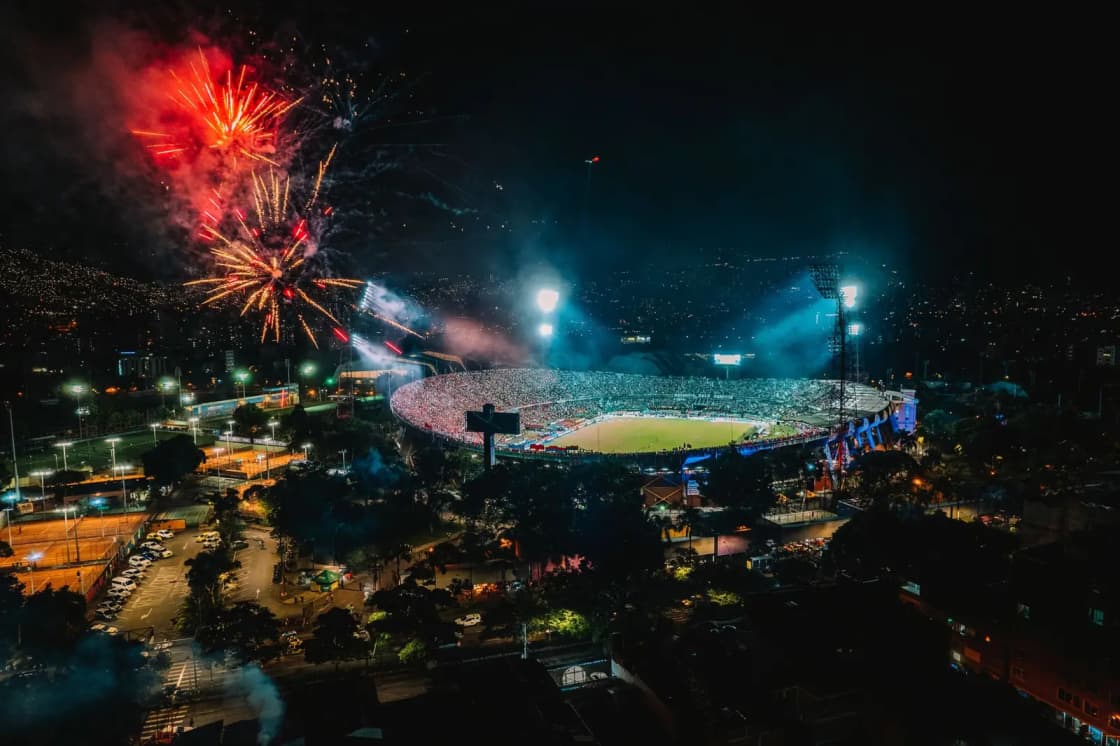
If one night defines summer in Provo, it's this one. Stadium of Fire fills LaVell Edwards Stadium every Fourth of July with a crowd around 50,000 people, a national music headliner, military tributes, and a fireworks finale that gets described — accurately — as one of the largest stadium shows in the country.
It is also an event people get wrong in small, avoidable ways: bags turned away at the gate, parking hunted for at 7 p.m., a picnic dinner packed that can't come inside. This is the year-over-year guide to the night itself. For the parade, the balloon fest, Freedom Days, and everything else in the surrounding fortnight, our complete Freedom Festival guide is the place to start — this page stays inside the stadium.
What Stadium of Fire actually is
Stadium of Fire is the closing event of America's Freedom Festival at Provo, a nonprofit that runs dozens of patriotic events across Utah Valley each summer. Taken together, those events draw close to half a million people; the stadium show is the one that sells tickets and books a headliner.
The format has been stable for years: a pre-show, a military flyover and skydivers, stunt segments, a national touring act, and then a finale that combines conventional aerial pyrotechnics with drones, flame effects, and lasers. The production has been handled by an Emmy-winning outside team, which is why the show feels more like a broadcast than a fireworks display with a band attached.
Recent headliners give a sense of the booking: Brad Paisley in 2026 (his first return since 2011), Rascal Flatts in 2025, the Jonas Brothers in 2024. Further back the list runs through Carrie Underwood, Tim McGraw, Kelly Clarkson, Journey, Miley Cyrus, David Archuleta and the Beach Boys. It skews country and family-friendly pop, and it always has.
The Osmond origin, and who really founded it
The name was coined in 1980 by Alan and Merrill Osmond, who wanted a patriotic event on the scale of the family's stage shows. Alan — the eldest of the performing brothers, and the group's de facto leader — was by several accounts the pyrotechnics enthusiast of the two.
Local coverage has also credited Carl Bacon as the founder, and both things can be true: the Osmonds supplied the concept and the name, and a working group of Provo people built it into an annual production. If you see contradictory founder claims, that's why.
Alan Osmond died on April 20, 2026, at his home in Lehi, at 76. He had lived with multiple sclerosis for decades and had long since stepped back from performing. He was buried at Spanish Fork City Cemetery. The 2026 show — which also marked the 250th anniversary of American independence — was staged partly as a tribute to him, and included what organizers described as the largest single firework ever shot at the stadium.
One less comfortable piece of the history, because it comes up: during the 2024 show, a fireworks mishap injured more than two dozen people. The event returned the following year with the same footprint.
Tickets: how they work, and when to move
Tickets are sold through BYU Ticketing at tickets.byu.edu, not through the Freedom Festival directly. The pattern each year:
- The on-sale lands in spring, announced with the headliner. In 2026 it was April 10 — early access at 10 a.m. for Freedom Festival email subscribers, general public at noon.
- Signing up for the Freedom Festival email list is the actual ticket strategy. That early-access window is the difference between choosing seats and taking what's left.
- Prices in 2026 ran from about $40 in the upper deck to around $270 for premium field-level. Expect a comparable spread, reset annually.
- It sells out most years. Secondary-market listings exist afterward, at secondary-market prices.
Buying direct is worth it for a second reason: BYU Ticketing publishes the event's entry policies alongside the tickets, and those policies are where most of the night's friction lives.
The no-bag rule — read this part twice
LaVell Edwards Stadium runs a no-bag policy for Stadium of Fire. In practice:
- Small clutch bags only, no larger than roughly 5" × 8" × 1", with or without a strap.
- Guests carrying a permitted bag are routed to designated gates for inspection — in recent years, gates 3 and 9.
- No outside food or drink. None. Not a cooler, not a water bottle, not a bag of snacks for the kids.
- Medically necessary bags are allowed after inspection, one per person.
Every year a share of the crowd arrives with a diaper bag or a backpack and has to walk it back to a car parked a long way away, in the dark, while the pre-show runs. Sort this out in the driveway, not at the gate. Policies are re-published each year with the tickets — confirm before you leave the house.
Getting there without losing an hour
Parking is the second-biggest friction point. Campus lots around the stadium are the main supply and they fill hours ahead, not minutes. The neighborhoods north and east of campus absorb the overflow, and street parking near the earlier parade route is restricted through much of the day.
Three approaches that work better than circling:
- Walk or bike if you're within a mile or two. On the Fourth, this is routinely faster than driving, and it removes the exit problem entirely.
- Take UVX. The rapid-transit line has a stop at the stadium. Note the fare rule: UVX has not been free to the general public since August 2024. UVU students ride UTA free by tapping their ID; everyone else pays standard fare.
- Arrive for the tailgate rather than the show. The Freedom Festival runs a Street Heat tailgate in the west parking lot from about 5 to 8 p.m. Coming early for that turns a parking problem into part of the evening.
Leaving is its own event. Fifty thousand people exit at once into a street grid that was not built for it. The free street dance on the west side at 10:30 p.m. exists partly because the smartest move is to not be in that traffic — give it 45 minutes and the drive home is a different experience.
What the night actually looks like
Gates open well ahead of the 8 p.m. start, and the pre-show is not filler — it's when the stadium fills and the crowd sorts itself out. The sequence typically runs: pre-show entertainment, a military flyover, skydivers into the bowl, stunt segments (Nitro Circus has appeared in several recent years), local and regional performers, then the headliner, then the finale.
Two things worth knowing about comfort:
- Early July in Provo runs 90–100°F, and the altitude makes the sun harder than the number suggests. The show starts before sunset. Sun on the east side of the bowl is direct for the first hour; if you burn, that matters when you pick seats.
- It's loud. The finale is a stadium-scale pyrotechnic show at close range. Hearing protection for small children is not overcautious.
Can you watch it for free?
Half-true, and worth being straight about.
The aerial shells are visible from a wide slice of north Provo and from higher ground along the benches — people watch from front lawns, parks, and the roads above campus every year, and that is a genuine free Fourth of July.
What you cannot see from outside the bowl is most of what the show has become: the field-level pyrotechnics, the flame effects, the lasers, the low-altitude drone segment, and the synchronized music. The finale is choreographed to be watched from inside, and the parts that make it distinctive are the parts the stadium wall hides.
So: a free vantage point is a good night out. It is not a cheaper version of the same night.
Also genuinely free, and open to anyone: the street dance on the west side after the fireworks, from about 10:30 p.m.
Where it sits in the Fourth of July week
Stadium of Fire is the finale, not the whole holiday. The morning of the Fourth belongs to the Grand Parade — one of the largest in the western United States, with a camping-out tradition that starts the night before — plus the Freedom Days market downtown, the Balloon Fest earlier in the week, Hope of America at the Marriott Center, and events at the SCERA in Orem. All of that lives in the Freedom Festival guide, and our Fourth of July in Provo coverage handles the day itself.
One last practical note that changes year to year: personal fireworks are separately regulated, and Utah County cities issue restrictions each summer based on conditions. Our fireworks restrictions coverage tracks where they land. What happens inside the stadium is a permitted professional display and runs regardless of whether your neighborhood can light anything.
Who else is on that stage
The headliner sells the tickets, but the headliner is maybe a third of the running time. The rest of the bill is unusually consistent year to year, and worth knowing about if you're deciding whether the ticket is worth it to someone who doesn't care about the booking:
- A military flyover and skydivers into the bowl. The skydive lands on the field, which reads very differently from 40 rows up than it does on video.
- Nitro Circus. The action-sports troupe first appeared at BYU in 2021 and has been brought back for several editions since, including the 250th-anniversary show. Ramps go up on the field, and this is generally the segment children remember.
- GENTRI, the Billboard-charting Utah vocal trio, plus the Stadium of Fire Dancers — a large, choreographed local cast that has been part of the show's identity for years.
- Tributes to military and civilian honorees, which is the part of the evening that most clearly descends from the Osmond-era conception of the show.
One structural thing that explains the production quality: Stadium of Fire is not produced in-house. It's built by an outside, Emmy-winning entertainment team, and it's staged as a broadcast — camera positions, cue timing, a running order. It has historically been carried to American service members stationed overseas, which is part of why the pacing feels televisual rather than like a concert with fireworks bolted on the end.
The stadium matters too. LaVell Edwards Stadium seats around 62,000, it opened in 1964 as Cougar Stadium, and it took its current name in 2000 for the coach who defined BYU football. A crowd of 50,000 in it does not feel the way 50,000 feels in an arena — the bowl is open to the sky and the mountains are right there behind the east rim, which is the single best argument for buying seats on the west side.
A day plan that actually works
The Fourth in Provo is a full day, not an evening, and most of the misery people report comes from trying to do it as two unrelated trips with a parking session in the middle. A plan that holds up:
Early morning — the Grand Parade downtown. Serious spectators claim spots along University Avenue the night before; this is a genuine local tradition, not an exaggeration. If you're not camping, arriving an hour-plus early is the minimum.
Late morning to mid-afternoon — go home, or go somewhere indoors. Early July in Provo runs 90–100°F and the sun at this altitude is punishing. This is the block that ruins people who try to power through it downtown.
5:00–8:00 p.m. — the Street Heat tailgate in the stadium's west parking lot. Arriving in this window solves the parking problem by making the wait into part of the evening.
8:00 p.m. — showtime. Gates are open well before.
Roughly 10:00 p.m. — the finale.
10:30 p.m. — the free street dance on the west side. Fifty thousand people cannot exit that street grid at once, so the choice is 45 minutes of music or 45 minutes of brake lights. It is not a close call.
Questions worth settling before you buy
Does everyone need a ticket, including small children? Assume yes and confirm at purchase — BYU Ticketing publishes the age and lap-child rules with the tickets each year, and they are not the same at every event held in that stadium.
What about accessible seating? Arranged through BYU Ticketing rather than at the gate. Sort it when you buy, not on the day.
What happens in bad weather? Early July storms in Utah Valley are usually brief, but a lightning hold is the kind of thing that gets decided on the night. The event's own channels are the source; a stadium of that size does not make those calls quietly.
Is the secondary market safe? It exists and it functions, but prices climb once the on-sale sells out, and buying direct is the only route where the entry policies come attached to the ticket. The email list is genuinely the cheaper strategy.
The short version
Buy in spring, join the email list first, leave the bag at home, eat before you come, park early or don't park at all, and stay for the street dance. The rest of the night takes care of itself — it has for more than forty years.
The price you are quoted is now the price, by federal rule
Anyone who has bought a ticket to a stadium show knows the shape of the old experience: a headline number that survives two screens, then a checkout page where it grows by a quarter. Since May 12, 2025 that sequence has been unlawful for live-event tickets, and the change is worth understanding before you buy, because it tells you what a compliant seller looks like.
The instrument is the Federal Trade Commission's Rule on Unfair or Deceptive Fees, 16 C.F.R. Part 464, published at 90 FR 2166 on January 10, 2025. It is unusually narrow. Rather than reaching all consumer pricing, the rule defines a "covered good or service" at § 464.1 as exactly two things: live-event tickets, and short-term lodging. A concert in a stadium is the paradigm case.
§ 464.2(a) makes it an unfair and deceptive practice to offer, display or advertise any price for a covered good without clearly and conspicuously disclosing the total price. That term is defined rather than left to intuition: the maximum total of all fees or charges a consumer must pay for the good and any mandatory ancillary good or service, with only three exclusions permitted — government charges, shipping charges, and charges for genuinely optional add-ons.
The provision that changes what you actually see on screen is § 464.2(b). The total price must be displayed more prominently than any other pricing information. A large pre-fee number beside a small all-in number is the exact arrangement the subsection forbids. The one thing allowed to be equally or more prominent is the final amount of payment — the number that arrives at the end once taxes and any optional extras are added — and only where it is displayed.
What that means for a ticket to this show
Three practical consequences, in the order you will meet them.
A per-order fee belongs in the advertised number. The FTC's own compliance FAQ gives the case directly: where an online retailer requires a fee to buy tickets online, the fee cannot be avoided and must be inside the total price. Sellers may still itemize — the FAQ is explicit that itemization is permitted — but the itemization may not overshadow the total.
Taxes may sit outside it, and then must be disclosed before you pay. Government charges are one of the three permitted exclusions, so a total price that excludes Utah sales tax is compliant. But § 464.2(c)(1) requires the nature, purpose and amount of any excluded charge to be disclosed clearly before you consent to pay, and § 464.2(c)(2) requires the final amount of payment to be shown at that point too.
Vagueness is separately prohibited. Under § 464.3 it is a violation to misrepresent the nature, purpose, amount or refundability of any fee. FTC staff guidance goes further and tells businesses to describe what a fee is for and avoid labels like "convenience fee" or "service fee." A line item you cannot decode is a reasonable signal to slow down.
Why this matters more for a show like this one than most
Stadium of Fire sells a single-night, fixed-capacity, date-certain event with a national headliner, which is the classic profile for aggressive resale. The rule reaches resale too. FTC staff guidance states that online marketplaces and other intermediaries responsible for displaying a price — including those in the secondary ticket market — must display the total price, and that sellers and intermediaries each have to supply the other with the information needed to calculate it.
Enforcement is live rather than theoretical. On April 9, 2026 the Commission filed suit against StubHub Holdings, Inc. in Case 1:26-cv-02924, alleging among other things that it advertised live-event ticket prices without clearly and conspicuously disclosing the total price. Those are allegations in a complaint and nothing here should be read as a finding; the point for a buyer is simply that the rule is being litigated, not ignored.
None of this tells you what a ticket costs. Prices, tiers and on-sale dates for this show change year to year and should be checked against the official seller rather than any guide. What the rule does tell you is what a lawful listing looks like: an up-front number that already contains every charge you cannot escape, a clearly labeled explanation of anything held back, and a final total before the payment button — not after it.
Related Guides
- Steel Days: How American Fork Takes Over Two Full Weeks in July
- Colonial Days in Orem: The Living-History Festival Locals Underrate
- Balloon Fest at Fox Field: Provo's Best Free Morning of the Year
- Midway Swiss Days: The Complete Guide
- Fiesta Days: Spanish Fork's Rodeo Week and the Valley's Biggest 24th of July
- The Timpanogos Storytelling Festival: What It Is and How to Do It Right
- The Rooftop Concert Series: Provo's Free Friday Night, Explained
- The Utah Valley Parade of Homes: How It Works, How Tickets Work & How to Actually Tour It
- Golden Onion Days: Inside Utah's Oldest Labor Day Celebration
- Warriors Over the Wasatch: the Hill Air Force Base air show
Frequently Asked Questions
When is Stadium of Fire each year?
How much are Stadium of Fire tickets?
Can I bring a bag into Stadium of Fire?
Where do you park for Stadium of Fire?
Can you watch the Stadium of Fire fireworks for free from outside?
Is there anything free on the Fourth at the stadium?
Who created Stadium of Fire?
Is Stadium of Fire good for young kids?