Upcoming dates

There's a particular kind of Utah festival that outgrows the town hosting it, and Swiss Days is the definitive example. Midway is a small place — a few thousand people in the Heber Valley behind Mount Timpanogos — and for two days every Labor Day weekend it absorbs a crowd that has been reported at 80,000 to 100,000 people.
For anyone in Utah Valley it's one of the easiest great day trips on the calendar: 45 minutes up Provo Canyon, no admission, and a craft market with a statewide reputation. It also has a handful of rules and rhythms that separate a good day from a frustrating one, and most of them aren't obvious until you're standing there.
What it is, and what it was
Swiss Days began in 1947 — as Harvest Days. Midway was a farming and dairy community, and the festival marked the end of the growing season.
The founding is unusually well documented for a small-town event: it was established through the efforts of Joseph B. and Pauline S. Erwin, who owned the Luke's Hot Pots resort (the property is now Ameyalli), along with a group of local supporters. That group became the Midway Boosters — and the Boosters still run Swiss Days today, nearly eighty years later. The Midway Recreation Center, dedicated in June 1941 and known locally as the Town Hall, sits at the center of the event and has since the beginning.
The Swiss identity came later and stuck. The Heber Valley was settled in part by Swiss immigrants who took one look at a green valley ringed by high peaks and recognized the country they'd left. The festival was reframed to honor them, and the name changed to match. That's why a Utah harvest festival now has alphorns, raclette, bratwurst, and a fair number of people in lederhosen.
Where the money goes — the part nobody mentions
This is the fact that reframes the whole event. Every year, roughly half the proceeds after expenses are donated to Latter-day Saint Charities — an amount the Boosters put at around $50,000 — and the other half goes back into Midway community improvements.
Swiss Days is not a commercial festival with a charitable veneer. It is a fundraiser that happens to be one of the largest festivals in the state, staffed by about 2,000 volunteers from Midway and the surrounding towns. When people say it still feels like a town event rather than a production, that's the mechanism underneath the feeling.
The two days, hour by hour
The market runs 8 a.m. to 8 p.m. both Friday and Saturday, spread across Midway's town square and along Main Street. Hundreds of artisan and craft booths, plus food booths, plus live music through the day.
Saturday is the traditions day:
- 7 a.m. — community breakfast and the 10K run, both starting early enough that you'll want to have decided the night before.
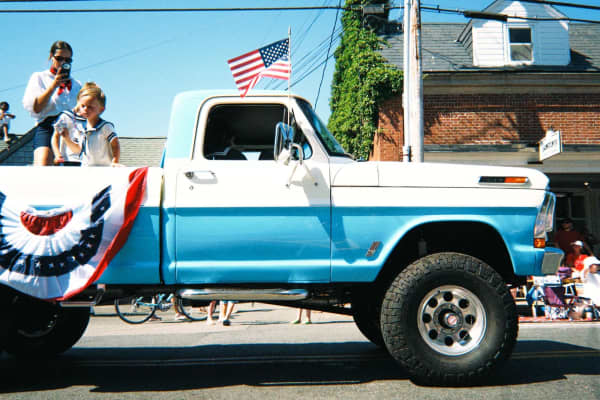
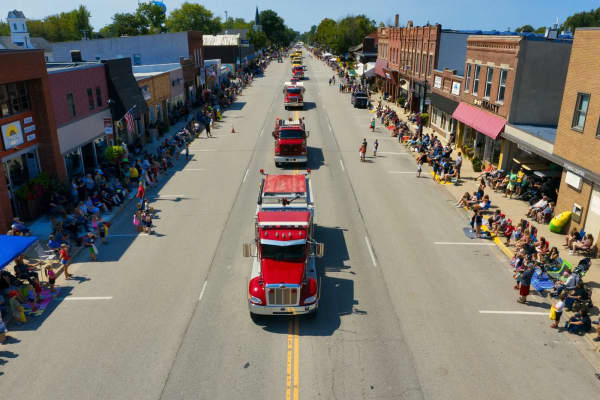
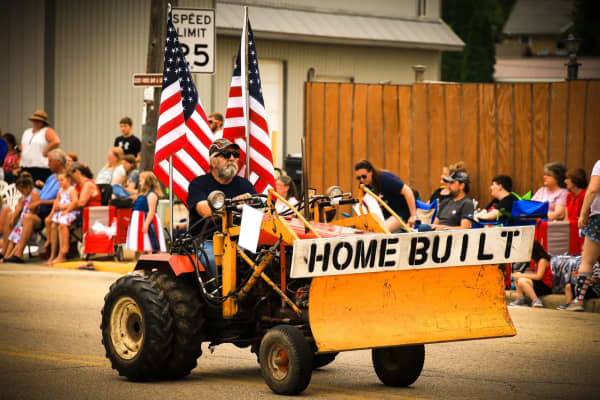
- 10 a.m. — the Swiss Days parade down Main Street.
- Through the day — live entertainment, the children's area, and the highest crowd density of the weekend.
Friday is the shopping day. Same booths, same hours, meaningfully fewer people. If you're coming for the crafts rather than the spectacle, Friday morning is the correct answer and it isn't close.
The three rules that decide your day
1. Take the shuttle. Pay the $10 and take the shuttle.
Designated public lots charge $10 per vehicle and run free shuttles to the square about every 15 minutes. One of them is across from Heber Valley Artisan Cheese off River Road. The Boosters' own advice is blunt about it: there really isn't front-row parking at Swiss Days. Midway's downtown is a few small streets. Circling them behind 40,000 other people on a Saturday morning is a worse experience than the shuttle by an order of magnitude — and free bike parking near Centennial Park is a genuine option if you're staying nearby.
2. Bring cash.
The food booths are cash-only. ATMs are set up around the square, and they develop lines at exactly the moment you want lunch. Craft vendors are mixed — many take cards, but not all, and cell service under a crowd that size is not something to build a plan on. Cash also moves the booth queues faster, which is why the food booths ask for it.
3. Come dressed for a long walk in the sun.
Closed-toe shoes, breathable clothes, water, sunscreen. Early September at 5,600 feet is warmer than it sounds and the square offers limited shade. Leave the stroller if you reasonably can — the paths between booths pack solid and a carrier is easier. Leave the dog at home; pets aren't allowed.
What to actually eat and buy
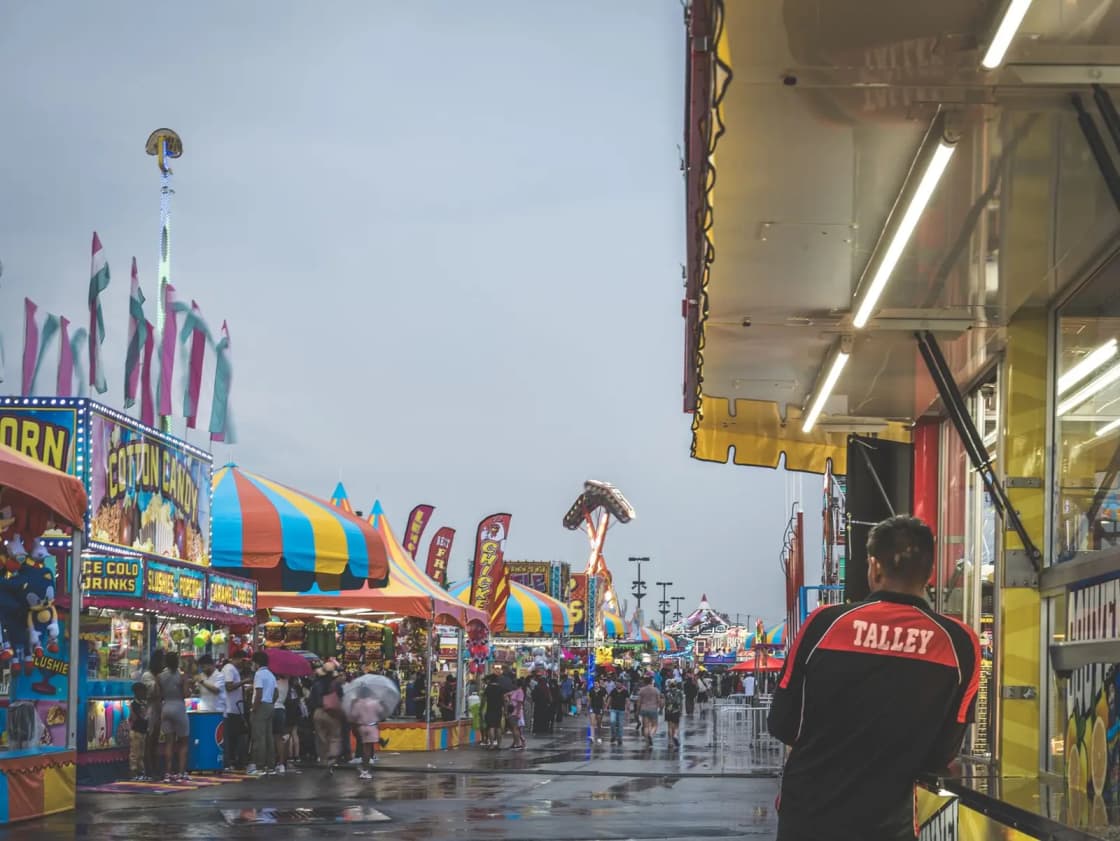
The food is half the draw and skews Swiss-German: bratwurst, warm strudel, raclette. Booths are run by volunteers rather than concessionaires, which is why the quality is inconsistent in an endearing way and the queues are long in a non-negotiable way. Eat early or eat late; 12:30 on Saturday is the worst possible moment to make a decision.
The crafts are why people drive from three counties. This isn't a flea market — the vendor field skews toward genuine makers, and a substantial share of the crowd treats Swiss Days as the year's Christmas-shopping trip. Which leads to the one strategic tip that matters: the good stuff sells out. A booth that looks well-stocked at 9 a.m. Friday can be picked over by Saturday afternoon. If you see it and want it, buy it — you will not find it again on the second lap.
Building the day trip from Provo
Midway is about 45 minutes from Provo, up Provo Canyon on US-189 toward Heber and then west. The drive is the good kind, and since you've made it, the Heber Valley gives you plenty of reason to stay:
- Deer Creek Reservoir is right on the way — boating, paddleboarding, and the best excuse to arrive early or leave late. Our Deer Creek and Jordanelle guide covers both.
- The Homestead Crater — a geothermal dome you can swim, snorkel or dive inside — is in Midway itself.
- Midway's downtown keeps its storybook character the rest of the year, and the Heber Valley and Midway day-trip guide is the full version of that trip.
Traffic note: everyone drives home at once on Saturday evening, and the canyon is the funnel. Either leave before the parade crowd disperses or stay for dinner and let it clear.
The Labor Day fork
Swiss Days shares its weekend with Payson's Golden Onion Days, at the southern end of Utah County — and the two are almost opposites.
Swiss Days is the destination: bigger, busier, a mountain drive, paid parking, and a craft market with statewide pull. Golden Onion Days is 20 minutes down I-15, free, and a town celebrating itself — a real community parade and free fireworks over Memorial Park.
They also don't fully overlap. Swiss Days is Friday and Saturday only; Golden Onion Days runs through the long weekend and puts its races on Labor Day morning. Doing both is normal.
For everything else on the valley's late-summer calendar, see our Labor Day and late-summer roundup, the day trips from Provo guide, and the Provo events calendar.
What's actually in the booths
Two categories, and they behave differently.
The crafts. This is the reason the festival has statewide pull. The vendor field skews toward genuine makers rather than resellers — wood, textiles, home décor, jewelry, seasonal decoration, food products — and a meaningful share of the crowd treats the weekend as their Christmas shopping. Vendors come from across the country as well as from Utah, and the booths run along the square and up Main Street densely enough that a full lap takes a couple of hours if you're actually looking.
The strategic point: stock is finite and the good items go. A booth that looks full on Friday morning can be picked over by Saturday afternoon. If you want it, buy it on sight — there is no coming back for it later, and there is no online version.
The food. Swiss-German by tradition: bratwurst, warm strudel, raclette. The booths are run by volunteers rather than concessionaires, which explains both the charm and the queues. The single best piece of timing advice for the whole festival is to eat before noon or after two — the middle of Saturday is when the square is least navigable and the lines are longest.
Around both, the day carries live music, alphorn and folk performances, a children's area with a bounce house and climbing wall, and enough people in Swiss dress to make the theme feel inhabited rather than staged.
Going With Kids, or With Anyone Who Cannot Stand for Six Hours
Swiss Days is a walking event on a town square with a crowd measured in tens of thousands, and that combination is unforgiving in specific, predictable ways. Being honest about them is more useful than pretending the day suits everyone.
Strollers are the classic mistake. Booth aisles narrow to a shuffle by mid-morning, and a stroller that works fine at a county fair becomes something you drag rather than push. A carrier is better for anyone small enough for one. If a stroller is genuinely necessary, come at opening and plan to be done before the aisles fill rather than working around them afterward.
Plan the day around sitting down. There is limited shade on and around the square, the seating that exists is informal, and a queue for food is a queue you stand in. If someone in your group tires quickly, decide in advance where they will rest and for how long, and treat that as part of the schedule rather than an interruption to it.
The shuttle is a genuine mobility factor, in both directions. Parking sits away from the square and the shuttle bridges the gap, which is good for anyone who cannot walk far — and it also means you are on someone else's timing at the end of the day, with a line, when everyone is leaving at once. Ask about accessible boarding rather than assuming, and if a member of your group uses a wheelchair or a walker, confirm arrangements with the organizers before the drive rather than at the curb.
The honest recommendation. With school-age children who can walk all day, Swiss Days is excellent and the food alone justifies it. With a toddler, or with anyone who needs frequent rest, the calmer half of the Labor Day fork — Payson's free, smaller, easier-to-park celebration twenty minutes from Provo — is very often the better weekend. That is not a knock on Swiss Days. It is what happens when a town of a few thousand hosts a crowd many times its size.
Midway itself, which is half the point
Midway is not a generic small town wearing a costume for two days. The Swiss and German settlement of the Heber Valley in the 1800s left an actual architectural and cultural residue, and the town has spent decades leaning into it — the old-world detailing on Main Street is the reason the festival's backdrop works.
The Midway Town Hall — formally the Midway Recreation Center, dedicated in June 1941 — sits at the center of the celebration and has since the beginning. The festival's founders, Joseph B. and Pauline S. Erwin, ran Luke's Hot Pots, the geothermal resort that operates today as Ameyalli; the hot springs that made that resort possible are the same geology that produced the Homestead Crater, the limestone dome you can swim, snorkel, or scuba dive inside, a few minutes from the square.
So the through-line is genuinely coherent: hot springs brought a resort, the resort owners started a harvest festival, the festival became a Swiss-heritage celebration, and the same geology still draws people up the canyon the other 363 days a year.
Saturday morning, if you want the whole tradition
Most visitors treat Swiss Days as a shopping trip that happens to have a parade in it. The locals' version runs the other way round, and it starts early.
7:00 a.m. — the community breakfast and the 10K. Both go at the same hour, which tells you something about how the day is designed: you either run it or you eat it. The run is the reason a share of the Saturday crowd is already in Midway before the market opens, and it is a genuinely pleasant course through a mountain valley in early September.
8:00 a.m. — the market opens. This is the best hour of the entire weekend to shop. Booths are full, vendors are fresh, and the paths are walkable. By ten it will not be like this again.
10:00 a.m. — the parade down Main Street. Swiss-themed, small, and over quickly by big-city standards — which is the appeal. Spectators line the route well before the start.
After the parade the crowd density peaks and stays there until late afternoon. If you arrived at eight and shopped first, this is when you eat and listen to music rather than fight the aisles.
The single biggest scheduling mistake is arriving at 11 a.m. on Saturday intending to shop. That is the worst hour of the two days for exactly the thing most people drove up to do.
Timing the drive, and the one hour to avoid
Midway is about 45 minutes from Provo — up Provo Canyon on US-189, past Deer Creek toward Heber, then west into Midway. In normal traffic it's one of the pleasantest drives out of Utah Valley.
Swiss Days traffic is not normal traffic. Two windows to plan around:
- Saturday 8:30–10:30 a.m., when the parade crowd and the market crowd arrive together. Leaving Provo by 7:30 puts you ahead of it.
- Saturday late afternoon, when everyone drives home through the same canyon at the same time. Either leave by mid-afternoon or stay for dinner in Heber and let it clear.
Friday has neither problem, which is one more argument for Friday if your schedule allows it.
The short version
Free to get in, $10 to park, cash for the food, Friday to shop and Saturday for the show. Take the shuttle, buy the thing when you see it, and remember that the money is going somewhere — which is the reason two thousand volunteers get up at dawn to make it happen.
Related Guides
- The Timpanogos Storytelling Festival: What It Is and How to Do It Right
- Stadium of Fire: How Provo's Fourth of July Actually Works
- Balloon Fest at Fox Field: Provo's Best Free Morning of the Year
- Steel Days: How American Fork Takes Over Two Full Weeks in July
- The Utah Valley Parade of Homes: How It Works, How Tickets Work & How to Actually Tour It
- Colonial Days in Orem: The Living-History Festival Locals Underrate
- Provo's Sister Cities: Meissen, Nanning and the BYU Connection
- Wasatch County Fair Days: the Heber derby, the PRCA rodeo and how to get tickets
- The Heber Valley Cowboy Poetry Gathering: what it was, and why it stopped
- The Soldier Hollow Classic: how to actually watch a sheepdog trial
Frequently Asked Questions
When is Midway Swiss Days?
How much does Swiss Days cost?
Where do you park for Swiss Days, and is the shuttle worth it?
Do Swiss Days booths take cards?
How big does Swiss Days actually get?
Can you bring a stroller or a dog?
How far is Midway from Provo?
Which day should I go, Friday or Saturday?