Upcoming dates

Once a year, on the weekend after Labor Day, several thousand people sit down on folding chairs in a garden in Lehi to listen to adults tell stories out loud. No screens, no set, usually no props — one person with a microphone and an audience that leans in. The Timpanogos Storytelling Festival has been doing this since 1990, and it is the largest event of its kind in the western United States.
It is also, if you're new to it, slightly hard to place. It isn't a folk festival, it isn't a children's event, and it isn't a lecture series. Here's what it actually is, and how to do it well.
The backyard, the library, and the mountain in the name
In 1989, Karen Jackman Ashton was president of the Friends of the Orem Public Library and looking for a way to raise money for the children's library. A bake sale hadn't worked. Neither had a home tour. Then she encountered professional storytelling — and eight months later the Friends launched the first festival.
It was held in the Ashtons' own backyard. Neighbors opened their homes to help stage performances. Three national storytellers came out; local performers including James Arrington, Marvin Payne and Gaye Beeson filled the rest of the program. Around 800 people came. By the second year the festival had added tents, a fourth performance space, an evening show at the SCERA, and school groups on Friday morning.
The backyard held it until about 1995. Then came the Olmsted property at the mouth of Provo Canyon, and then, in 2005, Mt. Timpanogos Park in Provo Canyon — a park Orem City built with input from the festival board specifically so the festival could keep growing. That is where most Utah Valley families of a certain age remember it: story tents under the mountain, blankets on grass, the river close enough to hear.
In 2017 it moved again, to Ashton Gardens at Thanksgiving Point. The reasons were unglamorous and decisive — parking and restrooms. The canyon site couldn't take the crowd, and the new site could put every event, daytime and evening, in one place.
So the answer to "why is a Lehi festival named after a Provo-canyon mountain" is: it's the name of the place it grew up. The festival kept it.
The part almost nobody connects
Here is the loop that makes the festival's current home more than a logistics decision.
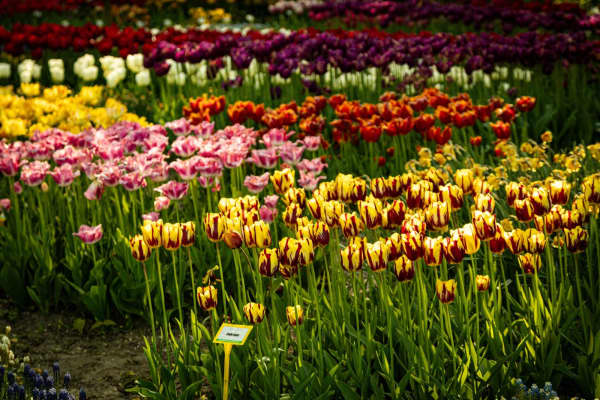
Karen Ashton's husband, Alan Ashton, co-founded WordPerfect — the Orem software company that put Utah Valley on the technology map long before anyone said "Silicon Slopes." After WordPerfect was sold, Alan bought the parcel of land Karen had identified and gave it to her. They called it Thanksgiving Point. The gardens opened to the public in 2000 — as Thanksgiving Gardens, renamed Ashton Gardens in 2016 — and Thanksgiving Point now gives their size as 50 acres. They carry one of the largest man-made waterfalls in the Western Hemisphere, though it is not always running, and a spring tulip display of a quarter-million bulbs.
Which means the festival that started as a library fundraiser in the Ashtons' backyard is now held in gardens the same family built with the proceeds of Utah Valley's first great software company — and the evening concerts happen in the amphitheater beside that waterfall. Nobody frames it that way in the event listings, and it is the most Utah Valley story on the entire schedule.
Karen Ashton's work was recognized nationally in 1999, when the National Storytelling Network honored her for leadership. The Utah Storytelling Guild, which exists because of the festival, was recognized the same year.
What a day is actually like
Friday and Saturday are the full days. Multiple story tents run simultaneously through the day, each with a rotating set of tellers, so the schedule is a choose-your-own affair. Alongside the tents there are musicians, magicians, puppeteers, potters and other entertainers spread through the gardens, and enough food and open lawn that people treat it as a full-day outing rather than a series of shows.
A dedicated Family Tent runs programming aimed at younger children, which is what makes the festival workable for families with a wide age spread — the six-year-old has somewhere to be while the adults hear a longer set.
The evenings are the festival's real signature, and they're themed:
- Bedtime Stories — built for families with young children, and priced low enough (recently $5 a person) that it functions as the festival's front door.
- Story Showcase — the all-ages evening program.
- Shivers — ghost stories and the darker end of the repertoire. Not for small children, and deliberately so.
- The Last Laugh — the Saturday-night comic finale that closes the weekend.
Thursday is the cheap way in. Recent years have run a $10 Sneak Peek with doors at 3 p.m. — gardens access, interactive activities, stories in the tents and an evening concert. If you've never been and don't want to commit a weekend, that's the ticket to buy.
Tickets, discounts, and the fine print
Prices are set annually at timpfest.org, but the structure repeats:
- Early-bird pricing runs through August 1. No code needed; it's just the price until it isn't.
- Groups of six or more get 25% off full-event or day tickets bought in one order — the single biggest discount available, and the reason extended families come as a block.
- Thanksgiving Point members get about 10% off.
- Senior and student weekend passes exist as separate products.
- TimpFest Online is a separate ticket, discounted (recently $30) when bought with a weekend pass.
- All sales are final. Not "final unless you email" — final. The festival asks people who can't attend to gift their tickets instead.
Daytime Sessions Versus Evening Concerts: Which to Buy
The festival is really two formats sharing a garden, and if you are buying one ticket rather than a weekend pass, knowing the difference decides whether you enjoy it.
Daytime is a menu you graze. Multiple tellers work simultaneously in separate tents, sets are relatively short, and the expectation is that you move between them. That structure is forgiving: if a teller is not for you, the next one starts soon and somewhere else. It also suits families, because a child who runs out of attention can leave a tent without disrupting anything. If you have never heard live storytelling and are unsure about it, daytime is the low-risk way in.
Evenings are a single room and a longer commitment. The concert format puts one audience in front of a curated lineup, sets run longer, and the material skews older — this is where the genuinely adult storytelling lands, and where the festival's best-known tellers tend to be programmed. It is also where the atmosphere is strongest, because a few thousand people listening to one voice in a garden after dark is a specific and slightly unusual experience.
So the one-ticket answer depends on who is coming. Bringing children: buy a day ticket and treat it as a picnic with stories attached. Coming as adults, particularly if you already know you like the form: buy an evening. Coming to find out whether you like it at all: buy a day ticket, because the ability to walk out of a tent politely is worth a lot.
Two things to factor in regardless. All sales are final, so decide before you buy rather than after. And a group of six or more gets the largest discount available on a single order, which is why extended families here tend to come as a block rather than in pairs.
What to bring, and what to leave home
Bring your own food and non-alcoholic drinks. This is genuinely unusual for a ticketed festival, and it's the biggest cost lever the day offers. There are water-bottle filling stations through the gardens.
Bring low chairs or a blanket. Seating in the tents and at the waterfall amphitheater is the kind you carry in. Low-backed chairs are the polite choice for anyone behind you.
Dress for two climates. September in Utah Valley can run warm and exposed in the afternoon and cool sharply after sunset. The evening concerts are outdoors.
Leave the dog at home. Pets are not allowed anywhere on Thanksgiving Point property.
Don't try to see everyone. The most common first-timer mistake is treating the tent schedule as a to-do list and spending the day walking between tents. Pick two or three tellers you want to hear and let the rest happen. Regulars follow tellers, not venues.
One number worth not trusting
Published attendance figures for this festival vary enormously — from around 25,000 to nearly 80,000 depending on which source and which year you read, and the festival's own materials have described it both as the largest storytelling festival in the western United States and, elsewhere, as the largest in the country.
We're not going to pick one. What's verifiable is the shape: it draws attendees from dozens of states and several countries, it is large enough that other festivals send their organizers here to study it, and the tellers themselves treat an invitation as an arrival. That's the useful version of the claim.
Less visible but arguably bigger: the Timpanogos Storytelling Institute runs a year-round education program, sending professional storytellers into classrooms across Utah and reaching tens of thousands of students and teachers annually. The September weekend funds and advertises a program that runs all year.
Getting there from Provo
Ashton Gardens is at 3900 Garden Drive, Lehi — roughly 25 to 30 minutes up I-15 from Provo, and about 45 minutes south of the Salt Lake City airport, which is why the festival draws as much from Salt Lake County as from Utah County. Parking is on site and is one of the reasons the festival moved here; follow event signage rather than habit, since the festival entrance isn't always the everyday gardens entrance.
If you're building a longer day around it, our Thanksgiving Point guide covers the museums and gardens on the same campus, and things to do in Lehi handles the rest of the north end of the valley.
If you've never heard live storytelling and quietly suspect it isn't for you
This is the most common reason people in Utah Valley have never been, so it's worth addressing directly.
The thing on stage is not a reading, not a children's program, and not stand-up — though the best tellers are funnier than most stand-up. A teller works without a script, without a set, and usually without props, holding a room of several hundred people for twenty to forty minutes with nothing but timing and structure. When it works, and at this festival it works often, the room goes quiet in a way that live performance almost never achieves any more.
The material ranges enormously across one weekend: Appalachian family stories, folk tales, ghost stories, personal narrative, tall tales, and material that would be filed as literary nonfiction if it were written down instead of spoken. Some sets are for children. Most are not.
How to choose, practically: the schedule lists tellers by tent and time, and first-timers try to pick tents. Regulars pick people. Read the teller biographies before you arrive, mark two or three you want to hear, and build the day around them. If someone's first set lands, follow them to their next one — most tellers perform several times across the weekend with different material.
Tent etiquette, since nobody explains it: arrive between sets rather than during one, sit low or bring a low chair, and treat the front rows as the children's territory during family programming. The tents fill; a popular teller's afternoon set is standing room.
What the festival does the other 51 weeks
The September weekend is the visible part of a year-round operation. The Timpanogos Storytelling Institute is a 501(c)(3) that runs an education program sending professional storytellers into schools across Utah — from Cache County to San Juan, preschool through high school — reaching tens of thousands of students and teachers annually, along with workshops that train teachers to tell stories themselves.
The scale of the volunteer effort behind the festival is the other under-reported number: hundreds of volunteers contributing thousands of service hours, which is how a nonprofit of this size stages an event of this size at these ticket prices.
That context matters for one practical reason. When people compare the ticket to a concert ticket, they're comparing the wrong thing — a weekend pass funds a classroom program, which is exactly what Karen Ashton set out to do with a bake sale in 1989.
Building a longer day around it
The festival is on the Thanksgiving Point campus, and the geography is worth getting right before you buy anything. The festival takes place in Ashton Gardens — which is why Thanksgiving Point closes the gardens to ordinary admission for the festival days. Your festival pass is your garden access; do not budget for a separate gardens ticket on those dates. The 50 acres of themed gardens are the venue, not a neighboring attraction, and the tulip display in spring is a separate pilgrimage at a different time of year. What is separate is the rest of the campus — the museums, the farm and the Butterfly Biosphere are distinct venues on their own tickets, and they stay open. If you have family visiting from out of state and one festival day rather than three, pairing a festival day with a morning in one of the museums is the strongest version of the trip.
Two logistics notes specific to this venue: the gardens are large and the walking adds up — the distance between tents is not trivial for anyone with mobility limits, so plan to base yourself rather than roam. And evening concerts are outdoors at the waterfall amphitheater, which cools noticeably once the sun is off it. ⚠ The waterfall it is named after has been switched off under Lehi's water conservation plan, so do not promise anyone the falling water. The layer you didn't bring is the one you'll want at 9 p.m.
The short version
Buy before August 1, come in a group of six if you can, bring dinner and a low chair, take Thursday's preview if you're testing the water, and follow the tellers rather than the tents. Then sit down and let someone tell you a story — which, in a valley with this many screens in it, turns out to be the whole point.
Related Guides
- Colonial Days in Orem: The Living-History Festival Locals Underrate
- Balloon Fest at Fox Field: Provo's Best Free Morning of the Year
- Midway Swiss Days: The Complete Guide
- Fiesta Days: Spanish Fork's Rodeo Week and the Valley's Biggest 24th of July
- Stadium of Fire: How Provo's Fourth of July Actually Works
- Steel Days: How American Fork Takes Over Two Full Weeks in July
- The Utah Valley Parade of Homes: How It Works, How Tickets Work & How to Actually Tour It
- Golden Onion Days: Inside Utah's Oldest Labor Day Celebration
- TEDxProvo
Frequently Asked Questions
When is the Timpanogos Storytelling Festival?
Why is a festival in Lehi named after Mount Timpanogos?
How much are tickets, and how do the discounts work?
Can you bring your own food to the storytelling festival?
Is the Timpanogos Storytelling Festival good for young children?
Where do you park at Ashton Gardens?
Can you watch the festival online?
Are pets allowed?