Pho is the last major Asian cuisine in Utah Valley that this site had not written about on its own terms, and that gap says something about how quickly the category grew rather than anything about its quality. Ten years ago a Vietnamese restaurant here was a novelty. Now there are enough of them that people argue about which one is best, which is the reliable sign that a food scene has arrived rather than merely appeared.
This guide covers where to go, what separates the rooms from each other, and the handful of practical details — the Sunday problem, the ordering vocabulary, the difference between a broth that has been simmered and one that has been assembled — that determine whether you walk out satisfied.
Why Utah Valley has this much pho
The short answer is that Utah has a Vietnamese community with roots going back to post-1975 resettlement, concentrated more heavily along the Wasatch Front than most people outside the state realize. The longer answer involves a second factor specific to this valley: a very large population of returned missionaries who spent two years in Southeast Asia, came home, and could not find the food they had learned to eat every day.
That second group matters commercially. A restaurant needs more than an immigrant community to survive; it needs a customer base broad enough to fill tables on a Tuesday. Utah Valley supplies both halves at once, and the result is a category that has expanded faster here than the population numbers alone would predict.
The growth has been uneven geographically, and that is worth knowing when you plan a drive. The newest arrivals have clustered on the fast-growing west side — Saratoga Springs and the Eagle Mountain corridor — where housing went up quickly and restaurants followed. Provo and Orem hold the established rooms. The north end of the county, around American Fork and Pleasant Grove, has its own set.
The Provo and Orem core
Pho Plus is the name that comes up first in most conversations about pho here, and it has an advantage the others do not: two locations, one in historic downtown Provo on Center Street and one on State Street in Orem at 908 S State. That matters more than it sounds. For an Orem family, driving into downtown Provo for a weeknight dinner is a decision; for a BYU student, going north to Orem feels like leaving the neighborhood. Pho Plus solved the problem by simply being in both places.
What people praise is consistency rather than any single spectacular quality. Making one excellent bowl of pho is not hard. Making the same bowl several hundred times a week, for years, is a different discipline, and it is the one this operation is known for. Note that it closes on Sundays.
Lovely Pho sits at 2306 N University Pkwy in Provo, on the north side of town within easy reach of the BYU end. It runs a straightforward Vietnamese menu — pho, vermicelli bowls, rice plates — and has a long-standing local following. It is the one most often named by people who live on the north bench and do not want to drive downtown.
Rollz Vietnamese at 992 S University Ave covers the south end of Provo. Its most-ordered items skew wider than pho alone: oxtail noodle soup, bun bo Hue — the spicier, lemongrass-heavy beef noodle soup from central Vietnam that is a different dish from pho — grilled shrimp salad bowls, and a beef banh mi. If you want to eat past the one dish everyone knows, this is a good place to start.
Saigon Cafe and DA PHO round out the Provo–Orem set, along with Pho King in Orem. Vegan Sun in Provo is the plant-based option and is discussed separately below. Saida Sushi and Noodle House and several pan-Asian rooms serve pho alongside other menus; they are a reasonable fallback rather than a destination for the dish itself.
Beyond Provo and Orem
Pho No. 1 in Pleasant Grove has vocal defenders who will tell you it is the best in the county, and it is far enough north that it does not compete directly with the Provo rooms for the same customers.
Cafe Trang Bistro in American Fork is praised for quick, fresh Vietnamese — noodle bowls, curry, banh mi — and works well as a stop rather than an occasion.
Pho 888 and Viet Deli serve Saratoga Springs, part of the wave of restaurants that opened to keep pace with the west side's growth. Viet Deli in particular is known for its banh mi as much as its pho, and for ribeye and meatball preparations. If you live out that way, the drive into Provo for Vietnamese food stopped being necessary several years ago.
What separates a good bowl from a mediocre one
The broth is the entire dish. Everything else — the noodles, the meat, the garnish plate — is essentially standardized across the category, and a restaurant that gets those right can still serve a forgettable bowl if the broth is thin.
A properly made pho broth is simmered for many hours with charred onion and ginger, beef bones, and a spice set built on star anise, cinnamon, cardamom and clove. Done well, it tastes layered — the flavor keeps developing as you work down the bowl rather than announcing itself in the first spoonful and then flattening out. Done poorly, it tastes like salt and beef stock, and no amount of sriracha fixes it.
So the first thing to do when a bowl arrives is taste the broth before adding anything at all. This is not connoisseurship; it is the only way to know what you are adjusting. Then add the herbs and sprouts gradually. The plate that comes alongside is a set of ingredients to be used across the course of the meal, not a salad to be dumped in at the start, which cools the broth and drowns it.
Hoisin and sriracha are a genuine debate. Plenty of Vietnamese diners consider squirting either directly into the bowl to be vandalism, and use a side dish for dipping meat instead. Plenty of others do exactly what the debate says not to. Nobody in any of these restaurants is going to correct you. It is worth trying the broth unadorned once, though, so that you know what the kitchen intended.
The ordering vocabulary
Most pho menus in the valley number their combinations, which makes ordering easier than the unfamiliar words suggest.
Pho tai is rare steak, sliced thin and cooked by the heat of the broth as it arrives. It is the mildest and most approachable option and the right default for a first visit.
Pho dac biet is the house special — a combination that typically includes rare steak, well-done brisket, and some mix of flank, tendon and tripe. It is the best value and the best introduction to the range, provided you are comfortable with the textures.
Bun bo Hue is not pho. It is a distinct central-Vietnamese soup, spicier and built on lemongrass and shrimp paste, with thicker round noodles. Ordering it expecting pho leads to disappointment that is nobody's fault.
Banh mi is the sandwich: a light baguette, pickled daikon and carrot, cilantro, chili, and a protein. It survives a car journey far better than soup does.
Ca phe sua da is Vietnamese iced coffee, brewed strong through a small metal filter over sweetened condensed milk. It is very sweet and very strong, and it is the standard way to finish.
Vegetarian, vegan and gluten-free
Vegan Sun in Provo is built around plant-based Vietnamese cooking from the ground up rather than adapting a meat-centered menu, which is why it gets recommended to vegans specifically rather than as a compromise.
At conventional restaurants, the question to ask is about the broth. A vegetable pho listed on the menu is sometimes built on a beef base, and fish sauce appears in dishes that otherwise read as vegetarian. Kitchens here will generally tell you straight if you ask directly, and asking is the only reliable route.
Gluten-free diners have an easier time with this cuisine than most, because rice noodles and rice are the foundation. Several valley Vietnamese restaurants are specifically flagged as careful by people who have to be careful. The hidden sources are hoisin sauce and occasionally the broth itself. If it is a medical requirement rather than a preference, say celiac — it changes how the message lands in a busy kitchen.
The Sunday problem, and other practicalities
Sunday closure is widespread across independently owned restaurants in Utah Valley, and Vietnamese kitchens are part of that pattern rather than an exception to it. Pho Plus closes Sundays. Others differ. There is no rule you can safely generalize from, because each of these is a small business making its own call, which is exactly why the category-level answer is useless and the restaurant-level answer is the only one worth having.
The same caution applies to hours generally. Aggregator listings for restaurants in this valley go stale quickly, and at least one major listing for a Provo Vietnamese restaurant still carries a pandemic-era closure notice years after the fact. Check the operator's own page or call. This site does not publish opening hours for exactly this reason: a number that is wrong is worse than no number, and hours change faster than any guide can track.
Portions here are large by the standards of the dish. A large bowl defeats most people, and ordering a small is not a failure of nerve. Several of these rooms run counter-service or near-counter-service formats, which makes them unusually quick for a sit-down meal — useful between classes and useful on a weeknight.
Where pho fits in the valley's wider Asian scene
Vietnamese food arrived late here relative to the other Asian cuisines, and the category around it is now deep. Thai is the most numerous by restaurant count. Korean, Japanese and Chinese kitchens are all well established, ramen has its own following, and boba and dumpling shops have proliferated near both campuses.
That depth is the reason pho took as long as it did to get its own page on this site: it was covered in passing across half a dozen guides before anyone treated it as a category in itself. It has clearly earned the separate treatment now.
Pho, ramen and the other noodle soups
People new to the category often use pho as a generic term for Asian noodle soup, and the distinctions are worth having because they change what you should order and where.
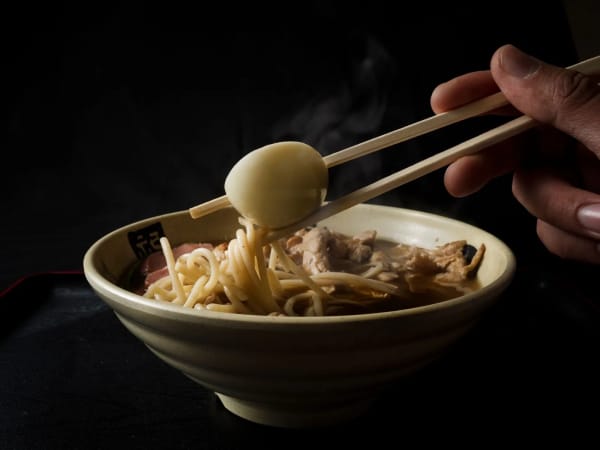
Pho is Vietnamese, built on a clear beef or chicken broth simmered for hours with charred aromatics and warm spices. The noodles are flat rice noodles. The defining quality is clarity — a good pho broth is translucent and light-bodied despite the depth of flavor in it. It arrives with a garnish plate you assemble yourself.
Ramen is Japanese, built on wheat noodles and, in most of its popular styles, a deliberately opaque and emulsified broth. Tonkotsu, the style most people picture, is pork bone cooked hard enough that the fat and collagen break into the liquid and turn it cloudy and rich. It is a heavier bowl, and it arrives composed rather than assembled. Provo has its own ramen scene, covered separately.
Bun bo Hue is Vietnamese but not pho — spicier, lemongrass-forward, thicker round noodles, and a shrimp-paste backbone that gives it a funk pho does not have.
Hot pot is not a noodle soup at all but a cooking method at the table, and it appears on some of the same menus, which adds to the confusion.
The practical upshot is that if you want something light and restorative, pho is the right call. If you want something rich and filling, ramen is. Ordering the wrong one for your mood is the most common way people conclude they do not like a cuisine they do.
Takeaway, delivery and feeding a group
Pho is a difficult traveling dish and the good restaurants know it. Ordered properly for takeout, the broth comes in a sealed container separate from the noodles, the meat and the garnish, and you assemble it at home. Ordered carelessly — or delivered by a third-party platform that has repackaged it — the noodles sit in hot liquid for twenty minutes and arrive swollen and soft. If the option to separate is offered, take it. If you are ordering through a delivery app and no such option exists, a banh mi or a vermicelli bowl is the more reliable choice.
For groups, this cuisine works better than most. The menus are broad enough to cover people who want soup, people who want rice plates and people who want a sandwich, and the price point makes it easy on a large table. Several of the rooms are small, though, which is the constraint that catches people out: a party of eight arriving unannounced on a Friday evening is a genuine problem in a twelve-table restaurant. Call ahead for anything above about six.
Portions being what they are, a group ordering one dish each will almost certainly over-order. Two large bowls shared between three people, plus a couple of orders of spring rolls, is closer to the right calibration than one bowl per person.
The stockpot problem, and the rule written for it
Pho is defined by a broth simmered for hours in a very large pot. That is also the single hardest object in a commercial kitchen to bring down to refrigeration temperature safely, and the Food Code has a rule aimed almost precisely at it.
Utah adopts the 2022 FDA Food Code through Utah Admin. Code R392-100-4. The relevant provision is Food Code § 3-501.14, the two-stage cooling rule. Cooked time/temperature-control-for-safety food must be cooled from 135°F to 70°F within two hours, and from 135°F to 41°F or below within six hours total — which leaves four hours for the second stage. Food prepared from ingredients already at ambient temperature gets a flat four hours to 41°F.
Both halves matter, and the first one is where big pots fail. A twenty-gallon stockpot of beef broth left in a walk-in will not lose 65 degrees in two hours; it will hold heat in the middle for most of a shift, and the temperature band it sits in is exactly the band in which spore-forming bacteria that survived the simmer start to grow. The Food Code's own remedy is procedural rather than heroic: if the food misses the two-hour mark, it may be reheated to 165°F and cooled again. If it misses the six-hour total, it is discarded. There is no third option.
Which is why the equipment list at a serious pho kitchen is a tell. Ice wands, shallow metal pans, splitting a batch into smaller volumes, an ice bath with stirring, adding ice as an ingredient to a concentrated broth — these are the recognized rapid-cooling methods, and a kitchen that cannot name one of them is not cooling twenty gallons inside the window.
Reheating has its own rule. Under Food Code § 3-403.11, TCS food cooked, cooled and then reheated for hot holding must reach 165°F for 15 seconds within two hours. Food held hot for service sits at 135°F or above under § 3-501.16(A)(1). So the daily cycle at a pho restaurant — simmer, cool, reheat, hold — passes through four separate numbered provisions, and the one that catches kitchens out is almost always the cooling stage rather than the cooking.
The rare beef on top is a different rule again
A bowl of pho tai arrives with raw sliced steak that cooks in the broth at the table, and that is a raw animal food served to a consumer. Food Code § 3-603.11 requires a consumer advisory for animal foods served raw or undercooked, in two parts: a disclosure identifying which items are or can be ordered raw or undercooked, and a reminder pointing the reader to a statement about the increased risk of foodborne illness. On a pho menu the disclosure is usually the asterisk beside the rare-steak combinations. If you have ever wondered why the number 1 has a footnote and the number 7 does not, that is the reason.
There is a genuine practical point buried in it. The broth cooks the beef because it arrives at or near boiling; a bowl that has cooled on the way to a table, or one delivered across town, does not do the same job. If you want the rare steak to cook through, submerge it immediately and press it under the noodles. If you are ordering pho tai for delivery, order it well done instead.
Cold ingredients, hot bowl, and the plate on the side
The herb plate is not an afterthought in regulatory terms. Bean sprouts are raw seed sprouts, which the Food Code names explicitly inside the definition of time/temperature control for safety food at ¶ 1-201.10(B) — they are one of the short list of plant foods that require temperature control on their own account, alongside cut melons, cut leafy greens and cut tomatoes. Basil, cilantro and lime are not on that list. So the sprouts on your side plate are held under refrigeration until they reach you and the herbs are not, and a restaurant that brings the plate out cold is doing the right thing rather than being fussy.
Utah adds one amendment with a visible consequence here. R392-100-4(3)(d) rewrites Food Code ¶ 3-201.16(A) to read that, except as specified in ¶ (B), mushroom species picked in the wild shall not be offered for sale or service by a food establishment. Wild mushrooms in a broth are a recurring feature of Southeast Asian cooking and they are not something a Utah restaurant may put in front of you from a forager's basket. Cultivated mushrooms from an approved source are unaffected.
None of this is a reason to worry about a bowl of soup. It is a reason to recognize what you are looking at: a cuisine built on the two operations — long cooking and long cooling — that the Food Code regulates most tightly, run successfully by a dozen small kitchens in this valley every day. For the permitting layer, see food permits and inspections in Utah County.
Related Guides
- Best Asian & Sushi in Utah Valley
- Best Ramen in Provo
- Best Thai Restaurants in Provo & Orem
- Best Korean Food & BBQ in Provo & Orem
- Best Chinese & Asian Food in Provo & Orem
- 30 Best Restaurants in Provo
- Best Food Near BYU
- Best Grocery Stores in Provo & Orem
- The Provo & Orem restaurant directory — every place we cover, with its address, filterable by cuisine and city
- Hogi Yogi: The Provo Chain That Went National, Sold, and Came Back to Four Stores
Frequently Asked Questions
Where is the best pho in Provo?
How many Vietnamese restaurants are there in Utah Valley?
Are Vietnamese restaurants in Provo open on Sunday?
What should I order at a pho restaurant if I have never had pho?
Is pho gluten-free?
Is there vegetarian or vegan Vietnamese food in Provo?
What is banh mi and where can I get one in Utah Valley?
Is pho a good cheap meal for students?
Sources
The facts in this guide were checked against these sources. Hours, fees and rules change, so confirm anything time-sensitive with the source before you go. How we make Provo.com.
- Utah Rule R392-100 Food Service Sanitation, Utah Office of Administrative Rules. Checked October 12, 2026.