
Utah Valley's Indian restaurants have a longer history than most people assume, and a shorter list than the population would suggest. Haveli Modern Cuisine is one of the newer entries, and it has arrived with a clear idea of what it wants to be.
The restaurant sits at 2005 South State Street in Orem, in the southern stretch of that road as it runs down toward the Provo boundary. It cooks North Indian food, carries a full Indo-Chinese section alongside it, has a large parking lot and — a detail its own listing leads with — mountain views from the dining room.
The short version
North Indian cooking with a substantial Indo-Chinese section, on South State Street in Orem. Open seven days including Sunday, no alcohol, big lot, catering available, and staff who are consistently described as patient with people who do not know the menu.
Where it is, and why the lot matters
State Street through Orem is a long commercial corridor, and the southern end of it — approaching 1600 South and beyond — is a mix of older strip retail and newer development. Haveli is near the 1775 South intersection.
The restaurant's own description makes a point of the big parking lot, which sounds like a strange thing to advertise until you have tried to park at several of Utah Valley's better independent restaurants. On this stretch, off-street parking is genuinely a feature.
It also mentions mountain view seating. The Wasatch front is visible from a great deal of Orem, but a dining room oriented to make use of it is a deliberate choice.
What "North Indian" actually signals
Indian restaurant menus in the United States skew heavily toward the North Indian repertoire, and Haveli is explicit that this is its focus.
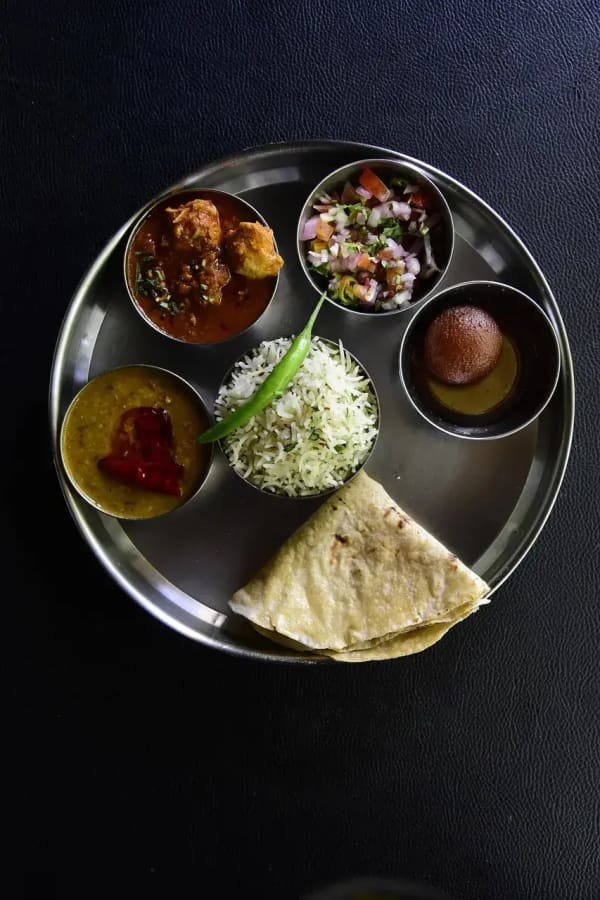
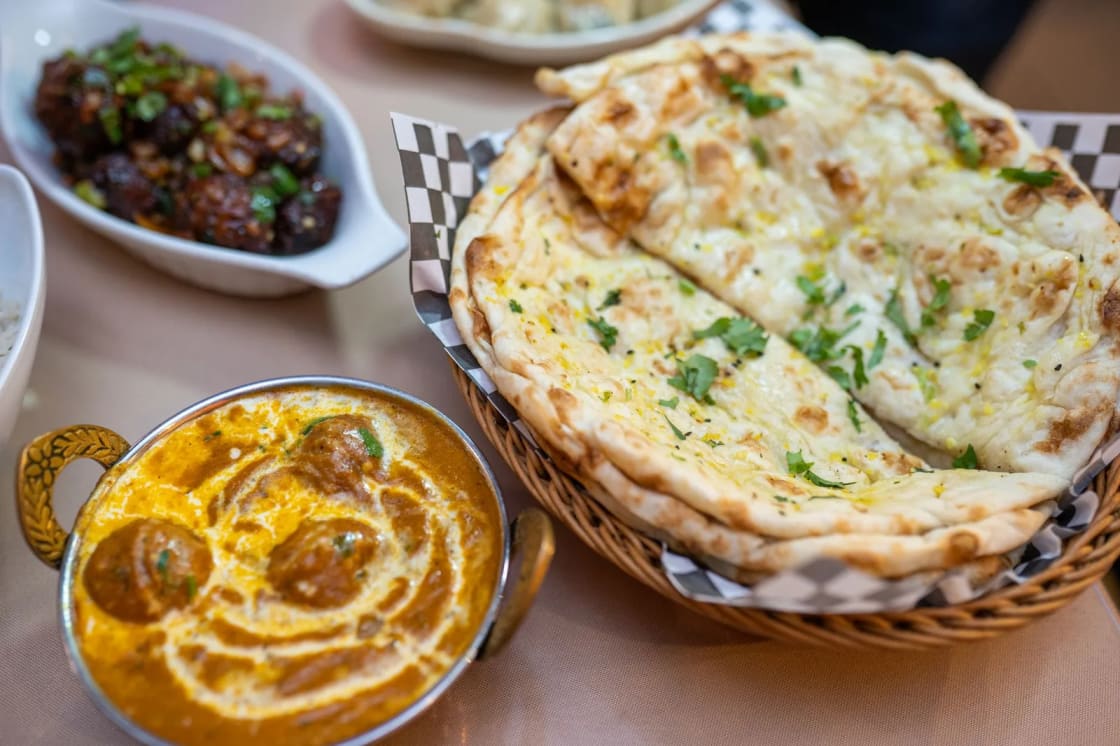
In practice that means the tandoor and the cream-and-tomato gravy family: butter chicken, chicken tikka masala, tandoori-roasted meats, korma, vindaloo, biryani, and the leavened breads — naan, garlic naan, bhatura.
The restaurant's own descriptions are unusually specific about technique. Butter chicken is described as tandoor-roasted chicken in a tomato-butter sauce finished with dried fenugreek leaves; a home-style chicken curry is described as bone-in and slow-cooked with a house-ground spice blend. That level of detail is not proof of quality, but it is the language of a kitchen that thinks about what it is doing.
The Indo-Chinese section, which is the interesting part
The menu carries chilli paneer and gobi Manchurian — cottage cheese wok-tossed with peppers in a garlicky chilli sauce, and battered cauliflower in a ginger-soy Manchurian glaze.
This is not fusion invented for an American strip mall. Indo-Chinese is a genuine and beloved regional cuisine, developed by the Chinese community in Kolkata and now eaten across India as street food and restaurant food alike. It is spicy, saucy, wok-driven and completely different in register from the tandoor menu.
Most Utah Valley diners have never had it. If you have eaten a lot of tikka masala and want something that will genuinely surprise you, this is the section to order from.
The chicken tikka masala test
One reviewer made a useful observation: having eaten tikka masala at every Indian restaurant in Utah County, they found the dish broadly similar everywhere — and then described Haveli's as clearly distinct.
That is the correct way to evaluate an Indian restaurant in a market this size. Tikka masala is the control variable, ordered by nearly everyone, and a kitchen that makes it taste like its own dish rather than like the county default is telling you something.
Vegetarian eating
The vegetarian side is substantial rather than token: paneer in several preparations, chana bhatura — the spiced chickpea curry with puffed fried bread that is a North Indian street-food staple — vegetable biryani, pakora, and the Indo-Chinese vegetable dishes.
For anyone eating meat-free in Utah Valley, Indian restaurants are among the most reliable options available, because the vegetarian dishes are core menu items rather than accommodations. Our best vegetarian and vegan restaurants guide covers the wider landscape.
Heat levels, and how to order them
Spice is adjustable. The data point worth carrying is a review reporting that ordering no spices at all still produced something slightly spicy.
That is not a complaint about the restaurant — it reflects the fact that a spice blend is not the same thing as chilli heat, and a dish built on a house-ground masala will have warmth even at zero chilli. If you are highly sensitive, say so in plain terms rather than naming a number, and ask which dishes are mildest by construction. Staff are repeatedly described as friendly and willing to explain.
Sunday opening, which is a genuine advantage
Haveli's listed hours run seven days, closing an hour or so earlier on Sunday than on other days.
In Utah Valley that is a real differentiator. Sunday closure is the regional norm, and the set of restaurants serving a proper cooked dinner on a Sunday evening is much smaller than the county's restaurant count suggests. Our restaurants open Sunday in Provo guide exists precisely because this question comes up constantly.
No alcohol, and why it barely matters here
Mapping listings flag no alcohol service.
Utah's alcohol licensing is its own subject, and plenty of Utah Valley restaurants simply do not pursue it. For this cuisine the loss is smaller than usual: the traditional accompaniments are mango lassi and masala chai, both of which the restaurant lists, and a lassi does more for a spicy meal than a beer does.
What it costs
Moderate, in the normal range for a full-service Indian restaurant in Utah County. Takeout and delivery are both available through the usual platforms as well as directly.
We do not print specific prices on venue pages, because menu prices are the fastest-moving fact about any restaurant and a stale figure is worse than none. The restaurant's own ordering site carries current pricing.
Catering, which is underrated in this county
Haveli advertises full-service catering — setup, service and cleanup — for events from small dinner parties to corporate functions.
Indian catering is comparatively scarce in Utah County, and for the tech corridor running from Provo up through Lehi it is a genuinely useful option to have on file. The vegetarian depth also makes it a practical choice for a mixed-diet office event, where the usual sandwich-platter default serves vegetarians poorly.
The website confusion
Two similar domains appear in search results, both presenting as the restaurant's own site, and more than one phone number circulates across aggregator listings.
This is extremely common for independent restaurants that have moved between ordering platforms — the old site outlives the migration and the aggregators never notice. The practical rule is to trust the number on the restaurant's current site or its Instagram profile and disregard the rest.
How it compares to the rest of the valley
Utah Valley's Indian scene is anchored by long-established restaurants, notably Bombay House in Provo, which was the first Indian restaurant in the state and shaped the market everyone else entered. India Palace in Provo is the other name that recurs, particularly for the lunch buffet format.
Haveli is a newer arrival positioning itself on the modern end — the name of the restaurant says so — with the Indo-Chinese section as its clearest point of difference. Our best Indian food in Utah Valley guide sets them against each other properly.
Accessibility and practicalities
Listings show wheelchair accessibility, takeout, delivery, catering, card and contactless payment, and Wi-Fi. The building is single-level with its own lot, which handles the two access problems that most often affect older main-street restaurants.
Delivery runs through the major third-party platforms; ordering direct is generally better for the restaurant.
Who this is for
It suits anyone who wants North Indian food in Orem without driving to Provo, anyone curious about Indo-Chinese cooking, vegetarians who are tired of salads, and groups needing a Sunday option.
It suits you less well if you want alcohol with dinner, or if you are hoping for a South Indian menu — dosas, idli and the rest are a different repertoire and are not what this kitchen is doing.
The lunch question
Indian lunch service in Utah Valley has historically meant a buffet, and the buffet format is how a great many Americans first encountered the cuisine. It remains the low-risk way to try a lot of dishes at once.
Haveli's listed hours open late morning, which puts it in the lunch market. Whether a buffet is running on any given day is exactly the sort of detail that changes seasonally and that no aggregator tracks reliably, so it is worth a call if the buffet specifically is what you are after.
The à la carte lunch alternative is worth considering regardless. A single curry with rice and naan is a substantial meal, and it lets the kitchen cook to order rather than holding food on a line.
What a haveli actually is
The name is not decorative. A haveli is a traditional townhouse or mansion of the Indian subcontinent, typically built around one or more interior courtyards, and the form is associated particularly with Rajasthan, Gujarat and the wider north.
Restaurants using the name are invoking a specific idea — hospitality inside a grand private house rather than a commercial dining room. Pairing it with "modern cuisine" is a deliberate tension, and the Indo-Chinese section is where that modern claim actually gets cashed out.
It is a small thing, but knowing what a restaurant's name means is part of reading what it is trying to do.
Breads, and why to order more than one
The tandoor is the defining piece of equipment in a North Indian kitchen, and the breads are where you can taste whether it is being used well.
Plain naan, garlic naan and the fried breads are all different products. Garlic naan is the default order for most diners and is genuinely the safe choice. But bhatura — the puffed, deep-fried bread served with chana — is a different experience altogether and is the one most people have never had.
For a table of two or more, ordering two kinds of bread costs little and tells you more about the kitchen than a second curry would.
Timing your visit
The quiet windows are mid-afternoon and early evening on weeknights. Friday and Saturday run later and busier, and the Sunday service closes earliest.
Because the restaurant is on a commercial stretch of State Street rather than in a dining district, it does not get significant passing footfall — people come deliberately. That generally means service is comfortable outside the obvious peaks.
Takeout and how the food travels
Indian food is among the better cuisines for takeout, because the gravy dishes are stable and often improve with a short rest. Curries, biryani and the Indo-Chinese dishes all survive a drive well.
The exceptions are the breads and anything fried. Naan steams itself soft inside a closed container and loses the contrast that makes it worth ordering; pakora and the battered Indo-Chinese items go the same way. If you are ordering takeout, either eat quickly or accept the bread will be a different product.
A short blast in a hot dry pan revives naan better than a microwave does.
Ordering for a mixed group
This is where an Indian menu earns its keep. A table with a vegetarian, a spice-averse diner and someone who wants heat can all be satisfied from the same kitchen without anybody eating a compromise.
The practical formula for four people is two gravy dishes of different intensities, one Indo-Chinese dish, a rice or biryani, and two breads. That gives everyone something and produces leftovers rather than shortfall.
Dishes are shared by default in this cuisine, which is also why it works well for groups where a plated one-each format would create winners and losers.
Parking and the State Street stretch
The southern end of State Street through Orem is a working commercial corridor rather than a walkable dining district, and it moves fast. The restaurant's own lot is the reason it is easy to visit at all.
Approaching so that you can turn right into the lot is worth a moment's planning at busy times, as left turns across this stretch can be slow. Everyone arrives by car; there is no meaningful passing footfall.
Verifying before you go
The durable facts here are the address on South State Street, the North Indian focus, the Indo-Chinese section and the absence of alcohol.
The two things worth confirming directly are the current phone number — more than one circulates — and whether a lunch buffet is running, which is seasonal and untracked by aggregators. The restaurant's own site and Instagram are the reliable sources.
A short glossary for a first visit
Tandoor — the clay oven that defines North Indian cooking, used for breads and for the marinated meats that go into dishes like butter chicken.
Masala — a spice blend, not a heat level. A dish described as masala is not necessarily hot.
Korma — mild, creamy, usually nut-thickened. The reliable order for anyone nervous about spice.
Vindaloo — the opposite end. Sour and hot, from a Goan dish with Portuguese roots.
Biryani — a layered rice dish cooked with the meat or vegetables rather than served alongside them. A full meal in itself.
Paneer — fresh unaged cheese that holds its shape when cooked, and the backbone of North Indian vegetarian cooking.
Lassi — yoghurt drink, sweet or salted. Mango is the common sweet version and genuinely does temper chilli heat in a way water does not.
The bottom line
Haveli is a competent, friendly North Indian restaurant on a stretch of State Street that does not have many, with a genuinely interesting Indo-Chinese section that most of its customers have not discovered yet.
Order the tikka masala if you want to benchmark it. Order the gobi Manchurian if you want to be surprised. Get the garlic naan either way.
The law sitting behind those accessibility notes
The practical accessibility observations above describe what this particular space is like. This section explains the framework that produces such wide variation between one valley restaurant and the next, because knowing it changes what question you ask when you call ahead.
Restaurants are places of public accommodation under Title III of the Americans with Disabilities Act; the Department of Justice regulations are at 28 C.F.R. Part 36. For an existing building, the governing standard is readily achievable barrier removal — architectural barriers must be removed where doing so is "easily accomplishable and able to be carried out without much difficulty or expense" (§ 36.304(a)). Typical measures named in the regulation include ramps, curb cuts, repositioning shelves, rearranging tables and chairs, widening doorways and fitting offset hinges (§ 36.304(b)).
Two limits in the rule explain most of what people observe on the ground. Rearranging furniture stops being readily achievable at the point it would cause a significant loss of serving space, and the duty does not extend to areas used exclusively by staff. Where removal is not achievable at all, the obligation converts into one of supplying goods and services by readily achievable alternative methods (§ 36.305) rather than disappearing.
Newly constructed and altered spaces face a considerably higher bar — the 2010 ADA Standards for Accessible Design — with a safe harbor for elements that already complied with the 1991 Standards, and an obligation since March 2012 to move non-complying elements toward the 2010 Standards to the extent readily achievable (§ 36.304(d)(2)). A restaurant in a more recently built or renovated shell therefore often has a genuinely different baseline from one in an older strip, and neither operator is doing anything wrong.
The useful consequence is about phrasing. Asking whether a restaurant is "accessible" invites a yes that may be answering a different question than the one you meant. Asking about the specific thing — the width of the entry, whether there is a step at the door, whether the accessible restroom is inside the restaurant or shared elsewhere in the building, whether any accessible parking is on the same level as the entrance — gets an answer you can actually plan around.
Delivery: The Indo-Chinese Side Is the Catch
Most of Haveli's North Indian menu delivers well, for the reason curry-based cooking generally does: it is sauce-led, it holds heat, and no part of it depends on a crisp surface surviving a drive.
The Indo-Chinese side of the menu is where it gets more complicated. That style leans on wok work and on fried elements finished in a sauce — chili paneer, Manchurian, crisp-fried preparations — and those are built around a contrast between a crisp coating and a wet sauce. That contrast is the first casualty of a closed container. What arrives is still good, but the texture that distinguishes the dish is gone. If you want that side of the menu at its best, eat it here.
The other thing you lose is the room. The dining room's mountain views are a real part of a meal here and no delivery order includes them.
What argues for pickup specifically at this location is the parking. A big lot on State Street means collecting an order is genuinely quick — pull in, walk in, leave — which is not true of every restaurant in the valley. Ordering ahead and collecting skips the platform markup entirely and gets the food to your table in far better shape than a driver working a route can.
For delivery, order the curries, the braises, the rice and the breads-on-the-side, and leave the wok-fried dishes for a visit.
Our food delivery guide covers the platforms, the fees and the markup.
Related Guides
- Dumpling Bao: The Chinese Kitchen Hidden Inside an Orem Grocery Store
- 16 Best Mexican Restaurants in Utah Valley (2026)
- Best Chinese & Asian Food in Provo & Orem (2026)
- Best Korean Food & BBQ in Provo & Orem (2026)
- 18 Best Asian & Sushi Restaurants in Utah Valley (2026)
- 16 Best Pizza & Italian Restaurants in Utah Valley (2026)
- Best Sushi in Provo & Orem (2026)
- Best Thai Restaurants in Provo & Orem (2026)
- Pupusas and Salvadoran Food in Provo: Where to Go and What to Order
- The Provo & Orem restaurant directory — where this place sits among everything else we cover, with the address and the city
Frequently Asked Questions
Where is Haveli Modern Cuisine?
What are Haveli's hours?
Does Haveli serve alcohol?
What should I order at Haveli?
Is Haveli vegetarian-friendly?
How spicy is the food?
Does Haveli do catering?
Which website is the real one?