
Order lomo saltado in Orem and you get beef stir-fried in soy sauce, served with french fries and rice on the same plate. It is one of Peru's best-known dishes and it is essentially Chinese food, because Peru received a large wave of Chinese immigration in the nineteenth century and the cuisines merged permanently.
That single plate is the argument for this guide. South American food is not one thing, it is not a variation on Mexican food, and Utah Valley has an unusual amount of it for a place this size.
Why a valley this size has this much of it
The obvious explanation is immigration, and it is correct as far as it goes — Utah has real Peruvian, Venezuelan, Brazilian, Argentine and Colombian communities, and immigrants opened almost every restaurant discussed here.
But immigration alone does not explain the concentration in this county, and the second factor is local.
Utah County sends an extraordinary number of young adults abroad for eighteen months to two years on religious missions, and South America is among the most common assignments. Brazil, Peru, Argentina, Chile, Colombia, Ecuador and Venezuela have absorbed Utah nineteen-year-olds for generations.
They come back fluent, and they come back hungry. A returned missionary who spent two years in Lima has specific, informed opinions about ceviche and will drive a long way for it. Multiply that by decades of returnees concentrated in one county, and you have a demand base for South American cooking that is wildly out of proportion to the size of the immigrant population.
Supply built by immigrants, demand amplified by returned missionaries. That combination is why Provo and Orem support restaurants that a comparable American city of this size usually cannot.
It also explains something visitors notice: the customers in these restaurants are frequently not from the country whose food they are eating, and they are ordering confidently in Spanish or Portuguese.
Peru: the most interesting food on this list
If you try one thing from this guide, make it Peruvian. It is the most distinctive cuisine in the valley and the one most likely to change how someone thinks about South American food.
Peruvian cooking is a genuine fusion, and not in the marketing sense. Andean ingredients — potatoes in enormous variety, corn with kernels the size of a thumbnail, aji peppers — met Spanish colonial cooking, then Chinese immigration, then Japanese immigration. Each layer stayed.
Lomo saltado is the first thing to order. Beef, onion and tomato stir-fried hard in a very hot wok with soy sauce and vinegar, served with fries and rice. The Chinese technique is not hidden; the dish is called saltado because it is tossed in the pan.
Ceviche is the other signature and is different from a Mexican ceviche. Raw fish cured in lime juice with red onion and aji, served with sweet potato and large-kernel choclo corn, and often with a small glass of the leftover marinade — leche de tigre — which is treated as a restorative.
Aji de gallina is shredded chicken in a mild, creamy, faintly yellow sauce thickened with bread, and it is the dish for anyone nervous about the rest of the menu.
Pollo a la brasa is Peruvian rotisserie chicken, marinated and spit-roasted, and it is the everyday food that Peruvian families in Utah eat on a weeknight.
And the green sauce. Every Peruvian kitchen has one, usually built on aji amarillo or huacatay, every one is different, and asking about it is the fastest way to get a real conversation going with whoever is running the place.
Utah Valley's Peruvian options are concentrated in Orem and Provo and include both sit-down restaurants and smaller specialty operations.
Brazil: the churrascaria and everything else
Brazilian food in Utah Valley is dominated by one format, and it is worth understanding both the format and what it leaves out.
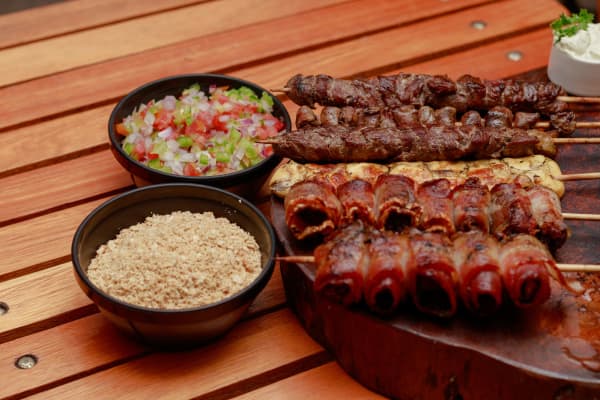
A churrascaria run rodizio style works like this: you pay a fixed price per person, you help yourself to a large salad and hot bar, and then servers circulate continuously with skewers of grilled meat, carving directly onto your plate. You control the flow with a two-sided card — green means keep coming, red means stop.
The cuts matter and most first-timers do not know to wait for them. Picanha — the top sirloin cap, salted and grilled over the fat — is the one Brazilians care about and the one to prioritize. Bacon-wrapped chicken, garlic sirloin, sausage and lamb circulate alongside, and grilled pineapple usually closes it.
The universal rookie error: filling up on the excellent salad bar, the cheese bread and the fried banana in the first fifteen minutes. Take a token amount, flip to green, and wait.
Utah Valley has churrascarias in Orem and in the north county, and they function as the valley's default celebration restaurant — birthdays, graduations, and the return of anyone who spent two years in São Paulo.
What the format leaves out is most of Brazilian cooking. Feijoada, the black bean and pork stew that is the national dish, pão de queijo, the chewy cheese rolls, coxinha, the teardrop-shaped shredded chicken croquette, and brigadeiros, the chocolate fudge balls at every Brazilian birthday, are all better represented by small bakeries, food trucks and pizza operations around the valley than by the steakhouses.
Venezuela: arepas, and the corn cake worth knowing
Venezuelan food has arrived in Utah Valley relatively recently and it is the most approachable cuisine on this list.
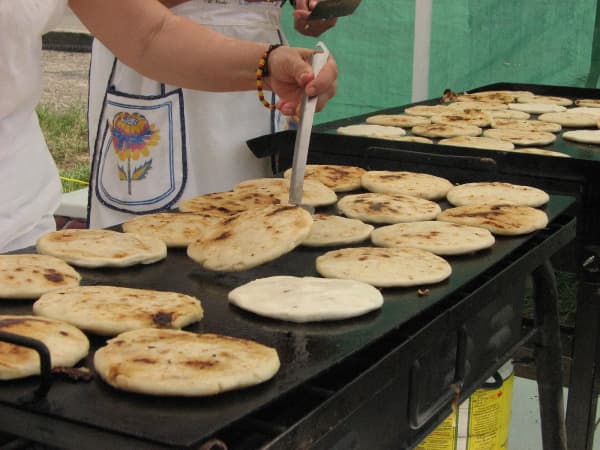
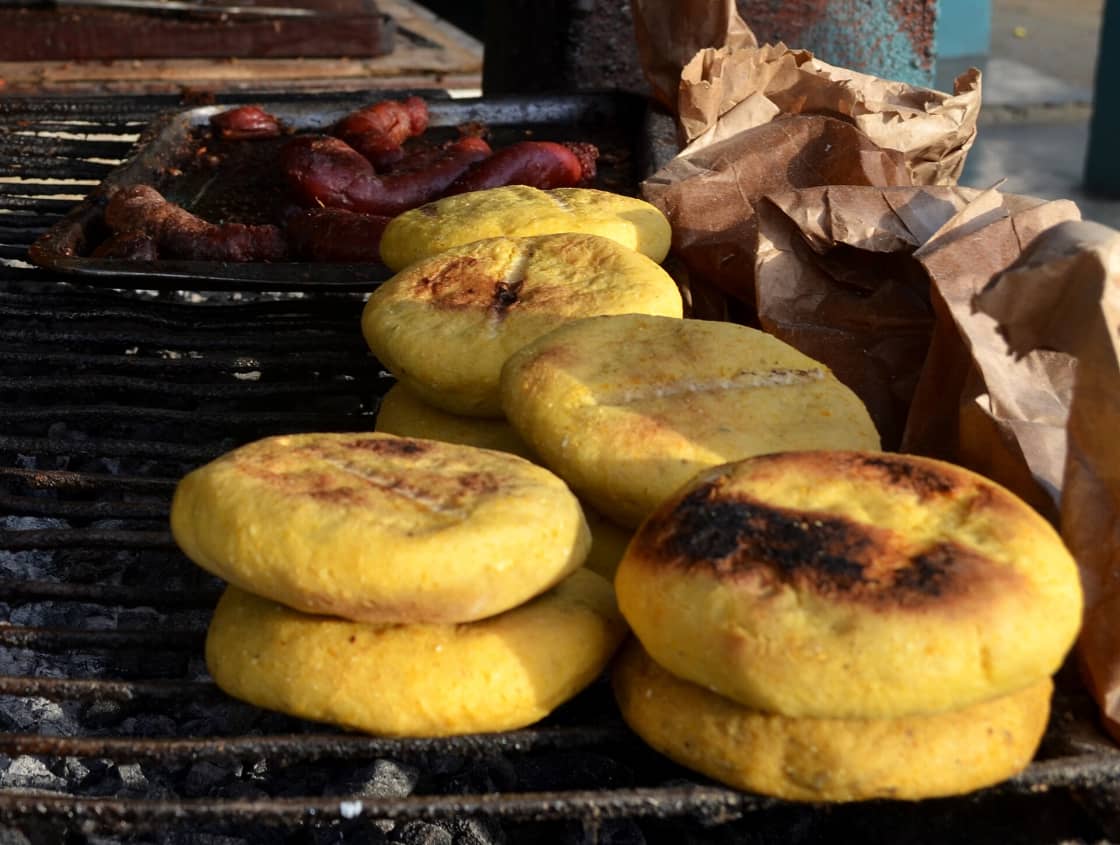
The centerpiece is the arepa — a round cake of ground maize, griddled until it forms a crust, then split and filled. It is not a tortilla and it is not a pupusa: a pupusa is stuffed before cooking and sealed, an arepa is cooked first and opened afterward like a roll.
Standard fillings include reina pepiada, chicken salad with avocado, which is the one to order first; pabellón, shredded beef with black beans, sweet plantain and white cheese, which is the national dish in sandwich form; and simple cheese versions. Arepas are naturally gluten free, which makes these places useful to know about — our gluten-free guide covers the wider picture.
Alongside them: tequeños, cheese sticks wrapped in a thin dough and fried, which are the most reliably crowd-pleasing item in this entire guide; cachapas, sweet corn pancakes folded over cheese; and empanadas in a fried corn dough.
Venezuelan operations in Utah Valley skew small — counter-service spots and trucks — and Orem has been the center of gravity.
Argentina: beef, Italy, and the pastry
Argentine food confuses people who expect it to resemble the rest of the continent. It does not, because Argentina received enormous Italian and Spanish immigration and the food went with it.
Beef is the identity. Argentine grilling — asado — is about time and salt rather than sauce and marinade, and chimichurri, the parsley, garlic, oregano and vinegar sauce, is served alongside rather than cooked in. It is not spicy.
Empanadas are the everyday food and the Argentine style is typically baked rather than fried, often filled with beef, olive and hard-boiled egg. The crimping pattern traditionally indicates the filling, which is a detail worth asking about.
Milanesa is a breaded cutlet — Italian influence, unmistakably — often served a la napolitana, topped with ham, tomato and melted cheese.
Alfajores are the pastry to take home: two soft cookies sandwiching dulce de leche, frequently rolled in coconut or coated in chocolate.
Provo has Argentine cooking, and the valley's Argentine options tend to be small and owner-run.
Colombia, and the rest
Colombia deserves a mention it rarely gets. Bandeja paisa is the enormous platter — beans, rice, ground beef, chicharrón, plantain, avocado, arepa and a fried egg — that functions as a national statement. Colombian empanadas are fried in a corn dough and are crisper than any other version. Arepas appear here too, generally thinner than Venezuelan ones and often served as a side rather than a sandwich.
Chilean, Ecuadorian and Bolivian cooking surface in Utah Valley mostly through food trucks, market stalls and catering rather than storefronts, which means they move. Festival Latinoamericano in downtown Provo over Labor Day weekend is the single best opportunity in the year to eat across all of these in one afternoon, and it is free.
What to drink, in a valley that mostly does not drink
South American restaurants adapt unusually well to Utah Valley, because a large share of what they serve was never alcoholic to begin with. This is one of the quiet reasons the category has done well here.
Inca Kola is the one to try first, and it is a genuine cultural artifact. A bright yellow, intensely sweet Peruvian soda flavored with lemon verbena, it outsells the global cola brands in Peru — one of very few countries where a local soft drink beat them outright. It tastes approximately like bubblegum and it is non-negotiable with Peruvian food.
Chicha morada is the better drink. Made from Peruvian purple corn simmered with pineapple, apple, cinnamon and clove, then chilled and sweetened, it is deep purple, spiced, and completely unlike anything most Americans have had. Order it once.
Guaraná is Brazil's answer — a soda made from an Amazonian berry, lightly fruity and less sweet than it looks.
Papelón con limón, Venezuelan cane sugar and lime, is essentially a rougher, more interesting lemonade. Maracuyá — passion fruit juice — turns up across the continent's restaurants and is worth ordering anywhere it appears.
Mate, the bitter steeped herb drink shared through a metal straw, is Argentine and Uruguayan daily life rather than restaurant fare, though it turns up in local markets. It contains caffeine, and it is worth knowing that for anyone whose consumption habits make that relevant.
Coffee is where Brazil and Colombia have obvious claims, and Utah Valley's cafes have increasingly noticed — single-origin Colombian beans are no longer a specialty item here.
Cooking it at home
A fair share of the interest in this food in Utah County comes from people trying to reproduce something they ate abroad, and the ingredients are more available than they were a decade ago.
The essentials to hunt for: masarepa, the precooked corn flour that makes arepas and is not interchangeable with masa harina; aji amarillo paste, which is the backbone of a lot of Peruvian cooking; dulce de leche for the alfajores; queso fresco or a Venezuelan-style white cheese; and frozen yuca and plantain, which save an enormous amount of work.
The Latino markets and panaderías around Provo and Orem carry most of this, and the larger grocery stores increasingly stock the basics. Where the markets outperform is on the things that are hard to substitute — the corn varieties, the specific chile pastes, and the cuts of beef that a churrasco requires.
The dish worth learning first is arepas. Masarepa, water, salt, fifteen minutes, a griddle, and you have made the staple of two countries with three ingredients.
How to find it, given that it moves
The practical difficulty with this category is that a meaningful share of it operates at a scale below stable storefront retail.
Confirm before you drive. Small family restaurants change hours, close on days that are not obvious, and occasionally move. This is the most volatile category in the valley's food scene.
Check the food trucks. A significant amount of the best Venezuelan, Colombian and Peruvian cooking here is mobile. Our food truck guide is the place to start.
Search by country, not by "Latin." Searching Latin food returns a blend of Mexican restaurants and generic listings. Searching Peruvian or Venezuelan or arepas returns the actual thing.
Watch the markets. The valley's Latino markets and panaderías carry South American products, and the people behind the counter know which restaurants opened last month.
Go on a weekend afternoon. Many of these places are at their fullest and best staffed on Saturdays, and a weekday 3 p.m. visit to a small kitchen can be a thin experience.
Reading a menu you cannot read
South American menus in Utah Valley are frequently in Spanish or Portuguese with partial English translation, and the translations are often unhelpful — "beef with rice" describes half the continent.
A short vocabulary that unlocks most of it:
Lomo is loin. Pollo is chicken, carne or res is beef, cerdo or chancho is pork, pescado is fish, mariscos is shellfish. Frango and carne cover the same ground in Portuguese.
Saltado means stir-fried. A la brasa means spit-roasted over coals. Frito is fried, asado or parrilla means grilled over fire, guisado is stewed. Milanesa is breaded and pan-fried.
Arroz is rice, papas are potatoes, yuca is cassava, plátano or maduro is plantain — maduro specifically meaning the sweet ripe version, as opposed to tostones, which are green plantain smashed and fried twice.
Aji is chile, and in Peru it is usually the name of a sauce rather than a warning. Chimichurri is the Argentine herb sauce. Curtido is the pickled cabbage that comes with Salvadoran food.
Entrada is a starter and plato fuerte or segundo is the main. A menú or menú del día is often a fixed-price lunch, which in a Peruvian restaurant is usually the best value on the board and frequently is not printed in English at all.
The one instruction worth following above all: ask what the kitchen is proud of. In a small owner-run restaurant this question reliably produces a better meal than anything on the printed menu, and in this particular category the person answering usually cooked it.
The returned-missionary palate, and why it raises the bar
There is a dynamic in Utah County restaurants that does not exist in most American markets, and it is worth naming because it explains the quality.
In an ordinary city, a Peruvian restaurant's customer base is Peruvian families plus adventurous locals who have no reference point. The adventurous locals cannot tell whether the ceviche is right. That is a soft market, and soft markets produce softened food.
Here, a meaningful share of the non-Peruvian customers spent two years in Peru. They know what pollo a la brasa costs on a Lima street, they know whether the aji sauce is correct, and they will say so. The same is true of Brazil, Argentina and Chile.
The consequence is a market where dumbing the food down does not work, because the people you would be dumbing it down for are exactly the people who would notice. Several kitchens in this valley are cooking with less compromise than they would elsewhere in the United States, and the reason is a religious practice that has nothing directly to do with food.
It has limits. It skews toward the countries that receive the most missionaries, which is part of why Brazilian and Peruvian food are better represented here than, say, Bolivian or Paraguayan. But where it applies, it applies strongly.
What to order if you have never done this
A short decision tree.
If you want the most interesting meal: Peruvian, lomo saltado, and ceviche if you like raw fish.
If you are feeding a group of six with mixed tastes: a Brazilian churrascaria. Nobody dislikes it and the salad bar covers the vegetarians adequately.
If you want lunch for one, quickly, and possibly gluten free: a Venezuelan arepa, reina pepiada.
If you want something familiar-adjacent that is still not what you expected: Argentine milanesa or empanadas.
If you want dessert: alfajores, and buy more than one.
The honest assessment
Utah Valley's South American scene is good and fragile.
Good, because the demand base is unusual and informed — a customer who lived in Lima for two years is a demanding customer, and the kitchens here are cooking for people who know what the dish is supposed to taste like.
Fragile, because most of these are small family businesses in a market where rents are rising, and because they are frequently buried under a Mexican-food search result. A restaurant serving excellent Venezuelan food in Orem is competing for attention against forty taco shops with better search visibility.
The practical response is simply to go, and to go to the small ones rather than only the churrascarias. The steakhouses will be fine regardless. The single-family arepa counter will not necessarily still be there in two years, and it is the better story.
Delivery: What Travels, and What to Collect
South American cooking splits cleanly between things that survive a drive and things that really do not.
Empanadas are the interesting case. They are handheld, sealed and dense, so they hold their heat and their shape perfectly well — but the pastry is the point, and a baked or fried shell softens inside a closed container within about fifteen minutes. They arrive good rather than excellent. If empanadas are the whole order, collecting them is meaningfully better; if they are part of a larger order, they are fine.
Grilled and roasted meats travel well, particularly anything served sliced with a sauce. Stews, beans, rice dishes and anything braised are unaffected by the trip. Arepas hold up reasonably if they are filled and wrapped rather than open-faced.
Chimichurri and other fresh sauces should always come separate. They are emulsions of oil and herbs, they soak into anything starchy on contact, and they are the element most likely to turn a good order into a soggy one.
What to avoid ordering for delivery: anything fried and unsauced, anything with a crisp plantain element, and anything plated as a composition where the arrangement is part of the dish.
As with several cuisines on this site, a number of the smaller family-run kitchens here are not on the delivery platforms, because the commission does not work at their prices. Calling them directly gets you the full range and usually a better price.
Our food delivery guide covers the platforms and the markup.
Related Guides
- The Provo & Orem restaurant directory — every place we cover, with its address, filterable by cuisine and city
- Pupusas and Salvadoran Food in Provo: Where to Go and What to Order
- Latino Markets and Panaderías in Provo
- Best Mexican Restaurants in Utah Valley
- Festival Latinoamericano: Provo's Biggest Free Festival
- Best Steakhouses in Utah Valley
- Best Food Trucks in Provo & Orem
- Best Restaurants in Provo
Frequently Asked Questions
Is there South American food in Provo and Orem?
What is the difference between South American and Mexican food?
What should I order at a Peruvian restaurant?
What is an arepa?
What is a Brazilian churrascaria and how does it work?
Why does Utah Valley have so much South American food?
Where can I find empanadas in Utah Valley?
Is South American food spicy?