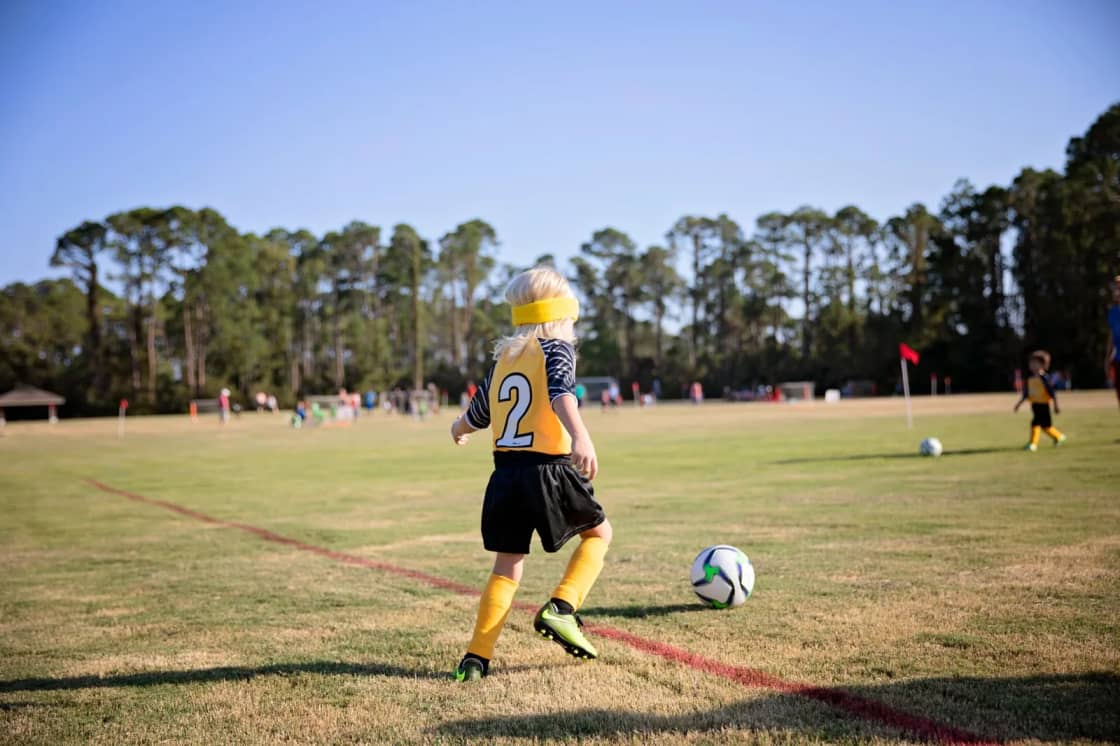

The first thing to understand about youth soccer in Utah County is that the sport's national reputation as an expensive club machine is only true of one of its three tiers here. The other two are cheap, local and enormous. On a Saturday morning in September the park fields in every city in the valley fill with five-year-olds in oversized city-league shirts chasing a ball in a pack, and the parents on the sidelines have paid the cost of a tank of gas for the whole season. That is rec. Above it sits club — the Utah Youth Soccer Association's competition system, with tryouts, paid coaches, a fall and a spring season, and bills that climb through the teens. Above club sits the academy tier, which means one thing at age six and a very different thing at sixteen.
This guide explains the three tiers as they exist in Utah Valley, what each one asks of a family in money and weeknights, when the registration windows open and close, which clubs and cities field teams, and how to decide which tier fits a particular child. It is written for the parent with a kindergartner who has just asked to play, and for the parent with a ten-year-old who has just been told by a rec coach that "she should really be in club." Our youth sports overview covers the whole landscape across every sport; this page goes deep on the one sport that, by registrations, is the biggest in the valley. Fees and dates below come from the clubs' and cities' published pages for the 2025–26 and 2026 seasons and are hedged accordingly; every program republishes them each year, and the program's own page is the source for the current number.
Why Soccer Is the Biggest Youth Sport Here
Utah County is young, and it is soccer country. UYSA, the state association, reports on the order of sixty clubs and roughly 55,000 registered players statewide, and the Wasatch Front's south end carries a large share of them. The reasons compound: the sport needs nothing but a ball and a field, both of which every city here has in quantity; the Latter-day Saint family structure produces households with four or five children, which favors sports that a parent can afford for all of them; the professional club up the road, Real Salt Lake, has run a state cup and an academy pipeline that make the top of the ladder visible from the bottom; and the valley's build-out of enormous sports complexes over the last decade — Epic Sports Park in Provo above all — has given the sport more turf than any other.
The result is a system with three distinct tiers and, importantly, three distinct calendars. A family that understands the calendar avoids the single most common mistake, which is discovering in July that the club season for August was decided in May.
Tier One: Recreation
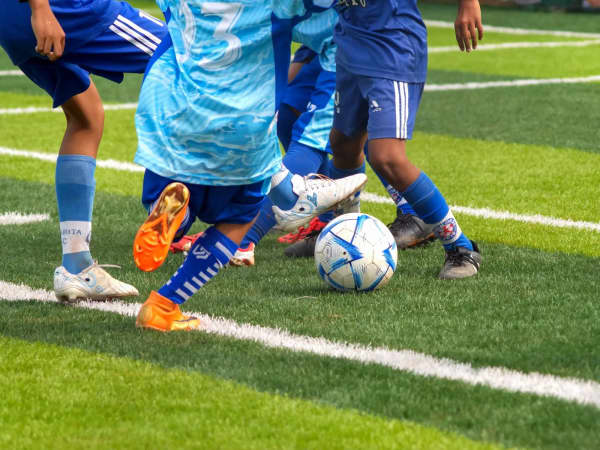
Rec soccer is the city league. In most Utah County cities it is run by the parks and recreation department: you register online, the city sorts children into teams by age (usually by grade or by two-year age band), a parent volunteers to coach, the team practices once a week on a city park field and plays once a week, usually Saturday morning, for about eight weeks. There is a fall season, which is the big one, and in most cities a shorter spring season. The fee runs from the low tens of dollars for the youngest tiny-tot and parent-and-child programs to somewhere under $100 for the grade-school leagues, with a modest non-resident surcharge; a jersey is usually included or a few dollars extra.
Provo runs its rec programs out of the Recreation Center with games at the city parks and, increasingly, at Epic Sports Park; Orem, Lehi, American Fork, Pleasant Grove, Spanish Fork, Springville, Saratoga Springs and Eagle Mountain all run their own. Registration for fall rec opens in the spring or early summer and closes in July or early August, well before school starts; spring rec registration opens after the holidays and closes in February or March. The cities publish these windows on their recreation pages, and they are strict, because the team draw happens right after the close.
Beside the city programs sits a second kind of rec: the county-wide intra-city leagues, in which a child registers with a private league operator, chooses a city to represent, and plays other cities' rec teams. These have grown fast in the valley because they let a family in a city with a thin program play a fuller schedule, and because they run sports the cities do not. The published fee scale for one of the larger operators in 2026 ran from about $45 for early registration to $85 for late, with games grouped into west (Saratoga Springs), north (Lehi and American Fork), central (Orem and Provo) and south (Spanish Fork) regions so that a family is not driving the length of the county for a rec game. Registration for the fall season opens in May and closes in early August, with games starting in mid-August.
What rec is for: learning the game, playing with school friends, finding out whether a child likes soccer or merely likes running around. What rec is not for: instruction. The coach is a parent, the practice is one hour, and a child who wants to get good will plateau in rec by about nine. That is not a criticism of rec; it is the design.
Tier Two: Club (Competition)
Club soccer is the Utah Youth Soccer Association's competition system. Every club in it is a private organization — some nonprofits with boards, some businesses — sanctioned by UYSA, which is the state affiliate of US Youth Soccer. UYSA runs the leagues the clubs play in, sets the age brackets (by birth year, not grade), certifies the referees, carries the insurance, and — the detail that matters most to a family — sets one statewide tryout window that every club must observe.
How a child gets on a club team. Tryouts. UYSA has held its window in late May and the first days of June in recent years, for the season that begins in August. A child registers for a club's tryouts (a fee, usually covering every session at that club), attends one or more sessions, and receives an offer — or does not — usually within days. The offer names a team and a tier within the club, and it expects an answer fast, often within forty-eight hours, because the clubs are all filling rosters in the same two weeks. Accepting means signing a financial agreement for the full year. A family that wants to compare clubs schedules the tryouts before the first offer lands; a family that tries out at one club and waits will find the others full.
What the year looks like. A fall league season from August into late October or November, a break for winter (with optional indoor futsal or turf leagues, which most clubs run and charge for separately), a spring season from March into May, and tournaments in between — typically two or three a year, some in state, some out. Two practices a week is standard, three at the older and higher tiers. League games rotate across the whole Wasatch Front, so a Utah County team plays roughly half its games an hour away. UYSA's state cup, the first stage of the national championship series, runs in the fall for the older age groups.
The tiers inside a club. This is where the money and the commitment diverge, and where parents most often misjudge. A club with a hundred teams has, in each birth year, a top team (called state, premier, elite, or the club's own label), one or more middle teams, and lower "all-area" or "district" teams. The top team travels, plays in the highest UYSA division or a national league, and costs the most. The lower teams play locally, travel less, and cost less. Most children in club soccer are not on the top team, and the sport's reputation for cost comes from the top team's bill. Ask what the lowest-commitment team in your child's birth year looks like; that is the honest comparison to rec.
What it costs. No club publishes a single number because there is no single number. The picture from published 2025–26 fee tables along the Wasatch Front: the youngest academy pools (five- and six-year-olds) around $380 a year; all-area competition teams for nine-to-twelve-year-olds in the high hundreds to around $1,500; teen all-area teams around $2,000 to $2,175 including winter indoor time; and the national-league tiers (ECNL and ECNL Regional League) $2,650 to $3,400 before travel. On top of the club fee sit UYSA's own charges — a membership fee of $13 for competition players, a league fee of $33 per season for U9 through U19, and a $40 field fee, as published on UYSA's fee-structure page — plus referee fees, a uniform kit for new players (a couple of hundred dollars, replaced every two or three years), and team fees for tournaments and coach travel that clubs explicitly exclude from their headline price. A realistic all-in figure for a middle-tier eleven-year-old is $1,500 to $2,500; for a top-tier fifteen-year-old, $3,500 to $5,000. Most clubs offer payment plans of up to eleven installments, and most have a financial-aid process; ask.
Which clubs are here. UYSA's club finder is the authoritative list, and it changes. Recent listings with a Utah County base or location include La Roca FC (with a Lehi site; La Roca is a Layton club that expanded south), Utah Avalanche (whose Utah County arm has operated under its own club name for elite competition), LFC International Academy in Provo and Orem, Nebo United in Payson, and a set of smaller competition and district clubs in Spanish Fork, Saratoga Springs and the Eagle Mountain corridor. Some of these are nonprofits with parent boards; some are for-profit; some are the local affiliate of a national brand. The finder lists which programs each offers — competition, academy, recreation, district — and that list is the first filter.
The district tier. UYSA maintains a level between recreation and competition, called district, with a lower membership fee ($13, matching competition, but without the per-season league and field charges of the competition tier in most cases) and, at most clubs, a lighter schedule and lower club fee. It is the tier for the eleven-year-old who has outgrown rec but whose family is not ready for the competition calendar, and it is chronically under-advertised because clubs make their reputations at the top. Ask for it by name.
Tier Three: Academy
"Academy" means two different things in Utah soccer, and the word confuses more families than any other.
At the bottom of the ladder, an academy is a club's pre-competitive pool for six-to-eight-year-olds: a season of skills training in a group, no fixed team, no league standings, and a modest fee. It is a club's on-ramp, designed to move children into its competition teams at nine. Several Utah County clubs run one, and for a seven-year-old who has done two seasons of rec and wants more, it is the natural next step — cheaper than club, better coached than rec.
At the top of the ladder, academy means the nationally affiliated tiers: the Elite Clubs National League (ECNL) and its Regional League on the girls' and boys' sides, the MLS Next pathway on the boys' side, and Real Salt Lake's own academy at its Herriman complex, which is a scouted, invitation-only program that does not take registrations. These tiers travel out of state for league play, cost the most, and are for the small number of players who are being developed for college and professional soccer. A family whose thirteen-year-old is on a club's top team will start to hear about them; a family whose thirteen-year-old is on the second team should not lose sleep over them. The state has a handful of clubs with ECNL status, and the Utah County affiliates of the big Wasatch Front clubs are the usual route in.
The Calendar, Assembled
Because the three tiers run on three calendars, here is the year for a family that wants to keep every option open:
- January–February: spring rec registration opens at the cities and the intra-city leagues. Club spring seasons are already set.
- March–May: spring rec season. Club spring league. Clubs publish tryout dates (usually in April) and open tryout registration.
- Late May–early June: the UYSA tryout window. Offers within days. Financial agreements signed. Club fees for U6–U12 are typically due in the first days of June at the larger clubs.
- May–July: fall rec registration at the cities and the intra-city leagues, closing in late July or early August.
- August: club fall season begins. Intra-city rec games begin mid-month. City rec seasons begin at the end of the month or in early September.
- August–November: everything runs at once. State cup for the older club age groups.
- December–February: indoor futsal and turf leagues for club players; nothing for rec.
The trap in that calendar is May. A family that has not decided by mid-May whether a child will try out for club has, in practice, decided.
Where the Games Are
Rec plays on neighborhood park fields, which is its charm. Club league play rotates across the Wasatch Front's big complexes, and in Utah County that means Epic Sports Park in west Provo — 100 acres, the largest complex in the state, the venue for the 2026 US Youth Soccer boys' national championships and the destination for the biggest tournaments — along with the large school-district and city complexes in Lehi, Orem, American Fork and Spanish Fork. Games in Salt Lake and Davis counties are at the equivalent complexes there, and the Real Salt Lake academy grounds in Herriman host state cup rounds. In winter, the private indoor facilities in Lehi, Lindon and Orem sell turf time to clubs and run their own futsal leagues; a club's winter program is usually at one of them.
A family's real cost in club soccer is not the fee; it is the drives. Two practices and one game a week, with half the games an hour away, is six to eight hours of transport a week for a single child. Families with three children in club soccer arrange their lives around it, and that — not the money — is the thing to think hardest about before accepting an offer.
How to Pick a Tier for a Particular Child
Under eight: rec, at the city. Two seasons at least. If the child asks for more, a club academy pool at seven or eight. Nothing else is worth the money yet, and a coach who tells you otherwise is recruiting.
Eight to ten, loves it, wants more: try out for club, and ask the club for its lowest-commitment competition or district team. Compare at least two clubs. Get the all-in number including last year's team fees. Sign for one year, not the dream.
Eight to ten, likes it, other interests too: stay in rec or move to the intra-city league. The sport will still be there at eleven; district takes late starters.
Eleven to thirteen, on a club's second or third team: you are in the right place. The top team is a bill, not a promise. Talk to the coach about what the child needs to move up, and decide whether the child wants it or you do.
Thirteen and up, on a top team, hearing about ECNL: ask the club, plainly, how many of last year's players in that tier went on to play in college and where. Then ask what the year costs with travel. Then decide as a family, because the number will be a car.
Any age, cost is the problem: rec, the intra-city league, or district. Ask every club about financial aid; most have some. And know that the difference between a $1,500 season and a $4,000 season, at the ages below fourteen, is mostly travel, not coaching.
What Nobody Tells the New Parent
Three things, in the order they bite.
First, the tryout offer comes with a clock. The two-day answer window is real, and it is designed to keep families from shopping. Plan the tryouts so that the club you most want is not the last one you see.
Second, the financial agreement is for a year, and clubs enforce it. If a child quits in October, the family still owes the spring. Read it. Ask what happens on injury; most clubs have a policy, and it is rarely a full refund.
Third, the sport is not the club. A child who plays rec until twelve and district until fourteen and then makes a high-school team has played more soccer, for less money, than most children who went to club at nine and burned out at twelve. The valley's high-school programs — the ones our Friday-night guide covers for football have their spring and fall equivalents on the pitch — take players from every path. The ladder is a tool. Use the rungs you need.
Finally, injuries. Soccer at the club tier produces a steady stream of ankle, knee and overuse injuries at twelve to fifteen, and the valley's sports-medicine clinics see them every week. A child playing two sports on the same calendar, or one sport year-round with no off-season, is the pattern to avoid; ask the club how it handles rest, and notice whether the answer is a policy or a shrug.
The Short Version
Start in rec at the city; it costs almost nothing and it is where the friends are. If the child wants more at eight or nine, try out for club during the UYSA window in late May, compare at least two clubs, and ask each for its lowest-commitment team and its real all-in cost. Sign for one year. Know that "academy" means a skills pool at six and a national league at sixteen, and that the district tier exists for the child in between. And plan around the drives, not the fees, because the drives are the actual price.
Related Guides
- Youth Sports in Utah Valley: City Rec, Club Teams & What It Costs
- Youth Baseball & Softball in Utah Valley
- Jr. Jazz in Utah Valley: Registration, Fees, the Draft
- The Complete Guide to Epic Sports Park
- Summer Camps in Utah Valley
- The Provo Recreation Center
- Sports Medicine in Utah Valley
- Intramurals & Club Sports at BYU and UVU
- Youth football in Utah Valley — tackle, flag and how the districts are drawn
- Youth Sports Registration Calendar — every sign-up window we can verify, by sport, city and age
Frequently Asked Questions
What is the difference between rec, club and academy soccer in Utah Valley?
How does the Utah Youth Soccer Association fit in?
When are club soccer tryouts, and can a child try out for more than one club?
What does a season of club soccer actually cost?
Which clubs field teams in Utah County?
Where do the games get played?
How young can a child start, and how old is too old to start?
Is there a cheaper middle option between rec and club?