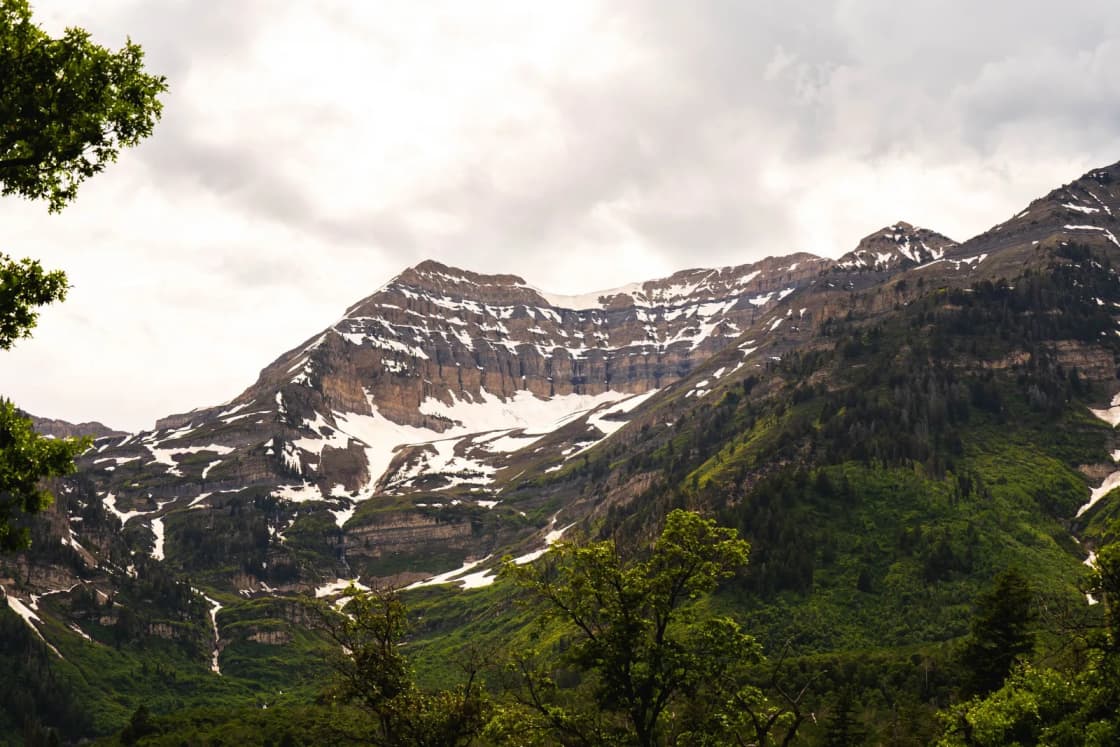
Long before anyone in Provo Canyon said the word Sundance, the North Fork had a rope tow bolted to a Chevrolet truck engine, a one-dollar day pass and a name picked from a public contest. Timp Haven was a family ski hill run by the Stewarts, who had homesteaded the flats under Mount Timpanogos around the turn of the 20th century. A young actor bought a $500 lot there in 1961. By the end of the decade he owned the mountain, had given it the name of his most famous role, and set it on a path that would lead to the Sundance Institute, the world's best-known independent film festival and, in 2020, a sale to outside investors.
This page tells that story in order, from the sources: the resort's own history, Ski Utah's resort history, Utah Humanities, BYU's Intermountain Histories project, the Stewart family's own historian, and Deseret News, Salt Lake Tribune, KSL and Daily Herald reporting. On several points those sources do not agree, and where they don't, we say so instead of picking a winner. For skiing, lodging, dining and lift tickets today, our Sundance Resort guide is the place to go; this page stays with the history.
Quick facts
| Year | What happened | Source |
|---|---|---|
| About 1900 | Stewarts homestead roughly 2,200 acres, later called Stewart Flats | Stewart family historian; Ski Utah dates the 2,200 acres to 1911 |
| 1944 | Stewart family opens Timp Haven ski area | Ski Utah, Utah Humanities, Intermountain Histories |
| 1948 | T-bar added, powered by a 1938 Ford truck | Ski Utah |
| 1953 | Single chairlift with a 2,500-foot track | Ski Utah |
| 1961 | Redford buys a lot in Timp Haven Homes for $500 | Ski Utah, Salt Lake Tribune |
| 1968 or 1969 | Redford buys the ski area and renames it Sundance | Sources split; see below |
| 1978 | Utah/US Film Festival starts in Salt Lake City | Park City Historical Society, Deseret News |
| 1981 | Sundance Institute founded; first lab held at the resort | Sundance Institute, Salt Lake Tribune |
| 1985 | Institute takes over the film festival | Sundance Institute |
| Dec. 2020 | Redford sells the resort to Broadreach and Cedar Capital | Deseret News, KSL, Salt Lake Tribune |
| Sept. 2025 | Redford dies at his home at Sundance, age 89 | Associated Press via PBS |
| Jan. 2026 | The Inn at Sundance opens; last Utah edition of the festival | Sundance Resort, Sundance Institute |
Before the skiers: Ute summer country and Stewart Flats
The resort's own history page starts with the Ute people, describing them as the land's original inhabitants. Ski Utah and Intermountain Histories, a BYU-based project of the Charles Redd Center for Western Studies, both say the Ute nation occupied the area from about 1400 AD and used the high meadows in summer for the cool air, the forests and the game. Utah Open Lands, which now holds a conservation easement on part of the land, lists protecting the site's "sacred and cultural significance" among its purposes and notes that the Ute Tribe historically used the area as hunting grounds. Our guide to the Timpanogos people of Utah Valley covers that longer history.
The settler chapter belongs to one family. Intermountain Histories and Ski Utah both describe the Stewarts as Scottish immigrants who came to Utah in the mid-1800s, and both say Andrew Jackson Stewart Jr. and his sons surveyed land in the canyon and each took 160 acres under the Homestead Act. By 1911, they say, the Stewart families held about 2,200 acres in the North Fork, an area people called Stewart Flats because so many Stewarts lived there.
A family account adds dates the shorter histories leave out. Stan Stewart, a great-grandson of Andrew Jackson Stewart Jr., wrote in 2020 that his great-grandfather and two sons, Scott Pease Stewart and John Riggs Stewart, surveyed the land east of Timpanogos for the US General Land Office in 1899, then came back to homestead it, and that the family collectively homesteaded about 2,200 acres starting the following year. His footnotes cite family biographies and papers held in University of Utah Special Collections, including Barbara Stewart Anderson's 2001 book Before Sundance: Ray Stewart and Timp Haven. He also writes that after Andrew Jackson Stewart Jr. died in 1918, Scott and John formed the North Fork Investment Company, and that in August 1921 the company donated 20 acres at Aspen Grove to BYU's Alpine Summer School, plus land for a Boy Scout camp and a church girls' camp.
That leaves a small discrepancy: the published histories say "mid-1800s" for the survey and 1911 for the 2,200 acres, while the family historian puts the survey in 1899 and the homesteading right after. The two are compatible if "mid-1800s" refers to the family's arrival in Utah rather than to the canyon survey, which is the most natural reading.
Ski Utah adds the context that made the flats a recreation spot. It credits BYU professor Eugene L. Roberts with popularizing hiking in the area in the early 1900s, says the Utah County Commission built a road for automobiles in the 1920s, and records a first slalom race on the Mount Timpanogos glacier in July 1941. The Provo Canyon road history covers how the highway below developed.
Timp Haven, 1944 to the late 1960s
Who started it
Every source agrees on 1944 and on the Stewart family. They name the founders a little differently:
- Ski Utah says S. Paul Stewart owned Timp Haven and ran it for 20 years with his brother Ray and Ray's wife Ava.
- Intermountain Histories says S. Paul Stewart and his brother and sister-in-law, Ray and Ava Stewart, opened it, and that it operated for 20 years.
- Utah Humanities, in a Beehive Archive feature reprinted by the Daily Herald in 2023, says Ray, Ava and Paul Stewart started it.
- The Stewart family historian says Ray Stewart (1910 to 1995) and Scott Paul Stewart opened it and started its first rope tow.
Ski Utah says the name came from a contest, and that Ruth Biddulph won a season pass that year for suggesting "Timp Haven."
What it was like
Ski Utah's history gives the most detail on the early operation. In the winter of 1944, it says, the Timpanogos Mountain Club gave up on a tow-rope plan when the rope wasn't ready, and the hill's rope tow ended up powered by a Chevrolet truck engine, hauling skiers 500 feet. The season usually ran from around Christmas into early March. A day pass cost $1. Provo City installed lights for night skiing on Mondays, Wednesdays and Fridays, and by the mid-1940s the hill offered ski lessons, BYU ski classes and a tubing and toboggan hill.
The lift timeline, also from Ski Utah:
| Year | Addition | Detail |
|---|---|---|
| 1948 | T-bar | Lifted skiers 1,000 feet; powered by a 1938 Ford truck |
| Autumn 1953 | Single chairlift | 2,500-foot track |
| 1957 | Lodge | On the site of today's General Store and Grill |
| 1958 | Poma lift | Same year longtime employee Jerry Hill started work |
| 1960s | Timp Haven Homes | Stewart subdivision of cabin lots |
Ski Utah's 2021 history said Jerry Hill had then worked at the mountain for 63 years and called him the longest-tenured employee in America. We have not found an independent count, so treat that superlative as the resort's and Ski Utah's claim.
For context on where Timp Haven fit among Utah's early ski hills, from Ecker Hill to Alta's first chair, see our history of skiing in Utah.
Redford arrives
How Robert Redford found the canyon is told three ways:
- The resort says that in 1961, just beginning his acting career, he rode up Provo Canyon, was taken with the place, bought land and built a small cabin for his family.
- Utah Humanities says he came on Provo Canyon by accident while driving between California and Colorado, and was drawn by the views of Mount Timpanogos.
- Intermountain Histories says he found the area by accident "in the 1950s" after a wrong turn on a road trip through the West.
There is a family tie the accident stories leave out. The Salt Lake Tribune's 2020 sale story says that in 1961 Redford and his first wife, Lola Van Wagenen, a Provo native, bought two acres next to the Timp Haven ski area and built a house there. A 2011 Deseret News column by Lee Benson says Lola married Redford in 1958. So a 1950s first visit and a 1961 purchase can both be true; the sources simply don't settle when he first saw the place.
On the 1961 purchase itself, the details line up. Ski Utah says Redford bought a two-acre lot in Timp Haven for $500. Utah Humanities says he paid $500 for a lot in the Timp Haven Homes subdivision.
The purchase, and the name
Why he bought it
Ski Utah's account is that by the late 1960s a plan was on the table for A-frame development on the slopes, and Redford bought 3,000 acres to prevent it. In August 1968, it says, he bought all of Timp Haven, including the T-bar, the rope tow and the Mandan double chair. KSL's 2022 profile, sponsored by the Utah Office of Tourism, describes the ski area at that point as a small resort with a homemade rope tow, a single chair and a T-bar, and says Redford saw the purchase partly as preservation.
The resort's current press materials say that when he bought the land it already had two basic lifts and a lodge, which he modernized.
When: 1968 or 1969
This is the most repeated disagreement in Sundance history, so here it is laid out plainly.
- 1968: Ski Utah (August 1968), Utah Humanities ("by 1968, he owned the entire resort"), the resort's own history page ("by 1968," thousands of acres), and the Stewart family historian, who says Paul Stewart sold 2,300 acres to Redford that year.
- 1969: The Salt Lake Tribune ("opened in 1969" and "in 1969 Redford bought Timp Haven"), the Deseret News ("founded the resort in 1969"), Intermountain Histories, the resort's January 2026 Inn announcement ("bought about 3,000 acres ... in 1969"), and the buyers' 2020 statement, which began, "In 1969, Robert Redford had a courageous vision."
The resort's own pages use both years. The likeliest explanation is that the land deal closed in 1968 and the ski area reopened as Sundance after the film's 1969 release, but no source we read spells that out, so we print both.
How much land
Acreage figures vary with the date and with what is being counted. Ski Utah and the resort's 2026 announcement say about 3,000 acres. The family historian says 2,300. By the 2020 sale, the Tribune and KSL put the resort at 2,600 acres, while the resort's 2026 announcement says the land now totals 3,343 acres including parcels Redford added later. The resort's history page lists 4,000 acres of "nature conservation" among its statistics. These are not necessarily contradictions, since land was bought, sold and placed under easements over five decades, but no single source reconciles them.
The name
Redford renamed the ski area after his character in Butch Cassidy and the Sundance Kid, the 1969 film with Paul Newman. Ski Utah notes that the real Sundance Kid, Harry Alonzo Longabaugh, took the nickname from Sundance, Wyoming, where he was arrested for stealing a horse. Ski Utah also records the Navajo lift going in in 1969.
"Develop a little"
The phrase that runs through every Sundance history appears in at least three versions. The resort's history page uses "developed a little, preserved a lot." Its 2026 Inn announcement says "Develop a little, preserve a lot." Ski Utah and Intermountain Histories quote Redford as saying his goal was "to develop a little and preserve a great deal." The idea is the same in all three; if you are quoting it, quote the version from the source in front of you.
From a mountain to a movement: the Institute and the festival
The resort is where the Sundance Institute started, but the film festival did not start there, and the order of events matters.
The festival came first, in Salt Lake City
The Park City Historical Society says the Utah/US Film Festival opened in September 1978 at Trolley Corners in Salt Lake City, co-founded by Sterling Van Wagenen, a BYU film graduate, along with John Earle and Cirina Hampton Catania of the Utah State Film Commission, with Redford as its first board chairman.
Lee Benson's 2011 Deseret News column, based on an interview with Van Wagenen, fills in the Utah Valley side. Van Wagenen was a Provo native working for the Utah Arts Council. He and Earle had run a film festival for the 1976 Bicentennial, and in early 1978 USC film professor Arthur Knight suggested they focus on regional low-budget features. Van Wagenen got a note to call Redford, they met at the resort, and Redford joined the board. Benson reports the first festival drew more than 10,000 people and ran $20,000 over budget. He also notes that Van Wagenen's older cousin Lola was Redford's wife, and that Van Wagenen approached Redford, not the other way around.
The Park City Historical Society says the festival moved to Park City in January 1981 at the suggestion of director Sydney Pollack, who said it would be "the only film festival in the world held in a ski resort during ski season."
The conference and the Institute
Here the sources disagree on the date of the founding meeting. Utah Humanities says Redford began hosting a three-day conference for independent filmmakers in the mid-1970s. Ski Utah says he hosted a three-day conference for filmmakers and artists in November 1979. Benson's column places the idea for a film center after the 1978 festival, which fits the later date better.
On the Institute itself, the sources agree. The Sundance Institute says Redford founded it in 1981 and, with Michelle Satter, launched its summer labs; the first Directors Lab, in June 1981, brought 16 emerging filmmakers and 34 actors and advisers to Utah, with 10 filmmaker teams working on features at the resort. Gregory Nava's El Norte was one of that year's projects. The Tribune says the labs were held at the resort for four decades. Van Wagenen became the Institute's first director, according to Benson.
The takeover and the renaming
The Sundance Institute says it took over the United States Film Festival in 1985, and that the first Institute-run festival ran Jan. 18 to 27, 1985. (That same Institute page describes the festival as held in Park City "since September 1978," which conflicts with the Park City Historical Society's account of a Salt Lake City start.) The new name came later: the Park City Historical Society says the festival was renamed the Sundance Film Festival after the 1990 event, while Benson's Deseret News column gives 1991. Intermountain Histories says Redford "founded the Sundance Film Festival" in 1978, which compresses all of this into one date.
Ski Utah says the first independent film screenings at the resort itself took place in 1985, the same year the Arrowhead lift went in.
For the full story of the festival's four decades in Utah and its departure, see our Sundance Film Festival Utah era guide.
The Redford decades on the mountain
Ski Utah's timeline of the Redford years, in brief:
- 1972: Jeremiah Johnson used the Bearclaw Cabin atop Arrowhead Summit, at 8,250 feet.
- 1985: Arrowhead lift installed.
- 1994: Ray's Lift, a quad named for Ray Stewart, began operating.
- 1995: The old Mandan and Navajo lifts were decommissioned.
- 2015: The Arrowhead triple was replaced by a quad named Red's Lift, after Redford.
The Owl Bar is the best-known object from the period, and its origin story varies by source. The Daily Herald reported in 2003 that the Owl Bar opened in 1996 as a private club, that its rosewood veneer bar was built in Ireland around 1800, that it came from Thermopolis, Wyoming, where Butch Cassidy's Hole-in-the-Wall Gang drank, and that a bullet hole was found while it was being restored in San Francisco in 1994. Ski Utah calls it an oak bar commissioned in Ireland in the late 1800s and says restoration took 18 months. The resort's own Owl Bar page says only that it is "the very wooden bar Butch Cassidy himself once bellied up to." Treat the outlaw connection as a well-loved story rather than a documented fact; none of the sources we read cites a primary record for it.
Conservation ran alongside. The Salt Lake Tribune reported in 2022 that in 1997 Redford placed nearly 900 acres at the edge of the Mount Timpanogos Wilderness into an easement with Utah Open Lands, land now known as the Redford Family Wildlife & Nature Reserve. Utah Open Lands also credits the Stewart families with earlier preservation of the area.
The 2020 sale
Redford told employees on Friday, Dec. 11, 2020, that he was selling. The Deseret News, KSL and Salt Lake Tribune all reported the buyers as Broadreach Capital Partners, based in Palo Alto, and Cedar Capital Partners, based in London and New York. The price was not disclosed. A January 2021 announcement by Ballard Spahr, the law firm for the seller, Sundance Partners Ltd., names the buyer as Storyteller Canyon Investments, LLC, and affiliates controlled by the two firms.
What the reporting says about the deal:
- Size: 2,600 acres, of which 1,845 were already protected by a conservation easement and covenants (Tribune, KSL, Ballard Spahr).
- Preserve: The Redford family partnered with Utah Open Lands to protect more than 300 acres at the base of Timpanogos, in the meadow below Stewart Falls. Utah Open Lands lists the Redford Family Elk Meadows Preserve at 316.5 acres, protected in 2020, and says the public keeps access to the Stewart Falls trail.
- Redford's reasons: He told the Tribune the resort had "created a lot of weight for me to be carrying around" and that he had searched for years for the right buyers. His prepared statement said, "Change is inevitable."
- What was not sold: The Sundance Institute, the film festival, the Sundance Catalog, SundanceTV and the Redford Center were not part of the deal.
- The buyers' plans: The Tribune reported plans for new runs, a high-speed lift, a day lodge, and an inn of 50 to 75 rooms in the village.
The family held a dedication of the Elk Meadows Preserve on Aug. 4, 2022, the Tribune reported, with a prayer by Ute spiritual leader Larry Cesspooch. (That Tribune story says Redford sold the resort in December 2019; the 2020 reporting at the time of the sale makes clear the year was 2020.)
What the new owners built
The resort and local outlets have reported a run of projects since:
- 2021: The Outlaw Express high-speed lift cut the ride to Mandan Summit from about 20 minutes to seven (Daily Herald, TownLift). KPCW reported in March 2021 that it would replace Ray's Lift and reach about 200 feet higher, reopening runs without lift service since 1995.
- 2022: More than 50 acres of intermediate terrain and expanded snowmaking (TownLift).
- 2024: The Springs pools at the base (Daily Herald) and the Mountain Camp Day Lodge (TownLift).
- January 2026: The 63-room Inn at Sundance Mountain Resort, two wings joined by a footbridge over the North Fork of the Provo River. The resort's announcement is dated Jan. 22, 2026, and gives Jan. 21 as the opening; at groundbreaking in 2024 the resort said the buildings were sized so neither stands taller than the tallest surrounding tree.
- 2026-27 season: The Electric Horseman high-speed quad, named for Redford's 1979 film, and Storyteller, a 1.7-mile ridgeline run. When the Daily Herald reported the plan in May 2025, the resort called it its "most significant mountain expansion since 1985" and cited 165 new acres. TownLift's August 2026 report on the resort's update says more than 100 acres, for a total of 605 skiable acres. Check the resort for the figure as it opens.
Redford's death and the festival's departure
Redford died on Sept. 16, 2025, at 89, "at his home at Sundance in the mountains of Utah," his publicist told the Associated Press. No cause was given.
Six months earlier, on March 27, 2025, the Sundance Institute's board had announced that the festival would move to Boulder, Colorado, starting in 2027, after considering Boulder, Cincinnati and Salt Lake City. The last Utah edition ran Jan. 22 to Feb. 1, 2026, in Park City and Salt Lake City. The Institute has set the first Boulder festival for Jan. 21 to 31, 2027. Its announcement said, "Park City and Utah will always be a formative part of the Festival," and its website still lists Utah community programs.
The resort, which has been separately owned since 2020, stays where it was in 1944: at the foot of Timpanogos, in the North Fork.
Seeing the history today
Getting there from Provo. The resort says it sits a couple of miles up a winding mountain road that branches off the four-lane Provo Canyon highway; that is US-189 to the SR-92 junction, then up SR-92. The address is 8841 N. Alpine Loop Road. On select winter dates the resort runs a free Park'n'Ride shuttle from Mt. Timpanogos Park at the bottom of the canyon, and UTA route 880 serves the resort in winter (free with a Sundance season pass). Both were listed as unavailable on the resort's site when we checked in November, so confirm before you go. Our Provo Canyon guide covers the drive.
What to look for.
- Stewart Falls. The family name survives on the waterfall below Timpanogos. Utah Open Lands says the trail stays open to the public across the Elk Meadows Preserve. Trail conditions change with snow; check the resort or the Forest Service before hiking in shoulder season.
- Lift names. Red's Lift honors Redford. Ray's Lift, named for Ray Stewart, is gone, replaced by the Outlaw Express in 2021.
- The General Store and Grill area. Ski Utah says the 1957 Timp Haven lodge stood on this site.
- The Owl Bar. Open Sunday through Thursday 4 to 11 p.m., Friday 4 p.m. to 1 a.m., and Saturday noon to 1 a.m., per the resort; it takes no reservations. Utah's alcohol rules apply.
- The mountain itself. For a sense of what the Stewarts saw, the Alpine Loop scenic drive runs on past the resort when the road is open; check UDOT for the seasonal closure of upper SR-92.
Who should skip it. If you want festival history, the resort is not the place: the screenings and crowds were in Park City and Salt Lake City, and there is no museum or historical exhibit on the property that we could confirm. This is a place to see names and landscape, not artifacts.
What to check first. Resort conditions and parking (the resort lists both paid and free options), UDOT road conditions for Provo Canyon in a storm, and the shuttle and bus schedule for the current season. For where to eat and stay, see eating in Provo Canyon and at Sundance and where to stay at Sundance.
Where the sources disagree, in one place
- First Redford visit: 1950s (Intermountain Histories) vs. 1961 (resort).
- Purchase of the ski area: 1968 (Ski Utah, Utah Humanities, resort history page, Stewart family historian) vs. 1969 (Tribune, Deseret News, Intermountain Histories, resort's 2026 announcement).
- Acreage at purchase: about 3,000 (Ski Utah, resort) vs. 2,300 (Stewart family historian).
- Stewart homestead dates: mid-1800s survey and 2,200 acres by 1911 (Ski Utah, Intermountain Histories) vs. an 1899 survey and homesteading from 1900 (Stewart family historian).
- First filmmakers' conference: mid-1970s (Utah Humanities) vs. November 1979 (Ski Utah).
- Festival renamed Sundance: after the 1990 event (Park City Historical Society) vs. 1991 (Deseret News).
- Owl Bar's bar: rosewood veneer, built in Ireland around 1800 (Daily Herald) vs. oak, late 1800s (Ski Utah).
- Expansion acreage for 2026-27: 165 acres (2025 announcement) vs. more than 100 acres (August 2026 update).
Related guides
- A Short History of Provo: From Fishing Camp to College Town
- Sundance Resort Guide
- The History of Skiing in Utah and the First Resorts
- The Sundance Film Festival's Utah Era
- Provo Canyon Road History
- Sundance in Summer
- The Timpanogos People of Utah Valley
Frequently Asked Questions
What was Sundance called before it was Sundance?
Who started the Timp Haven ski area?
When did Robert Redford buy Timp Haven?
How much did Redford pay for his first land at Sundance?
Why is it called Sundance?
Was the Sundance Film Festival started at the resort?
Who owns Sundance Mountain Resort now?
Can you still see pieces of Timp Haven and the Stewart era?
Sources
The facts in this guide were checked against these sources. Hours, fees and rules change, so confirm anything time-sensitive with the source before you go. How we make Provo.com.
- Ski Utah Resort Histories: Sundance Mountain Resort, Ski Utah. Checked November 23, 2026.
- The History of Sundance (Britain Schwarz), Intermountain Histories, Charles Redd Center for Western Studies, BYU. Checked November 23, 2026.
- Before Sundance: Homesteading Stewart Flats (Stan Stewart), Stewarts of Ballymena family history blog. Checked November 23, 2026.
- The Growth of the Sundance Film Festival, Park City Historical Society & Museum. Checked November 23, 2026.
- Redford Family Elk Meadows Preserve, Utah Open Lands. Checked November 23, 2026.
- The Sundance Resort Story, Sundance Mountain Resort. Checked November 23, 2026.
- Ballard Spahr Represents Sundance Partners, Ltd. in Sale of Sundance Mountain Resort, Ballard Spahr. Checked November 23, 2026.
- #Sundance40th: A Look Back at the Sundance Institute's 1980s Origins, Sundance Institute. Checked November 23, 2026.
- Sundance Institute Announces Boulder, Colorado, as the New Home for the Sundance Film Festival Beginning in 2027, Sundance Institute. Checked November 23, 2026.
- 2027 Sundance Film Festival To Take Place January 21-31 in Boulder, Colorado, Sundance Institute. Checked November 23, 2026.
- In Utah, Sundance Mountain Resort Opens a New Inn, Sundance Mountain Resort. Checked November 23, 2026.
- Sundance Mountain Resort Breaks Ground for The Inn at Sundance, Sundance Mountain Resort. Checked November 23, 2026.
- Sundance Mountain Resort: Owl Bar, Sundance Mountain Resort. Checked November 23, 2026.
- 3 Free Ways to Arrive, Sundance Mountain Resort. Checked November 23, 2026.
- Beehive Archive: Sundance: How Hollywood changed rural Utah, Daily Herald / Utah Humanities. Checked November 23, 2026.
- Robert Redford selling Sundance Mountain Resort (exclusive), The Salt Lake Tribune. Checked November 23, 2026.
- Founder Robert Redford has sold Sundance Mountain Resort, KSL.com. Checked November 23, 2026.
- Robert Redford selling Sundance Mountain Resort; 300 acres to be preserved, Deseret News. Checked November 23, 2026.
- Robert Redford explains the history and vision that make Sundance special, KSL.com (Brandview, sponsored by Utah Office of Tourism). Checked November 23, 2026.
- About Utah: Sterling Van Wagenen was there before Redford, Deseret News. Checked November 23, 2026.
- Robert Redford, Oscar-winning actor, director and indie patriarch, dies at 89, PBS NewsHour (Associated Press). Checked November 23, 2026.
- Sundance Mountain Resort to build new lift, add back mountain trails, Daily Herald. Checked November 23, 2026.
- Sundance Mountain Resort to add 100 acres of terrain with new high-speed quad lift, TownLift. Checked November 23, 2026.
- Sundance Mountain Resort aims to upgrade facilities and keep its independence, KPCW. Checked November 23, 2026.
- Robert Redford family sets aside Elk Meadows, The Salt Lake Tribune. Checked November 23, 2026.
- Owlelujah: Sundance bar gives night owls something to hoot about, Daily Herald. Checked November 23, 2026.