For 17 days in February 2002, the world's winter athletes competed along the Wasatch Front, from the ski jumps above Park City to a city hockey rink at the mouth of Provo Canyon. The Games came after a bribery scandal that nearly sank them and five months after the Sept. 11 attacks, which made security the first question anyone asked. More than two decades later, nearly every venue is still in use, and the IOC has given Utah the 2034 Winter Games.
This is the short, sourced version of what happened and what is left to see, with a Utah Valley angle that most retellings skip.
Quick facts
| Question | Answer | Source |
|---|---|---|
| Dates | Feb. 8 to Feb. 24, 2002 | Britannica; Salt Lake Tribune |
| Edition | XIX Olympic Winter Games | Britannica |
| Athletes | 2,399 (886 women, 1,513 men) | IOC |
| Teams | 77 National Olympic Committees | IOC |
| Events | 78 | IOC |
| Volunteers | 22,000 | IOC |
| Sport venues | 10; six already existed and four were new | IOC |
| Utah County venue | Peaks Ice Arena, Provo (ice hockey) | IOC; Daily Herald |
| U.S. medals | 34, a Winter Games record at the time | IOC; Team USA |
| Next Utah Games | 2034, elected July 24, 2024 | IOC |
How Salt Lake got the Games
The IOC picked Salt Lake City on June 16, 1995, at its session in Budapest, over bids from Canada, Switzerland and Sweden, the Salt Lake Tribune's timeline records. The state had already put money in the ground: the IOC's venue overview says $59 million in initial state funding went to venue construction before the bid, and six of the ten competition venues already existed by the time the Games arrived.
The scandal
The trouble surfaced on Nov. 24, 1998. The Deseret News chronology says KTVX Channel 4 reported a leaked 1996 letter showing scholarship payments of more than $10,000 to the daughter of an IOC member. Within weeks the story was international. IOC member Marc Hodler used the word "bribery" in an interview, and on Dec. 23, 1998, the U.S. Justice Department opened a formal investigation.
The fallout, by the Deseret News count:
- Jan. 8, 1999: Salt Lake Organizing Committee CEO Frank Joklik and Dave Johnson announced their resignations.
- Jan. 16 to March 17, 1999: Ten IOC members resigned or were expelled, and 10 others were reprimanded.
- Feb. 9, 1999: The organizing committee's Board of Ethics report put cash, gifts, trips and scholarships given to IOC members at more than $1 million.
- July 20, 2000: A federal grand jury indicted Tom Welch, the former bid and organizing committee president, and Dave Johnson on charges including conspiracy and interstate travel in aid of racketeering.
- Dec. 5, 2003: U.S. District Judge David Sam acquitted both men on all 15 counts, ruling the evidence was insufficient before the case reached a jury, the Tribune reported.
The IOC's own account of the Games calls it "a crisis related to the Olympic host election process, which led to a major reform of the process." That reform is part of the 2002 legacy too: the way cities win the Games today traces back to what happened in Salt Lake.
A new leader, then Sept. 11
On Feb. 11, 1999, the organizing committee hired Mitt Romney as its president and CEO, the Tribune timeline notes. Two and a half years later, the Sept. 11, 2001, attacks changed the mood around the Games. The IOC lists the attacks among the challenges the Games faced, and says the Games went on to help the country heal and became a symbol of resilience.
You could see it on the first night. At the opening ceremony on Feb. 8, 2002, eight American athletes carried a torn U.S. flag that had flown at the World Trade Center, Team USA recalls. George W. Bush became the first American president to open an Olympic Games. Then the cauldron. Eighteen members of the 1980 Miracle on Ice hockey team, led by captain Mike Eruzione, lit it together above the south stands of Rice-Eccles Olympic Stadium, and the Deseret News described the fire climbing 130 feet up the angular steel-and-glass structure. Eruzione later called keeping the plan quiet "the hardest secret I've ever had to keep."
The 17 days
A few moments people still bring up, from the IOC's and Team USA's accounts:
- Pairs figure skating. The judging scandal ended with two gold medals. The IOC Executive Board added a gold for Canada's Jamie Salé and David Pelletier after the skating federation suspended a French judge for misconduct; Russia's Yelena Berezhnaya and Anton Sikharulidze kept theirs. Instant video replay arrived in figure skating at these Games.
- Simon Ammann. The Swiss ski jumper had never won a World Cup event. He won the normal hill at the Utah Olympic Park, then the large hill four days later.
- Sarah Hughes. The skater from Great Neck, New York, won women's figure skating gold in an upset, months after Sept. 11.
- Apolo Anton Ohno. Gold in the 1,500 meters and silver in the 1,000 meters in short track. He went on to win eight Winter Olympic medals, the most by any U.S. Winter Games athlete, Team USA notes.
- Vonetta Flowers and Jill Bakken. Gold in women's bobsled, in the event's Olympic debut. Flowers became the first Black athlete to win a Winter Olympic gold medal.
- Snowboarding. Kelly Clark won the women's halfpipe, the first U.S. gold in any snowboarding event, and the U.S. men swept the halfpipe podium.
- Firsts elsewhere. Skeleton was on the program with a men's and a women's event (the sport first appeared at the 1928 Games in St. Moritz), and Estonia and Croatia won their first Winter Olympic medals.
The U.S. finished with 34 medals, 10 of them gold. The IOC notes that its previous best was 13, set in 1994 and 1998.
The Paralympic Winter Games followed a few weeks later. Team USA led all nations with 43 medals, the U.S. won its first sled hockey gold on home ice, and skier Sarah Will won four golds in her final Paralympics. Chris Waddell and Muffy Davis lit the Paralympic cauldron.
Utah Valley's part: Peaks Ice Arena
The Games' one Utah County venue was a city rink at 100 North Seven Peaks Boulevard, against the mouth of Provo Canyon. The Daily Herald's 20th-anniversary story says ground was broken on Sept. 17, 1997, the building opened with two ice sheets, and its first games were played in 1999. For the Olympics, more than 6,000 temporary seats raised capacity to 8,400, and men's and women's hockey games and practices filled it: 131,067 spectators, with 93% of tickets sold.
Afterward the rink went back to public skating, an adult hockey league and the skating courses BYU and UVU both offer there. In 2022, Provo Parks and Recreation Director Scott Henderson told the Herald that the arena "continues to operate completely on its own revenues, without any tax subsidy," and Mayor Michelle Kaufusi, in the same story, called it "the best example of a successful transition from an Olympic venue into day-to-day use." A 2024 Deseret News column says Peaks will host Olympic events again in 2034; our 2034 venue guide covers what that involves, and our Peaks Ice Arena guide has skating times and prices.
What it left behind
The numbers the IOC cites for the Games' effect on Utah:
- More than $5 billion in estimated economic impact, by the state's estimate.
- $76 million in net tax revenue to state and local government from 1996 to 2003.
- 45,700 job-years of employment and $3 billion in personal income.
- Almost 800 sports events brought to the area since, 75% of them outside winter sports.
- More than 175 international winter sports events since 2002, including more than 60 World Cups and seven world championships.
- A 72% rise in Utah skier visits between 2002 and 2019.
Utahns bought about 40% of the tickets, the IOC says, and most events sold out.
The bigger legacy is that the venues kept running. Organizers set aside an endowment from Games revenue, now cited at $76 million by both the IOC and the Utah Sports Commission, because, as the Deseret News explained in 2017, the biggest venues cost more to run than they earn. The Utah Olympic Legacy Foundation, a nonprofit, runs three of them, and the Sports Commission says they are designated Official U.S. Olympic Training Sites. Four national governing bodies (U.S. Ski & Snowboard, US Speedskating, USA Climbing and U.S. Biathlon) now have their headquarters in Utah.
What remains, venue by venue
| 2002 site | What happened there | Today |
|---|---|---|
| Rice-Eccles Olympic Stadium, Salt Lake City | Opening and closing ceremonies; the cauldron | Still the University of Utah's stadium; see our 2002 Olympic sites guide |
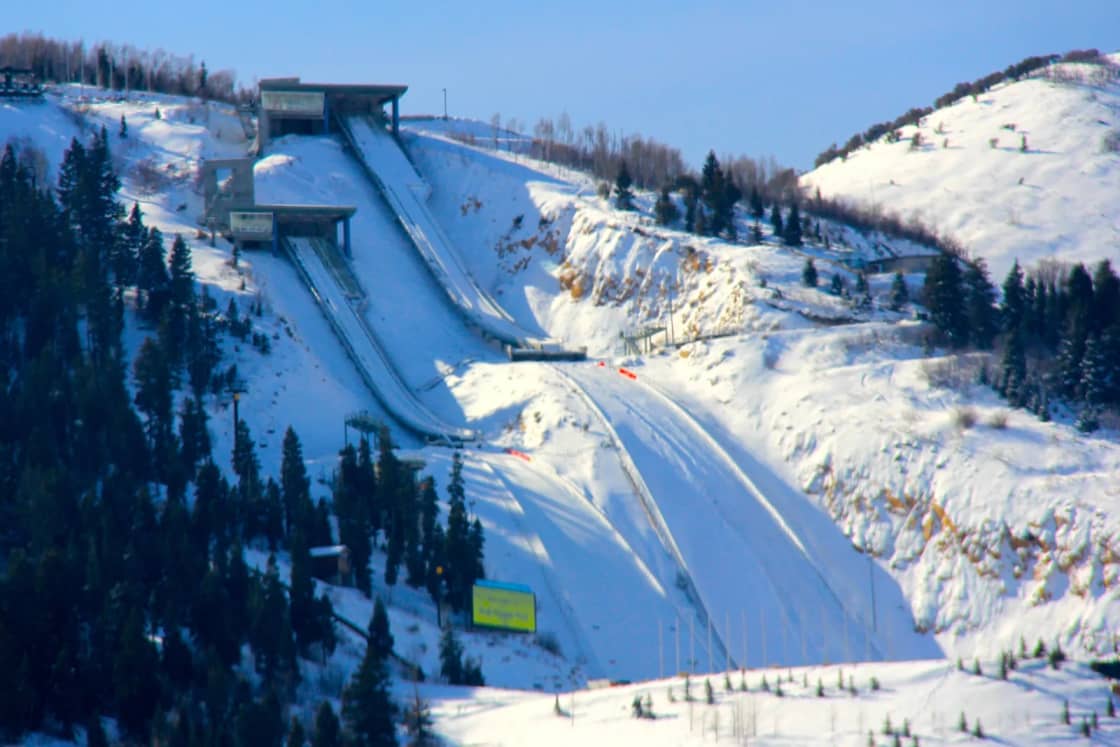
| Utah Olympic Park, near Park City | Ski jumping and sliding (bobsled, luge, skeleton) | Six ski jumps, a sliding track and a 2002 Games museum, run by the legacy foundation; see our Utah Olympic Park guide |
| Utah Olympic Oval, Kearns | Speed skating | Utah's only 400-meter speed skating oval, two ice sheets and a 442-meter running track |
| Soldier Hollow, Midway | Biathlon and cross-country skiing | Soldier Hollow Nordic Center in Wasatch Mountain State Park, open year-round; see our Soldier Hollow guide |
| Peaks Ice Arena, Provo | Men's and women's ice hockey | City rink with public skating and leagues |
| Ogden Ice Sheet, Ogden | Curling | In use (the IOC says every 2002 venue still is) |
| Olympic Village, Fort Douglas | Athlete housing | University of Utah Heritage Commons, 21 buildings |
The IOC's 2020 and 2025 updates say all of the Olympic venues are still in use and still host the sports they held in 2002, along with other winter and summer events. At the Utah Olympic Park, the Alf Engen Ski Museum and the Eccles 2002 Olympic museum share one building.
2034
On July 24, 2024, at its session in Paris, the IOC elected Salt Lake City-Utah to host the 2034 Olympic and Paralympic Winter Games, with 83 yes votes, 6 no votes and 6 abstentions. The IOC says those Games will be held in "100 per cent existing or temporary venues," which is the clearest sign of what 2002 left: the state does not need to build new arenas or tracks. The legacy foundation says it is planning upgrades to its three venues ahead of 2034.
What that means here, from traffic to housing to jobs, is in our 2034 Olympics guide for Utah Valley. If you want to be part of it, start with how 2034 volunteering is expected to work, and for the athletes this valley has already sent to the Games, see Utah Valley's Olympians.
Seeing it for yourself from Provo
The closest 2002 site is Peaks Ice Arena, on Provo's east side. By an OpenStreetMap (OSRM) routing estimate from Center Street in downtown Provo, Soldier Hollow is about 30 miles and an hour away, the Utah Olympic Oval about 43 miles and 53 minutes, and the Utah Olympic Park about 49 miles and 69 minutes, without traffic or snow. The cauldron and the stadium in Salt Lake City are covered in our 2002 Olympic sites guide, and our Salt Lake City day trip guide covers FrontRunner. Public skating at the Oval and at Peaks changes week to week, so check each rink's schedule before you go.
Frequently Asked Questions
When were the 2002 Winter Olympics in Salt Lake City?
How many athletes and countries took part in 2002?
What was the Salt Lake City Olympic bid scandal?
Who lit the 2002 Olympic cauldron?
Did Provo host any 2002 Olympic events?
Which 2002 Olympic venues can you still visit?
Who pays to keep the old Olympic venues open?
Will Utah host the Winter Olympics again?
Sources
The facts in this guide were checked against these sources. Hours, fees and rules change, so confirm anything time-sensitive with the source before you go. How we make Provo.com.
- Salt Lake City 2002 Olympic Winter Games, Encyclopaedia Britannica. Checked November 27, 2026.
- Salt Lake City 2002 Olympic Winter Games, International Olympic Committee. Checked November 27, 2026.
- Salt Lake City 2002: Olympic Venues Overview, International Olympic Committee. Checked November 27, 2026.
- Salt Lake City 2002: from adversity to success, International Olympic Committee. Checked November 27, 2026.
- IOC elects Salt Lake City-Utah 2034 as Olympic and Paralympic Winter Games host, International Olympic Committee. Checked November 27, 2026.
- About the Utah Olympic Legacy Foundation, Utah Olympic Legacy Foundation. Checked November 27, 2026.
- Utah's Olympic and Paralympic Legacy, Utah Sports Commission. Checked November 27, 2026.
- Remembering the top moments from the 2002 Salt Lake City Winter Games, Team USA. Checked November 27, 2026.
- Chronology of the 2002 Games scandal, Deseret News. Checked November 27, 2026.
- Timeline: Salt Lake City's 2002 Olympics and the road to 2034, Salt Lake Tribune. Checked November 27, 2026.
- Miracle team scores again, lights caldron, Deseret News. Checked November 27, 2026.
- Olympic fever yesterday, today and for the future at Peaks Ice Arena, Daily Herald. Checked November 27, 2026.
- Utah's secret sauce keeps Olympic venues viable 15 years after Games, Deseret News. Checked November 27, 2026.
- Provo's Peaks Ice Arena and the 2034 Olympics, Deseret News. Checked November 27, 2026.