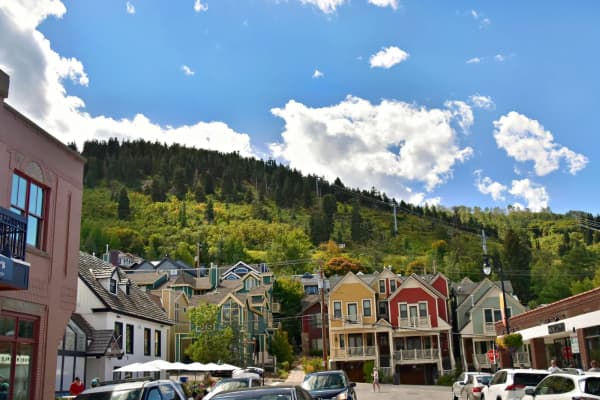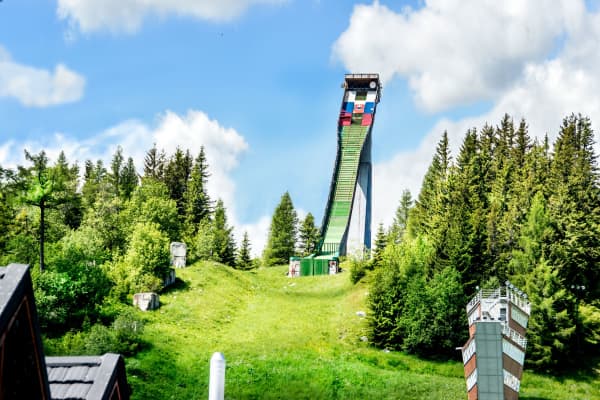
Utah skiing did not start with chairlifts and lift tickets. It started with Norwegian immigrants, homemade jumps and crowds of thousands standing in the snow near Parley's Summit to watch men fly. The Alf Engen Ski Museum at Utah Olympic Park, about an hour's drive from Provo, tells that story for free, seven days a week, in the same building as a second free museum devoted to the Salt Lake 2002 Olympic Winter Games. For a Utah Valley family looking for a winter outing that costs nothing but gas, it is one of the better options on the Wasatch Back.
This guide covers who Alf Engen was, what the two museums hold, how to get there from Provo, and what else happens at the Olympic Park between November and March. For the park's summer activities and pricing, see our Utah Olympic Park guide. For the rest of the town, see Park City from Provo.
| What | Alf Engen Ski Museum and Eccles Salt Lake 2002 Olympic Winter Games Museum |
| Where | Joe Quinney Winter Sports Center, Utah Olympic Park, 3419 Olympic Parkway, Park City |
| Hours | 9 a.m. to 6 p.m. daily; closed Thanksgiving Day and Christmas Day |
| Admission | Free (simulators and park activities cost extra) |
| Parking | Free lot with accessible spaces |
| Time needed | At least one hour, per the museum |
| Phone | Museum (435) 658-4240; Utah Olympic Park (435) 658-4200 |
Who Alf Engen was
Alf Engen was born in Norway in 1909. The finding aid for his papers at the University of Utah's J. Willard Marriott Library describes him as the oldest of three boys, whose father died when Alf was nine, and says the brothers learned ski jumping as youngsters. A 1995 Deseret News history of Utah skiing reported that his father, Trond Engen, trained his sons to ski, and that Alf was named to Norway's Olympic team at 18 but was considered too young to compete.
He came to the United States in 1929. The museum's Utah ski history FAQ says he arrived in July of that year and that his brother Sverre followed that fall. He settled first in Chicago, where, according to the Deseret News, he played soccer and turned down an invitation from Knute Rockne to try American football. He came to Utah in 1930 with a group of professional ski jumpers, and the University of Utah finding aid says he settled permanently in Salt Lake City in 1931.
What brought him was a jump called Ecker Hill.
Ecker Hill and the record jumps
The Utah Division of State History's Ecker Hill exhibit says the Utah Ski Club, made up mostly of young Norwegian Americans, began building a jump near Parley's Summit in the late fall of 1928 and finished it on Christmas Day that year. The first tournament was held there in February 1929, and in 1930 Gov. George Dern named the hill for Peter Ecker, the club's acting president. The site sits a few miles north of the present Olympic ski jumps.
In the 1930s and 1940s, according to the state history exhibit, Ecker Hill was one of a handful of world-class ski jumps in the United States. National meets were held there regularly, several world records were set there, and crowds reached as high as 9,000 people. Early headlines often belonged to the Professional Ski Jumpers of America, a 15-member group that competed for prize money around the country. The state exhibit calls Alf Engen perhaps the best known of those early professionals and says he was National Professional Jumping Champion every year from 1931 to 1935.
The exact distances depend on which source you read. The Deseret News reported that Engen won $500 at Ecker Hill for breaking the existing record of 229 feet, then won another $250 from a promoter by jumping 247 feet. The state history exhibit lists his top official mark at Ecker Hill as a 281-foot record jump in 1934. Accounts of early ski jumping records disagree on figures and on whether a jump counted as a world, national or hill record, so treat any single number with some caution.
Ecker Hill fell out of use as longer, better-designed jumps were built after 1949 and as skiers turned toward downhill skiing. The state exhibit says the 1949 National Championships were the last major competition there, that the hill was last used around 1960, and that it was listed on the National Register of Historic Places in 1986. The museum has an exhibit devoted to the hill.
From jumper to downhill pioneer
Engen did not stay a jumper. The Utah Encyclopedia entry on him, published on the state's History to Go site and written by Jodi Hullinger, says he learned downhill skiing at age 30, won national titles in jumping eight times between 1931 and 1946, and took the 1946 national jumping title at 37 on borrowed skis. It also credits him with developing the technique of powder skiing in the Wasatch Mountains. The Deseret News reported that in the early 1940s he was the only skier to win "Big Four" honors in jumping, downhill, cross-country and slalom.
His Olympic record is a story of near misses. The Deseret News reported that Engen was named to the 1940 U.S. Olympic team but was ruled ineligible because a Wheaties endorsement was deemed to have cost him his amateur status. He reached the Olympics as a coach instead: the museum's FAQ says he coached the U.S. Olympic ski team at the 1948 Winter Games, and the University of Utah finding aid says he and Walter Prager were co-coaches. The Deseret News reported that the 1948 Games were in St. Moritz, Switzerland, and that the women's team Engen coached included six Utahns.
Building Utah's ski areas
The museum's history FAQ fills in the less glamorous work. In 1935 the U.S. Forest Service hired Engen to identify areas suitable for ski development. In the mid- to late 1930s he was a foreman at the Civilian Conservation Corps camp at the mouth of Big Cottonwood Canyon. The University of Utah finding aid adds that during World War II he served in the Quartermaster Corps in Ogden as a consultant on snow and avalanche conditions and winter warfare equipment.
In 1948 he took over the Alta Ski School from his brother Sverre, according to the museum, and the University of Utah says he led the school until retiring in 1989. He also directed the Deseret News free ski school, which, according to the 1995 Deseret News article, he was associated with for almost three decades. The museum adds one detail with special relevance to the place you are standing: Engen served on the site selection committee that chose the location of what is now Utah Olympic Park.
Engen died in July 1997 and is buried in Centerville, according to the museum. He was inducted into the U.S. Ski Hall of Fame in 1956, per the University of Utah finding aid, and the Utah Encyclopedia says the U.S. Ski Association named him outstanding skier of the first 50 years of the 20th century.
How the museum came to be
The Alf Engen Ski Museum Foundation was established in 1989 to build a modest museum honoring Engen, according to the foundation's own page. The museum's FAQ says the effort was led by Alan Engen, Alf's son. When Salt Lake City was chosen to host the 2002 Winter Olympics, the plan grew to include an Olympic gallery and other features, and a lead gift from the S.J. and Jessie E. Quinney Foundation led to the building being named the Joe Quinney Winter Sports Center. The museum's FAQ says it opened to the public in 2002 inside that building, and that the George Eccles Salt Lake 2002 Olympic Winter Games Museum opened there in 2005. Visit Utah's listing gives an earlier opening year for the ski museum, 1987, which likely reflects a different milestone; the museum's own account is the one used here.
The name on the building honors S. Joe Quinney, who appears in Utah ski history well before the Olympics. The museum's FAQ says the Salt Lake Winter Sports Association, led by Quinney, raised $10,000 to build Alta's first lift. That lift, the Collins Lift, opened to the public in mid-January 1939 and was Utah's first chairlift and the fifth in the United States. One exhibit inside the museum is titled "Alf Engen & Joe Quinney," and another features the Collins Chair.
There is a Utah Valley thread in that history, too. The museum's FAQ lists Timp Haven, now Sundance, among the early Utah ski areas that ran tow devices before they had chairlifts. If you have skied at Sundance Mountain Resort, its roots run through the era this museum documents.
What the Alf Engen Ski Museum holds
The museum's collection page describes its focus as Alf Engen, the pioneers who shaped skiing in the Intermountain West, and Utah's winter sports heritage. Utah Olympic Park's museum page says the exhibits cover the history of skiing in the region across all disciplines and use interactive touch screens, videos, a virtual reality ski theater, games and topographical maps.
The museum lists 21 exhibits. Grouped loosely, they fall into a few themes.
Alf Engen and his family. Alf Engen's "King of the Hill" trophy case, the Engen Bell, the Alf and Alan Engen Ski Trophy, and an exhibit on Engen and Joe Quinney. The University of Utah finding aid notes that Engen won about 500 trophies and medals over his career, which gives some sense of what a trophy case for him involves.
Utah ski history. "From Silver Ore to Olympic Gold," "The Greatest Snow on Earth," "Historic Ecker Hill," resort profiles, the Collins Chair, and "Wasatch Mountain Recreation: A Visual History." The silver ore title points to skiing's roots in Utah's mining camps. The 1995 Deseret News history describes an 1893 visitor to the Grizzly Mine at Alta who saw skis 14 feet long and six inches wide, cut from single slabs of spruce, and a postman on skis who delivered mail to Brighton residents.
People and sport. "Stein Eriksen: The Father of Freestyle Skiing," a freestyle skiing exhibit, "The Story of the U.S. Alpine Ski Team" and "Evolution of Snowboards."
Fashion and photography. "Barbara Alley Simon: Ski Fashion," "A Century of Ski Fashion" and "Ray Atkeson: Ski Photographer."
Things to do with your hands. The Avalanche Maker game, Alf Engen's "Take Flight" ski jump simulator, a mountain sport simulator and a photo booth. The museum's visit page says the mountain sports simulators carry an extra charge, so ask at the front desk about current prices before promising a child a turn.
If you want a preview, Utah Olympic Park's museum page links to two panoramic virtual tours of the ski museum on the skiutah3d.net site.
The two halls of fame
The building also houses the Intermountain Ski Hall of Fame and the PSIA Hall of Fame, the latter recognizing contributions to professional ski instruction. The Intermountain hall honors achievement in competition, innovation and development, and the promotion of skiing in Utah, Idaho and Wyoming. Its online list runs to about 100 names. Alf Engen and W. Averell Harriman were inducted in 2002, Stein Eriksen in 2003, Picabo Street in 2017, Ted Ligety in 2023 and Steven Nyman in 2025, according to the museum's site.
The Eccles Salt Lake 2002 Olympic Winter Games Museum
The second museum in the Quinney center covers the 2002 Games. Its page on the museum's site says the space served as a media center during those Games, and that it features interactive exhibits, Olympic artifacts and a memorabilia collection that is growing ahead of 2034.
The museum lists 16 exhibits: ice hockey; the sliding sports (bobsleigh, luge and skeleton); Deedee Corradini and the origins of women's ski jumping; biathlon and cross-country skiing; the Paralympics; figure skating and speed skating; hometown heroes; Olympic medals; curling; alpine skiing; Olympic trading pins; the torch relay; Team 2002, the volunteers; snowboarding; freestyle skiing; and the opening ceremonies. The museum notes that the 2002 Games took place months after the Sept. 11, 2001 attacks and that the opening ceremony included a tribute to the victims.
For anyone who was too young to remember 2002, or who moved to Utah Valley since, this is the fastest way to understand why the state is hosting again. Pair it with the sliding sports exhibit and then look out the window: the track it describes is on the hillside outside.
Hours, admission and holiday closures
The museum's visit page lists hours of 9 a.m. to 6 p.m., seven days a week, and says the museum closes on Thanksgiving Day and Christmas Day. Utah Olympic Park lists the same daily hours for the venue and the museums. Thanksgiving falls on Thursday, Nov. 26, 2026.
Admission to both museums is free, according to the museum and Visit Park City. Utah Olympic Park's FAQ says visitors can explore the facility without buying a general admission ticket. You pay only for add-ons such as the simulators, the bobsled or a guided tour.
The museum is run by the Alf Engen Ski Museum Foundation, which says it relies on donations, memberships and its gift store. Visitors who want to support it can donate or buy a membership through the museum website.
Getting there from Provo
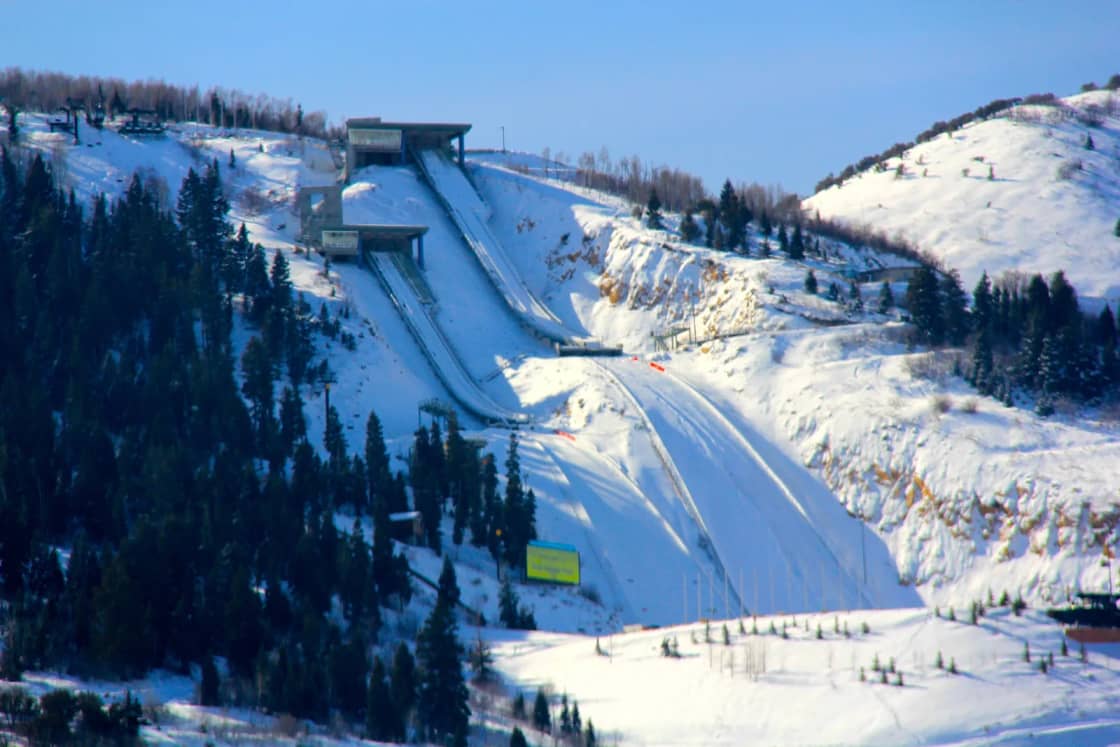
The museum and the Olympic Park sit at 3419 Olympic Parkway, west of Kimball Junction, just off I-80. Visit Park City notes that the park's Nordic ski jumps are visible as you exit the freeway, which makes it hard to miss.
From Provo, there are two general ways to get there.
Through Provo Canyon. US-189 runs up Provo Canyon from Provo to the Heber Valley as the Provo Canyon Scenic Byway, past Bridal Veil Falls, Deer Creek Reservoir and the turnoff for Soldier Hollow, the 2002 cross-country and biathlon venue. Utah.com describes the byway as open year-round. From Heber, US-40 continues north toward Park City and I-80. Note that the trail and park at Bridal Veil Falls remain closed this winter after an October rockslide; see our Bridal Veil Falls rockslide report for details.
By freeway. I-15 north into the Salt Lake Valley, then I-80 east through Parleys Canyon to the Kimball Junction area.
We have not given drive times here because they swing widely with weather, and in winter the deciding factor is road conditions, not distance. UDOT says that during severe winter weather, drivers must use traction devices where required by law, and on Nov. 9, 2026 it launched an online tool to help drivers understand winter traction requirements. Check UDOT's traffic app or website before you leave. Our Park City from Provo guide compares the two routes in more detail, our Provo Canyon in winter guide covers the canyon specifically, and our guide to winter tires and canyon driving explains what your car needs.
If you would rather not drive the last stretch, Visit Park City suggests taking the bus to the Kimball Junction Transit Center and using microtransit or a rideshare to reach the park. From Provo, though, you will still need a way to get to Park City in the first place.
Parking and arrival
Utah Olympic Park's FAQ says the venue has ample parking at no charge. The museum's visit page adds that the lot includes accessible spaces and that a passenger drop-off area sits just before the lot, on the left as you come up the hill. Visit Park City says the parking is next to the museum entrances.
If you have a bobsled reservation, the park asks riders to park in the main guest lot and check in at the Guest Services Desk in the Quinney Welcome Center 15 minutes before their session.
Accessibility
The museum's visit page lists the following:
- Wheelchairs to borrow at no cost from the front desk, first come, first served.
- An elevator to the second-floor exhibit.
- Wheelchair-accessible restrooms on both floors.
- Service animals welcome.
- An accessibility feedback form on the museum's website.
The wider Olympic Park is a 400-acre hillside, according to the park, and the FAQ notes that public roads to the bobsled track are closed, so reaching the upper venues on your own means walking. The museum building is the most accessible part of a visit.
Food
Plan to eat in Kimball Junction or Park City rather than at the park. Utah Olympic Park's FAQ says its cafe operates daily from Memorial Day to Labor Day and is closed during the fall, winter and spring. For inexpensive options nearby, see Park City without the Park City price.
What else is happening at Utah Olympic Park in winter
The museums are open all year, but the park around them changes with the season. Visit Utah describes the venue as an official U.S. Olympic Training Site with six Nordic ski jumps and one of four sliding tracks in North America, and says winter visitors can watch athletes train. Visit Park City adds that the park hosts international bobsled, luge and skeleton races and Flying Aces ski jumping shows, though it also notes that most training facilities are not open to the public for regular use. The summer menu of ziplines and the alpine slide is closed for the year, according to the park.
Here is what the park lists for the 2026-27 winter.
Winter Bobsled Experience
Utah Olympic Park lists the Winter Bobsled Experience at $225 per person, or $249 per person on holiday dates, Dec. 26 to 30 and Jan. 2. Riders must be at least 13 years old and weigh at least 100 pounds. The ride lasts less than a minute and generates up to four to five times the force of gravity, the park says; with check-in and orientation, the experience can take up to an hour and 15 minutes. Visit Utah says the sled reaches more than 60 mph. Tickets went on sale Oct. 26, and dates shift around training, competitions and track maintenance, so book through the park's online calendar. The park lists the season's end as April 11.
Guided tours
The park's guided tour page lists one-hour tours daily at 11 a.m., 1 p.m. and 3 p.m., priced at $22 for adults 13 and older and $17 for youth 12 and under and seniors 65 and older. Tours include a shuttle ride to the top of the Nordic ski jumps and the sliding track. The page is labeled as summer tours and does not say whether tours run in winter, so call the park at (435) 658-4200 before counting on one. The FAQ calls a guided tour the best way to see the park.
Uphill skiing
For skiers who earn their turns, the park sells an Uphill Season Pass for $285, valid Jan. 1 to April 1, 2027, conditions permitting, from 8 a.m. to 4 p.m. Each pass includes three buddy passes. Some areas close on event dates, and every participant must sign a new liability waiver each year.
Learn to ski for young children
The Eccles Learn to Ski Program, run with Woodward at the park, is for children ages 4 to 7. The one-day-a-week option costs $220 and meets Wednesdays from 4:30 to 6:30 p.m. in January and February; the two-day option costs $440. Equipment is included. That is a weeknight commitment that works better for Summit County families than Provo ones, but our learn to ski near Provo guide covers closer options.
How long to spend
The museum suggests at least one hour for its exhibits. Two museums, two halls of fame and a simulator turn can easily fill 90 minutes to two hours. Add a bobsled slot or a tour if one is running, and a meal in Kimball Junction, and the visit becomes a half-day trip from Provo.
Because the museums are open until 6 p.m., the visit also works as an afternoon add-on to a day of skiing, or as a stop on the way back from Park City. Arriving after an early ski day and leaving before the evening canyon drive is a reasonable plan in winter.
Bringing kids
The museum's interactive pieces are the ones children tend to head for: the Avalanche Maker game, the "Take Flight" ski jump simulator, the mountain sport simulator and the photo booth. Some simulators cost extra. Schools can book field trips through the museum's educators page.
The Eccles museum's medals, trading pins and torch relay exhibits give older kids a way into the 2002 Games, and the sliding sports exhibit sets up any bobsled ride for teenagers who meet the age and weight limits. Younger children cannot ride the bobsled, so for a family with small kids, the free version of the day (both museums, a look at the jumps from the parking area, and lunch in town) is the better plan.
The 2034 connection
The International Olympic Committee named Salt Lake City-Utah host of the 2034 Olympic and Paralympic Winter Games at its 142nd Session in Paris on July 24, 2024, according to the U.S. Olympic and Paralympic Committee, which said the plan calls for no new permanent venue construction. The Associated Press, in a venue list published by KSL, reported that Utah Olympic Park will host bobsled, freestyle ski cross, luge, Nordic combined, skeleton, ski jumping, and snowboard parallel and cross events in 2034. Visit Park City says the park "will be used again in 2034."
That makes the Eccles museum something of a work in progress. Its own page says it is growing its collection and developing new programs ahead of the 2034 Games. Venue assignments and plans can still change, so treat the event list as current reporting rather than a final schedule. Our Utah 2034 guide covers what the Games mean for Utah Valley.
Making a day of it
A few pairings work well from Provo in winter:
- Museum plus Soldier Hollow. If you take Provo Canyon, Soldier Hollow near Midway is on the way, and it is the other 2002 venue in the Wasatch Back. See our Soldier Hollow guide and our Heber Valley and Midway guide.
- Museum plus Park City. Kimball Junction and Main Street are a short drive from the park. Our Park City from Provo guide covers parking and the free town buses.
- Museum plus skiing. The museum's late closing time fits after a ski day. Our skiing near Provo guide covers the resorts.
Before you go
- Confirm hours on engenmuseum.org or by calling (435) 658-4240, especially around Thanksgiving and Christmas.
- Check UDOT road conditions and traction requirements before choosing Provo Canyon or the freeway.
- Book the bobsled in advance if you want to ride, and check the 13-and-older and 100-pound minimums.
- Call Utah Olympic Park at (435) 658-4200 to ask whether guided tours are running on your date.
- Bring snacks or plan to eat in town; the park cafe is closed in winter.
Related on Provo.com
- Utah Olympic Park From Provo: The Summer Playground That Is Also a 2034 Venue
- Park City from Provo: The Year-Round Day Trip Guide
- Soldier Hollow: The 2002 Olympic Venue Near Midway
- Utah 2034: What the Winter Olympics Bring to Utah Valley
- Provo Canyon in Winter
- Skiing Near Provo: Beyond Sundance
- Park City Without the Park City Price
Frequently Asked Questions
Is the Alf Engen Ski Museum free?
What are the Alf Engen Ski Museum's hours?
Where is the Alf Engen Ski Museum?
Who was Alf Engen?
How long should I spend at the museum?
Is parking free at Utah Olympic Park?
Is the museum wheelchair accessible?
Can I ride the bobsled when I visit the museum in winter?
Sources
The facts in this guide were checked against these sources. Hours, fees and rules change, so confirm anything time-sensitive with the source before you go. How we make Provo.com.
- Ecker Hill: A Photographic Exhibit, Utah Division of State History. Checked November 18, 2026.
- Engen, Alf (Utah Encyclopedia), Utah Division of State History. Checked November 18, 2026.
- Utah Olympic Park, Visit Utah. Checked November 18, 2026.
- Traction Law Summary Sheet, Utah Department of Transportation. Checked November 18, 2026.
- Alf Engen Ski Museum. Checked November 18, 2026.
- Plan Your Visit, Alf Engen Ski Museum. Checked November 18, 2026.
- Alf Engen Ski Museum Collection, Alf Engen Ski Museum. Checked November 18, 2026.
- Eccles 2002 Olympic Winter Games Museum, Alf Engen Ski Museum. Checked November 18, 2026.
- Utah Ski History FAQs, Alf Engen Ski Museum. Checked November 18, 2026.
- Our Foundation, Alf Engen Ski Museum Foundation. Checked November 18, 2026.
- Intermountain Ski Hall of Fame, Alf Engen Ski Museum. Checked November 18, 2026.
- Alf Engen Papers, 1915-1972, University of Utah J. Willard Marriott Library (Archives West). Checked November 18, 2026.
- Utah Olympic Park, Utah Olympic Legacy Foundation. Checked November 18, 2026.
- Museums at Utah Olympic Park, Utah Olympic Legacy Foundation. Checked November 18, 2026.
- Utah Olympic Park FAQ, Utah Olympic Legacy Foundation. Checked November 18, 2026.
- Winter Bobsled Experience, Utah Olympic Legacy Foundation. Checked November 18, 2026.
- Utah Olympic Legacy Foundation: Guided Tours, Utah Olympic Legacy Foundation. Checked November 18, 2026.
- Utah Olympic Park Uphill Pass, Utah Olympic Legacy Foundation. Checked November 18, 2026.
- Eccles Learn to Ski Program, Utah Olympic Legacy Foundation. Checked November 18, 2026.
- Utah Olympic Park, Visit Park City. Checked November 18, 2026.
- Provo Canyon Scenic Drive, Utah.com. Checked November 18, 2026.
- Salt Lake City-Utah Named Host of Olympic and Paralympic Winter Games 2034, U.S. Olympic and Paralympic Committee. Checked November 18, 2026.
- Norwegians and Depression Touched Off Rush for Utah's Golden Mountainsides, Deseret News. Checked November 18, 2026.
- Winter Olympians Will Compete at These 13 Venues When the Games Return to Utah, KSL (Associated Press). Checked November 18, 2026.