
On a Wednesday in July 2024, in Paris, the International Olympic Committee gave the 2034 Winter Olympics to Utah, and a certain part of Provo — the part that remembers 2002 — started counting. The count was ten years then. It is seven and a half now, and the state has a name for it: Utah 2034, unveiled in November 2025 as a name for the whole state.
Utah County has exactly one place in the plan, and it is the same place it had in 2002: Peaks Ice Arena in Provo, one of two proposed ice hockey venues. Everything the Olympics bring to Utah Valley — the money, the attention, the traffic, the training camps, the eight years of annual news — flows through or around that building.
This is the guide to what 2034 means here: the venue and why Provo has it, how the plan has already shifted, what the state has committed, what the valley gets beyond the rink, and the milestones between now and the opening ceremony. It is an evergreen page that will be revised as the news arrives; the Peaks Ice Arena guide carries the arena's own current status, and this page carries the Games.
The Games, Briefly
The Olympic Winter Games are proposed for February 10-26, 2034, with the Paralympic Winter Games March 10-19, 2034. The IOC awarded the Games on July 24, 2024, at its session in Paris. The Organizing Committee for the 2034 Olympic and Paralympic Winter Games, formed in February 2025 and led by president and executive chair Fraser Bullock, succeeded the Salt Lake City-Utah bid committee; in November 2025 it unveiled the Utah 2034 name and a new wordmark at an event that also debuted merchandise and an art installation at the Salt Lake City International Airport.
The bid's central claim is that no new permanent venues are required. The organizing committee says all 13 competition venues are already built and in daily use, and that the Games will not require state or local taxpayer funding. The Olympic Village is the University of Utah, and the plan's layout puts every venue within about an hour's drive of it.
The venues, as the plan stood in 2024: Rice-Eccles Stadium for ceremonies; the Delta Center, the Maverik Center, and Peaks Ice Arena for ice sports; the Utah Olympic Oval in Kearns for long-track speed skating; the Salt Palace for curling and the media center; Block 85 downtown for big air; Snowbasin for alpine; Soldier Hollow for biathlon, cross-country, and Nordic combined; Utah Olympic Park for sliding, ski jumping, and freestyle; and Deer Valley and Park City Mountain for freestyle and snowboard.
Peaks Ice Arena: Provo's Hockey Venue
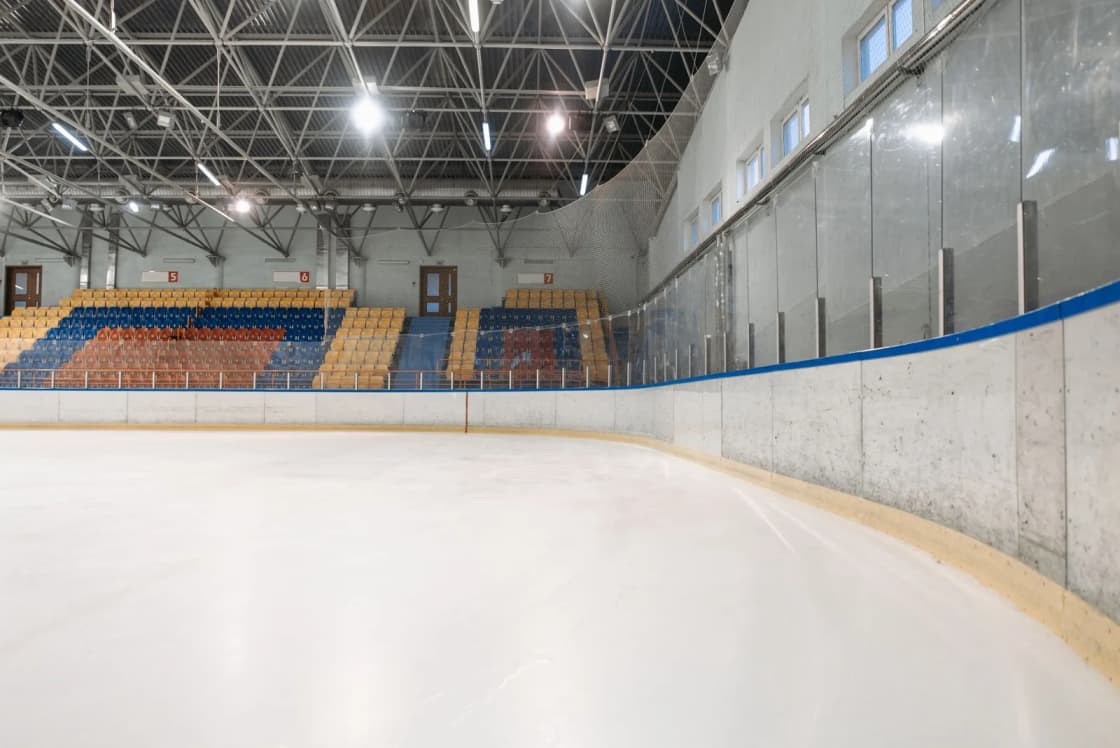
Peaks Ice Arena in Provo was built in 1998 for the 2002 Olympic effort and is owned by Provo City and Utah County; Provo City became its sole operator in 2018. It served as an official venue of the 2002 Games. Its two Olympic-sized ice sheets host public skating, youth and adult hockey, a Learn to Skate program and clubs including the Peaks Figure Skating Club and the Wasatch Wild Youth Hockey Association.
In the 2034 plan it is one of two ice hockey venues. In a 2019 presentation to the Legislature, the arena was described as not participating in Olympic Foundation support and operating independently.
Any Olympic changes to the rink, and what they mean for the arena's tenants, will be covered in the Peaks guide, which we keep current.
Why Provo Has a Venue
The reason a Provo rink is on a list with the Delta Center and Snowbasin goes back to the 2002 effort, when Peaks Ice Arena was built for the Games.
It hosted Olympic competition in 2002, and the 2034 plan uses the same building.
Utah County is not an Olympic county the way Summit and Salt Lake counties are. It has one venue, and it has kept it.
How the Plan Can Move
The organizing committee said from the start that the venue list would move. "Ten years is a long time, and event locations will evolve based on ownership changes, new sports, or new venue opportunities," Fraser Bullock said when the proposed venues were announced in 2024.
In the 2024 plan, figure skating and short-track speed skating were assigned to the Delta Center and ice hockey to the Maverik Center and Peaks Ice Arena. Check the organizing committee's current plan for any changes.
Our Delta Center guide covers the arena as it is now.
Expect changes. Venue assignments, event schedules, and capacities will be revised through the early 2030s as the IOC's program changes and Utah's facilities do. What has held is the geography: every venue within about an hour of the athlete village, with Snowbasin and Peaks Ice Arena outside the Salt Lake and Park City clusters.
The Money
The organizing committee's financial premise is that a Games on existing venues will not require state or local taxpayer funding.
For Utah Valley, the money question is venue readiness at Peaks. The specific dollar figure, and who pays what share, is the kind of number that is set in budget documents and revised, so we do not publish a single figure here.
Beyond the arena, the economic case for Utah Valley is the one every host region makes: visitor spending during the Games, lodging for the Provo hockey games and the Soldier Hollow events an hour away, construction and event jobs in the years before, and the long tail of attention. Utah County is already past 750,000 people, with its own hotel base, its own airport service and Silicon Slopes at its north end, so its share should be larger than in 2002 even if the venue count is the same.
What Utah Valley Gets Beyond the Rink
The competition list is one venue. The periphery is wider.
Training and practice ice. Olympic hockey teams practice on ice other than the competition sheets, and Peaks Ice Arena has two sheets. BYU and UVU facilities are obvious candidates; the organizing committee assigns practice venues in the final years before the Games.
Lodging and the Soldier Hollow connection. Soldier Hollow in Midway, the biathlon and cross-country venue, is up Provo Canyon from the valley, and Utah Valley lodging is a natural overflow for its spectators, and the Soldier Hollow guide covers the venue.
Fan zones and cultural programming. Host regions stage a cultural festival and community celebrations alongside the Games. Expect the organizing committee's community program to include Utah County events.
The torch relay. The 2034 route has not been announced.
Transportation. No new infrastructure is being built for the Games, which means FrontRunner, now with a station at Vineyard, is the Games transit for Utah Valley spectators heading north, and the I-15 corridor is the pressure point. Our FrontRunner guide covers the line as it is now.
The Paralympics. The March Paralympic Games use a subset of the venues: the Maverik Center for para ice hockey, Soldier Hollow, Snowbasin, Utah Olympic Park and the Salt Palace. Peaks Ice Arena is not in the Paralympic plan as of the 2024 documents.
Volunteering, and the 2002 Memory
Volunteers are a large part of how Provo remembers 2002, and the organizing committee itself calls the 2002 volunteers one of the Games' strengths.
The 2034 volunteer program has not opened yet. Expect an application, training and role assignments by venue. Peaks Ice Arena and the training sites in the valley will need local volunteers, and the Soldier Hollow venue an hour away will draw from here as well. A family that wants to be part of it should watch the organizing committee's site.
The other 2002 memory Utah County residents raise is traffic, and it is a fair question with a different answer this time. In 2002 the county was far smaller and the Games mostly happened north of the Point of the Mountain. In 2034 the hockey games at Peaks will bring Games traffic to the mouth of Provo Canyon, the Soldier Hollow events will run through it, and I-15 between Provo and Salt Lake will carry spectators both ways with no new lanes. The organizing committee's transportation plan, when it is published, is the document to read; expect it to lean on FrontRunner, park-and-ride, and restrictions around the venues for the competition days.
How to Follow It
The organizing committee publishes at utah2034.org and through the Salt Lake City-Utah Committee for the Games. The IOC's Olympics.com host pages carry the official venue plan and dates. Provo City's Peaks Ice Arena page carries the arena's calendar and, when it comes, the renovation schedule. The Utah Legislature's appropriations bills each session carry the venue money. And we keep three pages: this one for the Games, the Peaks guide for the arena, and the Wire for anything that moves between sessions.
The Countdown, in Milestones
Seven and a half years of news, in the order it will arrive.
2026. The Milano Cortina Winter Games in February were the first dress rehearsal; the organizing committee is staffing up; the Utah 2034 brand rolled out; IOC President Kirsty Coventry's first visit to Utah in September.
2027-2028. Sponsorship rounds; the Los Angeles 2028 Summer Games as the next U.S. Olympics; more detailed venue planning, including Peaks Ice Arena.
2029-2031. The official Games-time logo, which the organizing committee plans to introduce in 2029; venue work; the 2030 Winter Games in the French Alps as the second dress rehearsal; volunteer and ticketing programs.
2032-2033. Test events, ticket sales, the torch relay route, the cultural program and the transportation plan, on dates the organizing committee will set.
February 10-26, 2034. The Games. Hockey at Peaks. March 10-19, 2034. The Paralympics.
Each phase will produce Utah Valley news, and we will file it: on this page for the Games, on the Peaks guide for the arena, and on the Wire when something moves.
2002 and 2034, Side by Side
For the residents who were here in 2002 — and Provo has a lot of them — the comparison is the natural frame.
Utah's population is past 3.5 million now and Utah County's is past 750,000, and both will be higher in 2034. The organizing committee notes that Olympic events have increased nearly 40% since 2002, with big air among the additions. The 2002 Games were Salt Lake's; 2034's are the state's, by name. And Peaks Ice Arena, a new rink in 2002, will be a veteran venue hosting the Games a second time.
What is the same is the shape: a compact Games on the Wasatch, one venue in Provo, and a county that got it by asking.
Related Guides
- Peaks Ice Arena: The Complete Guide
- Game Night at the Delta Center from Utah Valley
- Soldier Hollow Guide
- Park City from Provo
- FrontRunner from Provo: The Complete Guide
- Heber Valley and Midway from Provo
- Provo vs. Salt Lake City: Living in Each
- Utah Olympic Park From Provo: The Summer Playground That Is Also a 2034 Venue
Related: Every 2034 Winter Olympics venue, explained
Frequently Asked Questions
When are the 2034 Winter Olympics?
What Olympic events will be held in Utah County?
Why does Provo have an Olympic venue at all?
Is the state spending money on Peaks Ice Arena for 2034?
Will there be Olympic events in Provo besides hockey?
What is the timeline between now and 2034?
How is 2034 different from 2002?
Will Utah Valley residents be able to get tickets?
Sources
The facts in this guide were checked against these sources. Hours, fees and rules change, so confirm anything time-sensitive with the source before you go. How we make Provo.com.
- Peaks Ice Arena: A case study in Olympic Venue success, Utah Legislature (interim committee materials, 2019). Checked October 12, 2026.
- About Us, Peaks Ice Arena, Provo City. Checked October 12, 2026.
- Annual population estimates (SUB-EST2025), U.S. Census Bureau. Checked October 12, 2026.
- SLC-UT Identifies Proposed 2034 Olympic & Paralympic Venues, Utah 2034 Organizing Committee. Checked October 12, 2026.
- Utah 2034 Unveiled as Unifying Name for Olympic and Paralympic Winter Games in 2034, Utah 2034 Organizing Committee. Checked October 12, 2026.
- Utah 2034 Celebrates Second Anniversary of Bid Award, Utah 2034 Organizing Committee. Checked October 12, 2026.
- IOC President Kirsty Coventry Finds Utah's 2034 Legacy Work Already Underway, Utah 2034 Organizing Committee. Checked October 12, 2026.
- Utah 2034 home page, Utah 2034 Organizing Committee. Checked October 12, 2026.