
If you grew up in Utah Valley, you know the story before you can remember learning it. A drought. An angry god in the mountain. A chief's daughter named Utahna climbing to the summit to give her life for her people. A young man called Red Eagle who intercepts her, pretends to be the god, and loves her instead — until she discovers the deception and throws herself from the ridge. The god, moved at last, joins their two hearts and lifts them into the cave, where you can still see them.
It gets told at school. It gets told at the cave. It has been staged as a ballet and set as an opera. And it is almost always introduced with some version of the phrase an old Indian legend.
It is not. It was written by a track coach, it was published in 1922, and we know his name.
The man who wrote it
Eugene Lusk Roberts — universally "Timp" Roberts by the end of his life — was a Provo man who coached athletics at Brigham Young University and ran its physical education department in the first decades of the twentieth century.
The idea that made him locally immortal did not come from Utah. Around 1907, serving a mission for the Church of Jesus Christ of Latter-day Saints in Switzerland, Roberts watched several thousand Catholic pilgrims walk in procession to a hilltop shrine near Einsiedeln. He was struck by it — not by the theology but by the form. A whole community moving up a mountain together, on the same day every year, for reasons bigger than exercise.
He came home wanting one of those for Provo.
The mountain was the obvious candidate. Roberts called it the Wonder Mountain, and there was a quirk of surveying in his favor: an early government survey had produced a figure that appeared to make Timpanogos taller than Mount Nebo to the south. That turned out not to be right, but it had already helped fix local attention on the peak above Provo and Orem rather than the higher one further down the valley.
In 1912, Roberts led the first Annual Timpanogos Hike. A small group of students and faculty, up the mountain and back.
Why he needed a legend
A hike is a hike. A pilgrimage needs a story.
Roberts had seen what gave the Swiss procession its power, and it was not the walking. So he built a ceremony around his hike — a bonfire the night before at Aspen Grove, poets and naturalists brought along to lecture on the plants and the views, badges for those who reached the summit — and at the center of it, a story told at the fire.
That story was "The Story of Utahna and Red Eagle." He told it at the trailhead for years before committing it to print, and in 1922 it was published in a slim collection called Timpanogos: Wonder Mountain, backed by the university, the Provo Chamber of Commerce and the American Fork Commercial Club.
Read that list of sponsors again, because it explains a great deal. This was not a folklore collection. It was a promotional publication, produced by a booster coalition that wanted people to come to Utah Valley and climb its mountain.
Why it stuck so completely
Within a generation the story was being repeated as ancient. That happened for reasons that had nothing to do with anyone lying.
It was told at a fire, at night, on the mountain. Context does an enormous amount of the work of authentication. A story delivered that way, by a respected figure, before a shared physical ordeal, does not feel like a piece of writing.
It attached itself to things you could see. The reclining shape of the ridge. The heart-shaped formation in the cave. Once a story explains a landscape feature, the landscape starts vouching for the story.
It had no competition. There was no widely known Indigenous account of the mountain circulating in the valley to contradict it — which, as we will get to, is itself the important fact.
And it was useful. It gave a young settler community a deep-sounding past for a place they had occupied within living memory.
The tell: the versions do not agree
The clearest evidence that this is literature rather than tradition is that nobody can keep it straight.
In some tellings Red Eagle dies of grief. In others a bear kills him. In others a warrior in a bear skin kills him. In some he deceives Utahna out of love; in others out of ordinary competition with rival suitors; in others he abandons her to marry someone else and that is what sends her off the cliff. The drought is central in some versions and absent from others. The Timpanogos Storytelling Festival, held in the mountain's own shadow, has featured three different versions.
Oral traditions do vary — that is normal and not a defect. But they vary around a stable core, transmitted through people who can say where they heard it. This story varies the way a popular piece of writing varies when it is retold by people who half-remember it and improve the ending. A compilation published in 1988 gathered the variants together, and the variants are the point.
What Timpanogos actually named
Here is where the real history starts, and it is genuinely more interesting.
The name did not originally belong to the mountain. The best scholarly reading traces it to a Ute term meaning something close to rock river — a description of moving water over stone, which is to say a description of a river, specifically the one now called the Provo.
From the river the name extended to the people who lived along it and to the lake it fed. When the Domínguez–Escalante expedition came down Spanish Fork Canyon in September 1776, guided by two Timpanogots, they recorded the lake as Lake Timpanogos. Utah Lake carried that name on maps for decades.
The mountain got the name last, from settlers, generations later.
Jared Farmer, whose 2008 book On Zion's Mount: Mormons, Indians, and the American Landscape is the definitive treatment of all of this, tracks the meaning drifting as it moved: from a plain description of a river, to a vague symbol of moral strength, and finally to a sleeping princess. Each shift moved the word further from anything an actual Ute speaker had said and closer to what the people using it wanted it to mean.
A caution worth stating: place-name etymologies recorded through Spanish and then English ears are uncertain by nature. "Rock river" is the best reading available, not a settled fact, and anyone who gives you a confident one-line translation is overstating what can be known.
The people the name belonged to
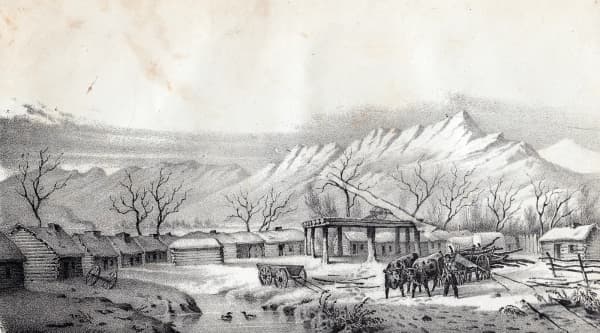
The Timpanogots were the Native people of this valley — Numic speakers, closely related to other Ute and Shoshone bands, and by most accounts the most populous and prosperous group in the region.
The reason was the lake. Utah Lake supported a fishery so productive that it made Utah Valley one of the easiest places to live in the entire Great Basin, in a landscape where most food had to be worked hard for. The spring spawning run drew people from far beyond the valley for a gathering that involved trading, horse racing, gambling, dancing and feasting — a genuine regional event, held annually, centered on this water, for a very long time before anyone wrote a legend about the mountain above it.
That is the thing worth sitting with. There was an ancient annual gathering in Utah Valley. It was real, it was documented by outsiders who saw it, and it had nothing to do with a maiden on a summit.
What happened to the Timpanogots after 1847 is the ordinary and terrible American story: settlement on their best ground, the fishery collapsing under new pressure, violence, and removal to a reservation in the Uinta Basin. Descendant communities exist today, and questions of tribal identity and federal recognition among them remain live and contested. This page does not try to settle those; it simply notes that the people the name came from are not a legend and are not gone.
Farmer's harder point
On Zion's Mount makes an argument sharper than "the legend is fake," and it is the reason the book won serious attention outside Utah.
Farmer's case is that the mountain rose in local affection as the lake declined. Utah Lake, the actual center of Indigenous life here and the actual reason people lived in this valley, became shallow, warm, carp-choked and unfashionable within a few generations of settlement. Timpanogos — snow-capped, photogenic, and empty of any inconvenient history — rose to become the emblem of Utah Valley in its place.
And the invented legend did a specific job in that substitution. It let a settler community feel deeply, romantically connected to an Indigenous past precisely at the site where no Indigenous claim was inconvenient. Nobody had been removed from the summit. Loving the mountain cost nothing.
Farmer's framing for this is that such names and stories work through their vagueness: obviously "Indian," attached to no specific tribe, person, or event anybody would have to reckon with.
How the hike ended
Roberts got what he wanted, and then some. The Annual Timpanogos Hike grew from a handful of people in 1912 into an event drawing thousands up one mountain over one weekend — bonfire, badges, a staged performance of the legend, national press.
The mountain could not take it. Trails braided and eroded, the alpine basin was trampled, and the sheer volume did damage that a fragile high-elevation environment recovers from slowly if at all. Mount Timpanogos was designated a wilderness area in 1961, and the mass hike was discontinued in 1970.
There is no need to editorialize the irony. A man invented a story to make a community love a mountain, the community loved it exactly as instructed, and the loving is what wore it out. Anyone who has queued on the summit ridge on a Saturday in August has seen the modern version of the same problem.
The shape, and why people disagree about it
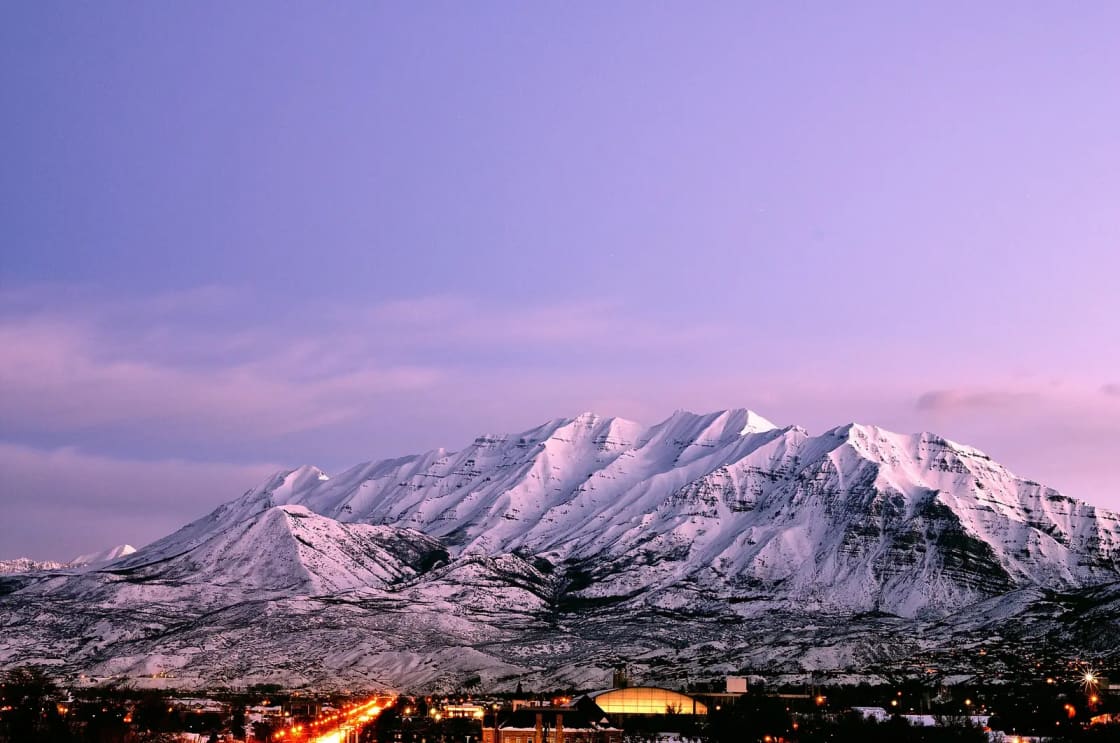
Ask two people in Orem to point out the sleeping woman and there is a fair chance they will trace her in opposite directions along the ridge.
That is not a small detail. If a mountain genuinely resembled a reclining figure the way a cloud sometimes resembles a horse, people would broadly agree on where the head was. On Timpanogos they do not — some read the profile from the north, some from the south, and both groups are entirely confident. Photographers who shoot the ridge for a living have written about noticing that their own family sees it the other way round.
What that indicates is a resemblance being read into the shape because a story told you it was there, rather than one read out of it. This is ordinary human perception rather than anything to be embarrassed about; it is the same faculty that finds faces in wood grain. But it does mean the "sleeping princess" is doing something other than describing a landform.
Worth noting too that the identification arrived late. The name came first, attached to a river. The romantic figure came decades afterward, as the meaning of the word drifted — which is the wrong order for a resemblance that supposedly gave the mountain its name in the first place.
This is not a Utah oddity
One reason to take Farmer's account seriously rather than treating it as debunking for its own sake: the pattern is national, and once you know it you see it everywhere.
Invented "Indian legends" attached to dramatic landscape features were a minor American industry in the nineteenth and early twentieth centuries. The lovers' leap is the standard form — a maiden, an impossible romance, a cliff — and versions of it are fastened to bluffs and gorges in dozens of states. Farmer traces much of the American template back to Maiden Rock in Wisconsin. Utah Valley alone has produced similar stories about Timpanogos Cave and about Bridal Veil Falls in Provo Canyon.
They almost always share three features. They are written by settlers rather than collected from Native communities. They are attached to places with tourism or civic-promotion value. And they end with a death that conveniently vacates the landscape, leaving a beautiful sad story where a living claim used to be.
Recognizing the genre is what makes the local case legible. Roberts was not a fraud pulling a con; he was a sincere man working in a well-established popular form, at a moment when doing so seemed like a compliment to the people whose land it was.
What still carries the name
Almost everything. Timpanogos Cave National Monument in American Fork Canyon. Timpanogos High School in Orem. The Mount Timpanogos Utah Temple. The Timpanogos Storytelling Festival. From July 2027, the Timpanogos School District serving Orem, Lindon, Pleasant Grove and Vineyard. Roberts Horn, on the massif itself, named for the man who wrote the story.
A word that began as a description of water running over rocks now names a mountain, a cave, a temple, a high school, a festival and a school district — and, for most people who use it daily, means a sleeping woman who never existed.
What to do with the story now
Nobody needs to stop telling it. The argument for retiring it entirely is weaker than it looks, because the story is a century old, locally written, and genuinely part of Utah Valley's history — just not the part it claims to be.
What changes is the framing, and the change is small. "There's a famous story about this mountain — a BYU coach wrote it in the 1920s to give the annual hike a legend, and it worked so well people still think it's ancient." That is a better opening than the false one, and children in particular find the second version more interesting, because a made-up legend that fooled everybody for a hundred years is a genuinely great story.
Then, if there is time, the real one: that the name belonged to a river before a mountain, that the valley's actual ancient gathering happened at the lake and not the summit, and that the people it is named for are not characters.
Where to see the pieces. The Great Heart is in Timpanogos Cave, reached by a steep paved mile and a half from American Fork Canyon. Aspen Grove, where Roberts told the story at the fire, is still the steeper of the two trailheads on the Mount Timpanogos summit hike. The Timpanogos Storytelling Festival still tells versions of it every year, which is exactly the right home for a piece of local literature.
For the wider history of how Utah's roadside stories got written down and who did the writing, Open Road Guide's account of the invented legend of Mount Timpanogos covers the same ground from the road, and its Utah historical marker archive is the most complete record of what the state has actually put in bronze.
And if you want the full scholarly version, Jared Farmer's On Zion's Mount is in the Provo City Library system. It is a serious academic book and an unusually readable one, and it will change how you look at the ridgeline out your window.
Related Guides
Frequently Asked Questions
Is the legend of Mount Timpanogos a real Native American story?
Who was Eugene Roberts?
What does the word Timpanogos actually mean?
Who were the Timpanogos people?
What is the Great Heart of Timpanogos?
Does Mount Timpanogos really look like a sleeping woman?
What happened to the Annual Timpanogos Hike?
Should people stop telling the legend?