
On a hot afternoon in July, the single best thing you can do in Utah Valley costs about the same as a movie ticket and involves sitting in cold water for two hours while a canyon slides past.
Floating the Provo River is the valley's defining summer activity, and it is genuinely easy — a mellow drift with a few riffles, suitable for most people, on water clear enough to see the bottom. It is also a real river with real hazards, a legal requirement that catches out a lot of first-timers, and a logistics problem that is the actual reason people give up on it.
This guide covers the stretch, the shuttle, the law, the trestle, and how to plan a float that ends with everyone happy and nobody hypothermic.
The stretch
The Provo River runs in three named sections, and knowing which one people mean saves confusion.
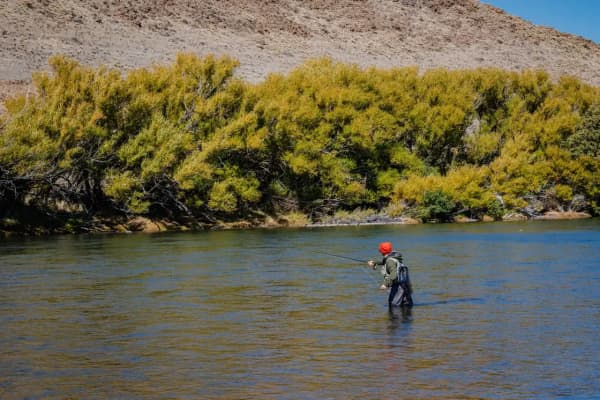
The Upper Provo is above Jordanelle Reservoir, in the high country. The Middle Provo runs between Jordanelle and Deer Creek — this is the blue-ribbon fly fishing water and is not a float stretch. The Lower Provo runs from Deer Creek Dam down through Provo Canyon and eventually into Utah Lake.
Floating happens on the Lower Provo, in the corridor alongside US-189 between Deer Creek and Provo. The standard run is:
Put-in: the Lower Provo River Park access below Deer Creek Dam, reached by turning off US-189 shortly before the reservoir and following the road down to a parking area with pit toilets and a bridge. This sits within Deer Creek State Park's day-use area, so expect an entrance fee.
Take-out: Vivian Park, about six miles up Provo Canyon from the canyon mouth, on the right as you drive up. There are marked public river exits along the rocks; if you are with an outfitter, use their private take-out instead.
Distance: roughly four and a half river miles. Time on the water: one to two hours, depending on flow.
The river is Class I to II at normal summer flows — the "rapids" are riffles, and the whole thing is tamer than the popular tubing stretch of the Weber River to the north. It is a good first float.
The law nobody expects: life jackets are mandatory
This is the single most important thing on this page, and it is the rule that catches out visitors from states with looser regulations.
In Utah, everyone floating on a river must wear a Coast Guard–approved personal flotation device, regardless of age. Not children under thirteen. Everyone.
That is stricter than the lake rule, which only requires PFDs for those twelve and under, and the reason for the difference is straightforward: rivers move, they change depth constantly, they hold strainers and submerged obstacles, and the water is cold enough to compromise a swimmer quickly. An inner tube counts as a vessel under the law.
The Provo is patrolled and citations are issued. State enforcement officials have been unusually direct about it — the point they make repeatedly is that life jackets only work if worn, and that parents who jacket their children and skip their own are getting the risk model backwards.
Every outfitter includes a jacket with every rental. If you are bringing your own tube from home, bring your own jacket too, and make sure it fits properly rather than sitting loose around the shoulders.
The hazard everyone names: the railroad trestle
Partway down the float there is an old wooden railroad bridge, and it is the one feature that every local source, outfitter and guidebook flags in the same tone.
Do not float through it. It has been the site of repeated accidents. The pilings, the low clearance and the way the current pushes toward them combine badly, and a tube offers no steering to speak of.
There is an exit point before the trestle where you can get out, walk around it on the bank, and put back in below. Most experienced floaters do exactly this, and it costs perhaps five minutes.
The tracks alongside the river carry the Heber Valley Railroad's tourist trains rather than freight, so crossings are infrequent — but they are live tracks and should be treated as such when you are carrying a tube across them.
Other things to expect on the float: low-hanging branches, submerged rocks on a limestone bed, and shallow sections that alternate with deeper ones without warning. None of these are dramatic. All of them will scrape you if you are drifting with your eyes closed.
Flow rates, and why they decide everything
The Provo below Deer Creek is a dam-controlled river, which means the flow you get is a management decision about irrigation and storage, not a function of the weather that morning. Checking it before you go is the single most useful piece of preparation.
Under about 1,000 cubic feet per second, tubing is easy. Above that it gets meaningfully harder and faster.
The comfortable casual range is roughly 100 to 500 CFS. In that window the float is mellow, the riffles are entertaining rather than alarming, and you can relax.
High spring flows are dangerous and are why the season does not start in May. Fast, cold, high water turns a gentle float into a swim you did not plan, and the strainers along the bank become genuinely serious.
Very low late-season flows produce the opposite problem — you scrape, you get stuck, and a two-hour float becomes three hours of walking.
Flow data below Deer Creek Dam is published publicly and the outfitters track it obsessively. If they are closed for the day, that is the reason, and it is not worth arguing with. The underlying USGS streamgage readings are also plotted on LiveEarthViewer's live river map, which is a quicker way to see whether today's number is trending up or down than reading a raw gauge table.
The water is cold, all summer
Because the release comes from the bottom of Deer Creek Reservoir, the Provo runs in the fifties Fahrenheit through July and August, no matter how hot the canyon air is.
For the first twenty minutes this is exactly what you want on a ninety-five-degree day. Over two hours it is a different proposition, particularly for children and anyone slight. People finish the float shivering more often than they expect.
Practical responses: bring a towel and a dry shirt for the car, consider a rash guard, and do not plan a float as the last activity of a cool evening. Mid-afternoon on a hot day is the right slot.
The shuttle problem, and the two ways to solve it
The put-in and take-out are several miles apart on a canyon highway. That is the real obstacle, and it is why most people who talk about tubing the Provo have never actually done it.
Option one: two cars
Park one vehicle at Vivian Park — the take-out — then drive the second up to the Lower Provo River Park put-in. Float down, retrieve the first car, and drive back up for the second.
Budget about thirty minutes for the shuttle on top of your float time. Vivian Park's parking fills quickly at peak summer hours, so arriving early matters more at the take-out than at the put-in.
This is the cheapest option by a wide margin if you own tubes and jackets. It requires two vehicles and a group willing to coordinate.
Option two: an outfitter
Two operators run the corridor and both do the logistics for you.
High Country Adventure — 3702 E Provo Canyon Road — is the turnkey option and the one most people use. You show up, rent a tube or an inflatable kayak, board a school bus, and get driven up the canyon to the put-in. They run multiple shuttles through the day and have a private take-out at Vivian Park. Reviewers describe it as genuinely easy: show up, hop on the bus, float, walk to your car.
Their guidance on suitability is worth quoting in substance. They recommend tubing for ages twelve and up, with a height minimum and a weight limit per tube, and they steer younger children, non-swimmers and heavier adults toward inflatable kayaks or self-guided rafts instead. That is not upselling; it is the correct advice. Slots fill on hot days, so book ahead.
Pro Rafting Tours — based at 1145 S 800 East in Orem — is the guided-rafting specialist and carries an exceptional review record. They run guided trips, self-guided rentals and custom trips for large groups, with rafts, kayaks and tubes. Groups of thirty and even a hundred-plus turn up in their reviews, handled with multiple guides front and back who pull over to brief the group before anything significant. They also offer riverside catering as an add-on at canyon parks. They are closed Sundays.
The choice between them is straightforward: High Country for a cheap self-guided tube float, Pro Rafting for a guided raft, a large group, or anyone nervous about the water.
Tubing versus rafting versus kayaking
Three products on the same stretch, and picking the wrong one is the most common planning mistake.
Tubing is a solo drift with no paddle and essentially no steering. You go where the current goes. Bring a stick or a hand paddle if you can — reviewers say this repeatedly — because pushing yourself off the bank is otherwise done with your hands. It is the cheapest and the most social if your group stays together, which it will not.
Rafting puts a group in one boat with paddles. Guided rafting is the right answer for families with young kids, non-swimmers, nervous first-timers and any group that wants someone competent reading the water. Self-guided rafts split the difference.
Inflatable kayaks — sometimes called duckies — are the underrated middle option. You get real steering, a dry-ish seat, and enough maneuverability to avoid the branches. Repeat visitors frequently do tubes the first time and kayaks the second.
For flatwater paddling instead of moving water, kayaking and paddleboarding around Provo covers Utah Lake and the reservoirs.
What to bring
A life jacket, if you are not renting. Legally required.
Secure river footwear. The riverbed is limestone and you will stand on it, walking around the trestle if nowhere else. Sandals with heel straps or water shoes. Flip-flops will be lost.
A quality inflatable, not a pool float. Branches and rocks destroy cheap vinyl, and a deflating float in moving water is a genuine problem. Rental tubes are heavier-duty for exactly this reason. If you buy your own, buy the thick kind.
A towel and dry clothes in the take-out car.
Sunscreen, reapplied — you are on reflective water at altitude for two hours, and the canyon walls do not shade the whole run.
Nothing you mind losing. Phones, keys and sunglasses end up in the river routinely. A cheap waterproof pouch on a lanyard solves most of it; leave the rest in the car.
Water to drink. Cold river, hot sun, and elevation dehydrate people faster than they notice.
Crowds, parking and river etiquette
The float is popular enough that on a hot Saturday in July the river carries a near-continuous line of tubes, and the constraints that bite are on land rather than water.
Vivian Park parking fills early. This is the take-out, which means an unavailable space there is a much bigger problem than one at the put-in. If you are running your own shuttle, place the take-out car first and place it early.
The put-in charges. The access below Deer Creek sits in state park day-use land with an entrance fee, which people running their own shuttle forget to budget for.
Weekday mornings are the quiet window. Late afternoon on a weekend is the busiest, and the difference in experience is significant — a crowded river means bunching at the riffles and a queue at the trestle walkaround.
A few points of etiquette that regulars would like more first-timers to know. Keep your group loosely together rather than strung out over half a mile, because a spread-out party cannot help anyone who gets stuck. Do not tie tubes together in a long chain; it looks fun and it steers like a barge, and it is how groups end up pinned against the trestle. Leave the bank as you found it — the corridor is heavily used and litter accumulates fast. And if you see someone struggling, the current will carry you to them faster than you can swim, so stay on your tube and reach rather than jumping in.
Alcohol is a poor idea here for reasons beyond the legal ones: cold water, a moving current and impaired judgment is the combination behind most river incidents anywhere.
If the river is not right
There are days when the flow is wrong, the season has not started, or the group is not up for it. The valley has decent substitutes.
Utah Lake and the reservoirs are the flatwater answer — no current, no shuttle, and paddleboards work. See kayaking and paddleboarding and the Utah Lake guide.
The Provo Recreation Center's outdoor pool complex has a wave pool, slides and an indoor lazy river, which is the closest controlled analog to floating and the right call with small children. Details in our Rec Center guide.
Provo Beach's indoor surf simulator is the all-weather option and works in February.
The Provo River Parkway lets you follow the same water on foot or by bike without getting in it, which on a cool day is the better version anyway.
For the fuller seasonal picture, see summer activities in Provo.
Where the float fits in a canyon day
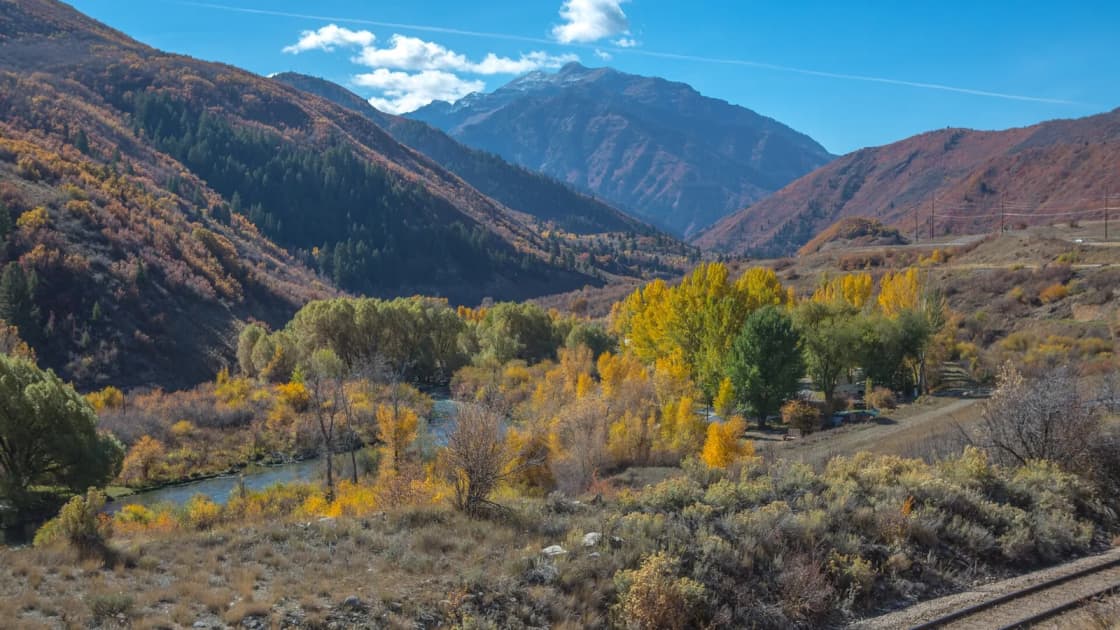
Provo Canyon compresses a remarkable amount into a few miles of highway, and the float pairs naturally with the rest of it.
Vivian Park is not just a take-out — it is a full picnic park with restrooms, pavilions and shade, and it is the trailhead for the Stewart Falls approach as well as a stop on the Heber Valley Railroad.
Bridal Veil Falls sits lower in the canyon and is the region's most photographed waterfall; see our Bridal Veil Falls guide.
The Provo River Parkway trail runs along much of the lower river for walking and cycling — covered in our parkway guide.
Deer Creek Reservoir, immediately above the put-in, is the flatwater and sailing option; see Deer Creek and Jordanelle.
Fly fishing on the Middle Provo above Deer Creek is a separate and serious pursuit — fishing near Provo covers it.
A good hot-Saturday template: float mid-afternoon, dry off at Vivian Park, and drive back down the canyon for dinner. It is the most reliably excellent summer day the valley offers, and it is fifteen minutes from downtown Provo.
The short version
Run it: below Deer Creek Dam to Vivian Park, about four and a half miles, one to two hours.
Wear a life jacket. Everyone. It is the law on Utah rivers regardless of age, and it is enforced.
Walk around the trestle. Every source says it because the accidents are real.
Check the flow first. Under 1,000 CFS is easy; 100 to 500 is ideal; high spring water is dangerous.
Solve the shuttle before you leave the house — two cars, or book an outfitter.
Expect cold water in the fifties all summer, and pack for it.
Take the kayak or the guided raft if your group includes young children or non-swimmers. It is a better trip, not a lesser one.
Season, flows, outfitter schedules and park fees all change year to year. Check the current river flow and call the outfitter before you drive up the canyon — on a marginal day they will tell you honestly, because a group that has a frightening float does not come back.
Related Guides
- The Provo River Delta's Last Construction Summer: What's Finishing, What's Detoured
- Provo River Delta keeps getting better: new fishing platforms, boat ramps, and fresh trout
- Shooting Ranges in Utah Valley: Where the Public Can Actually Shoot, and What to Bring
- Provo Canyon: The Complete Guide to US-189, the Stops, and the Seasons
- Fly Fishing the Provo River: Three Rivers Wearing One Name
- Vivian Park and Nunn's Park — the park at the top of the float
Frequently Asked Questions
Where do you tube the Provo River?
Do you have to wear a life jacket to tube the Provo River?
How long does it take to float the Provo River?
What is the railroad trestle on the Provo River?
When is the Provo River tubing season?
How cold is the Provo River?
Can kids tube the Provo River?
What's the difference between rafting and tubing the Provo River?