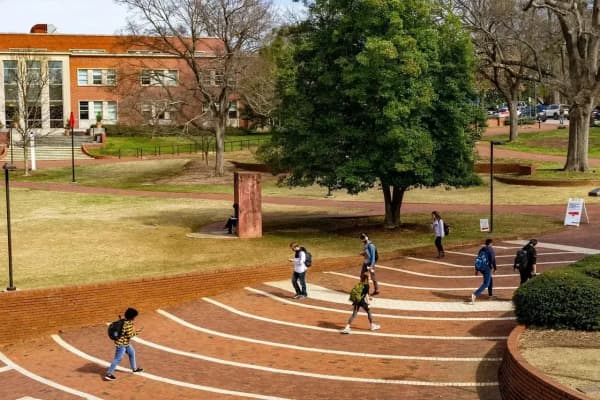

Spring break from Provo begins with a calendar problem that the rest of the country's college students do not have. Utah Valley University has a spring break — a real one, a week in mid-March. Brigham Young University does not, and never has: its winter semester runs from early January to late April with a single no-classes Friday in the middle and nothing else until finals, and a student who arrived from Arizona State or Ohio State discovers this in about the second week of February, when everyone back home starts posting flight confirmations. The two campuses are three miles apart. One of them empties for a week in March. The other one keeps going.
This guide is the student version of spring break from Utah Valley — for the UVU student with the week, the BYU student building one out of a Friday and a gap, and the friend group that spans both. It covers the four classic trips (St. George and Zion, Moab, Las Vegas, the Southern California coast) with real drive times and student-budget math, the ski alternative that requires no travel at all, the stay-in-Provo version, and the road-trip mistakes that reliably end a trip early. For the campus-side calendar the whole thing hangs on, our spring and summer term guide explains BYU's odd year; for the destinations in full depth, the site's St. George and Zion and Moab guides go deeper than this page can. Dates below are from the two universities' published 2026–27 calendars; confirm on the registrar's page, because the no-class Friday moves.
The Two Calendars
UVU: spring break is Monday, March 15 through Sunday, March 21, 2027, per the university's published spring calendar. That is the peak national week — the week when the largest number of American colleges are simultaneously off — which means the roads south and the towns at the end of them will be full. A UVU student with flexibility leaves on Friday the 12th and comes home midweek, or aims the trip at the back half of the week.
BYU: no spring break. The 2026–27 calendar carries one no-classes Friday in winter semester — March 19, 2027, per the published holiday schedule — which is an academic scheduling day, not a holiday, and which lands inside UVU's week. Winter finals end in the last week of April; spring term starts a few days later. A BYU student who is not taking spring classes has, in effect, a spring break in the last week of April and the first week of May, which is later, warmer and better for every destination on this page.
The friend group that spans both campuses has three real options: the UVU week for everyone, with the BYU students skipping two or three days of class; the no-class Friday weekend, three days, for a short trip; or the late-April gap, when the UVU students are in finals. Most groups do the first and do not talk about it much.
The Four Trips
St. George and Zion: the default
St. George is the valley's spring break the way Florida is the East Coast's. It is 250 miles and about 3.5 hours down I-15 — longer through the Virgin River Gorge on a peak Friday — and in mid-March it is in the 60s and 70s while Provo is in the 40s with a chance of snow. That contrast is the whole trip.
The student version: a car of four, a shared vacation rental or a campsite at Snow Canyon or Sand Hollow (booked in January; the state-park campgrounds sell out for the peak week a month or more ahead), groceries, one day in Zion on the free shuttle from Springdale, one day at Snow Canyon's slickrock and lava tubes, one day doing nothing by a pool. Gas is a tank each way, split four ways. The Zion day is the one to plan: in March the park's shuttle is running, the Springdale lots fill by 9 a.m. on peak days, and the Angels Landing permit lottery has to be entered in advance if that hike is the goal. A four-night trip with a split rental can come in under $200 a person; a camping version under $100. Our Zion and St. George guide has the full plan, including the hikes that do not need permits.
The catch is the crowd. Every college in Utah, Nevada and Arizona has the same idea, and St. George on the peak weekend has the traffic and the restaurant waits to prove it. Leave Thursday night or Friday morning, not Friday at 3 p.m.
Moab: the one for the outdoors group
Moab is 230 miles and 3.5 to 4 hours via US-6 through Spanish Fork Canyon to Price, then US-191 south. It is higher and colder than St. George — March nights in Moab drop below freezing, and the days are in the 50s and 60s — but it has Arches and Canyonlands, the Slickrock and the river trails, and a town that has been hosting the spring-break crowd for decades.
The student version: camping, if the group has the gear and the tolerance for cold nights (the BLM sites along the Colorado River on Highway 128 are cheap and first-come, and full by Friday noon of a peak week; the Arches campground and the state parks book far ahead), or a split motel. Arches has run a timed-entry system in spring in recent years, which means a reservation for a morning slot made in advance; check the park's page before leaving, because the rules have changed year to year. Delicate Arch at sunset, the Windows loop, Dead Horse Point, a day in the Island in the Sky district of Canyonlands, and a bike rental for anyone who came for the slickrock. Gas is a tank and a half each way. The Moab guide covers the drive and the parks in detail; the one thing to add for spring break is the road: US-6 through the canyon is a two-lane truck route with ice in March and deer at dusk, and it is not the road to drive at midnight after a long day.
Las Vegas: the expensive one
Las Vegas is 370 miles and 5.5 hours straight down I-15, and it is the trip that student budgets misjudge worst. The drive is easy and the hotel rooms midweek can be cheap; everything after that is not. Resort fees, parking fees, the price of a meal on the Strip, the price of anything with a line — Vegas in a peak week is built to extract from exactly the crowd that arrives. A car of four sharing a midweek room can do two nights for a few hundred dollars total if they eat off-Strip and drink nothing; the same trip on the weekend with a show is a thousand.
For a BYU crowd, the honor-code question comes up and answers itself: the trip is legal, the campus rules follow the student, and most of the groups that go treat it as Red Rock Canyon, the Valley of Fire, the Hoover Dam, a cheap buffet and a walk down the Strip at night. Red Rock is the surprise: a scenic loop and canyon hikes twenty minutes west of the Strip, better than anything in the city. Book the room midweek, park at a hotel without a fee (there are still a few; check), and leave before the weekend.
The Southern California coast: the full-week trip
San Diego is 650 to 700 miles and ten to twelve hours from Provo, all of it on I-15 until the last stretch. Los Angeles and Orange County are similar. That is a full day each way, which is why the coast is a week's trip and not a long weekend's, and why it belongs to the UVU student with the week or the BYU student with the late-April gap.
The student version: split the drive with an overnight in St. George or Vegas on the way down and a straight shot home; sleep cheap (a hostel in San Diego, a friend's apartment, a state-beach campground booked in the winter); spend the days on free beaches, because in March the water is cold and the sand is the point; and budget for California gas and food, which are both dearer than Utah's. San Diego is the favorite because the beaches, the parks and the zoo's neighborhood are walkable from cheap lodging; Orange County is pricier and further into traffic; Los Angeles is a different trip. The alternative is to fly: Salt Lake City to San Diego or Orange County is about two hours, and a student with more money than time should compare the fare against two days of driving. The Provo airport's own schedule is limited and seasonal; check whether it happens to have a coastal route the week you want.
The Alternatives
Skiing. Mid-March is spring skiing along the Wasatch, and it is the trip that requires no travel at all. Sundance is up the canyon; the Cottonwood resorts are an hour; the passes our ski-pass guide explains are already bought. A car of four with passes can decide on a Thursday night. It is the spring break the out-of-state students discover in their second year, and it is the fallback when the St. George rental falls through.
Bear Lake and the north. Wrong season. Bear Lake in March is frozen and shuttered; save it for summer.
Southern Utah beyond St. George. Bryce Canyon in March is snowy and spectacular and nearly empty; Capitol Reef is cool and quiet; the San Rafael Swell and Goblin Valley are perfect. These are the trips for the group that wants the desert without the crowd, and they are the ones this site's day-trip guides cover.
Staying in Provo. For the BYU student with three days, or anyone whose money is gone: the valley in mid-March has the first warm days on the Provo Canyon trail, the hot springs at their best, the museums, and — the underrated one — an empty campus and an empty town when UVU leaves. The rec centers are quiet, the restaurants have tables, and the drive to Sundance is fifteen minutes. It is not nothing.
The Budget, Honestly
A car of four, splitting evenly, mid-March 2027, with the usual student assumptions (gas at whatever it is, groceries not restaurants, the cheapest sleeping option that is not the car):
- St. George, four nights, split rental: $150 to $250 a person. Camping: $80 to $120.
- Moab, three nights, camping: $80 to $120 a person. Split motel: $150 to $250.
- Las Vegas, two midweek nights: $150 to $300 a person if disciplined; double that if not.
- San Diego, five nights, hostel or friend's floor, driving: $300 to $500 a person; flying adds the fare and subtracts two days of gas and motels.
- Skiing, three days, with passes already owned: the cost of lunch.
The money rule that keeps a group together: agree the split in Provo. Gas by the tank, groceries by the cart, one person pays and everyone Venmos that night, and the person who wants the nice restaurant pays the difference. The groups that fight are the ones that settle up at the end.
The Road-Trip Rules
Leave early. Friday at 3 p.m. on I-15 in the peak week is the whole state going south; Thursday night or Friday at 6 a.m. is a clear road.
Book the sleeping in January. Moab's campgrounds and Springdale's rooms are gone a month before the peak week; St. George rentals go fast; San Diego's hostel beds go early. A group that books in February is choosing from what is left.
Check the car. Oil, tires, the spare, the jack, a gallon of water, a blanket. The desert between Beaver and St. George has long stretches with no service; US-6 to Moab has none for an hour.
Two drivers minimum. Three for the coast.
Do not drive US-6 at night in March.
Bring the sunscreen and the layers both; St. George is warm and Moab's nights are freezing.
And tell someone the plan. The group chat back in Provo is the emergency contact.
A Day-by-Day for Each Trip
Because a plan on paper is what keeps four people in a car from arguing about it, here is a workable skeleton for each of the four, sized to a UVU week or a BYU long weekend.
St. George, four nights (Friday to Tuesday). Friday: leave Provo by 7 a.m., arrive by lunch, check into the rental, Pioneer Park's red rocks in town by evening. Saturday: Zion — park in Springdale by 8, ride the shuttle, do the Riverside Walk and the Emerald Pools if Angels Landing was not drawn in the lottery, out by 4, dinner in Springdale. Sunday: Snow Canyon in the morning (the petrified dunes and the lava tubes; bring a headlamp), the pool in the afternoon. Monday: the Red Cliffs desert reserve or a Sand Hollow paddleboard rental, and the drive up to Kolob Canyons at sunset if the group has energy. Tuesday: home by early afternoon, ahead of the Wednesday return traffic.
Moab, three nights (Thursday to Sunday). Thursday: leave Provo by noon, arrive in daylight, set up camp on the river road while sites are still open. Friday: Arches with a timed-entry reservation for the morning slot — the Windows and Double Arch first, the Devils Garden trail to Landscape Arch, Delicate Arch at sunset. Saturday: Island in the Sky in Canyonlands — Mesa Arch at dawn for the photographers, the Grand View Point walk, Dead Horse Point on the way back — and a town evening. Sunday: a short morning ride or the Corona Arch hike, then home through the canyon in daylight.
Las Vegas, two nights (Monday to Wednesday). Monday: leave early, Red Rock Canyon's scenic loop on the way in, check in mid-afternoon, the Strip at night on foot. Tuesday: the Valley of Fire or Hoover Dam in the morning, a cheap buffet, the Fremont Street end downtown in the evening. Wednesday: out before the weekend rates start.
San Diego, six nights (Saturday to Friday). Saturday: the whole drive, or the split with a night in St. George. Sunday: Pacific Beach or Mission Beach, the boardwalk, a rented bike. Monday: Balboa Park's free days and gardens, the zoo if the budget stretches. Tuesday: La Jolla's cove and tide pools, Torrey Pines. Wednesday: Coronado on the ferry, Old Town for cheap food. Thursday: a rest day, or a Tijuana crossing for the group that brought passports and read the rules. Friday: the whole drive home, with a driver swap at Barstow and another at Vegas.
None of these is the only version, and all of them survive being cut in half. The point of writing one down is that the group agrees on it before the car leaves the parking lot behind the apartment.
What to Know About the Return
The drive home is where the trips go wrong, because it is the day nobody planned. Three notes.
The Sunday of a peak week on I-15 northbound from St. George is the worst traffic of the year on that road; the Virgin River Gorge and the Cedar City stretch can add an hour. Come home Monday or Tuesday if the calendar allows, or leave St. George at dawn.
The Moab canyon on US-6 has a long, dark, deer-heavy stretch between Price and Spanish Fork. Aim to be through it before sunset; in mid-March that is about 7:30 p.m.
The coast drive home is eleven hours of I-15 that starts in Southern California traffic and ends in Utah at night. Leave San Diego by 6 a.m., swap drivers every two hours, and expect the Beaver-to-Nephi stretch in the dark. A car of four that leaves at noon arrives at 1 a.m. and has class at 9.
And the money: the last tank of gas and the last grocery stop are the ones nobody Venmos. Settle it at the Nephi exit, not the next week.
The Short Version
UVU's spring break is March 15–21, 2027, in the peak national week; BYU has none, only a no-class Friday (March 19 on the published calendar) and the late-April gap between winter finals and spring term. St. George is the default trip — 3.5 hours, warm, cheap, crowded; Moab is the outdoors version — cold nights, national parks, timed entry; Las Vegas is the one that costs more than it looks; the coast is a week's trip that needs a full week and ideally a flight. Skiing is the trip that needs no trip. Book the sleeping in January, leave on Thursday night, agree the money in Provo, and do not drive the Moab canyon in the dark.
Related Guides
- Spring and Summer Term in Provo
- Zion and St. George from Provo
- Moab from Provo: Arches and Canyonlands
- Ski Passes for Utah Valley Families
- Flying from Provo Airport
- Provo Airport vs. Salt Lake City Airport
- Hot Springs Near Provo
- Student Discounts & Deals in Provo
Frequently Asked Questions
Does BYU have a spring break?
When is UVU's spring break in 2027?
What is the cheapest real spring-break trip from Provo?
How far is each of the four classic trips?
Is the coast worth it from Provo?
What about going the other direction — skiing?
How does a BYU student actually take a trip with no break?
What are the road-trip mistakes that end a spring break early?