
Every winter, a few thousand people in Utah Valley decide that this is the year. They moved here from somewhere flat, or they grew up here in a family that did not ski, or their kid came home from a friend's house talking about Sundance, and they look up at the Wasatch on the first clear morning after a storm and think that it is absurd to live under those mountains and never have stood on them. Then they look up lift ticket prices and feel the other absurdity.
This guide is for that person, and for the parents trying to get a four-year-old through a first day without tears. It covers where to learn, which is a shorter list than it looks; what the lessons and programs cost, using the 2025-26 prices because the 2026-27 season's had not been posted when we wrote this in early September; the two ways to make the lift ticket nearly disappear for a child; the ski-versus-snowboard question; the clothing question; and the handful of mistakes that end a family's skiing before it begins. We have a separate guide to ski pass math for Utah Valley families, which is the next question after this one, and a general skiing near Provo guide for people who already know how.
Where to Learn: Sundance, Then Brighton, Then the Rest
Utah has fifteen ski resorts and Utah Valley is within two hours of a dozen of them. For a beginner, the list collapses to two, with a third for a specific case.
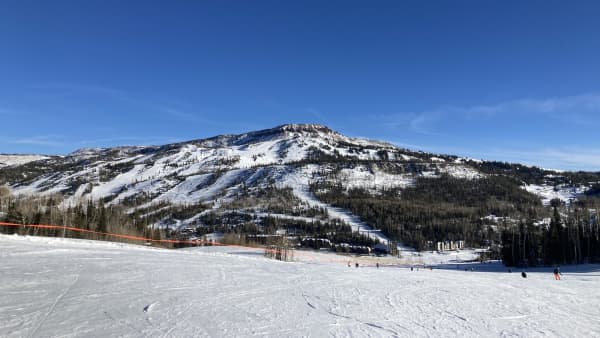
Sundance Mountain Resort, 35 minutes from downtown Provo up Provo Canyon and the Alpine Loop Road, is the answer for almost everyone in this county, and not only because it is closest. The mountain is laid out in two halves: a front mountain with the beginner and lower-intermediate terrain, served by its own lifts and its own base area, and a back mountain with the blue cruisers and the expert runs. That separation is the thing that matters for a beginner. On a first day at Sundance you will not be sharing a run with someone going 50 miles an hour, the lift you ride is a beginner lift, and the run you learn on ends at the lodge. The snowsports school runs group lessons daily — mornings and full days starting at 10 a.m., afternoons at 1:30 — with adult groups, a kids' group program the resort calls the Outlaw lesson, a one-on-one program for four- and five-year-olds it calls the Wild Bunch, and private lessons at any age. Reservations are online at least 24 hours ahead; walk-ins are possible but not guaranteed and cost more. Equipment must be rented before the lesson starts, at the resort's rental shop or in town.
Sundance's other advantage for a Utah Valley beginner is the four-session program, covered below, which is the single best deal in Utah for a first-time skier who lives within an hour of the resort.
Brighton, at the top of Big Cottonwood Canyon in Salt Lake County, is roughly 75 minutes from Provo without traffic and has taught more Utah children to ski than any other mountain. It has a large, gentle learning area at the base, a ski school with a long tradition of children's group programs, lift tickets that have historically been among the cheapest in the Wasatch, and night skiing on the lower mountain several nights a week, which for a family is a way to fit a lesson after school. The drive is the drawback, and the canyon's traction laws and holiday traffic are real; on a powder Saturday the Cottonwoods are the most congested roads in the state.
Solitude, next door to Brighton, has a good beginner area and a quieter base; Snowbird and Alta, in Little Cottonwood, are world-class expert mountains with beginner terrain that exists but is not the point, and neither is where to take a four-year-old on a first day. Park City Mountain and Deer Valley, about 70 minutes from Provo, have enormous ski schools and the prices to match; Deer Valley does not allow snowboards. Soldier Hollow in Midway, an hour from Provo, is not a downhill resort — it is a Nordic center and tubing hill — but its tubing hill is the best first winter day for a family that is not sure yet, and its cross-country trails are where a lot of Utah Valley adults learn to ski without ever buying a lift ticket. Our Soldier Hollow guide covers it.
What the Lessons Cost
The numbers below are Sundance's posted 2025-26 season rates, which were the most recent available in early September 2026. The resort had marked its 2026-27 lesson prices "TBA" when we checked; expect them to be the same or modestly higher, and treat these as the floor.
Adult group lessons. A half-day group lesson — two and a half hours, morning or afternoon — was $145. A full day, five hours with a lunch break, was $250. Groups are capped at a small number and sorted by ability, so a never-ever adult is grouped with other never-evers. The lesson price does not include the lift ticket; participants without a season pass buy a discounted lift ticket at online check-in, and the discount is only for the person in the lesson.
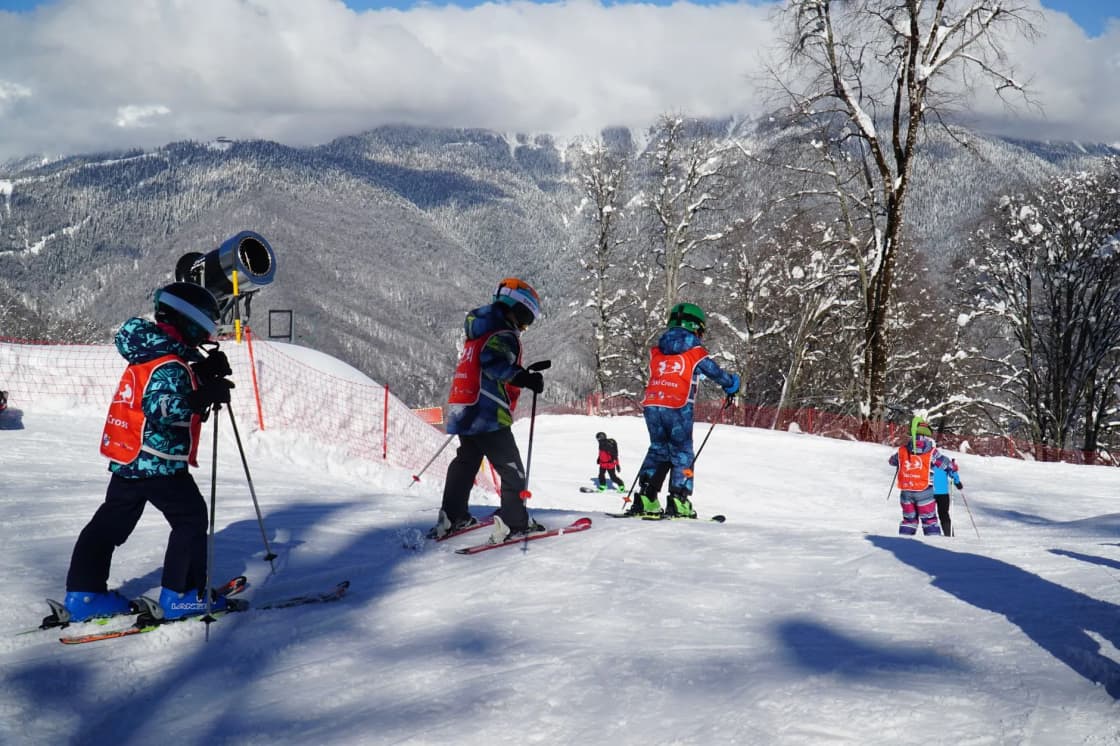
Kids' group lessons. The Outlaw program, for children roughly six and up, was $160 for a half day and $280 for a full day. The Wild Bunch, the resort's one-on-one program for four- and five-year-olds, was $235 for a half day. Children five and under do not need a lift ticket at Sundance, which takes a meaningful line item off a first day for a preschooler.
Private lessons. In a recent season Sundance listed half-day privates at $450 and full-day privates at $750, with a half-day kids' private for four- and five-year-olds at $225. Two or three adults splitting a semi-private come out cheaper per person than the group rate and learn faster. In the Cottonwoods, private lessons run higher — Solitude has listed a half-day private for up to five people at $615 and a full day at $840.
The four-session program. This is the one to know about. Sundance's Learn to Ski (and Learn to Ride, for snowboard) four-session program is for first-timers only, ages eight and up: four group lessons, two in January and two in February, with lift tickets for the lesson days included, a season rental of skis or board and boots included, and — if you complete all four lessons — a Sundance season pass for the rest of the winter. For the 2025-26 season it was $550, and reservations were due by November 15. Do the arithmetic against the à la carte prices above: four half-day lessons alone would be $580, before rentals or lift tickets, and the season pass at the end is worth several hundred dollars on its own. For a Utah Valley adult or teenager who is serious about learning, this is the cheapest path to skiing there is, and it sells out.
Rentals. A basic rental package — skis, boots, poles, or board and boots — runs roughly $50 to $70 a day at the resort and somewhat less at the ski shops in Provo and Orem, with multi-day and season rates available. Helmets are often included for kids and an extra few dollars for adults. Sundance's Mountain Outfitters shop handles rentals at the base; the Provo and Orem shops let you fit boots the night before and skip the morning line.
The lift ticket. For anyone in a lesson, the discounted participant ticket. For a companion who is not in a lesson, a regular day ticket, which at Sundance and everywhere else in the Wasatch is priced by date, cheaper online and in advance, and most expensive during the holiday weeks. Our pass math guide covers when a season pass beats day tickets; for a beginner the short answer is that it does not, until the second season.
Put together, a realistic first day for an adult beginner at Sundance is $250 to $350 including the lesson, the rental, and the discounted ticket. For a child in a group lesson with rentals, $200 to $330. For a preschooler in the Wild Bunch, $235 plus rentals, no ticket. For a family of four with two adults and two kids in lessons, a first day is a $1,000 outing, which is why the passport and the four-session program matter.
Two Ways to Make a Child's Lift Ticket Disappear
The Ski Utah Passport. For years, Ski Utah — the state's resort association — has sold a Passport that gives children in the 5th and 6th grades, and in some seasons the 4th, lift tickets at every participating Utah resort for a small processing fee. In recent seasons it has been three days at each resort, which across fourteen or fifteen resorts is more skiing than any family will use, and the fee has been under $100 for the whole season. It sells through skiutah.com starting in the fall, requires proof of the child's grade, and can sell out. Sundance participates; so do Brighton, Solitude, Snowbird, Alta, Park City, Deer Valley, Snowbasin, and the rest. Lessons and rentals still cost money, but the lift ticket — the biggest single line at most resorts — is gone for that child for the winter. If you have a 10- or 11-year-old, this is the year to start.
Five and under skis free. Sundance, and most of the Utah resorts, do not charge a lift ticket for children five and under. Combined with a lesson program designed for four- and five-year-olds, it means the first two seasons of a young child's skiing cost the lesson and the rental and nothing else.
Between those two, a Utah Valley family can get a child from four to twelve with lift tickets paid for in roughly four of those nine seasons. That is the reason so many people here grew up skiing on incomes that would not have supported it elsewhere.
Ski or Snowboard
For a child under eight, ski. The physics are simple: on skis a child stands facing forward, each foot moves independently, the wedge — the pizza — stops them on the first morning, and getting off a chairlift is a matter of standing up and sliding. On a snowboard a child stands sideways on a single edge, cannot walk on the flat without unstrapping a foot, spends the first two days falling on their wrists and their tailbone, and needs enough leg strength to hold an edge across the whole board. Resort schools set their minimum ages accordingly — group snowboard lessons typically start at seven, group ski lessons at four or five — and a parent who insists on a board for a five-year-old is buying two miserable days. A child who skis first and switches to a board at ten or twelve picks it up in a weekend; the reverse is rare.
For a teenager or an adult, either, and the honest question is which one you want to be doing in three years with the people you will be doing it with. Snowboarding has a harder first two days and an easier next twenty; skiing has an easier first day and a longer road to being good. Both schools at both resorts teach both.
What to Wear, and What Not To
The clothing mistake is the one that ends the most first days, and it is nearly always cotton.
Rent: skis or board, boots, poles, helmet. Own or borrow: waterproof, insulated pants; a waterproof shell or insulated jacket; a synthetic or wool base layer top and bottom; one pair of wool or synthetic ski socks, thin, not two pairs; waterproof gloves or, for children, mittens, which are warmer; goggles, not sunglasses; a neck gaiter or balaclava; and sunscreen, because the sun at 7,000 feet in January burns.
Do not wear: jeans, which soak through on the first fall and freeze; a cotton hoodie under a shell, which does the same; cotton tube socks, which bunch in the boot and cut off circulation; a puffy coat that is not waterproof; a knit hat under a helmet that is sized for no hat. Do not put two pairs of socks on a child's feet to keep them warm; it makes the boot tight and the feet colder.
The used-gear market in Utah Valley is enormous, because every family here has a closet of outgrown ski pants. The fall consignment sales, the ski-swap events the high school teams and the shops run in October and November, and the neighbor whose kid is a size up are how most first-year children get outfitted for under $100. The one thing to buy new and fit properly is the boots, which is why renting them the first season is the right call.
The First Day, Hour by Hour
Arrive early. A 10 a.m. lesson at Sundance means being in the rental line by 9 or having picked up gear in town the night before, and the lower parking lots on a weekend fill before the lesson starts. Eat breakfast; skiing is hard work and the lesson has no snack break. Go to the bathroom before you put the boots on.
The lesson itself, for a never-ever, is two and a half hours of a small area: how to walk in the boots, how to put the skis on and take them off, how to slide on the flat, how to make the wedge, how to stop, how to turn by shifting weight, and — usually in the last 45 minutes — the first ride up the beginner chair and the first run down. That is the whole first day, and the instructor will not let anyone skip ahead of it. Afternoon lessons are the same; a full-day lesson adds a lunch break and a second block that gets most adults turning in both directions on the beginner run by the end.
After the lesson, ski the beginner run three or four more times while it is fresh, and then stop. The injuries on a first day happen after 2 p.m. when the legs are gone and the snow has softened. Take the boots off in the lodge, eat, drive down the canyon before dark.
For a child in a group program, the day is structured for you; the resort's kids' lessons include supervision and, for full days, lunch. Drop off, say goodbye, and do not hover at the fence, which every instructor will tell you makes it worse. Pick up on time.
When to Go
January and February on a weekday. Early season, before Christmas, means thin cover, hard snow, and only the lower lifts; the holiday weeks from Christmas through New Year's are the most crowded and expensive days of the year, and the beginner area is a bumper-car rink; Presidents' Day weekend is the same; and March, while glorious for people who can ski, turns the beginner slope to wet slush by early afternoon and the learning surface to soup. A Tuesday in the third week of January is the ideal first day, which is exactly why Sundance schedules its four-session program across January and February. If weekdays are impossible, Sunday mornings at Sundance are quieter than Saturdays, for the reasons that make Sundays quiet everywhere in this valley.
Check the resort's snow report and the canyon road status the morning of. Provo Canyon and the Alpine Loop Road to Sundance are plowed but can be icy, and UDOT's traction law applies during storms; our winter activities guide has the road links. A first day should not be a powder day; new snow is harder to learn on and the crowds on a powder morning are the wrong company.
Beyond the First Season
By the end of a first winter — four or five days, one of them a lesson — most adults can ski the green runs at Sundance in control and most children are outrunning their parents. The second season is when the pass math changes: our ski pass guide compares Sundance's season pass, the Ikon and Epic multi-resort passes that cover the Cottonwoods and Park City, and the Yeti Pass, and the answer depends on how many days you think you will actually go. Sundance runs a ten-week Freeride coaching program for kids six to eighteen who can ski blue runs, priced around $1,000 with a season pass and eighteen coaching sessions included, which is where the children who caught the bug in year one end up in year two. And for the students in the valley, our guide to ski-season jobs covers the other traditional Utah way to ski for free, which is to work at the resort.
The mountains are 35 minutes away. The first day is $300. The four-session program is $550 and comes with the rest of the winter. And the child who learns at five will, twenty years from now, be standing on the first clear morning after a storm explaining to somebody from somewhere flat that it is absurd to live under those mountains and never stand on them.
Related Guides
- Ski Passes for Utah Valley Families: Sundance vs. Ikon vs. Epic vs. Yeti
- Skiing Near Provo
- Sundance Resort Guide
- Soldier Hollow: Tubing, Nordic Skiing and the Olympic Venue
- Cross-Country Skiing Near Provo
- Winter Activities in Provo
- Winter and Ski-Season Jobs for Students
- Snowshoeing Near Provo
- Getting to Sundance and the Resorts Without a Car
- Ski-Day Picker — which mountain fits your pass, your start point and the time you actually have
Frequently Asked Questions
Where is the best place near Provo to learn to ski?
How much does a first day of skiing actually cost?
Are there free or nearly free ways for kids to ski in Utah?
Should my child learn to ski or snowboard first?
When should a beginner go?
What do I need to wear, and what can I rent?
Are there ski lessons for adults who are embarrassed to be beginners?
Where can I ski or tube near Provo without a resort?