
There is a version of skiing in Utah Valley that costs less than a movie, does not involve a lift line, does not require anyone to drive to Salt Lake County, and puts you alone in an aspen forest on a January morning with the sound of your own breathing. It is cross-country skiing, it happens a mile above Sundance and an hour east in Midway, and it is the winter sport this valley's families keep rediscovering when the downhill prices come out each fall.
This guide covers the three places a Utah Valley cross-country skier goes — the Sundance Nordic Center in Provo Canyon, Soldier Hollow in Midway, and the closed Alpine Loop road above Aspen Grove — plus the farther options for a thin snow year, what a day costs, what to rent, how to dress, and how to start. The prices are the most recent posted figures as of early September 2026; Sundance had its 2026-27 Nordic rates listed as "TBA" when we checked, so treat every dollar figure as last season's and confirm before you go. Groomed status is the other thing that changes: both Nordic centers groom daily in season, both open when there is snow and close when there is not, and neither had announced 2026-27 opening dates when we wrote this.
The Two Kinds of Skiing, Briefly
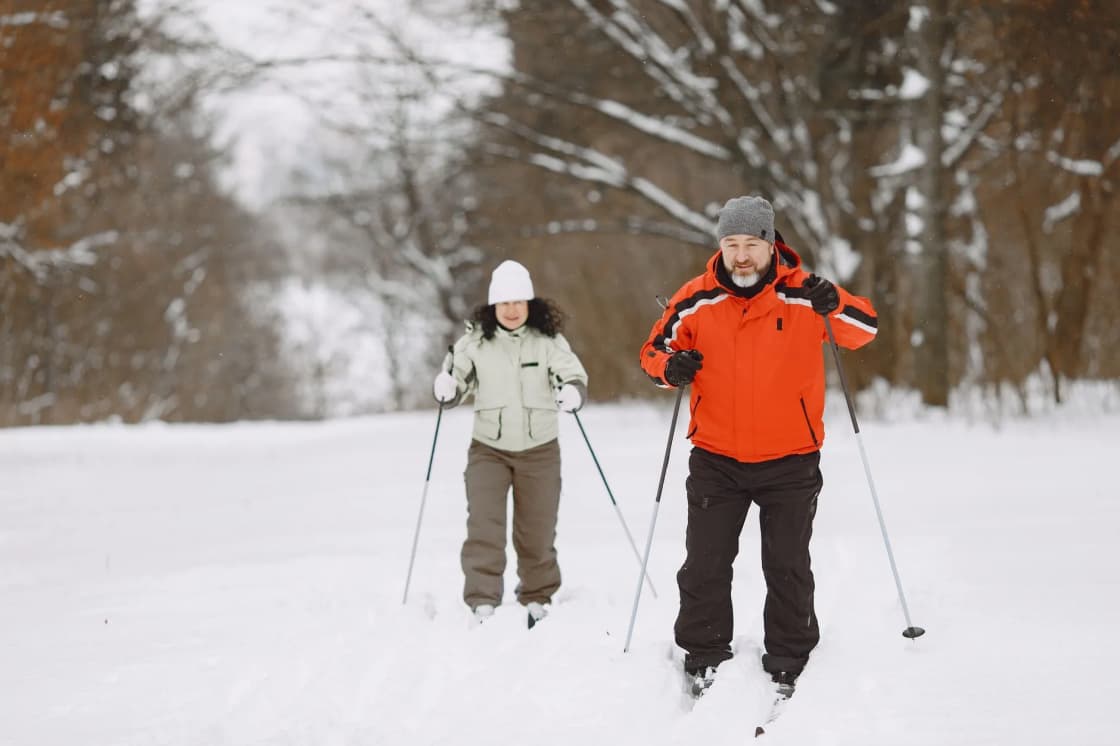
If you have only ever seen cross-country skiing on television during the Olympics, there are two disciplines and they need different gear. Classic skiing is the older one: the skis run in two parallel grooves cut into the snow by the groomer, and you move with a kick-and-glide stride that is essentially walking with momentum. It is the one to learn first, the one for families, and the one you can do on ungroomed snow. Skate skiing is the faster, harder one: shorter, stiffer skis on a wide flat corduroy lane, propelled with a lateral push like a speed skater. It is a magnificent workout and a miserable first day. The Nordic centers groom for both — a corduroy lane with classic tracks set along one or both edges — and rent both; a beginner rents classic.
The third thing, which is not really cross-country skiing but lives at the same centers, is snowshoeing, and our snowshoeing near Provo guide covers it. Both Sundance and Soldier Hollow keep separate snowshoe trails so that snowshoers do not punch holes in the ski track, and both rent snowshoes.
The Sundance Nordic Center
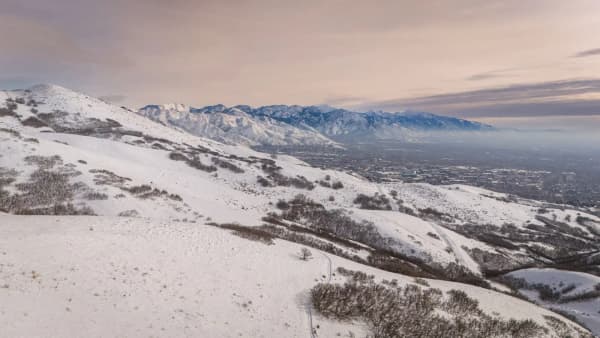
The Sundance Nordic Center is the reason Utah County has a cross-country scene at all. It sits about a mile up the Alpine Loop Road (Utah 92) past the main resort entrance — you drive past the ski area's turnoff, keep climbing, and turn left at the sign, a couple of miles before the winter gate — at around 7,000 feet, in the aspen and fir forest on the north flank of the Provo Canyon side of Timpanogos. From downtown Provo it is 35 to 40 minutes on a clear road.
The trail system is roughly 15 kilometers of daily-groomed track — older sources say 25 or 26, which likely counted the snowshoe network and the outer loops that are groomed only in deep years — set for both classic and skate, and a separate 10-kilometer snowshoe network through the woods. The trails climb; this is not a golf course. From the center, the loops go both directions and both go uphill first, which means every ski ends with a descent back to the car. The forest is the draw. Sundance's Nordic trails are the prettiest groomed skiing within an hour of Provo, and on a weekday morning after a storm you will see more moose tracks than people.
The center itself is a full-service shop: classic and skate rentals for adults and children, demo equipment for people shopping for their own, snowshoes and snow boots, and — in recent seasons — a kids' ski chariot for towing a toddler. Trail pass hours have been 9 a.m. to 5 p.m. daily, with a full-day pass and a discounted half-day pass after 2 p.m. In a recent season the adult full-day pass was $18 and the afternoon pass $14; juniors (6 to 17) were discounted, seniors 65 and over and children 5 and under have skied free; and the resort sold unlimited season passes, a family unlimited pass for up to four people, a limited pass that excluded Saturdays and holidays, and a ten-punch pass. Rentals ran in the $25 to $40 range for the day. Lessons — a one-hour learn-to-classic-ski session offered daily at 10 a.m. and 1 p.m., with the day pass and the rental bundled into the price — need to be booked 24 hours ahead online; last-minute bookings go by phone to the Nordic Center directly. There has been a junior Nordic team for kids, six to eight sessions across January and February, and a Ladies' Day program that has grown into one of the center's biggest weekly draws.
The event to know about is Full Moon Nordic: on the nights around the full moons of January and February, the center has stayed open from 5 to 9 p.m. for skiing and snowshoeing by moonlight, with rentals and the pass bundled into one price and all gear due back by 9. Sundance also runs its full-moon lift rides on the downhill side, covered in our Sundance resort guide; the Nordic version is quieter, cheaper, and the better date.
The practical caveats: the center is at the mercy of Provo Canyon snow, which is thinner and later than the Cottonwoods, so the season typically opens in December and can end in March; a warm winter shortens it at both ends. Parking is a small lot at the center and fills on Saturdays. The Alpine Loop Road above the resort is steep and, in a storm, treacherous; UDOT's traction law applies. And Sundance's Nordic trails, unlike its downhill runs, are not on Ikon or any multi-resort pass — the Nordic pass is its own thing.
Soldier Hollow
Soldier Hollow is the 2002 Olympic cross-country and biathlon venue, at the south end of Wasatch Mountain State Park outside Midway, and it remains the best Nordic facility within reach of Utah Valley. It is about an hour from Provo: up Provo Canyon, past Deer Creek Reservoir, through Heber, and west into Midway, with the last stretch through the state park. Our Soldier Hollow guide covers the whole venue, including the tubing hill that keeps the lights on; this section is only the skiing.
The trail system is large — the sources quote between 16 and 19 miles of groomed trail, and we have not reconciled them — and varied in a way Sundance's is not. The core loops below the stadium are flat and wide, ideal for a first day or a family; the competition loops laid out for the Olympic races are among the hardest cross-country terrain in North America, with climbs that reduce good skiers to a shuffle; and in between are miles of rolling intermediate trail through the sagebrush and scrub oak with the Heber Valley below and Timpanogos across it. Snowmaking covers roughly three miles of the core, which is the thing that matters in a thin year: when Sundance's trails are grass, Soldier Hollow is skiing. The season has run from about mid-December to mid-March, weather permitting, and closes early in a poor year.
The Nordic Center at the base rents classic and skate gear at every level from beginner to performance, runs lessons and clinics, and hosts junior and masters programs. Day passes and rentals are priced in the same range as Sundance's. There is a dedicated snowshoe trail. And there is biathlon: Soldier Hollow is one of the very few places in the country where a member of the public can ski a loop, drop to the range, and shoot at the 50-meter targets, in a scheduled clinic with a rifle the venue provides. It is exactly as strange and satisfying as it sounds.
Choose Soldier Hollow over Sundance for a long, fast, flat day; for a first day if you want the gentlest possible terrain; for skate skiing, where the wide flat lanes are far better; when Provo Canyon's snow is thin; and for biathlon. Choose Sundance for the forest, the moose, the shorter drive, and a weekday when you want to be alone.
The Aspen Grove Road
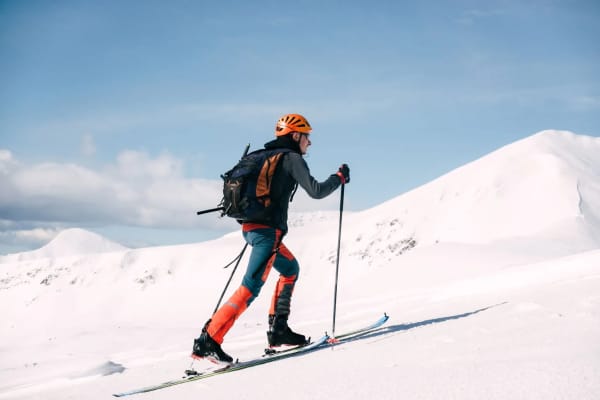
The free option, and the one every longtime Utah County skier knows. The Alpine Loop Road — Utah 92 — connects Provo Canyon to American Fork Canyon over the shoulder of Timpanogos, and it closes to cars every winter above the Sundance area from the first heavy snow, usually in November, until the plows open it in late May. Above the gate at the Aspen Grove trailhead, the closed road becomes a winter corridor: skiers, snowshoers, sledders, and the occasional snowmobile pack it into a firm, wide, ungroomed track that climbs at a steady road grade toward the summit at about 8,000 feet.
From the gate — a small parking area just past the Aspen Grove family camp turnoff, at the end of the plowed road — the first mile or so climbs gently through the aspens with Timpanogos above you to the left. The Timpooneke junction, where the summer trailhead road for the Timpooneke route branches off, is a natural turnaround for a family; the summit and the descent toward American Fork Canyon beyond it is a longer day and a more serious one. It is ungroomed, so classic skis with a fish-scale or waxed kick zone work and skate skis do not; wider touring skis or metal-edged backcountry Nordic skis are best, because the packed track is uneven and the descent on skinny skis is a controlled fall. There is no fee, no rental, no bathroom, and no one to call.
The serious caveat is avalanche terrain. The road above Aspen Grove crosses the runouts of several slide paths off Timpanogos and the ridges to the north, and the summit area and the American Fork side are in the middle of it. The Utah Avalanche Center publishes a daily forecast for the Provo mountains from roughly November through April; read it before you go, and on a day rated Considerable or higher for the aspects the road crosses, ski the Nordic center instead. Our avalanche safety guide covers how to read the forecast and what the ratings mean for a non-expert. The road is also shared with snowmobiles on the American Fork side, and with sledders near the gate on weekends, and the parking lot at the gate holds perhaps fifteen cars.
The same pattern — a closed canyon road above a winter gate — exists on the Nebo Loop above Payson Canyon and on the Squaw Peak road above Provo, and both are skied. Both are farther, colder, windier, and more snowmobile-heavy than Aspen Grove, and neither has the Timpanogos view. The Nebo Loop guide covers the road in its open season.
The Farther Options
For a thin year, a change of scenery, or a long weekend.
Wasatch Mountain State Park, which Soldier Hollow sits inside, grooms cross-country trails on its golf courses and up Snake Creek Canyon out of Midway, separate from Soldier Hollow's system and cheaper; the visitor center is the trailhead. The park, the Forest Service, and UDOT jointly maintain a network of roughly 70 miles of groomed trail that runs over the Wasatch ridge from Midway to American Fork Canyon and Tibble Fork, but that system is groomed for snowmobiles and is covered in our snowmobiling guide; skiers use it, mostly on the Midway side, and share it with machines.
The Mirror Lake Highway (Utah 150) above Kamas closes to cars at the winter gate about 15 miles up, and the closed road beyond is one of the state's most popular ungroomed ski and snowshoe corridors, in the western Uintas at 8,000 to 9,000 feet, with far deeper and more reliable snow than Provo Canyon. It is about 90 minutes from Provo through Heber. Snowmobiles share it.
White Pine Touring in Park City runs a Nordic center on the Park City Golf Club, flat and central and with excellent rentals and instruction, about 70 minutes from Provo. Mountain Dell, on the golf course in Parleys Canyon above Salt Lake, is the Salt Lake City equivalent. Solitude's Nordic center at the top of Big Cottonwood grooms the Silver Lake loops at 8,700 feet and has the most reliable snow of any Wasatch Front Nordic center; it is the one to know for a dry December.
What a Day Costs
The arithmetic is the argument. A downhill day at Sundance for an adult in a group lesson runs $250 to $350, as our learn-to-ski guide works through. A Nordic day at the same resort: $18 for the trail pass, $25 to $40 for rentals, and — if you want the lesson — a bundle that includes both. A first-timer can ski for under $60 all in; a family of four with two children under six, who ski free, for under $150 including rentals; and a season pass for one adult costs less than three downhill day tickets. At the Aspen Grove road, a family with its own gear skis for nothing.
Owning gear changes the math further. A classic setup — skis, bindings, boots, poles — can be had for a few hundred dollars new and far less used, and it lasts a decade. The ski swaps and consignment sales in Provo and Orem each fall carry Nordic gear alongside the downhill, and it goes cheap because fewer people are looking for it. Skate gear costs more and needs more care.
Learning
Classic cross-country skiing is the most learnable winter sport there is. Most adults are shuffling comfortably on a flat groomed track within 20 minutes and gliding within an hour; the one-hour lesson at Sundance exists to teach the three things that are not obvious — how to climb a hill without sliding backward (the herringbone), how to control speed and stop on a descent (the snowplow, which transfers from downhill skiing, and the sit-down, which does not), and how to get up after falling with two long skis attached to your feet. Children learn faster than adults because they are closer to the ground and do not mind falling.
Skate skiing needs instruction; the motion is counterintuitive, the balance is on a single ski at a time, and a self-taught skater develops habits that a coach spends a season undoing. Both centers teach it, and the junior programs at both are skate-first for the kids who want to race. Utah County's high schools have club Nordic teams that train at Soldier Hollow and Sundance, and the Utah Nordic Alliance organizes the state's citizen racing series, which is the path for an adult who gets serious.
What to Wear
Less than you think. Cross-country skiing is aerobic in a way downhill is not — an hour on the trail is closer to a run than to a chairlift — and the universal beginner mistake is to dress for the lift line and arrive at the top of the first climb drenched in sweat, then freeze on the descent. Dress like a winter runner. A wicking base layer; a light fleece or wind shell; tights or soft-shell pants rather than insulated ski pants; light gloves; a hat you can pull off; sunglasses rather than goggles, because you will fog goggles inside five minutes; sunscreen. Carry a warmer layer in a small pack for the stop at the top and the drive home. Wool socks, not cotton. The boots come with the rental and are warm enough.
Bring water. People forget that skiing at 7,000 feet in dry air is dehydrating, and the Nordic centers have a shop but not a restaurant.
Kids, Dogs, and Moose
Kids. Nordic is the easier family winter sport by a wide margin: no lift, no speed, a soft landing, and a rental fleet that goes down to preschool sizes. Sundance has skied children five and under free and rented a chariot for towing the ones who cannot ski yet; Soldier Hollow's flat lower loops are the gentlest terrain in the region. Plan an hour, bring snacks, and stop while it is still fun. A child who hates it will like the snowshoe trail, and one who loves it will want the junior team.
Dogs. Not on the groomed trails at either center, which is a firm rule everywhere Nordic trails are groomed; a dog's paw prints ruin a classic track. The Aspen Grove road is Forest Service land and dogs are allowed, on leash near the gate and under control above it; it is in the Timpanogos watershed at the top, so check the current rules. Our American Fork Canyon guide covers the watershed boundaries.
Moose. You will see them, especially at Sundance and on the Aspen Grove road, where the willows along the creek are winter forage. A moose on the trail is not a photo opportunity; it is a reason to stop, back up slowly, and wait or go around wide. They are faster than you on skis, they do not like dogs, and a cow with a calf will charge. Both Nordic centers post sightings.
The Season, Week by Week
Late November to mid-December: the centers open when there is enough snow to groom, which in Provo Canyon is sometimes Thanksgiving and sometimes Christmas; Soldier Hollow's snowmaking usually has it open first. The Aspen Grove gate closes with the first real storm. Late December through February: the season proper, with the best snow in January and the full-moon nights at Sundance in late January and late February. March: still good at Soldier Hollow and on the Uinta corridors, fading in Provo Canyon as the south-facing loops melt out; the centers close when the grooming stops holding, usually mid-March. April: the Aspen Grove road is a mix of ice and mud and is done. Late May: the gate opens to cars and it is a bike road until November.
The Short Version
Groomed and closest: the Sundance Nordic Center, 35 to 40 minutes, 15 kilometers, $18 last season, rentals and a one-hour lesson on site, full-moon nights in January and February. Groomed and biggest: Soldier Hollow in Midway, an hour, the Olympic venue, snowmaking, biathlon, the flattest beginner loops. Free and ungroomed: the closed Alpine Loop road above the Aspen Grove gate, on touring skis, after you have read the avalanche forecast. Farther: Wasatch Mountain State Park, the Mirror Lake Highway, Solitude's Nordic center for a dry December. Cost: under $60 for a first day, under $150 for a family. Wear: less than you think. Learn: classic first, skate with a coach. And go on a weekday morning after a storm, when the track is fresh and the forest is yours.
Related Guides
- Soldier Hollow: Tubing, Nordic Skiing and the Olympic Venue
- Snowshoeing Near Provo
- Learning to Ski or Snowboard Near Provo
- Backcountry Skiing 101 from Utah Valley
- Snowmobiling Near Provo
- Avalanche Safety in Utah Valley
- Sundance Resort Guide
- Heber Valley and Midway from Provo
Frequently Asked Questions
Where is the closest groomed cross-country skiing to Provo?
How much does a day of cross-country skiing cost?
Is the Aspen Grove road really skiable?
How does Soldier Hollow compare to Sundance for Nordic?
Do I need a lesson to cross-country ski?
What should I wear cross-country skiing?
Can I take a small child?
Where else can I ski when Provo Canyon is thin or crowded?
Sources
The facts in this guide were checked against these sources. Hours, fees and rules change, so confirm anything time-sensitive with the source before you go. How we make Provo.com.
- Spiffying up the Alpine Loop, Utah Department of Transportation. Checked October 12, 2026.
- Nordic Skiing & Snowshoeing, Sundance Mountain Resort. Checked October 12, 2026.
- Soldier Hollow Nordic Center, Utah Olympic Legacy Foundation. Checked October 12, 2026.