Price is the Carbon County seat, about 76 miles from Provo over Soldier Summit, and the reason most Utah Valley families stop there is the Prehistoric Museum at Utah State University Eastern. The museum on Main Street started in 1961 as a chamber of commerce project built around one Allosaurus skeleton. Today it holds the Allosaurus, a Utahraptor, a large ankylosaur mount, an Ice Age mammoth and a set of Fremont clay figurines that researchers call one of only two known complete sets. Add Helper's mining and railroad museum 8 miles up the road and you have a full day of dinosaurs and coal-town history. This guide covers hours, costs, the free days, the drive, what to see and who should probably go somewhere else.
| Museum | Prehistoric Museum, Utah State University Eastern |
| Address | 155 East Main, Price, Utah 84501 |
| Phone | (435) 613-5060 |
| Hours | Sun. to Wed. 9 a.m. to 5 p.m.; Thu. to Sat. 9 a.m. to 7 p.m. |
| Closed | Thanksgiving Day, Dec. 24, 25 and 31, Jan. 1 |
| Adults (13 to 64) | $7 |
| Children (2 to 12) | $3; under 2 free |
| Family | $20 (two adults, up to six dependents) |
| Free | Thursdays 4 to 7 p.m. and select holidays |
| From Provo | About 76 miles, roughly 1 hour 40 minutes via US-6 |
The Short Answer
Drive US-6 from Spanish Fork through Spanish Fork Canyon and over Soldier Summit, stop in Helper if the mining museum is open, then spend two hours at the Prehistoric Museum in Price. Go on a Thursday after 4 p.m. or on one of the museum's free holidays if cost matters. From spring through October, add the Cleveland-Lloyd Dinosaur Quarry south of Price, the source of the museum's first Allosaurus. In winter, skip the quarry, check UDOT for road conditions and traction rules before leaving, and plan to be back through the canyon before dark.
How the Museum Got Its Allosaurus
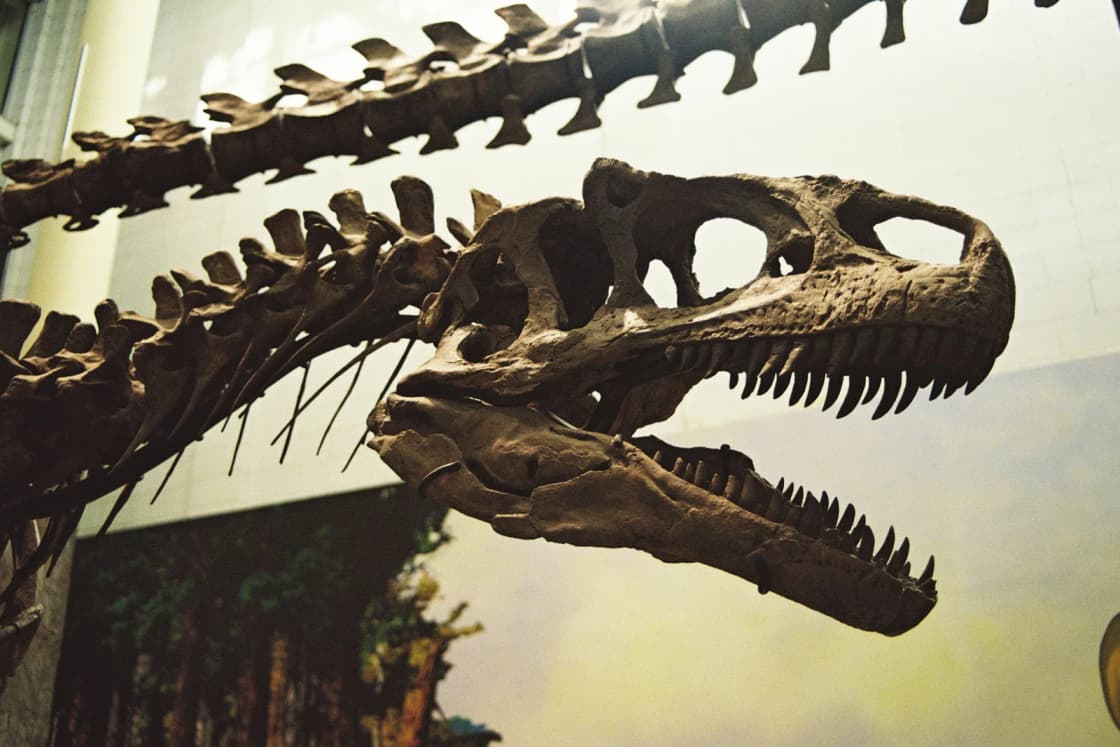
The museum's own history page tells a story that explains a lot about what you see inside. Local discussions about a museum began in the summer of 1960. In January 1961, the Price Chamber of Commerce authorized $2,250 to buy an Allosaurus skeleton. The museum opened on June 3, 1961, in a 1,500-square-foot room on the second floor of the Price City Municipal Building, and the skeleton, nicknamed "Al," went on display in 1963. A photo caption on the history page identifies the Cleveland-Lloyd Dinosaur Quarry as the skeleton's source.
The museum moved into the former city gymnasium in 1973, and later added a West Wing that houses the Hall of Dinosaurs. In 2003 it was accredited by the American Association of Museums and became a state and federal repository for archaeological and paleontological materials. In July 2010 it became part of Utah State University.
That repository status is part of why the collection keeps growing. Utah State Magazine reported in September 2025 that the museum brings in thousands of fossils a year and holds eight holotypes besides Utahraptor, including four ankylosaurs collected within 150 miles of the museum. A holotype is the single specimen scientists use to define a species, so a museum that holds several is doing original research, not only displaying casts.
What to See: The Hall of Dinosaurs
The museum's visit page sums up the dinosaur hall in one line: "Come see our carnivores and herbivores!" It also notes that many items on display were found within a stone's throw of the museum. Visit Utah describes towering full-body mounts, illustrations of how the animals may have looked and displays on their rise and fall, and says most of the real bones and tracks were found in eastern Utah.
Al the Allosaurus. Utah State Magazine describes Al as a 28-foot Allosaurus on display since 1963. It is the direct link to the Cleveland-Lloyd quarry, about 30 miles south, where the BLM says more than 46 individual Allosaurus fragilis have been found.
Utahraptor. The museum displays a full-body Utahraptor skeleton. According to Utah State Magazine, Utahraptor is the largest known dromaeosaur, has been found only in Utah, was named in 1993 and was the museum's first holotype. For kids who know raptors only from movies, this is the one they will want a photo with.
Peloroplites. Carbon County's tourism page calls it "the largest mounted ankylosaur skeleton." Utah State Magazine reports that the Peloroplites cedrimontanus holotype came from a quarry just outside Wellington, a few miles from the museum, where it was found with another ankylosaur holotype and a sauropod femur more than 6 feet long.
Carbon County's listing also mentions real dinosaur bone in the hall. Visit Utah goes further, saying the museum holds fossils from more dinosaur species than any other museum in the country. That is Visit Utah's claim, not one the museum makes on its visit pages, but it gives a sense of how deep the collection runs for its size.
What to See: Mammoths, Geology and the Fremont
Half of this museum has nothing to do with dinosaurs, and for many adults it is the better half.
The Huntington Mammoth. Visit Utah says an Ice Age mammoth skeleton greets visitors at the entrance to the Hall of Archaeology. Utah State Magazine tells its story: in the summer of 1988, a dozer driver named Chris Nielson noticed bones in the muck during construction of the Huntington Reservoir dam near Fairview. It turned out to be a Columbian mammoth, at the time the highest-elevation mammoth find by a significant margin. Most of the skeleton was recovered, and researchers identified the animal's last meal. The U.S. Forest Service awarded the bones to the Prehistoric Museum, which had to become accredited and meet federal standards to receive them. In other words, the mammoth helped push the small-town museum into the professional ranks.
The Pilling Figurines. Clarence Pilling of Price found 11 clay figurines in the spring of 1950 in a small side canyon of Range Creek, according to Utah State Magazine. They are about 1,000 years old and are one of just two known complete sets. Carbon County calls them "some of the most pristine and ornate examples of clay Fremont figurines in existence." Visit Utah notes they are only a few inches tall, with detailed dress. One figurine went missing in 1973 or 1974; an unsigned package returned it in November 2011, and testing confirmed it was authentic. Look closely, because the detail is the point.
The Hall of Archaeology. Visit Utah says the exhibits trace human presence in Utah from about 14,000 years ago to the present, with Ancestral Puebloan and Fremont displays of petroglyphs, pictographs, pottery, basketry and clay figures. Carbon County adds hunting implements, stone tools and skeletons of several Ice Age mammals. If you plan to see rock art in Nine Mile Canyon the same weekend, this hall is the best introduction available. Our Fremont culture guide fills in the background.
The Hall of Geology. Visit Utah describes a geology hall covering plate movement, erosion and the Mancos Sea, the shallow saltwater sea that covered central North America near the end of the Age of Dinosaurs. Its deposits formed the shale and sandstone layers you drive past on US-6, and they are also the reason this county has coal.
The Discovery Area and the Fossil Lab
The Discovery Area is the museum's hands-on room for children. USU Eastern lists a dig where kids uncover their own specimens, Utah dinosaur coloring, bone replicas for learning about dinosaur size and behavior, a rotating set of prehistoric cultural items, puzzles, games and puppets. Carbon County adds that it includes a child-sized pithouse. No separate fee is listed for it.
The museum's Fossil Prep Lab is where specimens are cleaned and prepared. The museum's lab page offers a live stream on Fridays from 1:30 to 5 p.m. The page does not say whether visitors can watch prep work in person, so call ahead if that matters to your group. The lab recently reopened after renovations that the museum says improved safety and use of space.
The museum also hosts an art gallery with several exhibitions a year, according to Carbon County, and the museum's home page listed a Fossil Fest and a community art show in November 2026. Events change every year, so check the museum's site for the current calendar.
Costs and Free Days
USU Eastern's admission page lists these rates:
| Ticket | Price |
|---|---|
| Adult (13 to 64) | $7 |
| Child (2 to 12) | $3 |
| Under 2 | Free |
| Senior (65+), military, college student | $5 |
| Family (two adults, up to six dependents) | $20 |
The family rate is the number most Utah Valley households should look at. Two adults and three kids would pay $23 at individual rates, so the $20 family ticket wins once you have three or more children.
Free admission is generous. The museum is free every Thursday from 4 to 7 p.m. It is also free on Martin Luther King Jr. Day, Presidents' Day, Memorial Day, Juneteenth, Independence Day, Pioneer Day, Labor Day, Columbus Day, Veterans Day, the day after Thanksgiving and the day after Christmas. Note the pattern around the big holidays: the museum is closed on Thanksgiving Day itself but free the Friday after, and closed Dec. 24 and 25 but free Dec. 26.
Others admitted free, according to the museum: EBT, SNAP and WIC cardholders with ID, museum members, Native Americans with ID, pre-arranged schools, preschools and youth groups, local junior high and high school students with ID, ASTC program participants, PBS Adventure Pass holders, Price City employees, and through the Blue Star program, active military members and up to five family members from Armed Forces Day through Labor Day.
Memberships. The museum lists an individual membership at $25 and a family membership at $40 a year. Both include admission to the Prehistoric Museum, the John Wesley Powell River History Museum in Green River and the Moab Museum. Higher levels, starting at $100, add ASTC Passport and ROAM reciprocal benefits. Membership cards are mailed and can take 7 to 10 days, and there are no digital cards, so buy well ahead of a trip if you want to use one.
Timing Your Visit
Plan on about two hours. The museum does not publish a recommended visit length, but a Visit Utah writer reported spending about two hours there on a quiet weekday afternoon. Families with young kids who park in the Discovery Area may stay longer.
The best value window is Thursday evening. The museum stays open until 7 p.m. Thursday through Saturday, and Thursday from 4 to 7 p.m. is free. Leaving Provo after school, you can be in Price by about 5 p.m. and get two hours inside at no cost. The tradeoff is driving home over Soldier Summit in the dark.
Sunday works. The museum is open Sunday from 9 a.m. to 5 p.m., which is unusual for this part of the state. The Helper museum is closed Sundays, and the Cleveland-Lloyd quarry's listed hours are Thursday through Sunday in season.
School and youth groups need to reserve at least two weeks in advance. Pre-arranged school groups, preschool through 12th grade, get in free; the museum's contact for school and tour bus bookings is Christina Collingwood at (435) 613-5755. Guided tours for other groups also require two weeks' notice and depend on guide availability, and those groups pay general admission. The museum says school tours focus on K-12, with an emphasis on elementary grades.
Parking. Carbon County's directions say to take Exit 240 off US-6 and turn east onto 1st North. The parking lot is between 1st and 2nd East on 1st North.
The Drive from Provo
Price is about 76 miles and roughly 1 hour 40 minutes from Provo by OSRM routing. The route is US-6 from Spanish Fork, up Spanish Fork Canyon past the Thistle site, over Soldier Summit and down Price Canyon through Helper. Our Spanish Fork Canyon guide covers the stops along the first stretch, and our history of the Thistle landslide explains the lake bed you pass.
The canyon is in the middle of a long run of construction. UDOT said on Nov. 12, 2026, that its new interchange at Thistle Junction, where US-6 meets US-89, would open by Monday, Nov. 30, replacing the old T-intersection with a bridge that carries US-6 over US-89. UDOT counted five crashes and eight deaths at the junction since 2003. A $53.4 million project from Chicken Hollow to Tie Fork is widening US-6, adding a center median barrier and flattening curves, with work expected to wrap up in 2027. Expect lane shifts and slower traffic in work zones until then.
Winter. UDOT can enforce traction requirements on state roads up to 24 hours before a storm begins. In November 2026, UDOT launched an online traction law quiz that covers all state-owned roads and tells you whether your vehicle meets the requirements for the route you plan to drive. It is on UDOT's snow tire and chain requirements page and its traveler information sites. Before any winter trip, check conditions and alerts at udottraffic.utah.gov, carry chains or confirm your tires qualify, and leave daylight margin for the drive home.
Holiday weekends clog the canyon. Ahead of Thanksgiving weekend in 2026, the Deseret News reported UDOT's warning of delays of up to 30 minutes on westbound US-6 from Soldier Summit to Spanish Fork on the Sunday, from 9 a.m. to 9 p.m. If you are coming home on a holiday Sunday, leave Price early or late.
Helper and the Mining Heritage
Helper sits at the mouth of Price Canyon, about 8 miles before Price, and it is where the coal and railroad side of Carbon County's story is told. Carbon County's tourism listing says the Helper Museum, formally the Western Mining and Railroad Museum, focuses on the people who worked in the underground mines from about 1880 to 1950 and on the immigrant communities who settled in the area.
Helper City's museum page describes what is inside. The lower level has a walk-through mock-up coal mine with canary cages, plus a jail and a smithy. Upstairs, themed rooms in the old hotel include a company store, a schoolroom, a Veterans Honor Hall, miniature locomotives, and dinosaur fossils and footprints. A miniature train runs on a small track for a quarter. The upper floors look out over the active train yard, and an outdoor exhibit holds coal mining equipment. The gift shop sells booklets for a self-guided driving tour up Spring Canyon, where several old coal camps stood.
Hours. Helper City lists Tuesday through Saturday, 11 a.m. to 4 p.m., closed Sundays and all major holidays. Other listings show different seasonal schedules, so call the museum at (435) 472-3009 before you build a day around it. Carbon County gives the address as 296 South Main Street. The city page does not list an admission price.
The mining link connects the two museums more than the drive does. The Mancos Sea deposits explained in Price's geology hall are the rock layers the Helper miners worked, and the same coal country produced Utah's worst mining disasters. Our Scofield and Castle Gate history tells that story and makes good reading before a visit.
The Quarry Where Al Came From
The Cleveland-Lloyd Dinosaur Quarry is about 30 miles from Price and now part of Jurassic National Monument, managed by the BLM's Price Field Office. The BLM says the quarry has produced more than 12,000 fossils from at least 74 individual animals, and that more than 75% of the bones are from predators, including more than 46 individuals of Allosaurus fragilis. The visitor center has more than 2,000 square feet of interactive displays and its own Allosaurus mount, plus two quarry observation platforms.
Getting there. The BLM says the turnoff toward Cleveland and Elmo is about 12 miles south of Price on UT-10, marked by a painted allosaur, and the route includes at least 13 miles of gravel road. There is no potable water and cell service is limited or unavailable, so carry water. OSRM's routing estimate from Price is about an hour and a half, largely because of the gravel.
Season and fees. The BLM lists hours as Thursday through Sunday, 10 a.m. to 5 p.m., and a $5 entry fee for visitors 16 and up. The monument honors America the Beautiful passes, including the free 4th grade pass, which matters for Utah Valley fourth graders. The BLM says the monument closed for the season on Nov. 1, 2026, with spring reopening details to be posted once confirmed. A separate BLM notice says the dig site is temporarily closed for construction, with trails reachable by a bypass. Call the Price Field Office at 435-636-3600 before driving out at any time of year.
Our Cleveland-Lloyd and Mill Canyon guide covers the quarry in depth.
Nine Mile Canyon and Other Add-Ons
Nine Mile Canyon. The BLM's page lists the turnoff about two miles east of Wellington, which is about 10 miles southeast of Price, and names the Great Hunt Panel and the Owl Panel among its rock art. The BLM lists September through November as the best season, and its page names the Prehistoric Museum as a related stop. Pairing the museum's Fremont figurines with the canyon's panels is a strong weekend. Our Nine Mile Canyon, Helper and Price guide covers the canyon, its private land and rock-art etiquette.
Farther south. Price is a natural first stop on the way to the San Rafael Swell. Our parent guide to Goblin Valley and the San Rafael Swell picks up from there, and the Utah dinosaur road trip strings the Prehistoric Museum together with the trackways near Moab and the Vernal sites.
By train. Amtrak's California Zephyr stops in Helper; our train days guide explains what that does and does not make possible.
Who Should Skip This Trip
Families with only a short window and toddlers. Three and a half hours of round-trip driving for a two-hour museum visit is a lot for very young kids. Closer options include the BYU Museum of Paleontology in Provo and the Museum of Ancient Life in Lehi, both in our Utah Valley dinosaur museums guide.
Anyone set on seeing bones in the ground in winter. The Cleveland-Lloyd quarry is seasonal. If the quarry is the point, wait for the BLM's spring reopening announcement.
Drivers uncomfortable with mountain winter roads. Soldier Summit is a high pass on a busy freight route. If a storm is forecast, the Natural History Museum of Utah in Salt Lake City is an all-interstate alternative.
People planning a Sunday or Monday around Helper. The Helper museum lists no Sunday or Monday hours.
What to Check Before You Go
- Museum hours and holiday closures on USU Eastern's Prehistoric Museum admission page, especially around Thanksgiving, Christmas and New Year's.
- Whether your date is a free day, and whether anyone in your group qualifies for free admission with ID.
- Helper museum hours, by phone at (435) 472-3009.
- Jurassic National Monument status with the BLM Price Field Office, 435-636-3600.
- US-6 road conditions, construction and traction alerts at udottraffic.utah.gov, and the UDOT traction law quiz in winter.
- Fuel and food. Price has the most services in the area. Fill up there before the quarry or Nine Mile Canyon, neither of which has services.
A Sample Day from Provo
Morning. Leave Provo by about 9 a.m. and take US-6 through Spanish Fork Canyon. Arrive in Helper around 10:45 and wait for the museum to open at 11 if it is a Tuesday through Saturday, or walk Main Street first.
Midday. Drive 8 miles to Price for lunch, then spend the early afternoon at the Prehistoric Museum. Start with Al and the Utahraptor, give the kids time in the Discovery Area, and save the Huntington Mammoth and the Pilling Figurines for the adults.
Afternoon. In season, drive to the Cleveland-Lloyd quarry to see where Al came from. In fall, try the lower end of Nine Mile Canyon instead. In winter, head home in daylight.
Budget version. Make the trip on a Thursday, see Helper first, and arrive at the Prehistoric Museum after 4 p.m. for free admission.
The Short Version
The Prehistoric Museum at USU Eastern, 155 East Main in Price, is about 1 hour 40 minutes from Provo and is open seven days a week except for a few winter holidays. Adults pay $7, kids $3, and families $20, and it is free on Thursdays from 4 to 7 p.m. and on a long list of holidays, including the day after Thanksgiving. Come for Al the Allosaurus, the Utahraptor and the Peloroplites mount, and stay for the Huntington Mammoth and the Fremont figurines. Add Helper's mining and railroad museum for the coal-country half of the story, add the Cleveland-Lloyd quarry from spring through October, and check UDOT before you cross Soldier Summit in winter.
Related Guides
- Goblin Valley and the San Rafael Swell from Provo
- Nine Mile Canyon, Helper and Price From Provo
- Cleveland-Lloyd Dinosaur Quarry and the Mill Canyon Tracks from Provo
- The Utah Dinosaur Road Trip: Quarries, Museums and Trackways
- Dinosaur Museums in Utah Valley
- Scofield 1900 and Castle Gate 1924: Utah's Worst Mining Disasters
- Spanish Fork Canyon: Diamond Fork, Sheep Creek and the Thistle Site
- Best Day Trips from Provo
Frequently Asked Questions
How much does the Prehistoric Museum in Price cost?
When is the Prehistoric Museum free?
What are the Prehistoric Museum's hours?
How far is Price from Provo?
What dinosaurs are at the Prehistoric Museum?
Can I visit the Cleveland-Lloyd Dinosaur Quarry in winter?
Is the Helper mining museum worth adding?
Do I need special tires to drive US-6 to Price in winter?
Sources
The facts in this guide were checked against these sources. Hours, fees and rules change, so confirm anything time-sensitive with the source before you go. How we make Provo.com.
- Utah State University Eastern Prehistoric Museum, Carbon County Tourism. Checked November 26, 2026.
- The Helper Museum, Carbon County Tourism. Checked November 26, 2026.
- Helper City: Museum, Helper City. Checked November 26, 2026.
- Prehistoric Museum, Price, Visit Utah (Utah Office of Tourism). Checked November 26, 2026.
- Cleveland Lloyd Dinosaur Quarry, Bureau of Land Management. Checked November 26, 2026.
- Jurassic National Monument, Bureau of Land Management. Checked November 26, 2026.
- Nine Mile Canyon, Bureau of Land Management. Checked November 26, 2026.
- UDOT prepares to open new US-6, US-89 interchange in Spanish Fork Canyon, Utah Department of Transportation. Checked November 26, 2026.
- UDOT launches online tool to help drivers navigate winter traction requirements, Utah Department of Transportation. Checked November 26, 2026.
- Prehistoric Museum: Admission, Utah State University Eastern. Checked November 26, 2026.
- Prehistoric Museum: Visit, Utah State University Eastern. Checked November 26, 2026.
- Prehistoric Museum: Our History, Utah State University Eastern. Checked November 26, 2026.
- Prehistoric Museum: Discovery Area, Utah State University Eastern. Checked November 26, 2026.
- Prehistoric Museum: Tours, Utah State University Eastern. Checked November 26, 2026.
- Prehistoric Museum: Fossil Prep Lab, Utah State University Eastern. Checked November 26, 2026.
- Prehistoric Museum: Membership, Utah State University Eastern. Checked November 26, 2026.
- Bones, Tools, and Treasures Tell Utah's Ancient Story, Utah State Magazine. Checked November 26, 2026.
- Thanksgiving travel could create road delays up to 40 minutes in Utah, UDOT warns, Deseret News. Checked November 26, 2026.