Upcoming dates

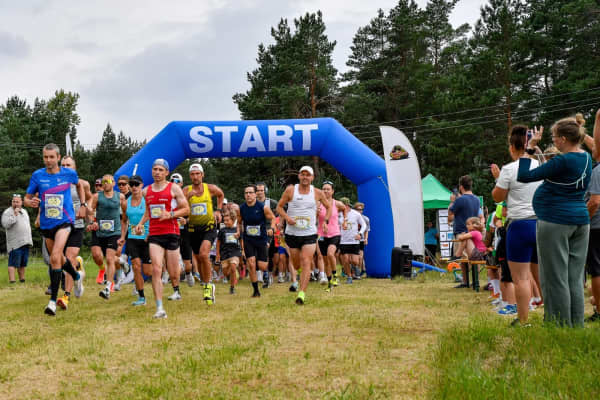
On the first Saturday of June, a little before six in the morning, hundreds of runners stand in a ranching hamlet at the top of a canyon in Wasatch County, wrapped in mylar, waiting for the sun. Twenty-six miles below them, Provo's Center Street is being fenced, a truck is unloading a bell, and a coffee cart is setting up outside the courthouse. What connects the two scenes is a downhill road through one of the prettiest canyons in the state, and a race that has become, over nearly twenty years, the valley's signature athletic event: the Utah Valley Marathon.
This is the evergreen guide to that race — the course, the drop, the shuttle, the expo, the smaller distances, and the training a Provo runner can do on the actual course — and to the other side of it, which is the spectator's problem of watching a race that runs through a closed canyon. It complements our Provo running routes guide, which covers the trails a runner trains on. Dates, prices and shuttle times below come from the race's published pages for the 2026 and 2027 editions and are hedged; the race republishes everything each summer and its own site is the source.
The Race in One Paragraph
The Utah Valley Marathon runs on the first Saturday of June. It is a point-to-point road marathon that starts in Wallsburg at about 5,960 feet, descends along Deer Creek Reservoir and down Provo Canyon on US-189, and finishes in front of the historic Utah County Courthouse on University Avenue in downtown Provo at about 4,500 feet. The net drop is 1,444 feet — 56 feet under the 1,500-foot line above which the Boston Marathon applies a downhill penalty to qualifying times — which makes it a clean Boston qualifier and a fixture on the national lists of fast courses. Its half marathon often sells out ahead of race day. The men's course record is 2:15:52 (2025); the women's is 2:37:35 (2021). It benefits CharityVision, a Utah eye-care charity. The 2027 race is Saturday, June 5.
The Course, Mile by Mile (Roughly)
Wallsburg (miles 0–3). The start is on East Main Canyon Road in the middle of a town of a few hundred people, most of whom are up to watch. The first miles wind through Wallsburg's few turns and out along Highway 222 toward the reservoir — the only real turns on the course. It is the coldest part of the morning and the highest; runners who have not raced at altitude notice the air here and nowhere else.
Deer Creek (miles 3–8). The course reaches US-189 and turns west along the south shore of Deer Creek Reservoir, with the sun coming up over the Wasatch Back. This is the flattest stretch and the most scenic, and it is where the discipline is tested: the road is gently downhill, the legs are fresh, and every coach who has ever advised a runner on this race says the same thing — hold goal pace here, because the canyon will give you the time back and take it from your quads if you spent it early.
Upper Provo Canyon (miles 8–16). Past the dam and into the canyon proper. The grade steepens, the walls rise, and the highway follows the Provo River down past the turn to Sundance and Cascade Springs. This is where the downhill becomes the race. A four-percent grade for eight miles is fast on the clock and murderous on the front of the thigh, and runners who trained on flat roads begin to feel it around mile 14.
Bridal Veil Falls and the lower canyon (miles 16–22). The falls come into view on the left, 600 feet of it, and for many runners it is the emotional high point of the course. The half marathon's start is in this stretch, so the road fills. Near Nunns Park the course leaves the highway briefly onto the Old Provo Canyon Road and the paved Provo River Trail — the only surface change on the course — before rejoining University Avenue at the canyon mouth.
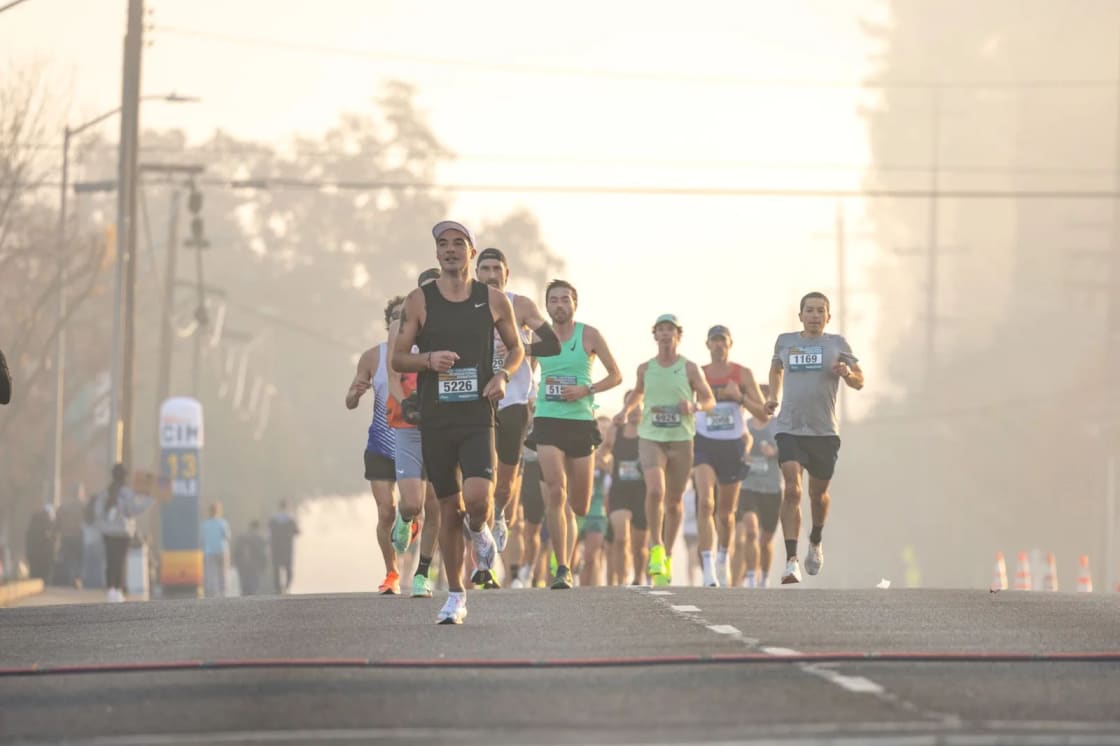
University Avenue to the courthouse (miles 22–26.2). Out of the canyon, past the Riverwoods, down the long straight of University Avenue through Orem's edge and into Provo. The grade eases to nearly flat, which is when a downhill runner discovers what the descent did; the last four miles are the slowest for almost everyone. The finish is on University Avenue at the courthouse park, with a crowd, a bell for runners who set a personal record, and the expo's food.
Registration, Cost and the Calendar
The race opens registration for the following year in the summer, right after the current edition. Pricing steps up through the year: the 2027 marathon listed at $124 through September 3, 2026, with later tiers higher; the half, 10K and 5K are cheaper; the kids' 1K is free. The half sells out, sometimes months ahead, and is the distance to register for early. Refund and deferral policies are the race's own and change; read them before registering, because June injuries are common and the answer is usually a deferral to the next year for a fee rather than a refund.
The Friday. Packet pickup runs Friday from 10 a.m. to 8 p.m. at the expo in the Utah Valley Convention Center on Center Street, a few blocks from the finish, with a limited Saturday pickup at the shuttle loading area for out-of-towners who arrive late. The Friday 5K runs in the evening. Downtown Provo on that Friday is the race's party — the restaurants along Center Street fill with runners eating pasta, and the hotels near the convention center have been booked since winter.
The Saturday. Marathon shuttles load in downtown Provo in the small hours — around 4 a.m. — and ride up the canyon to Wallsburg for the 6 a.m. start; half-marathon shuttles leave a little later for their own start in the canyon. The 10K and 5K start in the city. First marathon finishers are expected at the courthouse around 8:20 a.m.; the six-hour time limit closes the course at noon.
The Shuttle, Which Is the Part People Get Wrong
Because the course is point to point, the race owns the start-line logistics, and they are unforgiving. Runners park near the finish (the city and the race publish the lots), walk to the shuttle loading area, board a school bus or a coach in the dark, and ride forty minutes up to the start. There is no other way to the start: the highway is closing behind the buses. A runner who arrives after the last shuttle does not run.
At the start there are portable toilets (never enough; go before boarding), water, a gear-check truck that carries a labeled bag to the finish, and a lot of cold people. Wallsburg at 5 a.m. in early June is often in the 40s, sometimes the 30s, and runners arrive in old sweatshirts, gloves and space blankets that they shed in the first mile into donation bins. Bring layers you do not want back. The half-marathon start in the canyon is a little warmer and later, and the same rules apply.
What the Downhill Actually Does
A downhill marathon is a specific event, and the Utah Valley course is one of the purest examples in the country: after Wallsburg's turns, it is nearly a straight line down a four-percent canyon road. The things runners who have done it say, distilled:
The clock is generous and the quads pay. Every mile of descent loads the front of the thigh eccentrically; by mile 16 an untrained runner's quads are shot, and the last four flat miles become a shuffle. The runners who set personal records here trained on descents — long downhill repeats on the Provo Canyon trail itself, or the Squaw Peak road, or any hill run down rather than up — for six to eight weeks.
Go out at goal pace, not at the pace the grade gives you. The first eight miles feel free. They are not.
The altitude matters less than it looks. The start is at nearly 6,000 feet, but the course descends through the effort, and by the time the race is hard the air is thick. Hydration matters more than altitude: the canyon is dry and the June sun, once it clears the walls, is direct.
It is beautiful, and that is not nothing. Deer Creek at sunrise, the canyon walls, the falls — runners who came for the qualifying time come back for the road.
The Spectator's Problem
The Utah Valley Marathon is a hard race to watch, and families who come to cheer should know that before they plan.
US-189 through Provo Canyon is closed to traffic from before the start until the course clears — for the whole morning, in effect. That means no driving to Deer Creek or Bridal Veil to catch a runner going by; the canyon belongs to the race. The realistic places to see a runner:
The canyon mouth. The Nunns Park and Canyon View Park area, where the course leaves the highway for the trail and rejoins University Avenue, is reachable from the Orem side before the closures tighten or by bicycle on the Provo River Trail, which parallels the course and stays open to cyclists in most years. A spectator on a bike can ride up the trail from the city and see the field twice.
University Avenue. From the canyon mouth down to Center Street, the course is on a city arterial with sidewalks, and a family can pick any block. The stretch past the Riverwoods and through the Orem–Provo line is where the marathon and half fields merge and the crowd is thickest on the road.
The finish. The courthouse park on University Avenue at Center Street is the event: the finish arch, the PR bell, the food, the medals, the families. Arrive by 8 for the first marathon finishers; the bulk of the field comes through between 9:30 and 11:30.
The race publishes its spectator information and its road closures the week before, and they change a little each year. Provo City posts the closures too. The one rule that never changes: do not try to drive the canyon that morning.
The Resident's Problem
For a Provo or Orem resident who is not running, the first Saturday of June is a morning with two closures. The canyon highway is shut until late morning, which cuts off Heber, Sundance, Deer Creek and Wasatch County by the direct route; the way around is I-15 north to Lehi and US-40 through Park City, which adds an hour, or simply waiting until the reopening. University Avenue closes progressively from the canyon down to Center Street, which affects anyone crossing it; the east–west streets stay open with crossing points managed by police, and the delays are real but short.
Provo's runners, on the other hand, treat the morning as a home game. It is the rare big-city marathon that a resident can train for on the actual course — every mile of the canyon is on a public trail — and finish a ten-minute walk from their own front door. A meaningful fraction of the field is from the valley, and the courthouse crowd is full of families who walked over.
Training for It in Provo
The course is public. The Provo River Trail runs from the canyon mouth up past Bridal Veil to Vivian Park and beyond, paved the whole way, and it is the marathon's middle miles; a runner can do their long downhill repeats on the race's own grade. The Deer Creek stretch is a highway shoulder and not a place to train, but the reservoir's trail system covers the same terrain. University Avenue is University Avenue. Our running routes guide maps the trail and the connections.
The training the regulars recommend: a standard marathon build, with two changes. Add downhill long runs — a long run that includes eight to ten miles of continuous descent on the canyon trail, once every two weeks in the last two months — to teach the quads the eccentric load. And add a few hard flat miles after a descent, because the race's last four miles are flat and that is when the damage shows. Runners who do both describe the race as fast and fun. Runners who do neither describe it as fast and then something else.
For the half, the same advice at half the volume; the lower canyon's grade is gentler but the flat finish is the same.
The Other Races
The event is five races, and the smaller ones are how the valley itself mostly participates.
The half marathon starts in the canyon at roughly the midpoint of the full course, drops about 700 feet, and is the most popular distance; it sells out. The 10K and 5K start in the city on Saturday morning and finish at the courthouse; they are the distances for a spouse, a teenager, or a runner coming back from something. The Friday 5K runs in the evening as part of the expo and is the social run. The kids' 1K is free, on the Saturday, near the finish, and produces the best photographs of the day.
A family can put a parent in the half, a teenager in the 10K and a six-year-old in the 1K and be at the courthouse together by ten. That is the valley's version of the marathon, and it is the reason the finish line feels like a city festival rather than a running event.
Where to Eat, Stay and Recover
The expo's food is at the finish, and Center Street's restaurants are a block away and open early on race day; the downtown breakfast places fill by 9. Out-of-town runners book the hotels near the convention center in winter — there are only a few downtown, and the rest of the lodging is along University Parkway in Orem — and a runner who books in May is looking at Lehi or American Fork. The valley's sports-medicine clinics see a wave of quad and IT-band complaints the week after; the smart recovery is a very slow walk on the flat river trail on Sunday and the hot springs on Monday.
The Short Version
The Utah Valley Marathon is on the first Saturday of June — June 5, 2027 — with a 6 a.m. start in Wallsburg, a 1,444-foot drop down Provo Canyon, and a finish at the Utah County Courthouse on University Avenue. It is a Boston qualifier without a downhill penalty, sells out its half, and runs five races from a full marathon to a free kids' 1K. Runners take a 4 a.m. shuttle to a cold start, hold back on the reservoir, and pay for the descent in the last four flat miles unless they trained on the canyon trail. Spectators cannot drive the canyon; they watch from the canyon mouth, University Avenue or the finish. Residents route around the closures or walk downtown and cheer. And a Provo runner can train on the race's own road, which is the best reason to run it.
Related Guides
- Running Routes in Provo
- Running Races in Utah Valley: The Annual Calendar
- Provo Canyon: The Complete Guide
- Indoor Tracks and Winter Running in Utah Valley
- Sports Medicine in Utah Valley
- Hot Springs Near Provo
- Cascade Springs: The Complete Visitor Guide
Frequently Asked Questions
When is the Utah Valley Marathon?
Why is it called a fast course, and is it a Boston qualifier?
What is the course, exactly?
How does the start work if the course is point to point?
Can I watch from the canyon?
What does the elevation do to a runner from sea level?
What about the other distances — is there a race for a family?
How does the race affect a Provo resident who is not running?
Sources
The facts in this guide were checked against these sources. Hours, fees and rules change, so confirm anything time-sensitive with the source before you go. How we make Provo.com.
- Utah Valley Marathon - Fast & Scenic, Utah Valley Marathon. Checked October 12, 2026.
- Utah Marathon - Enjoy a Fast & Scenic Boston Qualifying Marathon, Utah Valley Marathon. Checked October 12, 2026.