
Utah treats an e-bike like a bicycle as long as it meets the legal definition, and 2026 changed the rules around it more than any year since the classes were created. Since May 6, 2026, anyone under 21 needs a helmet on any e-bike on a public road, drinking while riding is illegal on every class, and the bigger, faster machines often sold as "e-bikes" are now treated like motorcycles. On May 5, 2027, the age rules for kids change again. This guide covers the law, where each kind of bike can go in Utah Valley, and what to check before you buy, so you end up with something you can ride where you want to ride it.
Sources up front: the definitions and rules below come from the Utah Code as published by the Legislature (sections 41-6a-102, 41-6a-1115.5, 41-6a-1115.6, 41-6a-1505, 41-6a-1511 and 41-6a-1512) and the enrolled text of H.B. 381, the 2026 Electric Mobility Device Amendments. Where a rule has a future effective date, we say so.
Part 1: What counts as an e-bike
The three classes
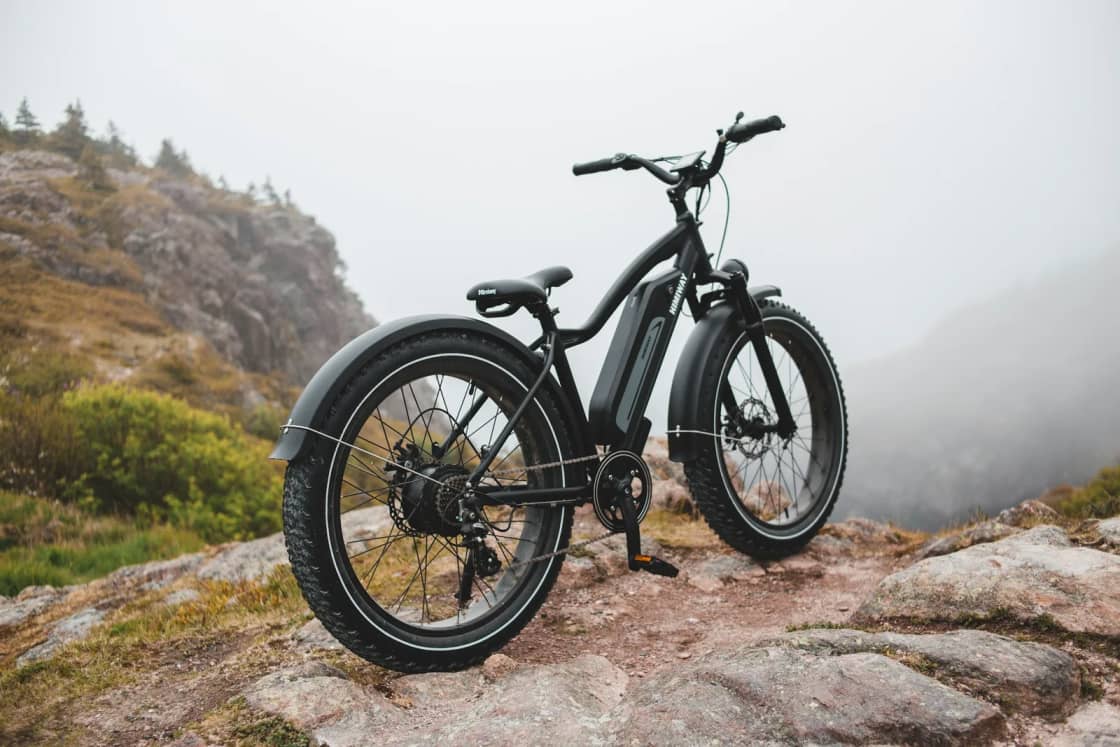
Utah Code 41-6a-102 defines an electric assisted bicycle as a bicycle with an electric motor of no more than 750 watts, fully operable pedals, cranks permanently attached at the original manufacture, and the ability to work as a regular bicycle with the motor off. It must fit one of three classes:
| Class | How the motor helps | Assistance stops at | Notes |
|---|---|---|---|
| Class 1 | Only while you pedal | 20 mph | Rental exception to helmet rule |
| Class 2 | Can move the bike by itself (throttle) | 20 mph | |
| Class 3 | Only while you pedal | 28 mph | Must have a speedometer |
A programmable e-bike, one the rider can switch between classes, counts only if it fully meets the rules of whichever class it is set to.
What is not an e-bike
The same section lists what is excluded, and this is where many online "e-bikes" fail. A vehicle with fewer than four wheels is not an electric assisted bicycle if it is designed, sold, or modified to:
- reach 20 mph or more on motor power alone;
- have a continuous motor power above 750 watts;
- come with foot pegs, or need a pedal kit installed to have working pedals; or
- have any throttle mode that exceeds 20 mph on motor power alone.
Those machines are high power electric devices under Utah law, and so is a real e-bike whose speed or power has been tampered with beyond the factory settings. Since May 6, 2026, Utah Code 41-6a-1511 gives anyone riding one "all rights" and makes them "subject to all provisions" of the traffic code that apply to a motorcycle operator. Riders under 16 may not operate one on a public road, nobody may ride one on a freeway, and cities and state agencies may restrict them on sidewalks, paths and trails. From May 5, 2027, H.B. 381's changes to the driver license law let a rider 16 or older operate one on a road with a class D driver license.
The practical point: if a bike's listing brags about a 1,500-watt motor or 35 mph on the throttle, it is not an e-bike in Utah, whatever the ad calls it.
Part 2: The rules for riders
Helmets (since May 6, 2026)
Utah Code 41-6a-1505 now says an individual under 21 may not operate or ride an electric assisted bicycle, a motor assisted scooter, a high power electric device or a motorcycle on a highway without protective headgear meeting the adopted standards. For bicycles and scooters that standard is the federal bicycle helmet rule, 16 C.F.R. Part 1203. Until May 2026, the helmet requirement covered only Class 3 e-bikes.
"Highway" is a defined term in Utah's traffic code: the entire width between property lines of any way open to the public for vehicle travel. In other words, public roads and streets, not just interstates.
The exception: the helmet rule does not apply to someone riding a Class 1 e-bike or a scooter rented from a business.
Riders 21 and older are not required to wear one, but the law gives them a small nudge: a court must waive $8 of a moving-violation fine for a rider 21 or older who was wearing a compliant helmet.
Ages, now and from May 2027
In effect today (the version of 41-6a-1115.5 effective until May 5, 2027):
- Under 8: may not operate an e-bike with the motor engaged on any public property, highway, path or sidewalk.
- Under 14: may do so only under the direct supervision of a parent or guardian.
- Under 16: may not operate a Class 3 e-bike.
From May 5, 2027 (the version enacted by H.B. 381):
- Under 8: still may not ride with the motor engaged on a highway.
- 8 through 15: may ride with the motor engaged on a highway if under the direct supervision of a parent or another responsible adult, or if they hold a personal electric vehicle safety certificate.
- 16 and older: may ride on a highway without supervision.
The certificate is new. Utah Code 41-6a-1512, effective May 5, 2027, directs the Department of Public Safety to create a safety education program that can be completed online, to issue a certificate to those who pass, and allows a fee of $10 or less. The same section bars anyone under 16 from riding a personal electric vehicle on a freeway and bars businesses from renting one to anyone under 16 unless the rider has the certificate or a parent or responsible adult supervises. The certificate applies to e-bikes, motor assisted scooters and high power electric devices.
The 2027 text of 41-6a-1115.5 no longer contains a separate under-16 line for Class 3. Until then, the Class 3 age limit stands.
Other rules worth knowing
- No drinking. Since May 6, 2026, Utah Code 41-6a-526 bars drinking an alcoholic beverage while operating an e-bike and carrying an open container on one on a highway. The earlier version applied only to Class 2.
- Police can hold a minor's bike. Utah Code 41-6a-1115.6, also new in May 2026, lets an officer who sees someone under 18 commit a traffic violation on a personal electric vehicle hold the vehicle and release it only to the rider's parent or guardian.
- No license needed. The Utah Driver License Division says you can ride an e-bike without a driver license or endorsement.
- Violations are infractions under 41-6a-1115.5.
Part 3: Where you can ride in Utah Valley
The state sets a baseline and lets everyone else narrow it. Utah Code 41-6a-1115.5 says an e-bike may be ridden "on a path or trail designated for the use of a bicycle," and that a local government or state agency may regulate or restrict e-bikes, or a specific class, on its sidewalks, paths and trails. So the answer depends on who owns the ground.
Roads and bike lanes. An e-bike follows the rules for a bicycle, with the helmet and age rules above added.
Provo sidewalks. Provo's micromobility ordinance (Provo City Code 9.32.170) includes electric assisted bicycles. On public sidewalks it sets a 10 mph limit, requires riders to yield to pedestrians and give an audible signal before passing, and requires a light or reflective material after dark. Riding is not allowed on the sidewalks of University Avenue between 400 North and 100 South or Center Street between 100 East and 500 West, which is downtown's core. Property owners may post their own bans, and riding contrary to a posted ban is unlawful. One more Provo detail: the city code still contains a section requiring bicycles ridden in public places to be licensed (9.32.010), with no repeal noted when we checked.
BYU. BYU's rideables policy covers privately owned bikes, scooters and similar devices. Campus sidewalks have a 5 mph limit ("or a fast walking speed"). Riding is restricted on sidewalks inside Campus Drive during class breaks and on the Helaman Halls and Smith Fieldhouse ramps. Rideables must be locked in outside racks; BYU says violators may have them impounded. BYU Police register bicycles at 2120 JKB.
Paved trails. The county's big paved trails are shared-use paths, and speed limits are posted on some. Pleasant Grove police, for example, say the limit on the Murdock Canal Trail is 15 mph. We could not find a single official list of which e-bike classes each Utah County trail allows, so the sign at the trailhead is the rule to follow. Our guides to paved trails in Utah Valley, the Murdock Canal Trail and the Provo River Parkway cover each trail.
Mountain trails. The Utah Highway Safety Office says e-bikes may use non-motorized state and local trails unless city codes prohibit them, but may not use non-motorized U.S. Forest Service trails. Much of the high country above the valley is national forest, so check the trail's designation before you take an e-bike up a canyon singletrack.
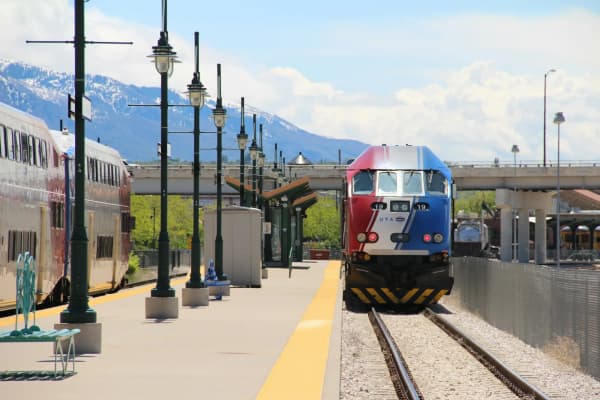
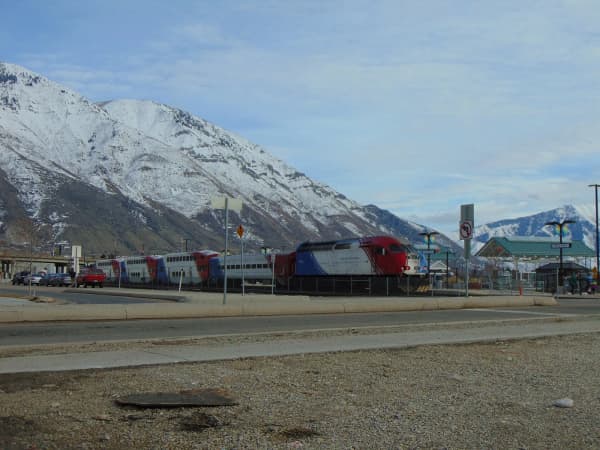
On transit. UTA says bikes are welcome on TRAX, FrontRunner and its buses, with racks on some train cars, and it rents BikeLink electronic lockers at stations including the Provo station area. Our bike commuting guide covers combining a bike with the train.
Part 4: Buying one
Most of the buying advice that matters in Utah comes straight from the law.
Read the label. Utah Code 41-6a-1115.5 requires Utah-based manufacturers and distributors in Utah to permanently attach a label showing the e-bike's class number, top assisted speed and motor wattage. A programmable bike must say which classes it can operate as. No label, or a label that does not match what the seller tells you, is a reason to ask more questions.
Watch for the disclosure. Sellers of electric vehicles with fewer than four wheels that are not e-bikes must tell buyers so, in capital letters: "THIS VEHICLE IS NOT AN 'ELECTRIC ASSISTED BICYCLE' AS DEFINED BY UTAH MOTOR VEHICLE CODE..." The current law requires it at the time of sale and in advertising, and H.B. 381's version adds a warning that a helmet may be required. If you see that language in a listing, you are looking at a motor vehicle, not an e-bike.
Run the four-question test from the definition before you pay:
- Is the motor 750 watts or less?
- Does it stop helping at 20 mph (Class 1 or 2) or 28 mph (Class 3)?
- Does it have real pedals and factory cranks, and no foot pegs?
- If it has a throttle, does the throttle top out below 20 mph?
Four yeses means an e-bike under Utah law.
Pick the class for where you will ride. If trails matter to you, check which classes are allowed on the ones you plan to use before you choose, because local rules can single out a class. A Class 3 is the commuter's bike for longer road trips but is off-limits to riders under 16 until May 2027 and may be restricted on some paths. A Class 2's throttle helps with stop-and-go riding and with hauling kids or cargo.
Ask about insurance. The state's required disclosure for non-e-bikes warns that insurance policies may not cover them. That warning is a good reason to ask your own insurer how an e-bike, legal or not, is covered under your homeowner's or renter's policy before you ride it in traffic.
Where to buy and fix. Our bike shops guide covers the shops in Provo and Orem, including service. If you only need an e-bike occasionally, Provo's shared bikes and canyon rentals are in our scooters and bike share guide.
Lock it. An e-bike is an expensive target. Register it where you can (BYU Police registers bicycles), photograph the serial number, and use a rack or a station locker rather than leaving it in a hallway; BYU's policy specifically requires outside racks.
Frequently Asked Questions
What are the three classes of e-bike in Utah?
Do I need a helmet on an e-bike in Utah?
How old do you have to be to ride an e-bike in Utah?
Can I ride an e-bike on Provo sidewalks?
Are e-bikes allowed on Forest Service trails above Provo?
Is a 1,000-watt or throttle-only electric bike legal as an e-bike in Utah?
What are the e-bike rules on BYU's campus?
Can police take a teenager's e-bike?
Sources
The facts in this guide were checked against these sources. Hours, fees and rules change, so confirm anything time-sensitive with the source before you go. How we make Provo.com.
- H.B. 381 E-Mobility Amendments presentation, Utah State Legislature. Checked October 20, 2026.
- Electric-Assisted Bicycle, Utah Driver License Division. Checked October 20, 2026.
- Utah Highway Safety Office: E-Bike Safety, Utah Highway Safety Office. Checked October 20, 2026.
- Provo City Code 9.32.170 Micromobility Devices, Provo City. Checked October 20, 2026.
- Provo City Code 9.32.010 Bicycle License Required, Provo City. Checked October 20, 2026.
- Utah Code 41-6a-102 Definitions (effective Oct. 1, 2026), Utah State Legislature. Checked October 20, 2026.
- Utah Code 41-6a-1115.5 Electric assisted bicycles (effective May 1, 2024, superseded May 5, 2027), Utah State Legislature. Checked October 20, 2026.
- Utah Code 41-6a-1115.5 Electric assisted bicycles (effective May 5, 2027), Utah State Legislature. Checked October 20, 2026.
- Utah Code 41-6a-1115.6 Electric assisted bicycles: law enforcement hold, Utah State Legislature. Checked October 20, 2026.
- Utah Code 41-6a-526 Drinking alcoholic beverage and open containers, Utah State Legislature. Checked October 20, 2026.
- Utah Code 41-6a-1512 Safety program: personal electric vehicles (effective May 5, 2027), Utah State Legislature. Checked October 20, 2026.
- H.B. 381 Electric Mobility Device Amendments (2026, enrolled), Utah State Legislature. Checked October 20, 2026.
- Brigham Young University: Rideables, Brigham Young University. Checked October 20, 2026.
- Utah Transit Authority: Bikes on UTA, Utah Transit Authority. Checked October 20, 2026.
- Tales from Utah Valley: Have fun and be safe on the Murdock Canal Trail, Daily Herald. Checked October 20, 2026.