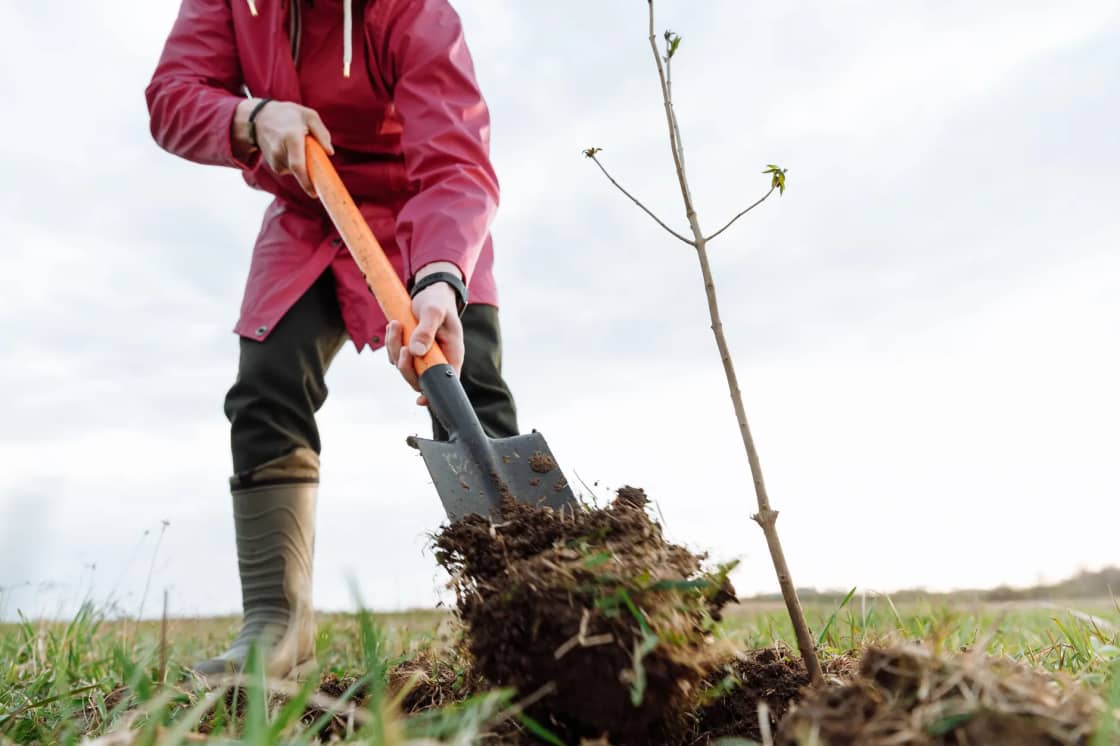

Every spring, Provo Power gives away several hundred shade trees, and every spring several hundred Provo households that could have had one do not, because they did not know the window was open. The tree program is the best-known of a whole category of things Utah County cities and utilities hand out to residents — money, materials, labor, and hauling — that most people never claim. The amounts are not trivial. A household that used all of it in a year of landscaping and appliance replacement could take home more than a thousand dollars in rebates and free goods; a household that just wanted a tree and a free sprinkler check could save the price of a nursery visit and a summer of overwatering.
This guide is the inventory. It covers the free trees, the state and district water rebates and the reason they pay in some cities and not others, the two big utilities' energy programs, the free and cheap compost and green-waste services, the spring cleanup, and the audits. It is written for a homeowner, but renters can claim some of it (a smart thermostat, an energy check, the cleanup). Two cautions that apply to everything below: the programs are funded annually and run out, and the details — amounts, windows, eligible cities — change every year. Where this page gives a number, it is an example from recent program years, not a schedule; the city's or utility's own page is the authority on the day you apply.
First, Know Which Utility You Have
The menu of freebies depends on who sells you electricity, and in Utah County that is not one company.
Municipal electric cities — Provo (Provo Power), Lehi (Lehi Power), Spanish Fork, Springville, Nephi, and a few smaller systems — run their own power utilities, buy wholesale, and run their own conservation programs. These are usually smaller than the big utility's menu but include the things the city cares about most, like Provo's trees.
Rocky Mountain Power cities — Orem, American Fork, Pleasant Grove, Lindon, Highland, Alpine, Cedar Hills, Saratoga Springs, Eagle Mountain, Vineyard, Payson, Salem, Mapleton, and most of the rest — are served by the investor-owned utility, whose Wattsmart program has the deepest rebate menu in the state.
Gas is Dominion Energy nearly everywhere, and its ThermWise program applies regardless of who sells you electricity.
Water is the city almost everywhere, with the state's rebate portal layered on top for cities that opted in.
Our utilities guide and utility rates comparison sort the cities; the rest of this page assumes you know which column you are in.
The Free Trees
Provo Power's shade trees are the flagship. The program has run under more than one name — Trees for Conservation, and more recently NatureShade — with consistent mechanics: a residential Provo Power customer with central air conditioning requests a tree during a short spring or fall window; the utility selects recipients (first-come in some years, a lottery in others, with a waiting period between trees at the same address); and the winners collect a young tree from an approved list of species suited to the valley, to be planted where it will shade the house's south or west walls by mid-summer. The logic is the utility's own: a shaded house runs its air conditioner less at 5 p.m. in July, which is when Provo Power pays the most for power. Several hundred trees have gone out in a typical year, and the window closes when they are claimed. Provo Power announces it on its social accounts and the city site; it is not advertised widely, and it is gone in weeks.
The Treebate, from Utah Water Savers and the Central Utah Water Conservancy District, is the other tree money: a rebate of about $50 per tree, up to ten trees, for new trees planted on drip irrigation in a qualifying landscape project, coordinated through the Landscape Incentive Program. It is a rebate on a tree you buy, not a free tree, and it requires pre-approval.
Arbor Day and city giveaways. Several Utah County cities have handed out seedlings or small trees at Arbor Day events, Earth Day fairs, and the spring cleanup; Orem, Lehi and American Fork have all done versions. These are announced a week or two ahead and are small; watch the city calendar in April. Our waterwise landscaping guide has a section on choosing and watering trees here, which matters more than getting one free.
The Water Rebates, and Why Your City Matters
Utah Water Savers is the statewide portal, run with the water conservancy districts — the Central Utah Water Conservancy District for this county — and it is where most of the water money lives. The rebates it has offered Utah County addresses:
- Smart irrigation controller: a rebate (recently $75) on a WaterSense-labeled controller, which is the highest-return purchase on this list; Provo also arranges a member discount on one brand through a national water-efficiency alliance.
- High-efficiency sprinkler nozzles: a small per-nozzle rebate (Provo has cited $3 each) for swapping old spray heads for pressure-regulating, matched-precipitation nozzles.
- Toilet replacement: a rebate for replacing an older high-flow toilet with a WaterSense model.
- Switch to drip: a per-square-foot rebate for converting overhead spray in planting beds to drip.
- Treebate: above.
- Landscape Incentive Program: the big one — a per-square-foot payment, up to $3 in the district's most generous version and with a minimum project size, for removing lawn and replacing it with waterwise landscaping to the program's standards.
The catch is the last one. When the state launched its lawn-conversion rebate in 2023, cities had to adopt the state's water-efficient landscaping ordinances to participate, and not all of them did. Provo and Orem — together a quarter of the county — opted out; Provo's officials cited concerns about tree health and about lawn water recharging the aquifer, and ran a smaller city-funded park-strip program instead (Provo's Turf Trade, which has paid a per-square-foot rebate for removing grass from narrow park strips when it has funding, and which has closed reservations when it runs out). Lehi, Alpine and Vineyard were among the early Utah County participants, and the eligible list has grown since; it is checked by address on the Utah Water Savers site.
So the practical rule: before you plan a landscape project around the rebate, look up your address. A Lehi household can be paid per square foot for a front-yard conversion; a Provo household two miles away gets the park strip and the controller and nozzle rebates, but not the lawn money. Our secondary water guide explains the other half of why Utah County lawns are watered the way they are.
Every rebate has pre-approval, receipt and inspection rules, and every one is funded annually; the money is typically gone by late summer. Apply in March.
The Energy Programs
Rocky Mountain Power's Wattsmart, for the cities it serves, has been the deepest rebate menu in the state: rebates on heat pumps and heat-pump water heaters, central air conditioners above a set efficiency, smart thermostats (often with a free or discounted unit), attic and wall insulation, windows, efficient lighting, and electric-vehicle chargers, plus a free or nominal-cost home energy assessment that identifies leaks and often installs LED bulbs and weatherstripping on the spot. There have also been programs for low-income households that provide weatherization free. The amounts change with the utility's annual plan and with the federal tax-credit landscape, which shifted again in 2025; the current list is on the Wattsmart site.
Dominion Energy's ThermWise, on the gas side, has paid rebates on high-efficiency furnaces, water heaters, smart thermostats, insulation and air sealing, and has run a free home energy check. It applies in every city, municipal-electric or not.
The municipal utilities run smaller menus. Provo Power's has included the trees, a discount on smart irrigation controllers, and periodic rebates on efficient appliances and thermostats; Lehi Power and Spanish Fork have run their own. These are on the city utility pages and the bill insert, and they are the easiest to miss because nobody advertises them.
The federal layer. Tax credits for heat pumps, insulation, solar and EV chargers have changed substantially in the last two years. Our home solar guide covers the solar side; for the rest, confirm the current credit before you assume a rebate stacks with it.
Compost, Mulch and Green Waste
Provo's compost site, run by Public Works on the west side, has sold finished compost and mulch to residents by the yard at a resident rate — the city's own pages have carried two different prices for years, so call 311 — and has accepted green-waste drop-off free during the city cleanup weeks and for a small per-load fee otherwise, with larger trailer loads costing more. It runs seasonally, roughly March to November, with reduced winter hours.
The county facilities — the South Utah Valley Solid Waste District's landfill and transfer station in Springville, and the North Pointe transfer station in Lindon, which serves the north county — accept green waste from residents under their own rules and fees, and have periodically offered free mulch from chipped Christmas trees and cleanup debris in late winter. Announced, seasonal, and gone fast.
City green-waste programs. Orem, Lehi, American Fork and others have run curbside green-waste collection or drop-off tied to the spring and fall cleanups, and some cities offer a green-waste can as a paid add-on to the garbage service. Our recycling and garbage guide covers the year-round rules and the things the regular can will not take.
None of this is a standing free-mulch pile. It is seasonal, it is announced by the city, and when the county chips the Christmas trees the pile is gone in a weekend.
The Spring (and Fall) Cleanup
This is the most valuable free service on the page, and the one newcomers most often miss. Every spring — April or May in most cities, with a fall repeat in some — a Utah County city either places large dumpsters in neighborhoods for a few days each or sends trucks down every street on a schedule, hauling away what the regular garbage will not take: old furniture, mattresses, branches and yard debris, construction scraps, and in some cities appliances. The value to a homeowner clearing a garage or a yard is a few hundred dollars in landfill fees or a junk-removal call.
The rules are consistent: no hazardous waste, no tires, no electronics (almost everywhere), no commercial loads; branches cut to a set length; items out by a set morning. The neighborhood dumpsters fill within hours of being placed — the etiquette is to bring your own load and not to scavenge — and the truck cities run a strict route. The dates change every year and are published on the city site and the March or April utility-bill insert; Provo pairs its cleanup with free green-waste drop-off at the compost site. Our junk removal and donation guide covers what to do with the rest of the year's accumulation.
The Audits
The free sprinkler check. Utah State University's extension service has run a residential water-check program along the Wasatch Front in which a trained auditor visits your yard, measures your sprinkler system's output and distribution uniformity with catch cups, and gives you a watering schedule tuned to your soil and your system. It is the single most effective thing a homeowner can do about a summer water bill, it is free, and the slots go early; sign up in May. Some cities have run their own version in some years.
The free energy check. Both Wattsmart and ThermWise have offered a home energy assessment for free or a nominal fee: an auditor walks the house, finds the leaks and the insulation gaps, and often installs LED bulbs, a smart thermostat, or weatherstripping on the spot. Availability is seasonal and slot-limited.
The free water-leak test. Most Utah County cities will read your meter for a leak on request, and the smart meters several cities have installed can flag continuous flow; ask your city utility if a bill jumps.
The Things That Are Free and Not About Money
A few city services belong on this list because they are valuable and unclaimed:
- Library passes. The county's libraries lend passes to museums, state parks and attractions on a library card; our libraries guide lists which libraries lend which.
- Free shade at the pool. Rec center and city pool day passes are cheap, and resident rates are cheaper; our rec center guide has Provo's.
- The tree-trimming and hazard-tree programs. Several cities will trim or remove trees in the park strip — city property — free, on request; Provo's forestry program handles park-strip trees.
- Free smoke detectors. Fire departments in several Utah County cities have installed free smoke alarms for residents who ask, usually with a grant program.
- Free document shredding and drug take-back days. Periodic, announced by the police department or the city.
- Radon test kits. The state has periodically offered free or discounted kits; our radon guide explains why Utah County homes should test.
What a Renter Can Claim
Less than a homeowner, but not nothing. The energy checks from Wattsmart and ThermWise are available to anyone who pays the utility bill, and the free thermostat or LED bulbs that come with them stay with the tenant's name on the account. The spring cleanup takes a renter's old couch as readily as an owner's, provided it is out on the right morning. Library passes, the rec center's resident rate, the shredding days and the smoke detectors are all resident programs, not owner programs. The rebates on controllers, toilets and lawn removal generally require the property owner's participation, and a smart-controller rebate on a rental is a conversation with the landlord, who benefits from the water bill it lowers if the lease puts water on the owner. Our renters' rights guide covers who pays which utility under a Utah lease.
The Calendar
January–February: apply for energy checks; watch for the county's Christmas-tree mulch. March: read the bill insert — cleanup dates, tree windows, rebate reminders. Apply for water rebates before the money goes. April–May: the spring cleanup; Arbor Day giveaways; Provo Power's spring tree window; sign up for the sprinkler check. June–August: rebates run out; controllers and nozzles installed now show up on the next bill. September–October: Provo Power's fall tree window; the fall cleanup in cities that run one; plant trees. November–December: compost site winter hours; watch for next year's program announcements.
The Short Version
Your city and your utilities are giving away trees, rebates, compost, hauling and audits, and most of it goes unclaimed. Provo Power's shade trees open twice a year and close in weeks. Utah Water Savers pays for smart controllers, nozzles, toilets, drip conversions and — in the cities that opted in, which do not include Provo and Orem — lawn removal at up to $3 a square foot. Rocky Mountain Power's Wattsmart and Dominion's ThermWise pay for heat pumps, thermostats and insulation and will send someone to check your house. The spring cleanup hauls your garage away free. The sprinkler check is free and fixes the water bill. All of it is annual, funded until it is not, and announced on the city site and the bill insert; read the March insert, look up your address on Utah Water Savers, and apply before you buy.
Related Guides
- Setting Up Utilities in Provo
- Utility Rates Across Utah Valley
- Waterwise Landscaping in Utah Valley
- Secondary Water in Utah Valley
- Recycling and Garbage in Provo
- Junk Removal and Donation in Utah Valley
- Home Solar in Utah
- Libraries in Utah Valley
Frequently Asked Questions
Does Provo really give away free trees?
What rebates does Utah Water Savers pay in Utah County?
Why does the lawn-removal rebate work in Lehi but not in Provo?
What do Rocky Mountain Power and Dominion Energy give away?
Where can I get free compost or mulch?
What is the spring cleanup, and what can I put out?
Are there free water audits or energy checks?
How do I find out what my own city actually offers?