
More on Lehi: every guide we have published there, in one place.
Twenty-five miles of interstate separates Lehi and Provo, both sit in Utah County, and people relocating here routinely treat them as interchangeable options within the same market.
They are not. They are close to opposite answers to the question of what a Utah Valley life looks like, and the choice between them tends to be settled by three things: where you work, what age your housing is, and how much you want the mountains to be part of your daily existence rather than your weekend.
This is a comparison rather than a verdict. Both cities are good, they are good for different people, and the useful exercise is working out which set of trade-offs describes your household.
The geography, which explains most of the rest
Utah County runs roughly north to south along I-15, with the Wasatch Range on the east and Utah Lake filling the middle of the valley floor.
Provo sits at the southern-central end, pressed right up against the mountains. The Wasatch rises directly behind the city, Provo Canyon cuts in at the north edge, and the lake is a few minutes west. It is the county seat and the historic center of the valley.
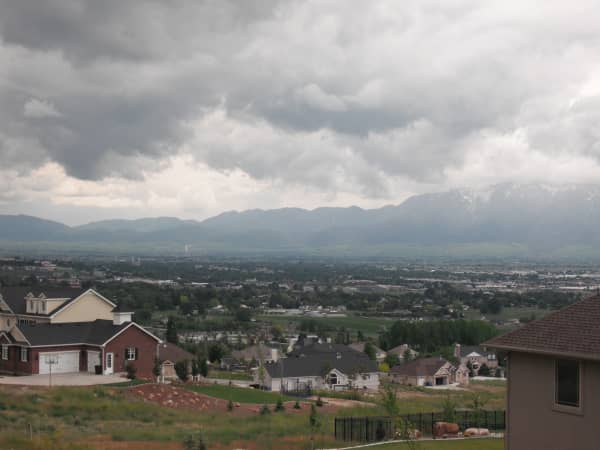
Lehi sits at the far northern end, at the point where Utah County meets Salt Lake County over the ridge at Point of the Mountain. It is on flatter, more open ground, with the mountains further off to the east and Utah Lake's north shore to the south.
That difference in position determines almost everything else. Provo is a mountain city with a lake nearby. Lehi is a valley-floor city on the seam between two metropolitan areas.
Work, which is usually the deciding factor
Be honest about your commute before weighing anything else, because it will dominate your daily experience of either city.
Lehi is inside the tech corridor. The stretch of employment running from Lehi up through the Point of the Mountain and into Draper and beyond — the area branded Silicon Slopes — is where a large share of Utah's technology jobs sit. Ancestry moved its headquarters to Lehi's Traverse Mountain in 2016 after three decades in Provo, which is a small illustration of the broader pull. If you work in that corridor, living in Lehi means a short drive rather than a commute.
Provo is a university, healthcare and services city with real tech of its own. BYU is the largest institution, Utah Valley Hospital anchors a substantial healthcare workforce, and downtown Provo has a genuine startup and small-business culture connected to both universities. The employment base is broader and less concentrated than Lehi's.
The commute that punishes people is Provo to Lehi. Northbound I-15 in the morning is the county's worst congestion, and a drive that takes twenty-five minutes on a Saturday is a different proposition at 7:45 on a Tuesday.
The commute that works better than expected is either city to Salt Lake, because FrontRunner serves the corridor. One caution that trips up newcomers: FrontRunner does not run on Sundays.
Housing is the clearest structural difference
Utah is a non-disclosure state, meaning sale prices are not publicly reported the way they are in most of the country, so we are not going to publish figures or medians. What we can describe accurately is the difference in the housing stock itself, which is more useful anyway.
Provo has depth and age. Neighborhoods built across a century, from historic districts near downtown through post-war east bench streets to newer development at the edges. Mature trees, established streets, smaller lots in the older areas, and a lot of houses that are charming and need work. It also has an enormous rental market driven by student demand, which is the single biggest distortion in the local picture.
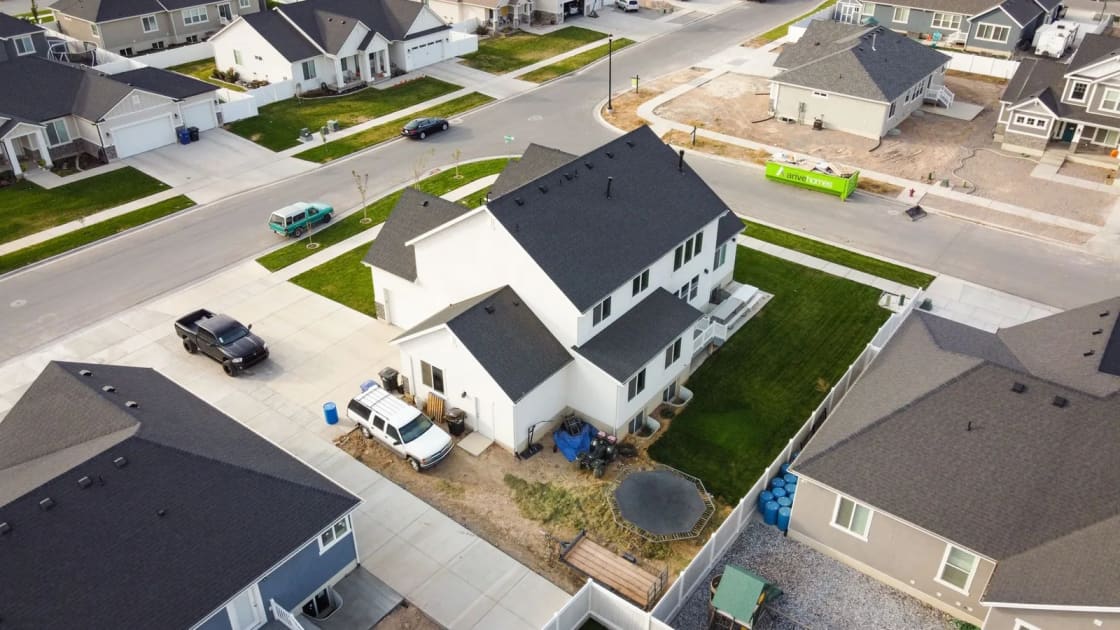
Lehi has newness and scale. A great deal of housing built in the last two decades, larger single-family homes, planned subdivisions, and substantial townhome and condominium development. Fewer surprises behind the walls and fewer character features in front of them.
The student rental market in Provo is worth understanding rather than dismissing. It means certain neighborhoods have high turnover, more parking pressure and a seasonal rhythm. It also means an investor-minded buyer has options in Provo that Lehi does not offer, and that a family buying near campus is buying into a different environment than one buying on the south end.
Schools, and a change coming in 2027
This is the comparison point most likely to be out of date in anything you read.
Provo is served by Provo City School District — a compact city district with the most diverse student population in the county.
Lehi is served by Alpine School District, and Alpine is scheduled to divide on July 1, 2027 into three separate districts: Aspen Peaks, Lake Mountain and Timpanogos.
For a family choosing between the two cities, that matters in a specific way. Buying in Lehi now means buying into a district that will be reorganized, with new boundaries, new boards, new administrations and eventually new decisions about budgets and programs. It is not a reason to avoid Lehi — reorganizations of large districts are often driven by exactly the growth that makes an area attractive — but it is a reason to ask which successor district a specific address will land in, and to treat any current district-level comparison as provisional.
Provo City School District is not part of that change.
Daily life, and what each place feels like
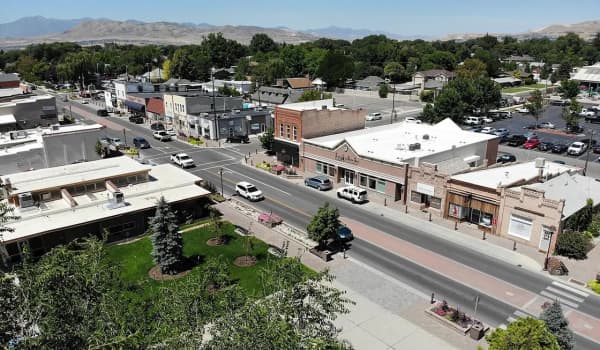
Provo has a real downtown. Center Street carries independent restaurants, shops, a theater scene, galleries and a First Friday rhythm, and it is walkable in a way very little of Utah County is. The city is dense enough that errands can be short. It also has the texture that a large student population creates: it empties noticeably between semesters, fills abruptly in September, and a lot of the food and nightlife is priced for people with no money.
Lehi is newer and more dispersed. Retail concentrates in modern centers rather than in a historic core, and getting around means driving. Thanksgiving Point is a genuine regional asset — gardens, museums and events at a scale most cities of Lehi's size do not have. The character is suburban in the current sense of the word, with the advantages and the sameness that implies.
If you want to walk to coffee, Provo. If you want a three-car garage, Lehi.
The outdoors
Provo wins this on geography and it is not close.
Rock Canyon and the Y trail start at the edge of town. Provo Canyon opens into Bridal Veil Falls, the Alpine Loop and Sundance within a short drive. The Provo River is a nationally regarded fishery running through the area. Utah Lake is minutes west. For a household whose weekends involve trailheads, Provo puts them at the end of the street.
Lehi is not outdoors-poor, but it is differently supplied. Trail connectivity along the Jordan River and the Murdock Canal corridor is good for running and cycling, Utah Lake's north shore is close, and the canyons of Salt Lake County are nearer from Lehi than from Provo. What Lehi lacks is a mountain immediately behind the house.
Growth, and what you are signing up for
Lehi has been among the fastest-growing cities in Utah for years, and that is the defining condition of living there.
The upside is new infrastructure, new schools, new retail and an area with momentum. The downside is that arterial roads carry more traffic than they were designed for, schools absorb enrollment quickly, construction is a permanent feature of the view, and the field behind your house may not stay a field.
Provo grows too, but as an established city with a fixed boundary hemmed by mountains and lake, its growth is more about infill and redevelopment than about new subdivisions. That produces its own arguments — density, student housing, parking, the balance between the university and the neighborhoods — but it produces a more stable physical environment.
Anyone buying in Lehi should look at what is approved for construction nearby. Anyone buying in Provo should look at zoning near the property, particularly anywhere within reach of campus.
Getting around without a car
Worth separating out, because the two cities differ more here than almost anywhere else and it rarely makes it into comparisons.
Provo is the more usable city without a car, by a wide margin. The core is compact, the university is embedded in the city rather than adjacent to it, bus service is denser, and UVX bus rapid transit runs the Provo–Orem spine connecting downtown, BYU, UVU and the FrontRunner station. A student or a single professional can live in central Provo without owning a vehicle.
One correction worth making, because the outdated version circulates constantly: UVX is not free to the general public. Free rides are tied to qualifying student identification, and that has been the case since August 2024. Assume you are paying a fare unless you hold the right credential.
Lehi assumes a car. It has a FrontRunner station and it is well positioned for a rail commute to Salt Lake, but the local geography is dispersed, destinations sit apart, and getting to a grocery store on foot is not a realistic default in most neighborhoods.
And the standing caveat for either city: FrontRunner does not operate on Sundays, which reshapes a car-free week more than newcomers expect.
Healthcare access
A practical comparison people rarely make until they need it.
Provo has Utah Valley Hospital, the county's only Level II trauma center and the anchor of the region's healthcare system, with the depth of specialty services that follows from that. It is a substantial advantage for anyone with an ongoing medical need, and it is one of the reasons the city's employment base is broader than the university alone would produce.
Lehi is served by facilities at the north end of the county and by the considerable medical infrastructure just over the line in Salt Lake County. For routine care this is unremarkable. For complex or specialist care, a Lehi resident is often driving south to Provo or north into Salt Lake County either way.
If someone in your household has a chronic condition or you anticipate needing specialists, look at where those specialists practice before choosing a city.
City services, taxes and the things you notice later
Both cities levy property tax at rates set locally, and both operate their own utilities and service arrangements, so a genuine comparison requires looking at the specific addresses you are considering rather than the cities in the abstract.
Two structural differences are worth naming.
Provo operates its own municipal power utility, which is unusual and which residents generally regard as an advantage. It also has its own fiber history, which has shaped internet options in the city in ways that differ from the surrounding county.
Lehi's newer development means newer infrastructure — roads, pipes, schools — but frequently also means special assessment arrangements or homeowners association structures attached to planned communities. HOAs are far more common in Lehi's housing stock than in Provo's older neighborhoods, and the monthly cost and the rules attached are a real part of the comparison.
Ask about HOA status early when looking in Lehi. Ask about the age of the sewer lateral and the electrical panel early when looking at an older Provo house. Each city has its own category of expensive surprise.
Food and going out
A smaller point, but it shapes daily life.
Provo's dining scene is deeper and more independent, with the range you would expect from a city with two large universities, an international student and returned-missionary population, and a downtown that has been actively cultivated. The trade-off is that a lot of it is priced and paced for students, and some of it closes early.
Lehi's is newer and more chain-weighted, concentrated in modern retail centers, with the reliability and the predictability that implies. It has been improving quickly as the population and incomes there have grown.
Neither city has much of a late-night scene by the standards of a comparable metro elsewhere, and Utah's alcohol regulations shape the restaurant and bar landscape throughout the state in ways newcomers should read about separately.
A way to decide
If you are stuck, work through these in order rather than weighing everything at once.
Where will you drive on a Tuesday morning? If the answer is in the tech corridor, that is close to dispositive for Lehi. If it is in Provo or Orem, the reverse.
How old a house do you want to own? This is the cleanest split between the two cities and the one people underweight. A 1955 house and a 2019 house are different lifestyles, not just different prices.
Do you need the mountains daily or weekly? Daily means Provo.
Are school boundaries central to your decision? If so, get specific about the 2027 successor districts before committing to a Lehi address.
Will you be car-free at any point? That points to central Provo.
How much continuing construction can you live beside? Lehi will keep changing for years.
Answer those six and the choice usually makes itself.
Who each city suits
Lehi suits you if your work is in the north-county tech corridor or Salt Lake County, you want newer construction and more space, you have children and want new schools, you value being between two metro areas, and you are comfortable with continuing change around you.
Provo suits you if your work or study is in the south end of the county, you want mountains at the end of the street, you value a walkable downtown and older housing with character, you can navigate a market shaped by student demand, and you prefer a settled place to a growing one.
Consider elsewhere in the county if neither quite fits. Orem sits between them and shares features of both. American Fork and Pleasant Grove offer established north-county alternatives to Lehi. Springville, Spanish Fork and Mapleton give the south end more space than Provo at a longer drive.
The short version
Lehi and Provo are twenty-five minutes apart and solve different problems. Lehi is newer, more spacious, closer to the tech corridor and growing hard, with a school district about to become three. Provo is older, denser, dramatically better positioned for the mountains, cheaper to enter if you will take an older house, and shaped throughout by a very large university. Work out where you will drive every weekday morning, then decide whether you want a new house on the valley floor or an old one against the Wasatch.
Related Guides
- Living in Lehi, Utah (2026)
- Provo vs Orem
- Provo vs Salt Lake City
- Silicon Slopes, Explained
- Moving to Provo
- Alpine School District
- The UVX Is the Best Thing About Getting Around Provo
- The Point development — the megaproject at the county line
- Traverse Mountain, Lehi: The Area and the Subdivision
- Orem vs. Lehi — the other end of the same decision
- The Vue at Traverse Ridge: Lehi's Hillside Apartments Above the Outlets
- Terra Vista, Lehi: Traverse Mountain Apartments From Studios to Three Bedrooms
Frequently Asked Questions
Is Lehi or Provo better for tech workers?
Which is cheaper to live in, Lehi or Provo?
What school districts serve Lehi and Provo?
Is Provo only for BYU students?
How long is the drive from Lehi to Provo?
Which city is better for families?
Is Lehi growing too fast?
Which has better access to the outdoors?
Sources
The facts in this guide were checked against these sources. Hours, fees and rules change, so confirm anything time-sensitive with the source before you go. How we make Provo.com.
- 2025 Utah Trauma Facilities list, Utah Department of Health and Human Services, Bureau of EMS. Checked October 12, 2026.
- Cedar Hills: Alpine School District split results, City of Cedar Hills. Checked October 12, 2026.