
More on Orem and Lehi: every guide we have published there, in one place.
For most of the last half-century, Orem was the second city of Utah Valley and Lehi was a small town at the north end with a flour mill and a rodeo. That relationship has inverted.
Census estimates for July 2025 put Lehi at roughly 95,313 and Orem at roughly 95,214. Lehi has passed Orem. The margin is about a hundred people, which is nothing statistically and quite a lot symbolically, and the direction of travel means the gap will widen.
These are now two large cities offering close to opposite versions of Utah Valley. This covers how they differ on jobs, housing, schools, commuting and daily life, and how to work out which one you want. Figures and city programs change; confirm current specifics before deciding.
The short version
Lehi is the jobs city: newer, faster, more expensive, closer to Salt Lake, and built around a technology corridor that did not exist thirty years ago.
Orem is the settled city: older, cheaper, denser in the middle, next to two universities, and closer to the mountains that most people move to Utah Valley for.
If you work in tech and want a new house, Lehi. If you are attached to a university, want an established neighborhood, or want your budget to go further, Orem.
The population crossover, and what it means
The headline is that Lehi passed Orem. The more useful figure is the trajectory behind it.
Lehi has been among the fastest-growing cities in Utah for years, adding thousands of residents annually during its peak growth window. Orem, meanwhile, has posted essentially flat numbers with some year-over-year declines in recent county estimates.
Orem is not in trouble. It is built out. There is very little undeveloped land inside its borders, average household sizes are falling as they are nearly everywhere, and the city can only add population through redevelopment — which it has been doing, mostly along State Street.
Lehi still has room, particularly on its west and north sides, and it has been using it.
For a buyer, the practical difference is what the next decade looks like out your window. In Lehi, more construction, more new neighbors, more new schools, more road projects. In Orem, more of the same, with occasional arguments about a proposed apartment building.
Jobs are the biggest single difference
Lehi sits at the center of what everyone calls Silicon Slopes — the technology corridor running along I-15 through Lehi and up into the Point of the Mountain and Draper. The concentration of technology employment there is the highest in the state, and it is the reason Lehi grew the way it did.
There is also a very large semiconductor operation in Lehi, which anchors a manufacturing employment base alongside the software jobs. Our piece on how that chip plant came to be covers a strange corporate history.
Orem's employment picture is different. Utah Valley University is a major employer in its own right, the city has a long-standing commercial base along State Street and University Parkway, and a great many residents commute to Provo or to Lehi.
If your job or your career is in technology, Lehi shortens your commute to near zero and puts you inside the network. That is the single strongest argument either city makes.
Schools split in 2027, and not into the same district
Both cities are currently in Alpine School District. It dissolves on 30 June 2027.
Lehi joins the Aspen Peaks School District with American Fork, Highland, Alpine, Cedar Hills and part of Draper. Orem joins the Timpanogos School District with Pleasant Grove, Lindon and Vineyard.
Lehi is one of the largest cities in Aspen Peaks, so its preferences will carry real weight there, and Orem is the largest of the four cities in Timpanogos.
Both districts have been building their administrations and working on boundaries. Individual school boundaries were still being worked out at the time of writing, so if that matters to you, ask the district about your specific address rather than relying on any published map.
The deeper point is the same as everywhere in the north county: from 2027 you are choosing between two brand-new institutions whose character is not yet established.
Housing: age, price and type
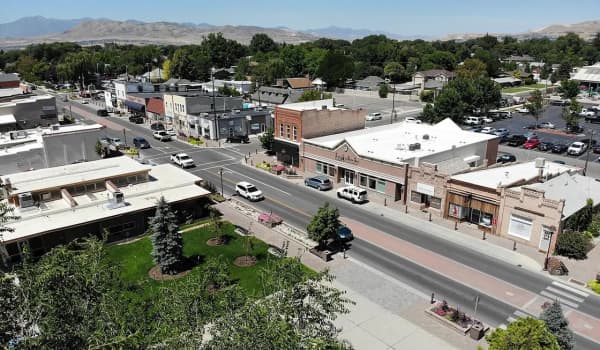
Orem's housing is predominantly mid-century single-family, laid out on a generous grid with large lots by modern standards. Prices are generally lower than Lehi's, and the city has substantially more rental inventory, partly because of the university.
It also has the State Street redevelopment story — mid-rise apartment buildings going up along the corridor, which has been the city's main source of new housing and its main source of political argument.
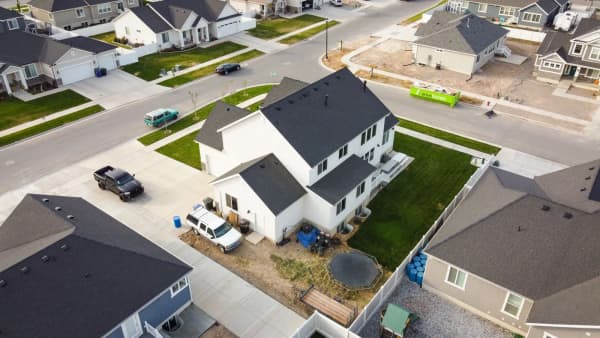
Lehi's housing is dominated by construction from the last twenty-five years, much of it in master-planned subdivisions with HOAs. Traverse Mountain and the west-side developments are the recognizable examples. You get newer systems, more consistent finishes, and less character.
The Orem and Lehi neighborhood guides break both down properly, because at this size the city-level average tells you very little.
Commuting, in both directions
To Salt Lake, Lehi wins comfortably. It is roughly twenty miles closer, it has two FrontRunner stations, and it sits at the top of the valley rather than the middle. Anyone commuting north should weight this heavily — our guide to living in Utah County while working in Salt Lake goes into the arithmetic.
To Provo, Orem wins just as comfortably. It shares a border with Provo, and University Parkway stitches the two together directly.
The corridor between them is the problem. I-15 through the Point of the Mountain is one of the most congested stretches in the state at peak hours, and a Lehi-to-Provo or Orem-to-Lehi commute is materially worse than the mileage suggests.
Transit is different
Lehi has two FrontRunner stations. Orem has one, adjacent to UVU, and it is well placed for the university but less useful for reaching the rest of the city.
Orem's compensation is that it is denser and flatter, with a bus network that works, and a good deal of it is walkable or bikeable in a way that most of Lehi is not. Lehi's newer subdivisions are built at a scale and layout that assume a car for everything.
If you want to run a one-car household, Orem makes that much easier. If you want a train to Salt Lake, Lehi does.
The mountains, and what each city sees
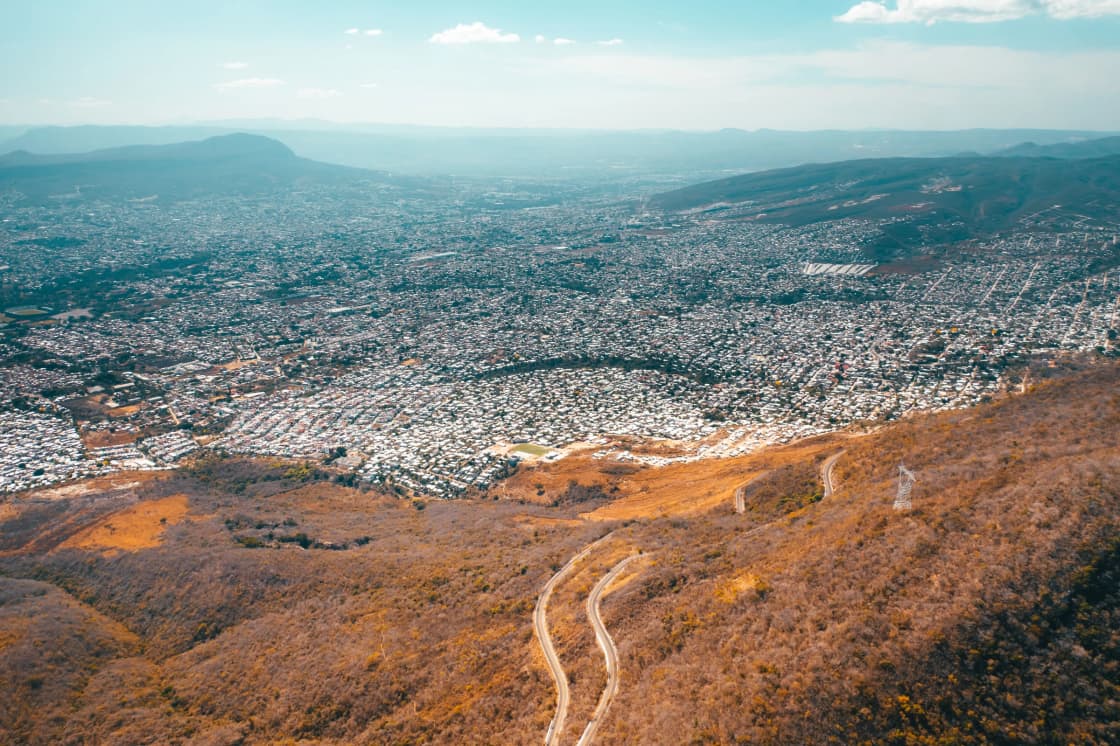
Orem sits directly below Mount Timpanogos. Provo Canyon, the Alpine Loop and the Timpanogos trailheads are all close, and the Bonneville Shoreline and Murdock Canal Trail run through the city's upper edge.
Lehi is farther from the big Wasatch canyons. What it has instead is the Traverse Ridge area, the Jordan River corridor, and better access to Salt Lake County's canyons by freeway — which, for a skier, is not a small thing.
Orem is the better base for Utah County outdoor recreation. Lehi is the better base for reaching everything north of the Point of the Mountain.
Students and universities
This one is not close. Utah Valley University is in Orem, BYU is a few minutes away in Provo, and Orem has the student housing, the bus routes, the cheap food and the schedule of a university city.
Lehi has almost none of that. It is a long, congested commute to either campus and the housing stock is not built for students.
If anyone in the household is attending or working at either university, Orem is the practical answer and Lehi is a compromise.
Families, and what each city offers children
Both are good places to raise children and both have the amenities you would expect. The differences are in texture.
Lehi has newer parks, newer schools, and a lot of families at the same stage of life arriving at once, which makes it easy to find peers. It also has Thanksgiving Point essentially on its doorstep, which is a genuine advantage for young families.
Orem has more established institutions — a large library, a long-running recreation program, the SCERA Shell and a rec center with a water park attached. Our comparison of every rec center in Utah Valley puts Orem's in context.
Youth sports run through city rec programs and club teams in both, on much the same model. Youth sports in Utah Valley covers how that landscape works.
The Point of the Mountain is its own subject
Between these two cities sits the Point of the Mountain, and it is doing more to shape both of them than any city council.
The former state prison site and the surrounding land is a major redevelopment project, and it sits directly between Lehi and Draper. Whatever gets built there will add jobs, housing and traffic to the corridor Lehi already depends on.
For Lehi, this is both the opportunity and the risk. More employment nearby is good for property values and bad for the commute, and the city has limited control over decisions being made just over the county line.
For Orem, the Point matters mainly as a traffic phenomenon. It is the bottleneck between Orem and the northern half of the state, and anything that adds volume there makes Orem feel farther from Salt Lake than the odometer says.
If you are buying in either city with a ten-year horizon, read about what is planned at the Point. It is a major external variable acting on both.
Density, and the arguments each city is having
Orem's growth argument is about height. With no land left, the only way to add housing is up, and the State Street corridor is where that has happened. Every proposal generates a debate about whether Orem is becoming something its residents did not sign up for.
Lehi's growth argument is about pace and infrastructure — whether roads, schools and water are keeping up with approvals, and whether the city is approving too much too fast.
These are opposite arguments with the same root: both cities are dealing with more demand than they have easy capacity for. Reading a year of council minutes in whichever city you are considering will tell you more about your future daily life than any amount of touring.
What each city is like on a Sunday
Small thing, useful. Both cities are heavily Latter-day Saint and both go quiet on Sundays, but differently.
Orem's Sunday is quieter in the residential grid and busier along the commercial corridors, where a reasonable number of businesses stay open partly because of the student population.
Lehi's Sunday is quieter overall, with less open, particularly away from the freeway corridor. Newer subdivisions in particular can feel very still.
If Sunday openings matter to you, our guide to things to do in Provo on a Sunday covers the valley-wide pattern, most of which applies to both cities.
Two mistakes people make with this comparison
The first is deciding on the population headline. Lehi passing Orem is an interesting fact and a terrible reason to choose a city. It tells you about trajectory, not about whether you will like living there.
The second is assuming Lehi is uniformly expensive and Orem uniformly cheap. Both cities span a very wide range. Lehi's older core near the original town grid is not priced like Traverse Mountain, and Orem's bench neighborhoods below Timpanogos are not priced like the flats near State Street. Compare specific neighborhoods, never city averages.
A third, smaller one: people assume that because Orem is older, its housing needs more work. Often true, but Orem's mid-century stock was largely built well, on generous lots, and a 1970s Orem rambler can be in better structural shape than a fast-built subdivision house from 2006.
Cost, honestly
Orem is generally cheaper — older housing, more rentals, lower entry prices. Lehi carries a premium driven by newer stock and by proximity to high-paying employment.
Do not decide on published median sale prices. Utah is a non-disclosure state, so sale prices are not public record and every published median is an estimate assembled from partial data. Look at live listings in the specific neighborhoods you are considering, and get a lender to tell you what the payment is including taxes and any HOA.
The HOA question is much more likely to arise in Lehi, and HOA dues are a real and permanent part of the monthly number.
Character, in one paragraph each
Orem feels like a mature American suburb that grew up around a university and a wide commercial street. It is unpretentious, a little worn in places, quietly liberal about some things and quite traditional about others, and full of people who have been there thirty years.
Lehi feels like a boom town that kept its rodeo. It has an old core with real history and a vast ring of new development around it, a young population, high incomes in some neighborhoods, and the slight rootlessness of a place where most people arrived recently. Lehi Round-Up is the week the old town reasserts itself.
Where each one is stronger
Lehi is stronger for technology employment, Salt Lake commuting, new construction, young families arriving together, and freeway access to the whole northern half of the state.
Orem is stronger for university access, affordability, walkability, established neighborhoods, mountain proximity, transit-light living, and having a city that is finished rather than under construction.
Utilities and who you call
Orem and Lehi both run significant municipal utility operations, which is normal for Utah cities and surprising to people arriving from elsewhere. The practical effect is that your water, and in some cases other services, come from the city rather than a regional corporation, and rate changes are decided in public meetings.
Lehi's rapid growth means it has been building and paying for infrastructure at pace, which is the sort of thing that eventually appears in rates. Orem's challenge is the opposite — maintaining and replacing systems installed decades ago, which is less visible and just as expensive.
Neither situation is a reason to choose one city. Both are a reason to read the utility rate discussion in council minutes before you assume your bills will look like your last city's. Our overview of who sets your utility bill across the valley explains the general pattern.
How to decide
Answer the job question first. It settles this comparison more often than anything else, and everything below it is secondary.
If the job question is neutral, answer the school-district question next, because from 2027 these two cities are administered by different boards and that difference will grow.
Then drive both commutes at the real hour. The Point of the Mountain is the single most underestimated factor in north Utah County housing decisions.
Finally, spend a Saturday in each. These are large cities with different atmospheres, and most people know within a couple of hours which one they would rather come home to. That instinct is worth taking seriously once the practical questions are settled.
If neither fits, the comparison family continues: Lehi vs Provo, Provo vs Orem, and Saratoga Springs vs Eagle Mountain cover the neighboring decisions.
Frequently Asked Questions
Which city is bigger, Orem or Lehi?
Are they in the same school district?
Which is better for a tech job?
Which is cheaper?
Which has a better commute to Salt Lake?
Which is better for students?
Is Orem shrinking?
Which one has better access to the mountains?
Sources
The facts in this guide were checked against these sources. Hours, fees and rules change, so confirm anything time-sensitive with the source before you go. How we make Provo.com.
- SUB-EST2025 Utah places, U.S. Census Bureau. Checked October 12, 2026.
- Aspen Peaks School District board meeting materials, Utah Public Notice Website. Checked October 12, 2026.