
More on The South Valley: every guide we have published there, in one place.
Salem is a town built around a pond, and once you know that, the rest of the city makes sense.
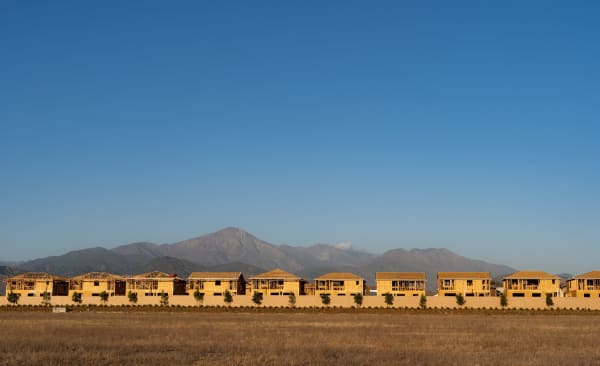
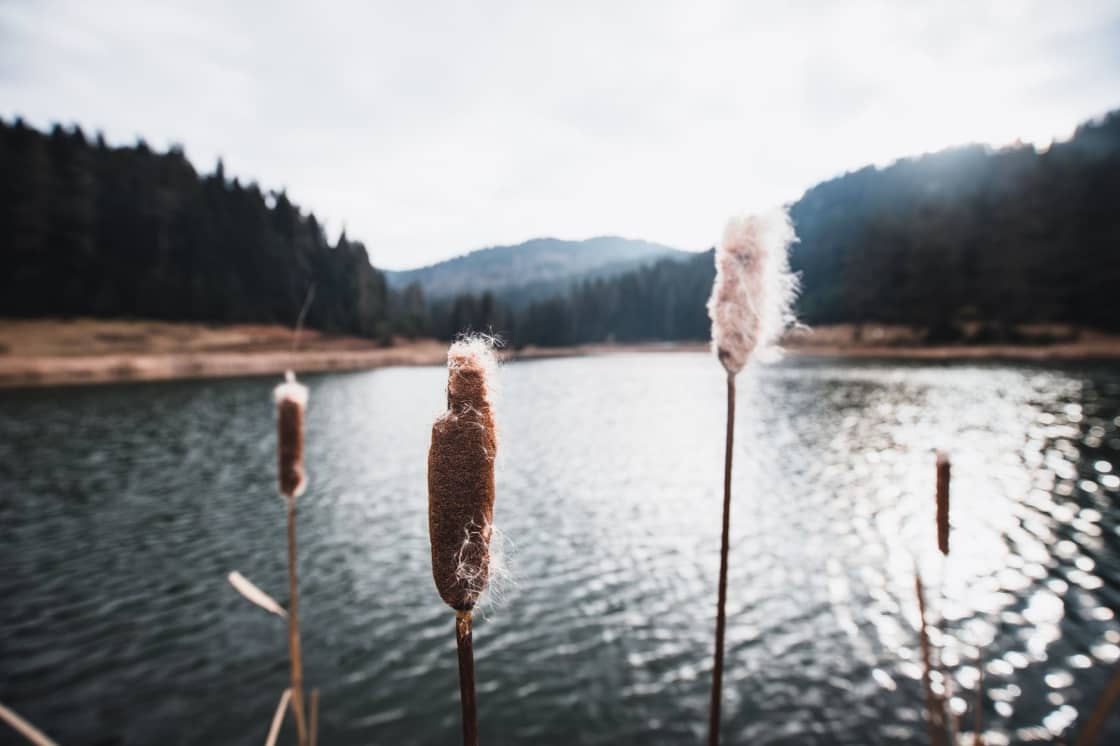
It sits in the south end of Utah County, off the freeway rather than on it, tucked between Spanish Fork to the north and Payson to the south with Loafer Mountain standing over it to the east. It was historically known as Pond Town. The pond is still there, still stocked, still the middle of everything.
That off-the-freeway position is the whole argument for living here. Salem is quieter than its neighbors, smaller than its neighbors, and has less of everything commercial than its neighbors — and a meaningful number of people move here specifically for those three facts.
This guide is the area-by-area companion to our broader guide to living in Salem.
The one thing to know before you compare neighborhoods
Salem has no official neighborhoods.
Provo runs a formal Neighborhood District Program, with mapped neighborhoods grouped into districts and volunteer boards approved by the City Council. Salem has nothing of the kind, and neither do most cities down here.
What residents call neighborhoods is a mix of three things: subdivision names on the newer edges, historic reference points around the old core, and plain geography. "The bench." "Out by the pond." "The west side." These are orientation devices, not civic units. They have no fixed edges, no representation and no legal meaning. The fuller backstory is in a short history of Salem and Elk Ridge.
More importantly, they tell you nothing about zoning, utility service, secondary water rights or school assignment. All four of those are parcel-level facts and all four have to be confirmed for a specific address. A neighborhood name is a starting point for a conversation, not an answer.
Salem at a glance
- South Utah County, east of the freeway, between Spanish Fork and Payson.
- Nebo School District — never part of Alpine, untouched by the 2027 split.
- Salem Hills High School inside the city, plus a junior high and elementary schools.
- Salem Pond at the civic center, stocked year-round.
- Loafer Mountain to the east, giving the bench its views and its slope.
- A driving town. No rail, limited transit.
The school pipeline, and the name that came from somewhere else
Salem educates its own. There are elementary schools in the city, Salem Junior High in the city, and Salem Hills High School in the city. A child can move through the whole sequence without leaving town — which, as our Payson guide points out, is less common in this valley than people assume. Lindon has no high school. Mapleton has none. Cedar Hills has none. Santaquin has none.
Salem Hills High School opened in the autumn of 2008, and it carries a distinction worth knowing: it was the first new high school Nebo School District had built since the 1970s. Nearly forty years of a growing district making do, and then a new building. Its structure was completed in the summer of 2008 and it opened under its first principal that fall.
It has collected some recognition since. In December 2008 it was awarded Best K-12 Education Project Design for the state of Utah by the Intermountain Contractors. In 2021 it received the National Performing Arts School of Excellence award, the first high school in Utah to do so — which is an unusual thing for a school this size in a town this size, and worth knowing if you have a child who sings, acts or plays.
Its mascot is the Skyhawk; its colors are light blue, navy blue and gold. Be careful with this one if you are reading around online: at least one widely circulated relocation guide gives Salem Hills the "Mighty Dons" in red and gray. The Dons are Spanish Fork High School. It is an easy confusion and it is wrong.
The name is older than the school, and belonged to a different city
Here is the detail that makes this school interesting.
The bench city immediately above Salem is Elk Ridge. It was originally incorporated in 1976 as the town of Salem Hills, named after a development built on part of the old Goosenest Ranch. About eighteen months later, residents voted to change the name to Elk Ridge, honoring the elk herds that used to winter in the area.
So the name "Salem Hills" belonged to a municipality for roughly a year and a half in the 1970s, was abandoned, and then reappeared thirty years later on a high school in the next town down — a school that Elk Ridge's own teenagers attend.
Salem Hills High also draws from Woodland Hills and part of the Payson area. That multi-city draw matters more than it sounds: a Salem address puts your child in a school whose student body comes from several small communities at once, which is a different social experience from a school that serves one town.
The district question, answered once
Salem is in Nebo School District and always has been. Nebo was never part of Alpine.
The dissolution of Alpine on 30 June 2027 and the creation of Aspen Peaks, Lake Mountain and Timpanogos on 1 July 2027 is a northern-valley event. It does not touch Salem's district, board, boundaries or rate.
For a buyer comparing south county against north county, that is a real if unglamorous advantage. Up north there is currently a live question about which board will set which rate. Down here that question does not exist.
The areas
The pond and the historic core
The oldest part of Salem, wrapped around Salem Pond and the civic buildings.
This is where the mature trees are, where the lots were laid out on the original settlement pattern, and where the housing stock is oldest and most varied. It is also the only part of Salem where walkability means anything — the pond, the park, the city offices and the older schools sit close enough together to make a walking life plausible for at least some errands.
What you are buying: proximity to the thing that defines the town. Character. Trees that took eighty years to grow.
What you are trading: older houses with older systems, smaller and more irregular lots, and the specific reality that when the town holds an event, it holds it near your house.
The bench and the east side
Climbing toward Loafer Mountain.
This is where the newer subdivisions concentrated as Salem grew, and it is where the views are. Elevation buys you a sightline across the south valley that the flat ground simply does not have, and it puts you closer to the mountain and the canyon access behind it.
What you are buying: views, newer construction, larger and more uniform lots, and the general sense of being above the town rather than in it.
What you are trading: the highest prices in the city, a longer drive to everything including the pond, and slope — which means driveways, snow and drainage all behave differently than they do on the flat.
The bench sits at the top of Salem's ordering. That has been true for a while and is likely to stay true, because the supply of view lots against a mountain is fixed and the demand is not.
The west and north sides
Flatter ground toward the valley floor and the highway connections.
This is the most affordable part of the city, the closest to the routes out toward Spanish Fork and the freeway, and where a good deal of newer, more uniform subdivision inventory sits.
What you are buying: the shortest drive to the freeway and to Spanish Fork's shopping, newer housing, and Salem's lowest entry point.
What you are trading: the least distinctive setting in a town whose appeal is its setting, and the greatest exposure to whatever gets built next, because this is the direction the growth is coming from.
The agricultural edges
Salem still has working agricultural ground at its margins, and some of it is still farmed.
Buying near it means large-lot possibilities, open outlooks and genuine quiet. It also means the ordinary realities of living beside agriculture — equipment at unhelpful hours, irrigation infrastructure, dust in season, and smells that are perfectly normal and not negotiable.
It also means the strongest likelihood of change. Agricultural land at the edge of a growing city is the land most likely to be something else in ten years. If an open field is the reason you are buying, understand that you do not control it.
What differs between these areas
Strip out the marketing and four things vary meaningfully across Salem.
Elevation. The bench sits above the town. That is views, slope, and a different winter.
Age of housing stock. The core is old, the edges are new, and everything about maintenance, insulation, systems and renovation potential follows from that.
Distance to the pond. In most towns, distance to the civic center is a minor factor. In Salem it is the factor, because the pond is where public life happens.
Exposure to growth. The west and north sides and the agricultural edges are where Salem will change. The established core will change least.
What does not vary much: schools. Salem is small enough that the whole city feeds the same secondary pipeline. Elementary assignment is a real question; high school largely is not. That is a simplification most Utah Valley cities cannot offer.
The commute, priced honestly
Salem's position is the trade. It is off the freeway, which is why it is quiet, and being off the freeway costs you minutes every single day.
Spanish Fork and Payson are both short hops. Provo is a manageable drive. The Lehi tech corridor is a long one, and Salt Lake City is a serious daily commitment before you account for snow or an accident on the interstate.
There is no rail station in Salem and transit service is limited. This is a driving town, and a two-car household in practice for most families.
The standing advice on this site applies with force here: drive the route you would drive, at the time you would drive it, on a weekday, before you buy. Off-peak numbers from a mapping app are not the commute. The morning stretch north through the south valley is a different road at 7:30 than it is at 11:00.
Growth, and where it is going
The south valley is filling in, and Salem is not exempt.
The general direction of travel is that growth arrives from the freeway side and works inward and upward. That means the west and north edges see it first, the agricultural margins are the most exposed, and the established core around the pond changes least.
What Salem has that its larger neighbors do not is a small enough footprint that change is visible. In Spanish Fork a new subdivision is one of many. In Salem it is a noticeable share of the town.
If you are buying for quiet, buy with your eyes open about what is entitled and planned nearby. Ask the city. A field is not a permanent amenity.
Renting in Salem
Rental inventory here is thin and always has been. Salem is overwhelmingly an owner-occupied, single-family town, and it does not have the apartment stock that Spanish Fork or Provo carry.
What exists tends to be individual houses, basement apartments and accessory units rather than managed complexes. That means fewer listings, less standardization, more variation in quality and more of the transaction resting on the individual landlord.
If you want to try the area before buying, you will generally have a wider selection a few minutes away in Spanish Fork or Payson.
Choosing in one pass
Want the town itself? The pond core. Old trees, walkable civic center, the reason people say Salem.
Want views and newer construction, and have the budget? The bench.
Want the lowest entry point and the shortest drive out? The west and north sides.
Want space and quiet and can accept agriculture as a neighbor? The edges — with clear eyes about what happens to farmland next to a growing city.
Then confirm the parcel-level facts for the actual address: zoning, utility provider, secondary water and school assignment. Every one of those is a property fact, not a neighborhood fact, and every one of them has surprised somebody at closing.
Salem against the rest of the south valley
Spanish Fork is the big one — more retail, more inventory, two high schools, freeway adjacency, and correspondingly less quiet.
Payson is further south, more affordable, and has its own complete school pipeline plus the Nebo Loop on its doorstep.
Mapleton is the premium estate-and-equestrian option to the north, with larger lots and higher prices.
Santaquin is further south again, more affordable still, and sends its teenagers out of town for high school.
Elk Ridge and Woodland Hills are the small bench cities above Salem — quieter again, more expensive per lot, and sharing Salem Hills High School with the city below.
Salem's position in that set is specific: small, quiet, off the freeway, with a complete school pipeline and a pond in the middle. It is not the cheapest, it is not the most convenient, and it does not try to be either.
The water question, which matters more here than the school question
There is a parcel-level fact in this part of the valley that surprises buyers more reliably than anything else, and it is worth putting ahead of most of what is above.
Ask whether the property has secondary water.
Secondary water, also called pressurized irrigation, is untreated water delivered through a separate pipe network for outdoor use only. Where it exists it is dramatically cheaper per gallon than treated culinary water, which is what makes a large lawn or a garden affordable to run. Where it does not exist, every drop on the grass is treated drinking water at treated drinking water prices.
Three things make this a Salem-specific concern rather than a general one.
Whether you have it depends on the street, not the city. Two houses a few hundred yards apart can be on different arrangements. It is not something you can infer from the address or from the neighbors.
It frequently comes attached to water shares, which are a form of property that transfers with the sale and which a buyer can fail to notice they are acquiring — or fail to notice they are not.
It is seasonal. Pressurized irrigation systems in this valley are shut down and drained for winter and turned back on in spring, on dates each provider sets and announces. A buyer who does not know this concludes in October that the sprinkler system has failed.
Our guide to secondary water and water shares covers the shares, the buyer's checklist and the metering law that takes effect in 2030, and the sprinkler winterization guide covers the seasonal side and the blowout timing.
Add it to the list with zoning, utility provider and school assignment. All four are parcel facts, and all four have caught somebody out.
The civic calendar, and what living near the middle of town costs
Salem's public life concentrates in a small area, which is one of the genuine pleasures of the place and one of its few predictable annoyances.
Because the pond, the park and the civic buildings sit together, most of what the city does happens in the same few hundred yards. For anyone living in the historic core, that means the events are walkable — and it also means that for a handful of days a year, the quiet town you bought into is not quiet.
This is a real trade rather than a complaint, and it is easy to price if you know about it. If you are buying within a few streets of the pond, ask what the calendar looks like and where parking goes during it. If you are buying on the bench or the west side, you get the events as a destination rather than as a condition.
Reading the building eras
You can date most of Salem by looking at it, and the eras tell you what you are buying into structurally.
The oldest stock sits around the original grid — varied, individually built, on irregular lots, with mature trees. Expect older systems, more character and more variability between one house and the next.
The late-century infill filled in the gaps around the core as the town grew modestly through the second half of the twentieth century. Conventional construction, conventional lots.
The recent subdivisions are concentrated on the bench and the west and north edges, built to current code with current insulation and current expectations about garage size and open plan. More uniform, more predictable, less distinctive.
The practical point is that "Salem" as a housing market is really three markets, and a figure quoted for one of them tells you very little about the others.
Related Guides
- Living in Salem — the full city guide
- Payson Neighborhoods Guide — the next city south
- Santaquin Neighborhoods Guide — the southern gateway
- Spanish Fork Neighborhoods Guide — the big neighbor north
- Nebo School District — the district Salem has always been in
- Utah County's Small Towns — Elk Ridge, Woodland Hills, Genola and the rest
- The Water Lantern Festival in Salem
Frequently Asked Questions
What are the best neighborhoods in Salem, Utah?
Does Salem have its own high school?
Why is it called Salem Hills High School when it is in Salem?
Is Salem affected by the Alpine School District split?
What is Salem Pond?
Are these official neighborhoods with defined boundaries?
How is the commute from Salem?
Why doesn't this guide publish home prices for Salem?
Sources
The facts in this guide were checked against these sources. Hours, fees and rules change, so confirm anything time-sensitive with the source before you go. How we make Provo.com.
- Elk Ridge - Utah History To Go, Utah Department of Cultural & Community Engagement. Checked October 12, 2026.
- Elk Ridge City General Plan 2024, Elk Ridge City (Utah Public Notice Website). Checked October 12, 2026.
- Neighborhood District Program | Provo, UT, Provo City Council. Checked October 12, 2026.