
More on Spanish Fork: every guide we have published there, in one place.
Spanish Fork is the fastest-growing city in the south valley, and it is growing for a reason that has nothing to do with the story dominating Utah County conversation right now.
For two years the valley has talked about the Alpine School District split. That conversation has been loud enough to wash south over cities it does not touch, and Spanish Fork is one of them. What is driving growth here is simpler: more house for the money, a settled school district, and a twenty-minute commute to Provo.
This guide is the area-by-area companion to our broader guide to living in Spanish Fork.
Spanish Fork at a glance
Settled in the 1850s, with its first schoolhouse built in 1862, Spanish Fork grew up as an agricultural community in the fertile southern end of Utah Valley. That farming heritage still shapes the place — historic homes, established streets, and a Main Street that anchors the city.
The most distinctive thread in its history is Icelandic. Spanish Fork was the first permanent Icelandic settlement in the United States, founded by Icelandic converts in the 1850s, and the city marks the connection every June with Icelandic Days. For a Utah town that is an unusual piece of cultural heritage, and it is part of why Spanish Fork has a stronger sense of identity than most fast-growing suburbs.
The city sits on I-15 with US-6 running east toward Price, and runs its own municipal utilities down to internet and television service.
The thing that is not a factor here
Spanish Fork is in Nebo School District and was never part of Alpine.
Utah County voters approved splitting Alpine three ways. Alpine dissolves on 30 June 2027, and Aspen Peaks, Lake Mountain and Timpanogos become operational 1 July 2027. Every one of those covers cities in the northern and central county.
Spanish Fork is in none of them, and neither are Springville, Mapleton, Salem, Payson or Santaquin. The south end of the county belongs to Nebo School District, which is not being split, not being renamed, not inheriting a share of Alpine's buildings or debts, and not running the boundary studies currently unsettling families further north.
The value of that to a buyer is specific. A north-county purchase right now carries an unresolved variable — which district, which board, which tax rate, which feeder school once boundary work concludes. In Spanish Fork that variable does not exist. Schools here are the stable column in the spreadsheet, growing steadily with the south valley rather than reorganizing. Our Alpine dissolution guide covers the northern picture if you are comparing across the divide.
There is one school question in Spanish Fork that does matter, and it is entirely internal to Nebo. It comes later in this guide.
The one thing to know before you compare neighborhoods
Spanish Fork's neighborhoods are not official designations.
Provo City operates a formal Neighborhood District Program — 35 mapped neighborhoods grouped into five districts, with volunteer boards approved by the City Council. Spanish Fork has no equivalent roster.
What it has is a split vocabulary that reflects its split housing stock. On the newer east side, people use subdivision names — developer choices with soft edges. Everywhere else they use informal geography: Main Street, the bench, the west side, out by the river.
Both are useful and neither is administrative. The consequences are the familiar ones — soft boundaries, no reliable HOA information, no reliable school information — but in Spanish Fork there is a fourth that matters more than usual.
Area names carry no zoning information. In a city where ranch lots with animal rights sit near standard suburban lots that look similar from the road, that gap is expensive. The rural appearance of a street guarantees nothing about what you may keep on a specific parcel.
Three cities in one
Spanish Fork's housing stock spans roughly a century and a half, and the practical effect is that buying here means choosing between three different products rather than three price points of the same one.
The historic core near Main Street. Old-house due diligence: roof, furnace, sewer lateral, unpermitted additions, and how a lot drawn before modern subdivision standards sits. What you get in exchange is character, mature trees and walkable civic amenities.
The east bench climbing toward the mountains. New-construction questions: which phase you are entering, what the covenants say, and how the surrounding parcels are entitled to build out — because the east side is where the city's growth is actively landing.
The ranch lots in between. Their own homework entirely: animal rights and outbuilding rules vary by parcel, so confirm zoning on the specific lot rather than assuming.
Matching the due diligence to the house matters more here than in a one-generation city like Vineyard or Eagle Mountain, where every property gets broadly the same inspection. In Spanish Fork the wrong checklist misses the actual risk.
The areas
Main Street and the historic core
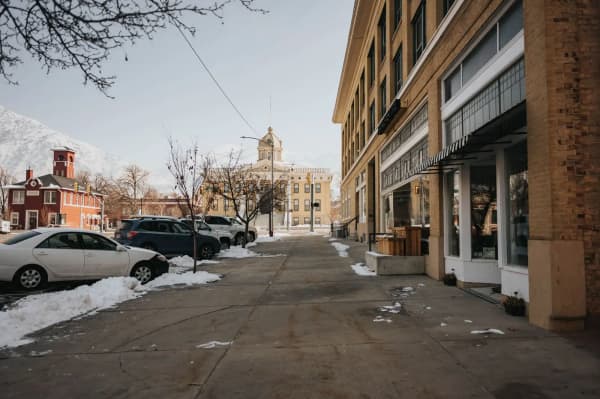
The original settlement, on the wide pioneer grid. Oldest housing in the city, largest mature trees, and the civic and commercial anchor — Main Street remains a real center rather than a bypassed relic.
This is also where the city's festival life happens. Fiesta Days each July brings a rodeo, parade and fireworks that draw thousands, and Icelandic Days in June marks the heritage. If you buy on a parade route, that is a feature or a bug depending on temperament, and worth knowing beforehand.
Suits: buyers who want character and grown-in streets; renovators; people who value walkable civic life. Costs you: old-house maintenance; less predictability in what you are buying.
The east bench
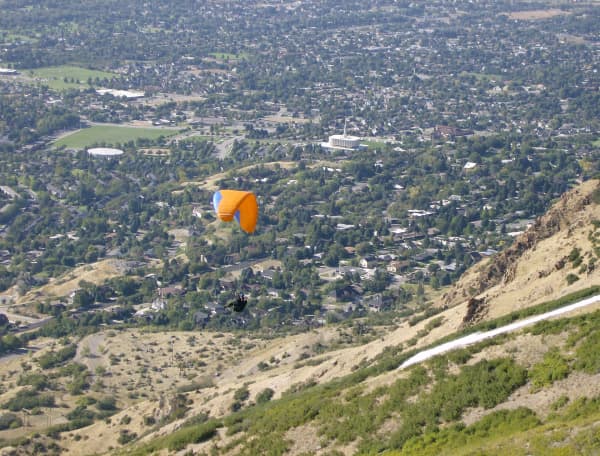
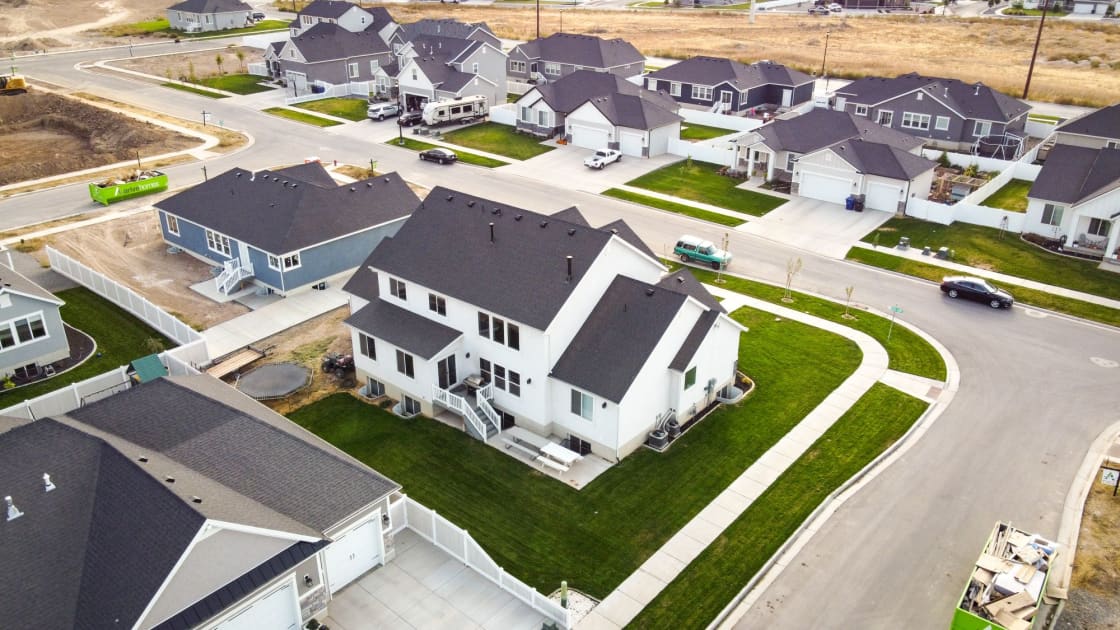
Newer subdivisions climbing toward the mountains, with the best views in the city and most of its current growth. Predictable systems, more uniform streetscapes, and where HOAs are most likely to appear in Spanish Fork.
Suits: buyers who want new construction and mountain views. Costs you: ongoing construction nearby; the longest drive to the freeway; winter grades.
The ranch lots
Larger properties between the core and the bench, preserving some of the city's agricultural character. Room for animals and outbuildings on some parcels — a genuine amenity that the built-out northern cities cannot offer at this price.
Suits: households who want land, animals or workspace. Costs you: zoning homework that cannot be skipped; properties that vary enormously despite looking similar.
The west side and the freeway corridor
Flattest part of the city, closest to the I-15 interchange and US-6, and where commercial activity concentrates. The fastest reach to the freeway and the least residential feel as a direct result.
Suits: commuters who want the shortest route out. Costs you: commercial proximity; the least scenic position.
The school seam that does matter
Spanish Fork has two high schools, and that is the school fact worth your attention here.
Spanish Fork High School, home of the Dons, and Maple Mountain High School both serve the city — and Maple Mountain also serves students from neighboring Mapleton. The two carry a spirited local rivalry.
The consequence is that a Spanish Fork address tells you nothing at all about which high school your child attends. The city is split between two, and the split runs through it rather than around it. This is exactly the situation where an area name substitutes badly for an address check: two houses a few streets apart, both unambiguously Spanish Fork, both unambiguously Nebo, sending children to rival schools.
The verification takes minutes. Nebo publishes boundaries and operates an address lookup — run the exact street address rather than the subdivision or the listing summary, and run it for each of elementary, junior high and high school, because the three sets of boundaries do not necessarily agree with one another. Then run it again in the year you buy, since lines shift as the city grows.
If a seller or agent tells you the schools verbally, treat that as a starting point rather than an answer. It is among the most commonly repeated pieces of stale information in any housing market, and it is repeated in good faith nearly every time.
Mountainland Technical College has a Spanish Fork campus, and BYU is about ten miles away in Provo. Our schools guide covers how valley schools compare more broadly.
The south-valley trade
Spanish Fork sits on one side of a decision a great many Utah Valley households are making, and it is worth stating without euphemism.
What the north county offers: proximity to the Silicon Slopes corridor, the newest housing stock in the county, rail access in several cities, and the strongest employment growth in the state. It comes with the highest prices, the most HOA governance, heavy construction traffic and an unresolved school district question.
What Spanish Fork offers: meaningfully lower housing costs, a housing stock spanning a century with genuine variety, far less HOA involvement, a settled school district, its own municipal utilities, and a twenty-minute commute to Provo. It costs you reach to the northern job corridor — thirty minutes to Lehi, forty to fifty to Salt Lake.
The honest way to run this is not to ask which city is better. It is to ask where you drive on a Tuesday morning. A household with both earners working in Lehi is fighting geography from Spanish Fork. A household working in Provo or the south valley is fighting geography from Lehi. Nearly everything else is noise next to that.
Buyers who find even Spanish Fork above budget tend to keep driving south — Santaquin runs among the more affordable markets in the valley, and that affordability is the main reason its population is climbing. Our cost of living guide covers the wider comparison.
The Icelandic thread
Most Utah cities have a pioneer origin story that reads much like the one next door. Spanish Fork has one that does not, and it is worth more than the footnote it usually gets.
Spanish Fork was the first permanent Icelandic settlement in the United States — founded by Icelandic converts to the Church of Jesus Christ of Latter-day Saints in the 1850s, who traveled a very long way to a valley that looks nothing like home. The city marks it every June with Icelandic Days, timed to Icelandic Independence Day.
Why this matters to someone choosing a house rather than reading a history: identity is one of the scarce commodities in fast-growing suburbs, and it is not something a developer can deliver. Cities that grow quickly tend to accumulate housing long before they accumulate a shared sense of place, and the gap can run a generation or more.
Spanish Fork did not have to build one. It has a distinct heritage, a festival calendar with real depth — Fiesta Days, Icelandic Days, the Harvest Moon Hurrah, the Festival of Lights, the Festival of Colors at the Krishna temple outside town — and a Main Street that still functions as a center rather than a bypassed relic.
For households weighing Spanish Fork against a newer city further north, that is a real item on the ledger even though it appears in no listing and no price comparison. Whether it outweighs a shorter commute is a personal question. But it should at least be on the list, because it is one of the few things about a city that cannot be built later.
Reading the building eras
Because Spanish Fork's housing spans roughly a century and a half, reading the era tells you more than reading a subdivision name.
Pioneer and early-settlement stock on the original grid. Small original footprints with a century of additions layered on. The most characterful housing in the city and the most likely to hold a surprise behind a wall.
Early-twentieth-century housing through the older core, growing up alongside the trees that now shade it. This is what gives the Main Street area its look.
Mid-century subdivisions ringing the core. Ranch and split-level houses on regular lots, largely HOA-free, with systems typically on a second or third replacement cycle — which usefully means the expensive items may already have been dealt with.
Agricultural holdings that were never subdivided, surviving as the larger ranch-style parcels between the core and the bench. These are the ones where zoning varies most and matters most.
Contemporary bench subdivisions, where current growth is landing. Predictable systems, uniform streets, covenants where they exist, and landscaping that has not yet filled in.
The value of reading eras rather than names is that the era tells you what to inspect, what to budget for and what the street looks like in a decade. A subdivision name tells you what a marketing team wanted you to feel about it.
The municipal utility difference
Most valley residents assemble a household from a set of private providers: a power company, a water district, a waste contractor, an internet provider, each with its own account, its own billing cycle and its own support line.
Spanish Fork does not work that way. The city runs its own power, water, sewer and garbage, and it also operates the Spanish Fork Community Network — municipal internet, television and telephone service. A new resident sets up nearly everything on one city bill.
This is a long-standing point of local pride and a genuine practical difference, and it has consequences worth understanding.
Setup is dramatically simpler. One call, one account, one bill. Anyone who has moved into a new city and spent a week on hold with four separate providers will recognize the value immediately.
Your utility relationship is with the city. When something goes wrong, you are dealing with a municipal department accountable to a council you vote for, rather than a regional corporation. Residents generally report that as a positive; it is certainly a different relationship.
Rates are set locally. A municipal utility answers to the city rather than to a state commission balancing a much larger service territory, which means local decisions have more direct effect on what you pay.
Municipal broadband is rare. Very few US cities operate their own internet service, and for households where connectivity matters — remote workers especially, which after the last several years is a great many people — it is a meaningful factor that simply does not appear in a housing comparison.
None of this is a reason to buy in Spanish Fork by itself. But it is one of those durable structural features that outlasts market cycles, and it belongs in the comparison alongside price and commute.
What differs between these areas
Age of the housing stock. The dominant variable, and it changes which inspection you need rather than just what you pay.
Zoning, specifically animal rights. Unusually consequential here and invisible from the street.
Whether there is an HOA at all. In much of Spanish Fork there is not, which is a real difference from the northern cities.
Distance to the freeway ramp. The city's whole commuter proposition rests on I-15 access.
Elevation. The bench drives differently in January and sees differently year-round.
Renting in Spanish Fork
Rental supply here is smaller than in the apartment-heavy northern cities and skews toward individual houses and basement units rather than purpose-built product. There is no academic calendar driving synchronised turnover the way there is in Provo, and no steady delivery of new managed buildings the way there is in Lehi.
What that means practically: start earlier than you would further north, expect a landlord-by-landlord market, and expect good units to move quietly. Our Utah Valley rent guide covers how asking rents order across the region.
What the map doesn't tell you
One bill for nearly everything. The city runs its own power, water, sewer, garbage and the Spanish Fork Community Network for internet, television and telephone. Setting up a household here is simpler than almost anywhere else in the valley.
Salem routes through you. Salem sits off I-15 entirely and reaches the freeway through Spanish Fork or Payson, which adds through-traffic on certain corridors.
The grid runs from a local origin. Utah cities measure numbered streets from their own origin point. Our address grid explainer covers why streets renumber across city lines.
City edges reflect annexation history, and addresses near a seam can be administratively surprising — which city responds to a call, which issues a permit, which council you vote for.
The festival calendar is full. Fiesta Days, Icelandic Days, the Harvest Moon Hurrah, the Festival of Lights, and the Holi-inspired Festival of Colors at the Krishna temple just outside town. Our things to do in Spanish Fork guide covers them.
The seams, city by city
Toward Springville, on the north. Both Nebo, both freeway-adjacent, and the two cities are frequently compared. Springville is the older and more settled; Spanish Fork the larger and faster-growing. Our Springville neighborhoods guide covers that side.
Toward Mapleton, on the northeast. Shares Maple Mountain High School with Spanish Fork, which makes this the softest seam in the area — shared district, shared school, different city.
Toward Salem, on the south. Set back from the freeway and routing through Spanish Fork to reach it.
Toward Payson, further south. Among the more affordable of the county's larger cities, and the next stop for buyers who need more room in the budget.
Choosing in one pass
Where do you commute? Provo and the south valley make Spanish Fork an easy call. Lehi and Salt Lake make it a real trade you should test on the road.
Old, new, or land? These are three different purchases here with three different inspection checklists. Decide first.
Do you need specific zoning? If animals or outbuildings matter, that narrows the search immediately — and it is a parcel question, not an area question.
Which high school? Ask early, at the address. A Spanish Fork address does not answer it.
For the broader relocation picture, our moving to Utah Valley guide covers settling in, and buying a home near Provo covers the purchase process.
Related Guides
- Living in Spanish Fork — the full city guide
- Nebo School District — the district Spanish Fork has always been in
- Alpine School District — the split that does not affect Spanish Fork
- Springville Neighborhoods Guide — the neighbor to the north
- Living in Mapleton — shares a high school with Spanish Fork
- Things to do in Spanish Fork
- Annexation and city boundaries in Utah County
- The Utah address grid, explained
- Mapleton neighborhoods
- Payson neighborhoods
- Spanish Fork High vs Maple Mountain High — which school an address feeds
Frequently Asked Questions
What are the best neighborhoods in Spanish Fork Utah?
Is Spanish Fork affected by the Alpine School District split?
Which high school serves Spanish Fork?
Are Spanish Fork's neighborhoods official designations?
Why doesn't this guide publish home prices for Spanish Fork?
Does Spanish Fork have its own utilities?
Can you keep animals on a lot in Spanish Fork?
How long is the commute from Spanish Fork?
Sources
The facts in this guide were checked against these sources. Hours, fees and rules change, so confirm anything time-sensitive with the source before you go. How we make Provo.com.
- Spanish Fork City History, Spanish Fork City. Checked October 12, 2026.
- Neighborhood District Program | Provo, UT, Provo City Council. Checked October 12, 2026.