
More on Eagle Mountain: every guide we have published there, in one place.
Most guides in this series tell you that the neighborhood names are soft and the boundaries are unknowable. Eagle Mountain is a partial exception, for an unusual reason: you can see where its areas end.
The city covers an enormous footprint, and its developed pods are separated by genuine stretches of open ground rather than running continuously into one another. Where one area stops and the next begins is not a matter of interpretation. It is a matter of driving for a few minutes past nothing.
That single fact drives most of what a buyer needs to know here, and it is why choosing wrong inside Eagle Mountain costs more than choosing wrong inside a compact city.
This guide is the area-by-area companion to our broader guide to living in Eagle Mountain.
Eagle Mountain at a glance
The origins are unusual. It began as Cedar Valley ranchland assembled by private investors, and it incorporated in December 1996 with about 250 residents. For years it was known as a remote, affordable place to buy a lot of house and land far from the Wasatch Front.
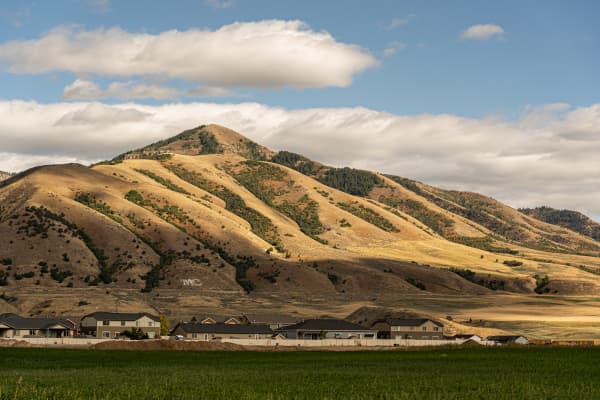
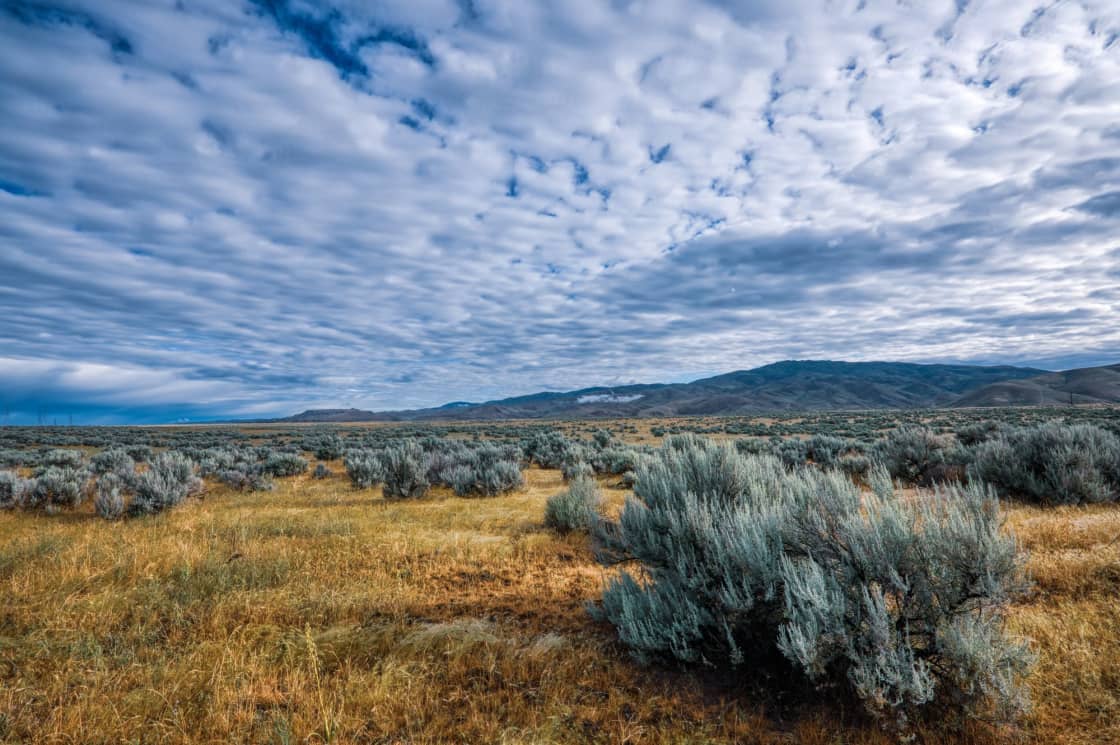
The land has shaped everything since. Vast, open, at the base of the mountains — it is why Eagle Mountain can be simultaneously a fast-growing residential community and a hub for enormous industrial projects, and why the city's identity still leans rural and western even as its population multiplies.
Internal geography is the whole game
In Orem or American Fork, the difference between neighborhoods is measured in minutes. In Eagle Mountain it can be measured in the same units you would use to compare two separate cities.
The practical consequences are concrete and they are the ones residents talk about:
Distance to a grocery store varies substantially by pod. Some areas have retail nearby; others involve a real drive for a carton of milk.
Distance to a school likewise. In a city this spread out, the assigned school may not be the nearest one, and the nearest one may not be close.
Distance to the main connector out — Pony Express Parkway and SR-73 toward Lehi — is the biggest of them. Two Eagle Mountain addresses can differ by fifteen minutes before either driver reaches the road everyone else is already on.
So the first discipline here is different from anywhere else in the valley. Do not ask what an area is like. Map your actual weekly journeys from a specific address — work, school, groceries, church, the gym — and add them up. The answer will separate the areas far more decisively than any description of their character.
The one thing to know before you compare neighborhoods
Eagle Mountain's neighborhoods are not official designations.
Provo City operates a formal Neighborhood District Program: mapped neighborhoods grouped into districts, with volunteer boards approved by the City Council and a place in city governance. Eagle Mountain has no such roster. Its area names are master-planned development names, chosen by developers, with no civic standing.
The difference from Lehi or Saratoga Springs is that here the names are anchored to visible geography. A pod separated from its neighbors by open ground has an edge, whatever the city's official position on the matter. That makes the names more useful than usual — but it does not make them administrative, and it does not make them a substitute for verifying a specific address.
The usual cautions still apply. Names do not carry HOA scope, and names do not carry school assignment. In a district about to be reorganized and a region about to open a new high school, the second of those is not theoretical.
The areas
The Ranches
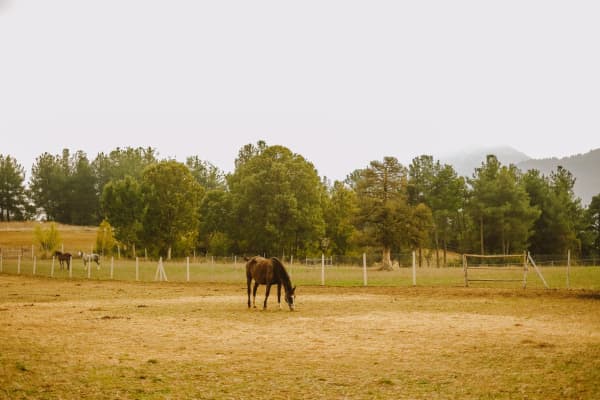
The city's largest and most established area, and the one that most defines Eagle Mountain's character to outsiders. Established family neighborhoods alongside golf-course and equestrian properties — a combination that is close to unavailable elsewhere in Utah Valley at this price.
This is where the city's rural-western identity is most legible, and where households who want room for animals most often land.
Suits: families who want space, equestrian households, golfers, buyers who want an established street in a young city. Costs you: distance from the main connector out; the drive to anything not inside the pod.
City Center
The original core, and where more of the city's affordable starter housing sits. For first-time buyers this is frequently the entry point to Eagle Mountain and, by extension, to homeownership in Utah County.
Suits: first-time buyers, value-focused households. Costs you: the least amenity-rich position; older stock by Eagle Mountain standards, which still means recent by anyone else's.
Eagle Park
Among the newer planned developments, with the newest housing and the newest infrastructure. The usual new-build trade applies: predictable systems, warranty coverage, no shade for fifteen years.
Suits: buyers who want new construction and are willing to live beside continuing development. Costs you: ongoing construction; amenities arriving on a schedule rather than already present.
SilverLake
Higher ground with mountain views, and generally the higher-end end of the Eagle Mountain market. Elevation buys the outlook here the way it does in Traverse Mountain or the Springville bench.
Suits: buyers who want views and a step up in finish. Costs you: price; winter grades; distance.
The Cedar Valley side
The most rural character in the city — large lots, open space, room for animals. This is Eagle Mountain at its least suburban, and for a certain buyer it is the entire point.
Suits: households who want land and quiet and will absorb the drive to get it. Costs you: the longest journeys to everything; the fewest services; the most self-reliance.
The data-center corridor and your tax bill
The most surprising thing about Eagle Mountain is its emergence as a technology-infrastructure hub, and it is worth understanding as a resident rather than as a headline.
The same qualities that attract homebuyers — abundant, affordable land — attract data-center developers who need space near power and fiber. Meta built a major data center here, a billion-dollar-plus investment it later expanded. Google purchased land for a potential future campus with a written commitment to invest well over a billion. Tyson Foods built a meat-processing plant. Developers including Tract have acquired hundreds of additional acres to prepare further sites.
The one real constraint has been power: demand has outpaced what the regional utility can supply, which has slowed some projects and prompted the city to explore new energy approaches.
For residents this matters concretely. Large commercial and industrial facilities generate significant tax revenue that helps fund city services and can offset the property-tax burden on homeowners — a meaningful benefit in a city building out this much new infrastructure at once. A city with a large non-residential tax base is structurally different from a pure bedroom community, where every road and park is funded by the households using it.
The honest counterweight is that industrial development is a land use, and land uses have neighbors. If you are shopping near the corridor, look at what is entitled nearby rather than only what is built. Our Silicon Slopes explainer covers the wider regional tech picture.
The district the west side voted for
Eagle Mountain is in Alpine School District today. Alpine dissolves on 30 June 2027, with successor districts operational 1 July 2027.
Eagle Mountain joins Saratoga Springs, Cedar Fort and Fairfield in the new Lake Mountain School District, named for the ridge separating the west side from the lake.
How it came about matters. Proposition 14 created Lake Mountain — the west side voted itself a district whose boundaries finally match its own growth. Proposition 11 created Aspen Peaks out of the north-central cities. Neither proposition named Orem, Lindon, Pleasant Grove or Vineyard, so those became Timpanogos by subtraction.
That is why the mood on this side of the valley differs so sharply from the mood in Orem. Out here the split is something residents chose and largely still defend. In the Timpanogos cities it is something that happened to them, along with the oldest buildings in the former Alpine footprint.
Capacity, and the boundary change that is coming
Students here currently attend schools including Cedar Valley and Westlake high schools, both of which have been running over capacity because of the area's growth. More high school capacity on the west side is part of the long-range plan, so watch the new district's building decisions.
The implication for an Eagle Mountain buyer is the same one facing Saratoga Springs, and it deserves stating plainly: a new high school opening will redraw feeder boundaries across the west side. Attendance areas have to be carved out of the existing schools to populate the new one. That is not a risk of a change, it is a certainty of one.
So verify assignment at the address and in the year you buy — and hold it loosely rather than treating it as a fixed attribute. Our schools guide covers how valley schools compare more broadly, and our Saratoga Springs neighborhoods guide covers the other Lake Mountain city.
The real cost of distance
Eagle Mountain's trade is usually summarized as "more house for a longer drive," which is true and incomplete. The drive costs more than time, and the additional costs are the ones buyers tend to discover afterwards rather than model beforehand.
Vehicle cost is the obvious one and it is not small. A commute of thirty-plus miles each way, driven daily, adds up in fuel, maintenance and depreciation. Households frequently find that the money saved on the house is partly returned to the car, and a two-commuter household returns it twice.
Spontaneity gets expensive. In a compact city, forgetting an ingredient costs five minutes. Out here it can cost half an hour, which changes behavior — people batch errands, plan more, and turn back less often. Most residents adapt quickly and stop noticing. But it is a genuine adjustment for anyone arriving from somewhere dense.
Participation costs more. Evening activities in Provo, Orem or Salt Lake — a class, a concert, a league, a standing commitment — carry a travel tax that eventually shapes which ones you keep. Households with strong ties east of the lake feel this most.
Weather compounds it. A drive that is comfortable in June is a different proposition in a February storm, on open ground, in the dark.
None of this argues against Eagle Mountain. It argues for running the trade with complete numbers rather than only the purchase price. Plenty of households run it and conclude the city is clearly worth it — especially those who work locally, work from home, or want land they cannot afford anywhere closer. The ones who struggle are usually the ones who compared a mortgage payment against a mortgage payment and stopped there.
The power question
Eagle Mountain's industrial story has a constraint attached that is worth understanding, because it affects the city's trajectory rather than just its headlines.
Data centers consume electricity at a scale that is difficult to overstate, and demand here has outpaced what the regional utility can supply. That has slowed some projects and prompted the city to explore new energy approaches.
For a resident, three implications follow.
The tax-base benefit is not automatic. Announced projects are not built projects, and a facility that cannot get power does not generate revenue. The offset to your property-tax burden depends on what gets energised, not on what gets announced.
Infrastructure investment tends to follow. Solving a power constraint at that scale means grid investment, which is generally good for a growing residential city too.
The land is committed either way. Hundreds of acres have been acquired for future sites. Whether or not each gets built promptly, the land use around the corridor is broadly settled — which is useful information if you are shopping nearby and wondering what the open ground becomes.
The honest summary is that Eagle Mountain's industrial base is a genuine structural advantage for homeowners and a slower-moving one than the announcements suggest.
The rural identity, and whether it survives
Eagle Mountain markets itself, and thinks of itself, as rural and western. That is not purely a slogan — the equestrian properties, the large lots and the open ground are real, and they are the reason a meaningful share of residents chose the city over Saratoga Springs or Lehi.
The open question is how much of it survives build-out. A city that was a few hundred people in 1996 and is now a substantial suburb has already changed character once. The pods that feel isolated today are separated by ground that is, in many cases, entitled for eventual development.
For a buyer the useful move is to be precise about which version of the rural character you are buying:
Rural by zoning — a large lot with animal rights, in an area zoned to stay that way — is durable. It survives growth because the zoning constrains what happens around it.
Rural by vacancy — a standard suburban lot that currently faces an empty field — is not. It lasts exactly as long as the field does.
Both feel identical from a driveway on a viewing day. Only one of them is still true in a decade, and the difference is a zoning map and half an hour of research.
The auction that made the city
Eagle Mountain's founding story is worth more than the trivia it usually gets treated as, because it explains the shape of the city better than any planning document.
Most Utah cities began as pioneer settlements — a grid laid out around a center, growing outward in rings over generations. Eagle Mountain began as Cedar Valley ranchland assembled by private investors, and it incorporated in December 1996.
That origin has three visible consequences.
There is no historic core to grow outward from. What other cities have at their center — an old grid, a Main Street, a courthouse square, a hundred and fifty years of accumulated civic buildings — Eagle Mountain does not have, because it never went through that phase. City Center is the original developed area rather than a pioneer settlement.
The footprint was defined by a land transaction rather than by settlement patterns. The city's enormous boundary reflects what was in the parcel, not where people naturally clustered. That is precisely why the developed pods sit scattered across it with open ground between them — the boundary came first and the neighborhoods filled in afterwards, wherever development made sense at the time.
Growth has been developer-led throughout. There was no pre-existing town to negotiate with, which allowed both the residential build-out and the later industrial projects to happen at a scale and speed that would be impossible in a settled city.
Understanding that sequence makes the map legible. Eagle Mountain is not a town that sprawled. It is a very large piece of land that acquired a city, and it is still filling in.
What differs between these areas
Which pod, and how far it sits from everything. The dominant variable, with no real equivalent in a compact city.
Lot size and what you may keep on it. Eagle Mountain offers a genuine range from suburban to nearly rural, and animal rights vary by lot and by HOA rather than by city.
HOA scope. Most master-planned neighborhoods carry design and landscaping standards. Scope varies widely; read the specific documents.
Elevation. SilverLake and the higher ground drive differently in winter and see differently in every season.
Proximity to the industrial corridor. A tax-base benefit at the city level and a land-use question at the street level.
Renting in Eagle Mountain
Rental supply here is thinner than in the eastern cities and skews toward single-family houses rather than purpose-built apartment product. That makes the market more landlord-by-landlord and less predictable in timing.
The same corridor logic applies to renting as to buying: a lease ten minutes closer to Pony Express Parkway is a materially different lease. Given that most Eagle Mountain renters are commuting east, that difference compounds twice a day, five days a week. Our Utah Valley rent guide covers how asking rents order across the region.
What the map doesn't tell you
Almost nothing here is old. The housing stock is overwhelmingly new, nearly all built in the last twenty years. Buyers arriving from established parts of the valley are trading architectural variety and mature trees for newer systems and a bigger lot. That is a clean trade, but it is a trade.
The open ground between pods may not stay open. Some of it is entitled for development, some for industry, some neither. Find out which before you assume a view is permanent.
Winter on the far west side is its own thing. Open ground means wind and drifting, and the distances mean more of your winter is spent driving.
The grid runs from a local origin, as everywhere in Utah. Our address grid explainer covers why streets renumber across city lines.
City edges reflect annexation history, and addresses near a seam can be administratively surprising.
The seams, city by city
Toward Saratoga Springs, on the northeast along SR-73. Same district from 2027, same commute geometry, same road projects. The two cities have more in common with each other than either does with anywhere east of the lake.
Toward Cedar Fort and Fairfield, to the west and south. Rural, sparsely populated, and joining Lake Mountain alongside the two large cities.
Toward Lehi, to the northeast beyond Saratoga Springs. This is where the jobs are and where the district changes — Lehi goes to Aspen Peaks. Our Lehi neighborhoods guide covers that side.
Toward the Lake Mountains, to the east. Not a municipal seam but the ridge that gives the new district its name and separates Eagle Mountain from the lake entirely.
Choosing in one pass
Map your week from the address. Not the area — the address. In Eagle Mountain this single exercise does more work than every other consideration combined.
How much land do you want? The city can deliver anything from a standard suburban lot to something nearly rural. Decide before you shop.
Will you keep animals? If yes, that narrows the search immediately and usefully.
How firm do you need the school to be? A new high school is coming and boundaries will move. Plan around the certainty.
For the broader relocation picture, our moving to Utah Valley guide covers settling in, and buying a home near Provo covers the purchase process.
Related Guides
- Living in Eagle Mountain — the full city guide
- Lake Mountain School District — the district the west side voted for
- Alpine School District — the split explained
- Saratoga Springs Neighborhoods Guide — the other Lake Mountain city
- Lehi Neighborhoods Guide — where the jobs are
- Silicon Slopes, explained
- Annexation and city boundaries in Utah County
- The Utah address grid, explained
- Cedar Valley High vs Westlake High — the two schools west of the lake
- Saratoga Springs vs. Eagle Mountain: The Two Fastest-Growing Cities in Utah, Compared for People Deciding Between Them
Frequently Asked Questions
What are the best neighborhoods in Eagle Mountain Utah?
Are Eagle Mountain's neighborhoods official designations?
What school district will Eagle Mountain be in after 2027?
How long is the commute from Eagle Mountain?
Do the data centers affect people who live in Eagle Mountain?
Why doesn't this guide publish home prices for Eagle Mountain?
Can you keep horses or animals in Eagle Mountain?
Why does it take so long to drive across Eagle Mountain?
Sources
The facts in this guide were checked against these sources. Hours, fees and rules change, so confirm anything time-sensitive with the source before you go. How we make Provo.com.
- Neighborhood District Program, Provo City. Checked October 12, 2026.
- Eagle Mountain City, Unified Fire Authority. Checked October 12, 2026.
- Voters approve split of Alpine School District, Eagle Mountain City. Checked October 12, 2026.
- Cedar Valley High and Westlake High (NCES CCD), National Center for Education Statistics. Checked October 12, 2026.