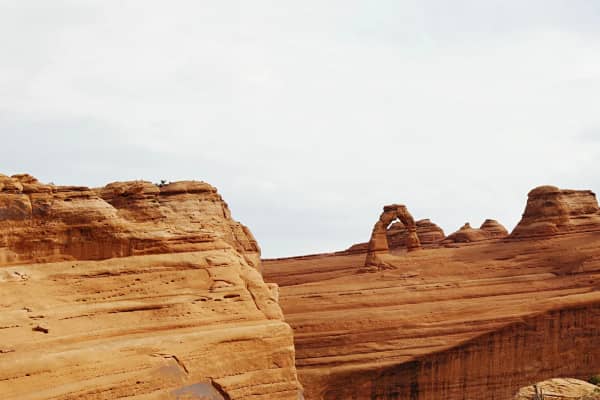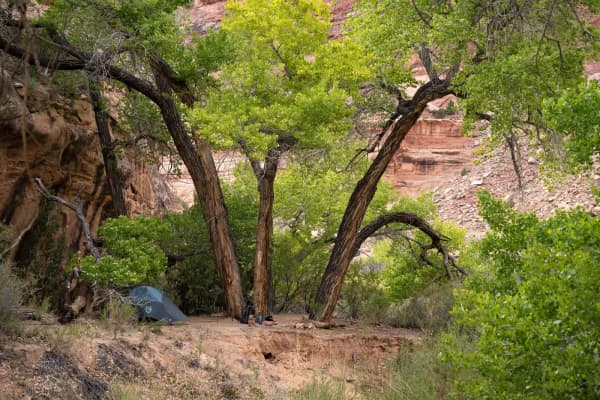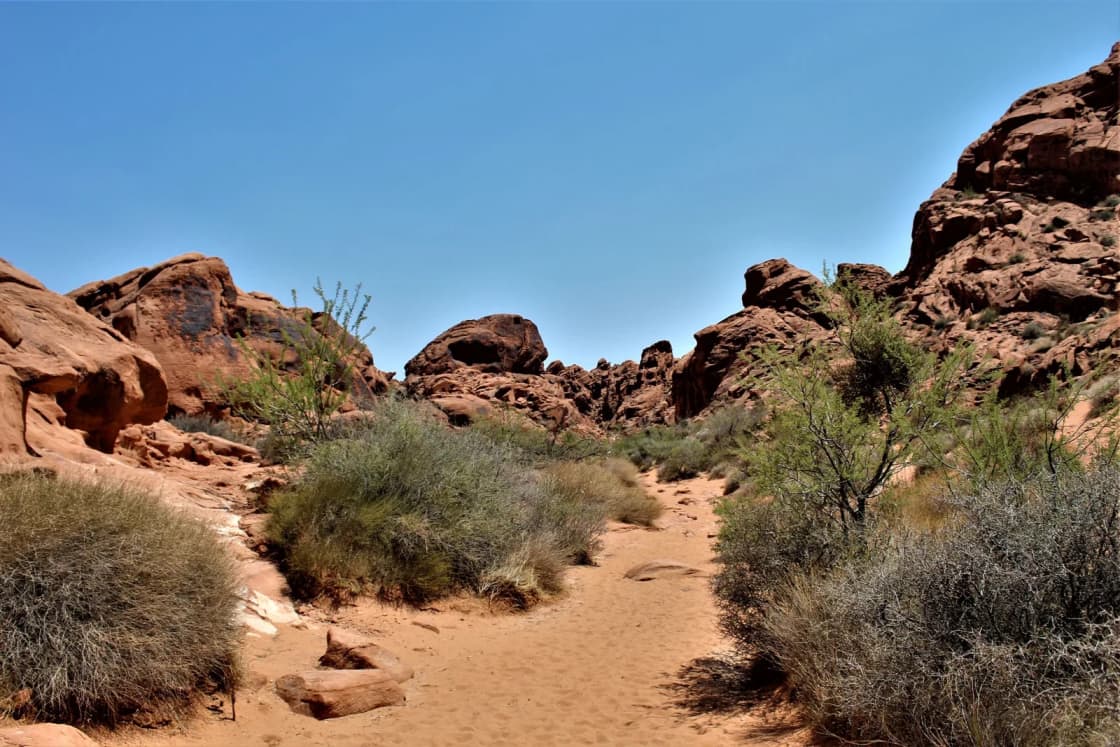
Much of the dark, lumpy ground between the shrubs in Arches, Canyonlands and Capitol Reef is not plain dirt. It is alive: a crust of cyanobacteria, lichens, mosses and fungi that holds the desert's soil in place, and the Park Service says a single footstep can crush it. That is one of the reasons rangers in Utah's desert parks ask you to stay on the trail. This guide explains what the crust is, what it does, how long the experts say it takes to come back, and where to walk instead.
Quick facts
| Question | Answer | Source |
|---|---|---|
| What it is | A living crust dominated by cyanobacteria, with lichens, mosses, green algae, microfungi and bacteria | Capitol Reef National Park |
| Other names | Biological soil crust; cryptobiotic soil crust ("hidden life") | Glen Canyon National Recreation Area |
| How deep the life is | Within 1/8 inch (3 mm) of the surface | Canyonlands National Park |
| What it does | Holds soil against wind and water, adds nitrogen, soaks up rain | National Park Service |
| Recovery | A thin veneer in five to seven years at best; up to 50 years for the cyanobacteria's repair work; some areas never fully | Capitol Reef National Park |
| Where to walk | Established trails, bare rock or sandy washes | Canyonlands National Park |
What it is
"Biological soil crusts, sometimes called cryptobiotic soil crusts, are an important part of arid and semi-arid ecosystems," Glen Canyon National Recreation Area's page begins. The older name explains itself: "Crypto means hidden, while biota means life."
The main builder is cyanobacteria, which Canyonlands National Park calls "one of the oldest known life forms on earth." Capitol Reef National Park lists the rest of the community: lichens, mosses, green algae, microfungi and bacteria. The crust forms when microscopic cyanobacteria bind sand and other soil particles together, Canyonlands explains on its page for a soil-crust sign along the Mesa Arch trail. When wet, the cyanobacteria's sheaths "swell up to ten times their dry size," Capitol Reef says, storing water, and the sheaths bind soil particles together.
What it does
- Holds the soil down. "A solid coating of crust resists erosion by wind and water, and provides a stable place for plants to grow," Canyonlands says.
- Feeds the plants. Cyanobacteria convert nitrogen from the air into a form plants can use. Capitol Reef calls this "especially important in desert ecosystems, where nitrogen levels are low and often limiting to plant productivity." Glen Canyon adds that some surface lichens fix nitrogen too.
- Holds water and seeds. The crust soaks up rain "like a sponge," Canyonlands says, and its bumpy surface "captures seeds and precious drops of water," according to the park's Mesa Arch page.
On the Colorado Plateau, Capitol Reef says, "these knobby black crusts are extraordinarily well-developed." A 2017 Forest Service research bulletin says crusts "can amount to 70 percent or more of the non-rocky ground cover."
How to recognize it
Well-developed crust "is often much darker than the soil it is on top of," Glen Canyon says, with a spongy surface of bumps and small peaks. Canyonlands describes "knobby black crust," and Capitol Reef notes that the color changes with the mix of organisms, so it does not look the same everywhere.
Not all of it is obvious. Glen Canyon says "even sand dunes frequently contain a thin crust hidden underneath the wind-blown sand," and that crust can occur anywhere the soil is stable, including places that look trampled.
Why one step matters
The living part is thin. "Because the organisms grow within 1/8th inch (3mm) of the surface, small impacts have big effects on soil conditions," Canyonlands' Mesa Arch page says. "Even a single footstep crushes this fragile system."
Wheels do more damage. "Vehicles can scar the fragile biological soil crust, and leave it damaged for decades," Capitol Reef says. Tracks are "especially damaging," the park adds, "creating areas that are highly vulnerable to wind and water erosion," and rain carries loose material away, often cutting channels along the tracks, especially on slopes. Capitol Reef also warns that "since crustal organisms need light to photosynthesize, burial can mean death."
How long it takes to come back
The sources agree that recovery is slow. They differ on how slow:
| Source | What it says about recovery |
|---|---|
| Capitol Reef National Park | "Under the best circumstances, a thin veneer of biological soil crust may return in five to seven years." The lost sheath material and soil nutrients are repaired "during up to 50 years of cyanobacterial growth." Lichens and mosses may take even longer, and "impacted areas may never fully recover." |
| Glen Canyon National Recreation Area | Compacted crust can take "anywhere from a few years to several decades or longer to recover," and some parts could take several hundred years in very dry places. |
| Canyonlands National Park | The full community takes decades, even a century, to form, and crust "takes many years to re-form after damage, if ever." |
| Forest Service bulletin, 2017 | "Estimates of recovery times range from years to millennia." BYU lichenologist Larry St. Clair cited predictions of 200 to 400 years; Forest Service ecologist Steve Warren said "it may take 20 years to recover, depending on how much it rains, but the organisms will colonize the area from the air." |
Two details in the sources help explain the spread. Rain matters, as Warren said, and Glen Canyon's longest estimates are for very dry places. And it depends on what counts as recovered: Capitol Reef's thin layer of cyanobacteria returns first, while the full community, with its lichens and mosses, takes far longer.
Where to walk instead
Each park puts it a little differently, but the advice lines up:
- Stay on the trail. "Stay on existing trails," Capitol Reef says, and Glen Canyon applies the same rule to hikers, mountain bikers and off-roaders.
- Off trail, use rock and washes. Canyonlands lists "established trails, bare rock, or sandy washes where crust doesn't grow." Capitol Reef says to walk "in wash bottoms or on slickrock," and Glen Canyon says to hike only on exposed rock or in drainages where water flows regularly. The Mesa Arch sign adds streambeds.
- Camp on rock or old ground. "Camp on slickrock or in previously disturbed areas," Capitol Reef says.
- Keep wheels on roads. "Vehicles and bikes should stay on designated roads, respect road closures," Canyonlands says.
- Go around. Capitol Reef's last instruction: "Go out of your way, literally, to avoid biological soil crust."
Canyonlands sums it up in four words: "Don't Bust the Crust!"
The Provo connection
Some of the research behind that advice was done close to home. The Forest Service's 2017 bulletin on soil crust, "Don't Bust the Biological Soil Crust," by science writer Sue Miller, featured two scientists with Provo ties: Steve Warren, a disturbance ecologist at the Forest Service's Shrub Sciences Laboratory in Provo, who earned his master's degree at BYU, and Larry St. Clair, a lichenologist whom the bulletin describes as a recently retired professor in BYU's College of Life Sciences and the director and curator of its Herbarium of Non-Vascular Cryptogams.
The bulletin's findings, as of 2017:
- Losses are widespread. "It is possible that 20 to 30 percent of rangelands have lost most of their soil crust."
- The biggest threat is disturbance. Warren named "extensive and widespread mechanical disturbance" from livestock and vehicles. The bulletin also calls cheatgrass invasion an emerging threat "because it increases fuel loads," and describes wildfire as a new, significant one.
- Replanting crust has limits. Researchers tried transplanting crust as a slurry made from crust harvested elsewhere. St. Clair called it "robbing Peter to pay Paul," and it was not viable at large scale. Passive restoration, letting crust recover on its own, "appears more viable than active restoration," the bulletin says.
- Visitors are part of the fix. "Education and awareness is the first step in helping recreators reduce their impact on biological soil crust," the bulletin says, and concentrating recreation in particular places "can help prevent widespread soil crust damage," the same idea as keeping hikers on a single trail.
Where you will see the message
In Canyonlands' Island in the Sky district, a sign on the way to Mesa Arch explains the crust and asks visitors to protect it "by walking only on designated trails, bare rock, or streambeds." For the trails themselves, see our guides to Island in the Sky, the Delicate Arch trail and Devils Garden.
Related guides
- The Utah national parks from Provo, ranked
- Capitol Reef from Provo
- Why Utah has so many arches
- Utah hiking gear checklist: desert vs. mountain
- Where to camp and stay in Moab
- Gooseberry Mesa and St. George mountain biking
- Desert hiking safety in Utah: water, heat and when to turn around
Frequently Asked Questions
What is cryptobiotic soil?
Why do Utah's desert parks ask hikers to stay on the trail?
How long does cryptobiotic soil take to recover?
What does cryptobiotic soil look like?
Where should I walk if I leave the trail in the desert?
Can I ride a bike or drive off road over it?
Where does cryptobiotic soil grow in Utah?
Sources
The facts in this guide were checked against these sources. Hours, fees and rules change, so confirm anything time-sensitive with the source before you go. How we make Provo.com.
- Inside Canyonlands: Biological Soil Crust, National Park Service, Canyonlands National Park. Checked November 27, 2026.
- Mesa Arch: Keeping It Together, National Park Service, Canyonlands National Park. Checked November 27, 2026.
- Biological Soil Crusts, National Park Service, Capitol Reef National Park. Checked November 27, 2026.
- Cryptobiotic Soil Crusts, National Park Service, Glen Canyon National Recreation Area. Checked November 27, 2026.
- Don't Bust the Biological Soil Crust: Preserving and Restoring an Important Desert Resource (Science You Can Use Bulletin, Issue 23, January/February 2017), USDA Forest Service, Rocky Mountain Research Station. Checked November 27, 2026.