New this season in Payson
Coming up
- Payson Scottish Festival 2027 — Friday evening and Saturday
- Golden Onion Days 2027 — Payson — Dates not yet confirmed
- Festival Latino de Payson 2027 — See the organizer for daily times
Everything dated across the valley sits on the events calendar, and openings and closings are tracked at openings and closings. Neither is a scrape: an entry appears on the tracker only when this site has already published the reporting behind it.

More on Payson: every guide we have published there, in one place.
Payson is where Utah Valley stops feeling like one continuous city. Far enough south that the development thins out, close enough that you can be there in twenty-odd minutes, it's a town with a mountain road behind it, a 1901 schoolhouse turned museum in the middle of it, and a Labor Day celebration older than most of the state's traditions.
Here's what's worth the drive.
Golden Onion Days
Payson's signature is Golden Onion Days, held over Labor Day weekend since 1929, when it began as the Onion Harvest and Homecoming. In 2026 it runs September 3–7, Thursday through Monday, with Labor Day itself falling on Monday the 7th.
(A small correction to something we and others have said before: this festival is usually described as running "continuously" since 1929. The city's own edition numbering doesn't quite support that — the 2024 celebration was billed as the 95th annual, and an unbroken run from 1929 would have made it the 96th. Somewhere in there is a missed year. "Since 1929" is safe; "every year since 1929" is not, and we won't assert an edition number for 2026.)
The name is agricultural and unglamorous and the town has entirely embraced it. The weekend brings a parade — the Grand Parade runs down Main Street on the Monday morning and pulls a big crowd — plus concerts, a carnival, the Onion Days 5K and 10K, a car show, a Dutch oven cook-off, a baby contest, a children's treasure hunt with a substantial cash prize, and fireworks, with most of it anchored around Memorial Park. It's the weekend the population of the town effectively doubles.
Why onions, though?
This is the question everyone asks and almost nobody answers, and the real reason is better than the folklore.
Payson was an onion town — the crop was a mainstay of the local agricultural economy by the 1920s. But the festival's name is not simple civic pride. During the 1920s, Utah state officials actively encouraged communities to pick a locally produced product and brand their city celebration around it. That is a policy, and its fingerprints are all over the valley: Pleasant Grove's Strawberry Days. American Fork's Steel Days. Payson's onions.
In 1929, Mayor L.D. Stewart proclaimed the city's first Onion Harvest and Homecoming, and the surviving text of the proclamation makes clear it was a homecoming first and an agricultural festival second — the stated aim was to bring former residents back to town to renew old friendships and to make Payson known as an outstanding onion district. The name was later shortened and gilded into Golden Onion Days.
So the next time somebody in Pleasant Grove or American Fork asks why Payson celebrates a vegetable, the honest answer is that all three towns were doing the same thing at the same time, for the same reason, on the same official encouragement.
It's also the last of the south valley's big summer festivals — Spanish Fork's Fiesta Days, built around a long-running rodeo, lands in July around Pioneer Day.
We've written it up separately, including the practical side of visiting: see Golden Onion Days for the full picture.
The Nebo Loop Scenic Byway
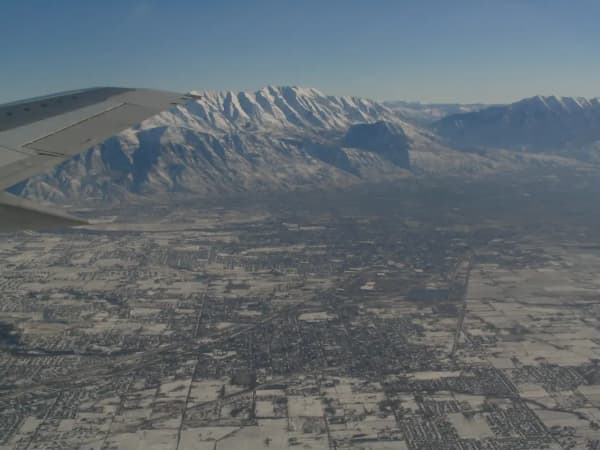
The Nebo Loop Scenic Byway climbs out of Payson Canyon and runs south along the flank of Mount Nebo, the highest peak in the Wasatch Range — and the trailheads for hiking it are off this road. It is, without much argument, one of the best drives in the state — and it's the single biggest reason to point a car at Payson.
Along the way: Payson Lakes, an easy and family-friendly set of lakes with picnicking and fishing; Devil's Kitchen, a red-rock formation that gets compared to Bryce and is a very short walk from its parking area; and Grotto Falls, a short hike to a waterfall that spills over a rock shelf.
The critical caveat is seasonal: the loop closes in winter and reopens in late spring, with exact dates depending on snow. Our complete Nebo Loop Scenic Byway guide covers the route, the closure honestly, the stops, and a half-day plan that works — and it also covers Payson Canyon itself as a destination, for anyone who wants the canyon without committing to the whole loop.
The Peteetneet Museum
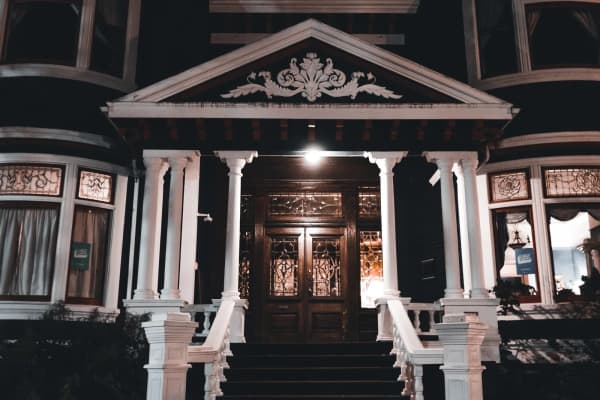
Right in town, on a bluff visible from the main intersection, sits one of the more charming small museums in the valley. The Peteetneet Museum and Cultural Arts Center occupies a 1901 schoolhouse — a substantial three-story building that was saved from demolition and restored by a volunteer nonprofit, People Preserving Peteetneet.
Inside are roughly a dozen display areas: a preserved historic schoolroom, a Victorian house display, a fashion collection spanning about 150 years, a western room, a blacksmith shop, a historic photograph collection, and an art gallery with exhibits that rotate through the year. Admission is free.
Outside, the grounds hold a statue of Chief Peteetneet, the leader of a Tumpanawach (Timpanogos) Ute band, along with a fountain, lawns, and an outdoor amphitheater used for community events. The large hill behind the building has been the town's sledding and sliding hill for generations. Public tour hours are limited and have been listed inconsistently in different directories — call before you go.
Why the building matters more than the museum
Most visitors treat Peteetneet as a pleasant local-history stop. It is also, architecturally, one of the most significant buildings in south Utah County, and the reason is a name that turns up across this county without anyone connecting the dots: Richard C. Watkins.
Watkins was born in Bristol, England in 1858, trained under Richard K.A. Kletting in Salt Lake City, arrived in Provo in 1890 as a construction supervisor, and opened his own firm in 1892. Over the next two decades he became one of the best-known architects in the area and designed many schools across the intermountain west, and served as a leading school architect.
His work is essentially a map of this county. Maeser Elementary in Provo (1898). The Knight Block (1900) and the Hines Mansion (1895), also in Provo. The Fairfield District School (1898), a two-room brick schoolhouse out in the Cedar Valley in a town that now has 160 residents. And, three years after Fairfield, Peteetneet.
Peteetneet is generally considered the most flamboyant of the group — the Victorian belfry is what separates it from the plainer Maeser and Spring City schools — and the combination of Victorian and Romanesque Revival detailing is what got it onto the National Register in 1990.
The construction story is local in a way that is easy to miss. Payson passed a bond to raise the roughly $22,000 the building cost. The lumber came from John E. Spencer's sawmill up Payson Canyon. The red sandstone came from Spanish Fork Canyon, one valley over. Sources put completion at either 1901 or 1902, and the honest answer is that construction spanned both.
The building served as an academy and then an elementary school until the late 1980s, when the Nebo School District moved students to newer facilities. Because of a clause in the original deed, the property reverted to Payson City, which planned to demolish it. People Preserving Peteetneet formed in 1988, bought the building and its site from the city, and saved it — and because the building sits on the Nebo Loop Scenic Byway, the Utah Department of Transportation contributed $100,000 toward the restoration on scenic-byway grounds. A glass elevator shaft was added to the south facade in 2008 to make the upper floors accessible.
A civic building saved by a citizens' group, part-funded because it happened to stand on a scenic road, is a fairly unusual preservation story. It is why the building is still there.
The town was called something else twice
Payson's name has changed twice, and the sequence tells you most of the town's early history.
On 20 October 1850, three families — those of James Pace, John Courtland Searle and Andrew Jackson Stewart, sixteen people in total — settled on the bank of Peteetneet Creek. They named the place after the creek, and the creek was named for Chief Peteetneet, whose village stood about a mile northwest of the present city center. A fort followed, called Fort Peteetneet.
In August 1852 the settlement was renamed Pacen, after James Pace and his sons. Pacen became Payson.
Chief Peteetneet — more precisely rendered Pah-ti't-ni't — was a clan leader of a Timpanogos band, and the name comes from the Timpanogos dialect of the Southern Paiute language. It means, roughly, "our water place." His people were semi-nomadic, living in grass-thatched wattle-and-daub houses and ranging across the Utah Lake country and south into Sanpete and Sevier; with Chief Tabby-To-Kwanah he led seasonal migrations up and down the canyon each spring and fall. His village is described as able to hold more than two hundred people.
It is worth sitting with the shape of that for a moment. A Ute leader's name, meaning "our water place," attached to a creek; the creek's name attached to the settlement; the settlement then renamed for one of the settlers within two years — and a century and a half later the leader's name is the one on the museum, the amphitheater, the creek and the statue on the lawn, while Pacen is gone entirely.
Payson on film
Payson's historic downtown and its old high school drew location scouts for decades, and the credit list is more famous than the town gets credit for. Footloose (1984) was filmed here, including scenes at Payson High School; that 1967 building was demolished in 2025 after the new school next door was finished, and Kevin Bacon's locker was saved and placed in the new building. The 1985 thriller Warning Sign used the town as a location, the animated Banjo the Woodpile Cat (1979) was set here, and Disney Channel's Hatching Pete shot its parade scenes on Main Street.
Payson is also the birthplace of the singer-songwriter Jewel.
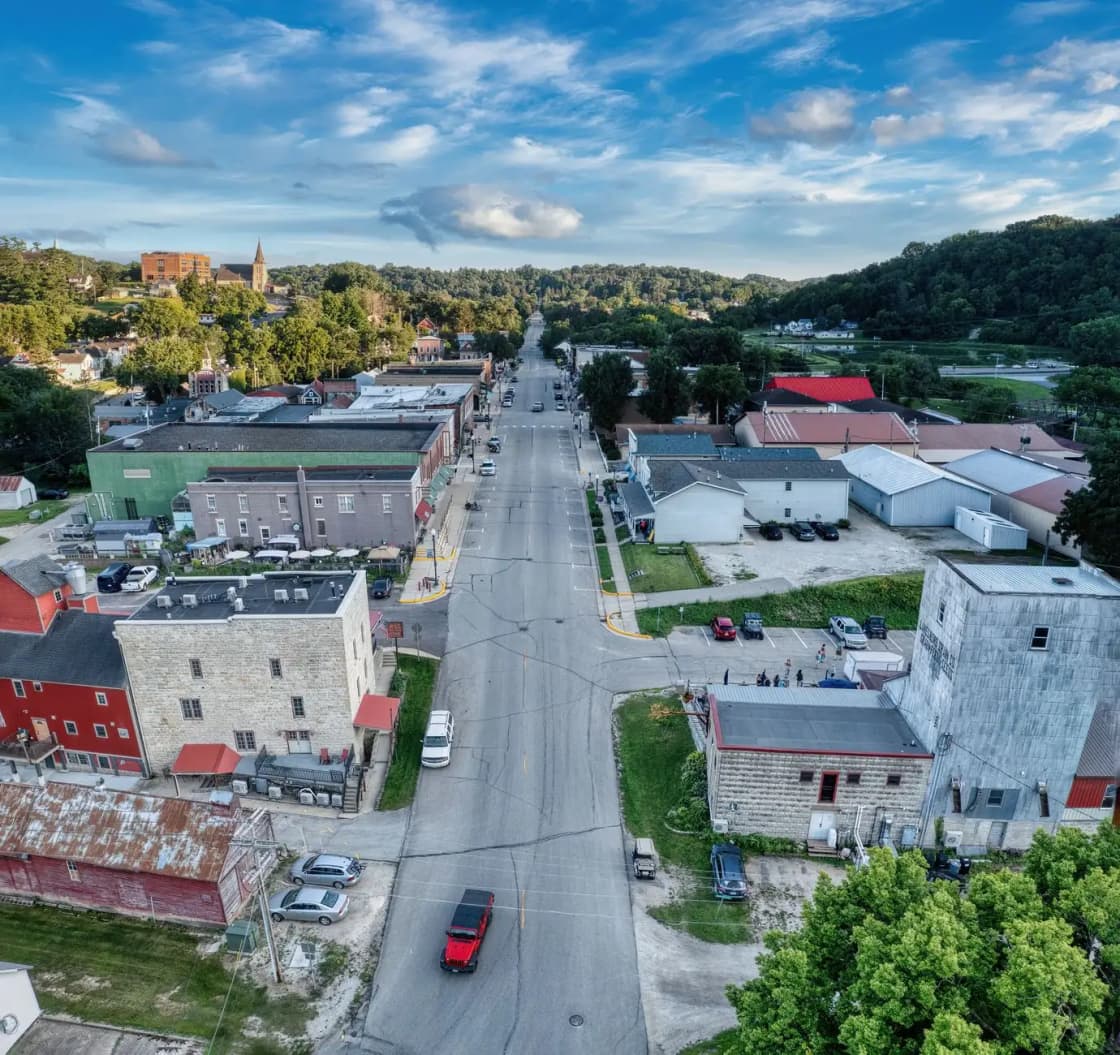
Main Street itself went through a substantial revitalization and repaving project completed in recent years, so the streetscape you'll walk is in better condition than photographs from a few years ago suggest.
The temple grounds and historic downtown
The Payson Utah Temple sits on the north end of town, dedicated in 2015. The temple itself is open only to members of the Church of Jesus Christ of Latter-day Saints, but the grounds are open to visitors and are meticulously landscaped — a pleasant, quiet stop, particularly in spring when the beds come in. Worth knowing if you are planning a visit: the public open house that preceded the 2015 dedication was a one-time event, so the interior is not something a visitor can now arrange to see.
Payson's historic downtown has held onto its older commercial buildings better than most Utah Valley cities, which is part of why it periodically turns up as a filming location. It's a short, walkable stretch, best combined with something else rather than treated as a destination on its own.
Parks and community events
The city maintains a large park system — 28 parks — with Memorial Park serving as the civic center of gravity and the home base for most of the festival calendar.
Beyond Golden Onion Days, the city runs a busy calendar of small events, most of which never make a regional listing.
The Salmon Supper is the strangest and the most Payson of them — an annual community fish dinner held in August, in a landlocked farming town two hundred miles from the ocean, which has been going long enough that nobody local finds it odd. It regularly sells out.
There is also an annual Scottish Festival, band concerts in Memorial Park that have run since the early 1950s, and Western Heritage Night, a newer tradition that started in 2016 when two local law enforcement officers who liked to sing pitched the events coordinator on an evening of old-time country music. It is held at the Peteetneet Outdoor Amphitheater, on the museum grounds, with a Dutch oven dinner beforehand.
Dates and details shift year to year; check the city's current calendar rather than an aggregator, since these are exactly the kind of small-town events that listing sites get wrong for years at a time.
Ten places in Payson, in one list
Everything below is a place you can go, inside Payson or up the canyon the city sits at the mouth of. Ten is a short list and that is the honest number, not a placeholder. Four of the ten point at the same guide, because the Nebo Loop is where most of what Payson offers a visitor is, and this site covers the byway as one route with its landmarks as sections rather than as separate pages. That concentration is a fact about the city rather than a defect in the list.
The Payson Utah Temple, the city pool, Loafer Mountain, Bennie Creek and Maple Bench are all here too. Santaquin's canyon and Salem Pond are left out because they are other towns, however close. Hours and prices are left out on purpose: both change, so check with the venue before you go.
If you only have three hours
Three hours in Payson is a decision about the canyon, and unlike most cities in this valley the decision is seasonal rather than a matter of taste.
From roughly late spring to fall, take the canyon. Drive up the Nebo Loop Scenic Byway as far as Payson Lakes, walk the shoreline, and come back down. That is comfortably three hours and it is the best three hours the city has. If you want a second stop on the way, Devil's Kitchen is a very short walk from its parking area — the red-rock formation people compare to Bryce — and it costs you fifteen minutes rather than an afternoon. Mount Nebo does not fit in three hours, and neither does driving the full loop through to the far end; the byway is a half-day commitment if you take it all the way.
In winter the canyon is closed and the answer changes completely. See the winter section below.
If you want the town instead: the Peteetneet Museum and Cultural Arts Center is the anchor — the restored 1901 schoolhouse on the bluff, free to enter, with about a dozen display areas inside and the Chief Peteetneet statue, fountain and amphitheater on the grounds. Public tour hours are limited and have been listed inconsistently across directories, so call before you drive out. Add historic downtown and the temple grounds and you have a genuine, unhurried three hours without leaving the valley floor.
Payson with kids
Payson is an unusually good small city for children, and most of what works is free.
Payson Lakes is the family outing. Easy, picnic-friendly, with fishing, and the reward is at the parking area rather than a mile above it — which is the distinction that matters when you are deciding what a six-year-old will tolerate. The Nebo Loop guide covers the drive and the stops honestly, and the lesser-known hikes guide covers Grotto Falls, a short walk to a waterfall that spills over a rock shelf and is about the right size for young legs.
In town, the Peteetneet grounds do more for children than the museum does: lawns, a fountain, the amphitheater, and the large hill behind the building, which has been the town's sledding and sliding hill for generations — it works as a running-around hill in summer too. Admission to the museum is free, which makes it a low-stakes stop even if it turns out to hold their attention for ten minutes.
The city maintains 28 parks, with Memorial Park as the civic center of gravity and the home base for most of the festival calendar. The destination playgrounds guide covers what is worth a special drive elsewhere in the county, and the kid fishing ponds guide covers the community waters stocked for children.
If you can pick your weekend, pick Labor Day. Golden Onion Days brings concerts, a carnival, races and fireworks, and the Grand Parade down Main Street on the Monday morning pulls a big crowd.
Payson on a Sunday
Payson's Sunday is simple, because the two things most worth doing here are a road and a park.
The canyon does not observe Sundays. In season, the Nebo Loop, Payson Lakes, Devil's Kitchen and the Mount Nebo trailheads all run as normal, and a Sunday drive up the byway is one of the better uses of the day in the south valley. The city's parks, including Memorial Park, are open air and open all week, and the Peteetneet grounds — statue, fountain, lawns, the hill — have no gate.
The museum itself is the thing to check. Peteetneet's public hours are limited and inconsistently reported, and Sunday is exactly the day a directory listing is most likely to be wrong about. Call rather than drive.
The temple grounds are a common Sunday walk here and are open to visitors, though the building itself is not a Sunday drop-in.
Food is where the planning goes. This is a small city and a share of its independents close on Sunday; Spanish Fork is the nearest larger option north, and the valley-wide Sunday guide covers what stays open across the county.
Payson in winter
The single most important winter fact about this city is that the Nebo Loop closes. The byway shuts for the season and reopens in late spring, with the exact dates set by snow rather than by a calendar. That removes Payson Lakes, Devil's Kitchen, Grotto Falls and the Mount Nebo trailheads in one stroke — which is most of what a visitor comes for. The Nebo Loop guide covers the closure honestly. Do not plan a winter trip around the canyon and do not trust a mapping app that routes you over it.
What winter gives back is the hill. The slope behind the Peteetneet Museum has been the town's sledding and sliding hill for generations, and it is the rare winter attraction that is local rather than borrowed from somewhere else in the county. The sledding guide covers how to read a hill and — more usefully — its runout, which is the part people get wrong.
The rest of the winter answer is indoors and mostly elsewhere. The Peteetneet Museum is open through the season, on its limited hours, and its rotating art gallery is a better cold-day stop than it sounds. Beyond that, the rec centers guide compares the valley's indoor facilities, the indoor activities guide covers cold-day options, and the winter activities guide covers the season county-wide.
The city's own winter calendar is thin — Payson's events cluster hard into summer and Labor Day. The Salmon Supper is August, the Scottish Festival and the band concerts in Memorial Park are warm-weather fixtures, and Western Heritage Night runs at the outdoor amphitheater. Winter here is a quiet season and it is more honest to say so than to pad the list.
Make a day of it
The best Payson day is built around the mountain. Drive up the Nebo Loop in the morning, stop at Payson Lakes and Devil's Kitchen, come back down for lunch downtown, and finish with an hour at the Peteetneet. That's a full, unhurried day and it costs almost nothing.
In late September and early October, do exactly that but reserve more time for the drive — the fall color on the Nebo Loop is the main event, and you'll want to stop more than you planned. If you want a shorter version of the same idea, Springville's Hobble Creek Canyon is the other south-valley fall drive, and it draws far less traffic than the Alpine Loop does.
Over Labor Day, forget all of the above and come for Golden Onion Days.
And in winter, when the loop is closed, Payson becomes a shorter stop: museum, downtown, temple grounds, the sledding hill behind Peteetneet, and home. This is worth planning for rather than discovering — a January visit built around the Nebo Loop is a wasted drive.
If you want to make it a bigger loop
Payson pairs naturally with the rest of the south end of the county. Spanish Fork is twelve minutes north and has the Icelandic monument, the Krishna temple and the canyon. The four small towns immediately around Payson — Elk Ridge, Woodland Hills, Genola and Goshen — are covered in our guide to Utah County's small towns, and the concrete ruin of the Tintic mill on the hillside between Goshen and Genola is visible from the road on the way. And if you want the day that most Utah Valley residents have never taken, drive west instead: Camp Floyd at Fairfield is about an hour away, holds the other half of the Watkins story, and is usually empty.
Thinking about living here?
Payson consistently comes up when people want more space and a lower price than the north valley offers, and are willing to trade commute time for it. Our complete guide to living in Payson covers housing, schools, the commute, and what daily life is like this far south. For nearby comparisons, Salem, Santaquin, and Spanish Fork each make a different trade.
Payson doesn't perform for visitors. That's most of its appeal.
The name changed twice; the legal status has changed too, and that one is on a certificate
The section above covers the two earlier names. There is a parallel history that never gets told, which is Payson's changing classification under state law — and it is worth a paragraph because it explains a distinction visitors hear all day here without noticing.
People call Payson a town. In Utah statute, town is not a compliment or a description of atmosphere. It is the bottom band of a six-part classification, and Payson has long since left it.
The six bands
Utah Code Section 10-2-301 classifies every Utah municipality by population: first class at 100,000 or more; second class from 65,000 to 99,999; third class from 30,000 to 64,999; fourth class from 10,000 to 29,999; fifth class from 1,000 to 9,999; and town under 1,000.
Payson's population puts it comfortably above the 1,000 line and, on recent figures, above the 10,000 line as well — which is to say the word visitors reach for is two or three bands off. That is not pedantry. Class is the switch that decides which provisions of the Municipal Code apply to a place, so it changes what the city may do.
Class is set by certificate, not by census day
This is the part almost nobody knows. Section 10-2-302(1) provides that a municipality retains its classification until it is changed under that section or under Subsection 67-1a-2(3), and Section 10-2-302(3) makes a change effective on the date of the lieutenant governor's certificate.
The process is asymmetric:
- Growing. Under Section 67-1a-2(3)(c)–(d) the lieutenant governor monitors municipal populations and, when a city passes the limit for its current class, shall issue a certificate and deliver it to the city's legislative body within 10 days. Automatic; no application required.
- Shrinking. Under Section 10-2-302(2) the city's legislative body may petition for a certificate reflecting the lower band. Optional; the state does not act on its own.
And the figure used is not the census by default. Section 67-1a-2(3)(c) directs the lieutenant governor to use the Utah Population Committee estimate, falling back on the census or a Census Bureau estimate only if the committee's estimate is unavailable — which matters in a county growing this fast, where a decennial figure can be badly out of date.
What a reclassification does and does not do
Section 10-2-303 is reassuring on this. On a change of class: property and property rights stay vested in the city; no contract, claim, right, demand or liability is altered; ordinances, orders and resolutions remain in force until repealed or amended, to the extent not inconsistent with law; the identity of the municipality is unaffected; officers stay in office until their terms expire; and the city keeps the same form of government it had immediately before (Section 10-2-303(1)(f)). Litigation and city business continue as though nothing had happened, and where the new class offers a different remedy for an existing right, that remedy is cumulative rather than substitutive.
Section 10-2-306 then provides that every court in Utah takes judicial notice of a municipality's existence and classification.
The other way a place stops being what it was
Two more parts of the same chapter are worth knowing about, because Utah County history contains examples of both. Part 6 governs the consolidation of two or more municipalities into one, which does go to an election (Sections 10-2-607 to 10-2-609) and takes effect with the disincorporation of the original municipalities under Section 10-2-611. Part 7 governs disincorporation on its own, initiated by petition under Section 10-2-701, examined by the district court under Section 10-2-702, and decided at an election on a ballot prescribed by Section 10-2-704.
A Utah municipality, in other words, is a legal creature that can be created, reclassified, merged and dissolved — and the historic downtown you are walking through has already lived through one of those categories of change more than once.
Population figures and classifications change. Confirm Payson's current classification and population with the city or the lieutenant governor's office rather than inferring either from an old table.
Frequently Asked Questions
What is Payson, Utah known for?
When is Golden Onion Days in Payson?
Is the Peteetneet Museum free?
Who designed the Peteetneet building?
Is the Nebo Loop open year-round?
Can you go inside the Payson Utah Temple?
How far is Payson from Provo?
What is there to do in Payson in winter when the Nebo Loop is closed?
Sources
The facts in this guide were checked against these sources. Hours, fees and rules change, so confirm anything time-sensitive with the source before you go. How we make Provo.com.
- Golden Onion Days, Payson City. Checked October 12, 2026.
- Payson City: Peteetneet, Payson City. Checked October 12, 2026.