
Provo Canyon is the most photographed piece of geography in Utah Valley, and most of the photographs are made from the wrong places at the wrong time.
That is not a criticism of the people making them. It is a consequence of how the canyon is built. A steep, roughly east-west corridor with a fast highway running through it produces a very specific problem: the best views are visible from the road, and the road is the one place you should not stop. So visitors either shoot through a windscreen, or they pull onto a shoulder that was not designed for it, or they end up at the one obvious car park with everyone else at the one obvious hour.
The canyon rewards a different approach. Park once, walk, and let the light rather than the pull-off decide where you shoot.
This guide is the photography companion to our broader guide to Provo Canyon.
The structural fact that decides your whole day
Provo Canyon runs roughly east–west, with steep walls on both sides.
Almost everything practical about photographing it follows from that single geometric fact:
- The canyon floor loses direct sun early and gains it late. The walls block the low sun at both ends of the day, so the window of direct light on the floor is shorter than the daylight hours suggest.
- Midday is when the floor is lit — and midday light is the worst light. Overhead sun on steep walls gives you blown highlights, black shadows and no modeling.
- The compensation is enormous: long stretches of soft, even shade. For moving water, wet rock, foliage and anything with fine texture, that shade is better light than direct sun would be. It is why phone photographs of the river here often look better than people expect.
- Sunrise arrives down the canyon from the east, and the first light tends to catch the upper walls before the floor.
- The last light does the same in reverse — the tops go warm while the bottom is already in shade.
The practical translation: shoot the water and the trees in shade, shoot the walls and the ridgelines at the ends of the day, and treat the middle of the day as a scouting window rather than a shooting one.
The five places that work
Bridal Veil Falls
The canyon's signature subject and the reason most people come. It is a tall, tiered waterfall visible from the developed viewing area and the paved trail, and it is as photogenic as its reputation.
Two things to plan around.
Flow changes everything. Spring melt gives you volume and drama. Late summer gives you a thinner fall and more visible rock structure. Winter gives you ice, which is the most striking version of the subject and the least accessible. The same framing produces four different photographs across a year.
Access varies and the posted signage governs. Conditions at the falls change with season, flow and rockfall, and arrangements at the site have changed over the years. Falling rock and ice are real hazards here rather than cautionary boilerplate. Whatever you read in advance — including in this guide — read the signage on the day and treat it as authoritative.
We have a dedicated Bridal Veil Falls guide that covers access, parking and the trail in full, and it is the right thing to read before you drive up.
Light: shade for most of the day, which suits it. Avoid the hour when direct sun hits part of the fall and not the rest — that split is very hard to expose for.
The Provo River Parkway Trail
The most underrated photographic resource in the canyon, and the answer to the highway problem.
The paved trail runs along the canyon floor beside the river. It is mostly flat, it is easy walking, and — this is the point — it puts you repeatedly at water level rather than looking down from a road. That changes what you can make: reflections, foreground rock, overhanging branches, water moving through frame, the river as a leading line rather than a distant ribbon.
It also solves the safety and access problem in one move. Park at a developed area, walk, and every good view becomes reachable on foot instead of requiring a stop on a fast road.
Light: excellent in soft shade, which is most of the day. Early morning is the best of it, partly for light and mostly because you will have it to yourself.
Nunn's Park
A developed park on the canyon floor with parking, facilities and direct river access — which makes it a base rather than merely a subject.
Its value to a photographer is practical. You can leave the car legally, get to the water quickly, and work a stretch of river without a long approach. It is a good place to start a morning and a good place to bring people who are not going to walk far.
Our guide to Vivian Park and Nunn's Park covers both in detail, including facilities and what each is set up for.
Light: shade-dominant. Good for water detail, less good for wide canyon views.
Vivian Park
Further up the canyon, larger, and set in a wider part of the corridor — which is exactly why it is worth the extra drive.
Where the lower canyon is tight and steep, the ground around Vivian Park opens up. That gives you something the narrow sections cannot: room to include sky, room to see the walls from a distance rather than craning up at them, and a broader sense of the canyon as a landscape rather than a slot.
It is also the confluence area where the canyon's geography changes character, and it is the jumping-off point for the Alpine Loop.
Light: the most forgiving in the canyon, because the wider corridor gets more sun for longer. This is the one place where a midday shot can work.
The Alpine Loop, climbing out
The Alpine Loop leaves the canyon and climbs toward Sundance and over the top. It is a seasonal road — it closes in winter — and it is the canyon's best elevated perspective.
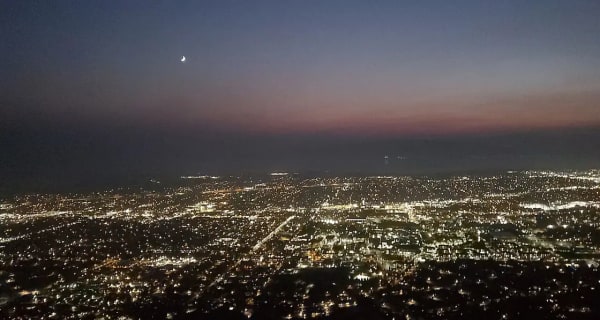
Climbing gets you above the canyon floor, which solves the fundamental compositional problem of shooting from inside a slot: from down there, everything is up. From the Loop, you can see the shape of the terrain, look across at ridgelines instead of up at walls, and put layers of ground between you and the horizon.
It is also the autumn color road. Maple and aspen turn along it, and in the peak weeks it draws serious traffic.
Our Alpine Loop scenic drive guide has the seasonal closure detail and the full route, and the Sundance Resort guide covers the destination at the top.
Light: the only reliable place in the area for genuine sunrise and sunset light on landscape, because you are above the walls that block it everywhere else.
Seasons, and what each one is for
Spring is water. Snowmelt drives the river hard and the falls to their heaviest flow. It is the most dramatic version of the canyon's central subject. It is also the wettest, the muddiest off-trail, and the season with the most variable conditions.
Summer is long days and heavy traffic. The light is harsh in the middle and the canyon is busy, particularly at weekends. The compensation is that early mornings are long and pleasant, and the shade on the canyon floor is a real relief. Summer is a morning season here.
Autumn is the headline. Maple and aspen color through the canyon and along the Alpine Loop draws photographers from well outside the valley. The turn generally lands between mid-September and early October, often peaking in late September, but it moves year to year with temperature and cannot be pinned to a date in advance — anyone who tells you the exact weekend twelve months out is guessing. Watch conditions in the two weeks beforehand.
Autumn is also when the parking problem becomes acute. Weekend mornings at the popular spots fill early, and "early" means earlier than you think.
Winter is the emptiest and most technically interesting. Ice formations at the falls, snow on the walls, a canyon with almost nobody in it. It is also the season with real access limits: the Alpine Loop closes, road and trail conditions vary sharply, and the canyon is a genuine winter driving environment rather than a scenic one. Check conditions before committing, and read our winter guidance for the canyon if you are heading up toward Sundance.
The highway problem, stated plainly
Do not stop on the shoulder of US-189 to take a photograph.
This is the single most common and most dangerous mistake visitors make in Provo Canyon. The highway through the canyon is fast, busy, carries commercial traffic, and has limited shoulder in exactly the places where the views are best. A car stopped on it is a hazard to itself and to everyone coming around the bend.
The good news is that the alternative is better photography anyway. Every subject worth shooting in this canyon is reachable from a developed parking area on foot, usually via the Parkway Trail. Parking once and walking gets you closer to the water, lower to the ground, out of the sound of traffic and into positions the highway cannot offer.
Treat the road as transport and the trail as the location.
Practical craft notes for this specific canyon
Bring a tripod, even a small one. The canyon's defining light is soft shade, which means longer exposures than you would expect for the time of day. It is also the only way to get the silky water look that people come here for. A compact travel tripod matters more here than an expensive lens. To learn alongside other photographers, see photography clubs and classes in Utah Valley.
A polariser earns its place. Wet rock, river surface and foliage all have glare that a polariser cuts, and the effect on water clarity and leaf saturation in shade is significant. It is the one filter worth carrying in this canyon.
Expose for the highlights on the walls. The dynamic range between a sunlit wall top and a shaded canyon floor is beyond what most sensors handle in one frame. Protect the highlights and lift the shadows afterwards, or wait until the split is gone.
Get low. The single biggest improvement most people can make in this canyon is dropping the camera to within a foot or two of the water. It creates foreground, exaggerates the scale of the walls, and puts the river in the frame as a subject rather than a stripe.
Shoot the same spot twice. The canyon changes so much with light and season that returning to a location at a different hour is more productive than finding a new one. Most people do the opposite.
Watch your footing on wet rock. Canyon rock beside moving water is slick in a way that is not obvious until you are on it, and a camera in your hands removes an arm you would otherwise use to catch yourself.
Permits, drones and shooting for money
The canyon is a patchwork of land management — Forest Service land, county and state facilities and private property — and the boundaries between them are not signposted for a visitor's convenience. Which authority governs your position can change within a few hundred meters.
Personal and hobbyist photography does not require a permit.
Paid photography (portraits, weddings, filming for hire) depends on whose land you are standing on. On national forest land, the Forest Service decides by a project's likely effects rather than by whether it is commercial: five or fewer people with hand-carried gear need no permit, and groups of nine or more likely do. County and state facilities and private land set their own rules on fees and group sizes. Because the applicable authority changes so quickly along the canyon, the only reliable approach is to confirm with the specific agency for your exact location and date. Do not assume one answer covers the canyon.
Drones are governed by both the land manager and the airspace, and neither is uniform here. Check both for the specific parcel before you fly.
Group shoots — a wedding party, a class, a workshop — are the case most likely to need permission even when an individual would not, because the constraint is often about occupying a site rather than about the camera.
This is one of those areas where the honest answer is "it depends on exactly where you are standing," and a guide that gave you a single confident answer would be misleading you.
Building a day around it
If you want a plan rather than a list:
Dawn. Start on the Alpine Loop if it is open and the season is right — it is the only place with real sunrise light on landscape. If it is closed, start at Nunn's Park and walk the Parkway Trail while the canyon is empty.
Morning. Work the river from the trail. This is the best light of the day for water, foliage and rock, and the crowds have not arrived.
Midday. Scout rather than shoot. Drive the canyon, note where the light will fall later, look at parking, eat something. Bridal Veil Falls is worth seeing at this hour even if the photograph is not the one you want.
Late afternoon. Back to the water as the shade returns, or up to Vivian Park where the wider corridor holds light longer.
Last light. The Alpine Loop again, or the upper walls from the canyon floor as the tops go warm.
That sequence works in every season. What changes is the subject, not the shape of the day.
The four subjects the canyon offers
It helps to think in subjects rather than in locations, because the same pull-off gives you completely different photographs depending on what you went there to make.
Moving water. The river and the falls. This is the canyon's strongest subject and the one that rewards technique most: a tripod, a slower shutter, a polariser to cut surface glare, and a low position that puts rock or branches in the foreground. Soft shade is ideal light for it, which means most of the day works.
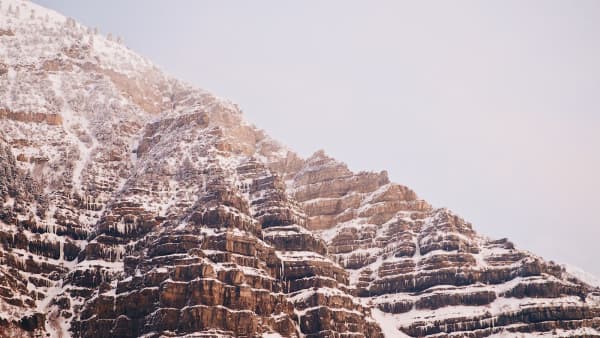
The walls. Steep rock faces on both sides, which are the hardest subject here because you are almost always looking up at them from inside a slot. They work at the ends of the day when the tops go warm while the floor is in shade, and they work from elevation on the Alpine Loop. They very rarely work at midday.
Foliage. Maple and aspen through the canyon and up the Loop, spectacular in autumn and good in spring when everything is fresh. Foliage is the subject most forgiving of overcast weather — flat light saturates color rather than washing it out, so a gray day is a good day to shoot leaves.
The road itself. US-189 and the Alpine Loop are photogenic subjects in their own right, particularly the Loop's switchbacks from above. Shoot the road from a safe vantage point, never from its shoulder.
Deciding which of the four you are chasing before you leave the house does more for the results than any equipment decision.
Weather, closures and checking before you go
The canyon is a mountain environment with a highway through it, and that combination produces conditions that change faster than a plan does.
The Alpine Loop closes seasonally. It is not a year-round road. If your plan depends on getting up it for elevation or autumn color, confirm it is open before you drive.
Canyon weather is not valley weather. It can be several degrees colder, wetter and windier than Provo on the same afternoon, and storms behave differently in a steep corridor. Dress for the canyon rather than for the town you left.
Spring runoff changes access along the river. High water covers banks and gravel bars that are walkable in late summer, and moving water at melt volume is dangerous in a way it is not in September.
Winter is a driving question first and a photography question second. Road conditions in the canyon can differ sharply from conditions on the valley floor a few miles away.
The habit worth building: check conditions the morning of, not the week before, and be willing to change the plan when you get there. The canyon is close enough to come back to.
Etiquette in a canyon that is busier every year
Provo Canyon carries a lot of people, and photographers occupy space in ways that other visitors do not — tripods take up trail, sessions take up viewpoints, and a group shoot can hold a spot for an hour.
A few things that make you a good citizen of a crowded canyon:
Do not monopolise a viewpoint. If people are waiting, take the shot and move. Come back for the second composition.
Keep the trail clear. A tripod across a paved shared-use path is a genuine hazard to cyclists and pushchairs, not just an inconvenience.
Stay on durable surfaces. The temptation to step off for a slightly better angle is exactly how riverbanks get eroded and vegetation gets trampled, and in a canyon with this much traffic the cumulative effect is visible.
Park legally or leave. On busy autumn weekends the developed lots fill and the overflow ends up somewhere it should not be. If the lot is full, the answer is a different location or a different hour, not a creative parking decision.
Be careful photographing strangers. Families and hikers are not props. In the developed areas in particular, people have a reasonable expectation of not becoming someone else's subject.
Related Guides
-
Best photography spots in Provo & Utah Valley — the valley-wide roundup this canyon guide sits under, covering the lake, downtown, campus and the gardens as well as the mountains.
-
Graduation photo spots in Utah Valley — the same backdrops, timed around commencement
Frequently Asked Questions
Where are the best photo spots in Provo Canyon?
What time of day is best for photographing Provo Canyon?
Do I need a permit to photograph in Provo Canyon?
Can I photograph Bridal Veil Falls up close?
When is the best season for photography in the canyon?
Is the Provo River Parkway Trail good for photography?
What should I not do while photographing here?
Can I get good photos here on a phone?
Sources
The facts in this guide were checked against these sources. Hours, fees and rules change, so confirm anything time-sensitive with the source before you go. How we make Provo.com.
- Utah County Public Works: Parks, Utah County Public Works. Checked October 12, 2026.
- Permits (Filming and Photography), USDA Forest Service, Uinta-Wasatch-Cache National Forest. Checked October 12, 2026.
- Your Guide to Leaf Peeping on the Alpine Loop, UDOT Timpanogos Area. Checked October 12, 2026.
- Provo River Parkway, AllTrails. Checked October 12, 2026.