
Utah Valley has RV camping in three different categories that share almost nothing with each other. Choosing the wrong one is not a small inconvenience — it is how people end up trying to reverse a thirty-foot trailer on a canyon switchback.
So this guide is organized around the decision rather than around a list.
The three categories
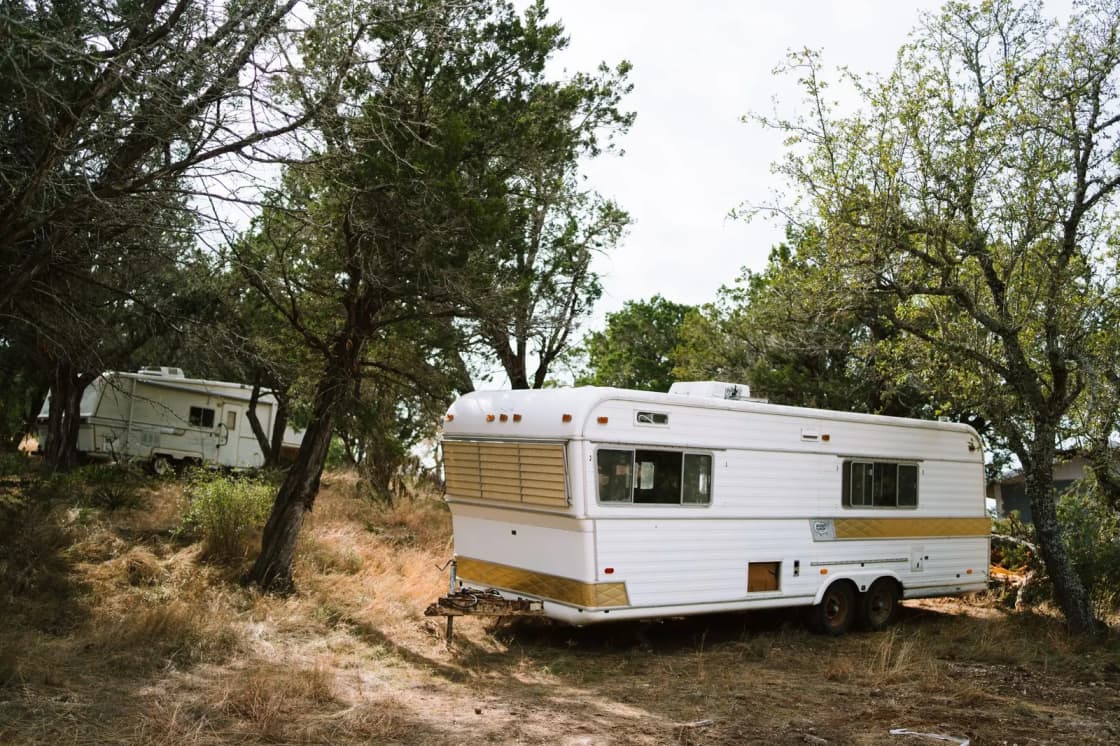
1. Valley-floor RV parks and developed camping — full hookups. Power, water and sewer at the site, level pads, year-round or near-year-round operation, and a short drive to groceries, fuel and a hospital. This is the category with actual hookups, and it lives on the valley floor near Utah Lake and the I-15 corridor.
2. Canyon campgrounds — developed sites, little or no hookup. Forest Service campgrounds up the canyons above the valley. Numbered sites, usually a fire ring and a picnic table, often vault toilets, sometimes potable water. Generally no electrical or sewer connection. Beautiful, cool in summer, seasonal, and length-restricted.
3. Dispersed camping — no services at all. Free camping on national forest land, no numbered site, no water, no toilet, no dump. Suits vans and small trailers on the right roads and is a poor fit for a big rig on most of them.
The single most useful sentence in this article: if you need hookups, you are staying in the valley. The mountains do not have them.
Length limits are the constraint nobody plans for
This is where trips go wrong, and it has two independent parts.
The road. Mountain roads above Utah Valley include tight switchbacks and carry vehicle length restrictions. The Alpine Loop in particular is not a road for a long motorhome or a large trailer. A restriction on a road is not advisory — there are places up there where a long vehicle physically cannot make the turn, and there is nowhere to reconsider.
The campground. Individual campgrounds post their own maximum vehicle length, independent of the road, driven by the size of the pull-through or back-in pads and the turning radius of the loop. A campground on a road your rig can drive may still have no site your rig can occupy.
Check both. Verify the road restriction with the Forest Service and the site length limit with the campground listing, before you tow anything up a canyon.
The season is shorter than the summer
Canyon campgrounds run roughly late spring through early fall, and the window moves every year with snowpack.
High-elevation sites in the Wasatch open when the access roads clear and close when the weather turns. That can mean a season noticeably shorter than what "summer" implies, and it means a May or October trip needs its season status checked before its availability.
Valley RV parks generally run year-round, which is the other half of the argument for staying low if your dates are flexible in the wrong direction.
Elevation also buys you temperature. A canyon campground in July is meaningfully cooler than the valley floor, which is the reason to go up when the season allows.
Two booking systems that do not talk to each other
This causes more failed searches than anything else.
- Federal campgrounds — the Forest Service sites up the canyons — are reserved through the national recreation booking system.
- Utah state park campgrounds use the state's own separate reservation system.
- Private RV parks book directly with the business.
Searching one and concluding the area is full is a mistake, because you have searched roughly a third of the inventory. On a holiday weekend the state and federal systems can both be sold out while a private park has space, and vice versa.
Book early for summer weekends. Utah's population growth has compressed availability across all three categories, and the Wasatch canyons are the recreational backyard of the entire Wasatch Front, not just of Provo.
Dump stations and water
Dump stations exist in the valley — typically attached to developed campgrounds, some fuel stops and municipal facilities — but availability shifts, and we are not going to publish a list that will be wrong within a year.
The durable planning rule:
- Confirm one specific station before you need it.
- Canyon campgrounds are the least likely places to have one.
- If you are staying up a canyon for several days, plan tank capacity around a valley dump on the way in and on the way out.
Potable water follows the same pattern. Some canyon campgrounds have it, some do not, and it can be turned off at the shoulders of the season even where it exists. Arrive with your fresh tank full.
Dispersed camping with a rig
Free dispersed camping on national forest land is genuinely available around Provo, and it is the right answer for some travelers and completely wrong for others.
What it is not: hookups, a numbered site, water, a toilet, a dump station, or a guarantee that a spot will be free when you arrive.
Whether it works for you depends almost entirely on the specific road and pullout. Plenty of dispersed areas that are comfortable for a tent or a van are unsuitable for a trailer — narrow forest roads, soft ground, no turnaround, low branches.
There are also rules: stay limits, fire restrictions that tighten sharply in late summer, and requirements about distance from water sources. Fire restrictions in particular change during the season and are enforced.
Our dispersed camping guide covers the practice, the etiquette and the seasonal rules in detail.
Provo as an I-15 stopover
For travelers passing through rather than visiting, Provo is a better overnight than it gets credit for.
It sits on the I-15 corridor between Las Vegas and the Idaho line, close enough to Salt Lake City to be practical without paying a metropolitan rate. The valley elevation stays workable in shoulder seasons when the mountains do not. There are full grocery stores, fuel, RV service, and a hospital.
If you are driving the corridor and need a night, this is a sensible place to take it — and Utah Lake gives you something to look at that a highway-side lot does not.
Winter is real here
If your stay extends past fall, understand what you are signing up for.
Utah Valley winters bring sustained freezing, not occasional cold snaps. That means:
- Hose and tank freezing, and the need for heated or insulated water connections
- Propane consumption well above what most people budget
- Skirting becoming worthwhile rather than optional
- Snow removal around your site
Some valley parks stay open year-round and accommodate winter residents, but this is cold-weather RVing, not a mild snowbird arrangement. Anyone coming from Arizona expecting a similar winter will be surprised.
There is one more seasonal factor specific to this valley: winter inversions. Cold air settles in the basin and holds pollution near the ground, sometimes for weeks. Air quality during a strong inversion is poor enough to matter for anyone with respiratory issues, and it is not visible in a weather forecast.
How to actually plan this
- Decide whether you need hookups. If yes, valley. If no, the canyons open up.
- Measure your rig and check both limits — the road restriction and the campground maximum.
- Check the season status for canyon sites before checking availability.
- Search all three booking channels, not one.
- Confirm a dump station before you need it.
- Check fire restrictions if you are dispersed camping in late summer.
For the broader picture of the outdoor season here and what the canyons offer once you are parked, our dispersed camping guide and the Stewart Falls and Rock Canyon hiking guides cover the ground within reach of a campsite.
What to ask when you call a park
Listing sites carry stale information about RV parks more reliably than about almost any other category, because parks change hookup configurations, length limits and policies without updating third-party directories. A three-minute phone call beats twenty minutes of reading reviews.
Ask these, in this order:
- "What is your maximum length, and does that include the tow vehicle?" The answer differs between parks and is the question most likely to end the call productively.
- "Is the site pull-through or back-in?" Matters enormously for a long trailer and for anyone traveling solo.
- "Is it 30 amp or 50 amp?" If you need 50 and they have 30, you are managing your air conditioning all week.
- "Is the pad level, and is it paved, gravel or dirt?" Dirt sites after rain are a different experience.
- "What is your policy on rig age?" Some parks enforce an age limit on older units, which is an unpleasant thing to discover on arrival.
- "Is there a dump station on site, or do I need to find one?"
- "What does the Wi-Fi actually support?" The honest answer is usually email and not streaming.
A note on reviews: for RV parks specifically, weight recent reviews heavily and discount anything more than a couple of years old. Ownership changes, and a park's reputation lags its management by years in both directions.
Utah Lake as a base
For anyone who wants water access rather than mountains, the lake side of the valley is the underrated option.
Utah Lake is large and shallow, which produces a genuinely different experience from an alpine reservoir — warmer water, big open sky, and sunsets over the water with the Wasatch lit up behind you. Developed camping on that side sits at valley elevation, which means a longer usable season than anything up a canyon.
Two honest caveats. Algal blooms occur on the lake in warm months and can prompt health advisories that restrict contact with the water; check the current advisory status before planning a trip around swimming. And wind comes up across open water in the afternoons, which matters for awnings — retract them when you leave.
The lake is also the reason the valley floor works as a shoulder-season base. In April and October, when canyon campgrounds are closed or miserable, a valley site by the water is comfortable.
Monthly stays and seasonal pricing
If you are staying more than a couple of weeks, the pricing structure changes and it is worth asking about explicitly.
Most valley parks offer weekly and monthly rates at a substantial discount to the nightly rate, and monthly stays are often billed with electricity metered separately rather than included. That second detail matters in a Utah summer or winter — a month of air conditioning or electric heat can be a meaningful line item that does not appear in the quoted rate.
Long-stay availability is also seasonal in a way that is not obvious. Summer is peak for travelers, so monthly spots are scarce and expensive. Winter is when long-term space opens up, because the traveling population leaves — but see the winter section above for what you are signing up for.
Ask directly whether a park has long-term residents, and whether that is a community you want. Some parks are majority long-term and function as neighborhoods; others are transient-only. Neither is wrong, but they are different products and the listing rarely says which.
Connectivity and services
Cell coverage is good on the valley floor and degrades quickly up the canyons. If you work remotely, that is the deciding factor between the two categories, more than hookups are — a canyon site with no signal is a vacation, not an office.
Practical valley advantages worth naming: full grocery stores, RV supply and service, propane, laundry, a major hospital, and an airport with commercial service. For a traveler who has been boondocking, Provo is a genuine resupply stop rather than a wide spot in the road.
Fire restrictions and the late-summer rules
One seasonal factor deserves separate treatment because it changes mid-trip and carries real consequences.
Utah imposes fire restrictions that tighten through the summer, and they are not uniform — they vary by land management agency and by county, so a rule that applies on national forest land may differ from one on state or private land a few miles away.
Restriction stages typically escalate from ordinary caution, to campfires permitted only in developed campground fire rings, to a full ban including charcoal. At the strictest stages, even a propane stove can be regulated, though gas appliances with a shutoff valve are generally the last thing restricted.
What this means practically for an RV traveler:
- Check the current stage for your specific location before you leave, and again if your trip runs more than a few days.
- A generator with a working spark arrester matters during restrictions, and a poorly maintained one is a genuine ignition source.
- Do not assume the campground host will tell you. They usually will, but the responsibility is yours and the penalties are real.
- Dispersed camping is where restrictions bite hardest, because developed campground fire rings are often the last permitted option.
The broader point: late summer in Utah is fire season, and it is not an abstraction. Trip plans built around campfires in August frequently need rewriting, and knowing that in advance is better than discovering it at the trailhead with a bundle of firewood.
The short version
- Three categories: valley hookups, canyon campgrounds without hookups, and free dispersed camping.
- If you need hookups, stay in the valley. The canyons do not have them.
- Check road length restrictions and campground length limits separately. Both can stop you.
- The canyon season is shorter than summer and moves with snowpack.
- Three booking channels — federal, state and private — that do not share inventory.
- Confirm a dump station in advance; canyon sites rarely have one.
- Winter here is genuinely cold, with inversions on top of the freezing.
The legal difference between a campground and a driveway
Everything on this page divides into places that charge you and places that do not, and Utah law draws a much harder line between those two than the price difference suggests.
Utah Code § 57-14-102 lists "using off-highway vehicles or recreational vehicles" as a recreational purpose, and camping and picnicking alongside it. Utah Code § 57-14-201 then says an owner of land owes no duty of care to keep the land safe for anyone using it for a recreational purpose, and no duty to warn of a dangerous condition on it. On its face that covers every rig on every acre in the state.
Utah Code § 57-14-202 attaches the condition. The protection runs to an owner who invites or permits recreational use without charge, or for a nominal fee of no more than one dollar per year. And Utah Code § 57-14-204 states the exception in terms: nothing limits liability for an injury suffered where the owner charges a person to enter or go on the land or use it for a recreational purpose. Utah Code § 57-14-102 defines "charge" as the admission price or fee asked in return for permission to enter or go upon the land.
So a commercial RV park that takes forty or eighty dollars a night is outside the recreational-use chapter entirely, and is a business owing its guests an ordinary duty of care over its own premises — the pedestal, the sewer connection, the gravel pad, the tree limb over site nineteen. A dispersed site on national forest ground, where nothing is collected, sits inside the chapter, and the managing agency owes you neither safety nor a warning.
Two carve-outs that catch out the middle cases
The statute anticipates the arrangements that do not fit either end.
Land leased to a government. Utah Code § 57-14-203 applies the no-duty rule to an owner of land leased to the state or any subdivision of the state for recreational purposes, unless the lease says otherwise in writing. And Utah Code § 57-14-204 provides that where land is leased to the state or a subdivision, consideration the owner receives for the lease is not a "charge." A private landowner who leases ground to a city for a campground therefore keeps the immunity, notwithstanding the rent.
Reservoir day-use fees. The same section provides that owners of a dam or reservoir who allow recreational use and do not themselves charge for it are treated as not having charged, even where the visitor pays the Division of State Parks or the Division of Outdoor Recreation for services and facilities. That is the provision doing the work at the reservoir campgrounds in this guide: your day-use payment does not convert the dam owner into a defendant.
What it means when you are choosing a site
Practically, the split gives you a reasonable heuristic for how much site-condition diligence is on you.
At a paid private park, hazards on the premises are the operator's problem in the first instance, and reporting a broken step or a live pedestal is worth doing because someone has an obligation to fix it. At a free dispersed site, nobody owes you a functioning anything, nobody is coming to inspect it, and Utah Code § 57-14-205 confirms that the chapter does not relieve you of your own duty to exercise care. Check your own levelling, your own clearance, and your own ground before you commit fourteen thousand pounds to it.
Where a claim against a landowner does proceed, Utah Code § 57-14-501 caps noneconomic damages at four hundred and fifty thousand dollars for actions arising on or after 14 May 2019, excluding punitive damages, wrongful death, and the willful-conduct and paid-access liabilities preserved elsewhere in the chapter.
Related Guides
- Horseback Riding in Utah Valley: Where to Ride, What It's Actually Like, and Who Takes Beginners
- Jolley's Ranch: Camping in Hobble Creek Canyon, Twenty Minutes from Provo
- Shooting Ranges in Utah Valley: Where the Public Can Actually Shoot, and What to Bring
- Skate Parks in Utah Valley: Fort Utah, Orem, and Where Else to Actually Skate
- Provo Canyon: The Complete Guide to US-189, the Stops, and the Seasons
- Soldier Hollow: The Olympic Venue You Can Actually Use
- Running Routes in Provo: A Runner's Guide (2026)
- Hobble Creek Canyon: The Name Springville Gave Away
- The Murdock Canal Trail: Utah County's Flat 17 Miles
- Hunting Near Provo: How Utah's System Works Before You Worry About Where
Frequently Asked Questions
Are there RV parks with full hookups near Provo?
Can I take a big RV up American Fork Canyon or the Alpine Loop?
When are the canyon campgrounds open near Provo?
How do I book a campsite near Provo?
Is there a dump station in the Provo area?
Can I camp for free near Provo in an RV?
Is Provo a good stopover on an I-15 road trip?
Do I need to worry about winter RVing in Provo?