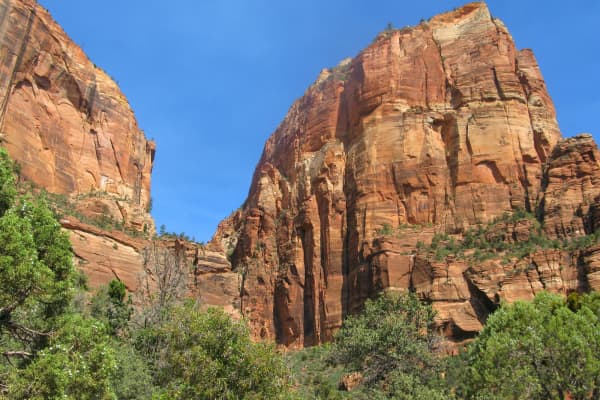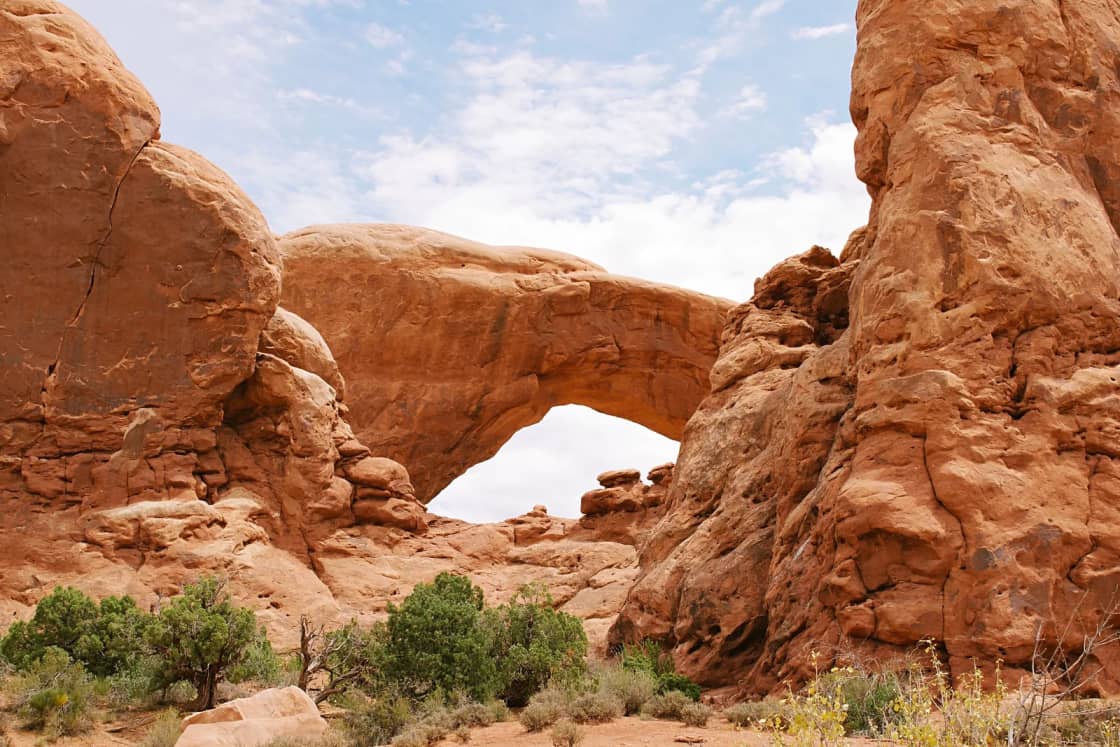
Utah's "Mighty 5" is the tourism-board name for the state's five national parks: Arches, Bryce Canyon, Canyonlands, Capitol Reef and Zion. For anyone starting in Provo, the planning question is rarely "which one is best." It is "how many days do I need before this turns into a long drive with a few photographs in it?" This guide answers that, park by park, using the drive times we have already published and the fees, shuttle rules and season notes the National Park Service lists on its own pages.
A plain summary first: all five parks are between roughly 3.5 and 4.5 hours from Provo by estimate, and none is a comfortable day trip. Seeing each one properly takes about a day. Seeing all five properly takes seven to nine days including the driving. A five-day version is possible, and we describe it, but it is a driving trip first.
A note on the numbers. Drive times here come from our ranked guide to the Utah national parks from Provo, which used OpenStreetMap routing estimates (OSRM) from downtown Provo with no traffic. They are approximate. Construction, weather and a Friday afternoon on I-15 will change them, so check a map app on the day you leave. Fees, shuttle rules and seasons below come from the National Park Service pages we read on November 9, 2026. Those pages change, and we say "check the official page" where a detail was not confirmed.
Quick facts
| Park | From Provo (approx.) | Time to plan on the ground |
|---|---|---|
| Capitol Reef (Fruita) | 181 mi, 3 hr 35 min | 1 day, 1.5 with Cathedral Valley or the Burr Trail |
| Arches | 187 mi, 3 hr 43 min | 1 day, 1.5 with Fiery Furnace |
| Bryce Canyon | 226 mi, 4 hr 4 min | Half day to 1 day |
| Canyonlands (Island in the Sky) | 201 mi, 4 hr 11 min | Half day to 1 day, more for other districts |
| Zion (Zion Canyon) | 265 mi, 4 hr 36 min | 1 to 2 days |
The "time on the ground" column is our planning judgment, not a Park Service figure. It assumes you want to see the main viewpoints and walk one or two trails, not complete a backcountry route.
Vehicle entrance fees the Park Service lists for 2026: $20 at Capitol Reef, $30 at Arches and Canyonlands, $35 at Bryce Canyon and Zion. Zion's second entrance, the Kolob Canyons Visitor Center off I-15, is about 3 hours 44 minutes from Provo by the same estimate, which makes it the closest piece of Zion even though the main canyon is the farthest.
Who this guide is for
It is written for Utah County residents and visitors staying in Provo who are deciding how much vacation, or how many weekends, to give southern Utah. It is also for people who have seen the "Mighty 5 in a week" itineraries and want to know what they leave out. If you have only a weekend, skip to the three-day section. If you have two weeks, you will find the pacing advice more useful than the list.
Getting there from Provo
Provo sits at the northern end of the routes to all five parks, which helps and hurts. It helps because nothing is more than about 4.5 hours away by estimate. It hurts because the parks lie in different directions. The two parks near Moab, Arches and Canyonlands, are in the east. Capitol Reef is in the middle. Bryce Canyon and Zion are in the southwest.
Using the same estimates, the hops between parks are:
- Arches to Canyonlands' Island in the Sky: about 48 minutes and 29 miles.
- Capitol Reef to Arches: about 2 hours 48 minutes.
- Capitol Reef to Bryce Canyon along Highway 12: about 3 hours 4 minutes.
- Bryce Canyon to Zion Canyon: about 2 hours 14 minutes.
Put those together and a one-way loop is Provo, Arches and Canyonlands, Capitol Reef, Bryce, Zion, home. The sum of the hops is about 8 hours 20 minutes between parks, plus the drive in from Provo to the first stop and the drive back from Zion, about 4 hours 36 minutes by estimate. The total is well over 16 hours behind the wheel before you walk anywhere. That is why the "how many days" answer lands where it does.
Highway 12 between Capitol Reef and Bryce is one of the state's scenic byways, which is a reason to give that day more room. See our scenic byways ranking for details.
Road status matters most from late fall through spring. The Utah Department of Transportation runs a traveler information site, udottraffic.utah.gov, that carries road, weather and avalanche conditions and traffic cameras. We did not find current closure information for the individual routes on the day we wrote this, so check it before you leave, and read Utah Winter Driving: The Traction Law, Chains and Canyon Rules if your trip falls in winter.
Park by park: how much time each one needs
Capitol Reef: one day, easily
Capitol Reef is the shortest drive and the cheapest entry. The Park Service lists a $20 private vehicle fee, and a $35 annual park pass. Fruita Campground sites are $25 a night and reservations are made at recreation.gov and open six months ahead, according to the fees page. Backcountry permits, and day-use permits for canyoneering, rock climbing and bouldering, are listed as free.
One day covers the Fruita area, the Scenic Drive and a short trail or two. Our Capitol Reef trail guide and the Capitol Reef from Provo page cover the specifics. The Park Service describes a long, narrow park whose weather varies from district to district, with Fruita, the North District (Cathedral Valley) and the South District (Burr Trail) forecast separately. If you want Cathedral Valley or the Burr Trail, add half a day to a day. Check the park's alerts page for road conditions first, because the Park Service says some roads can close for snow or bad weather and that late-summer monsoon downpours can cause flash floods.
The Park Service basic information page we fetched was last updated in January 2022 and did not list current hours, so check the official hours page before you go.
Arches: one day, with an early start
Arches sits about 10 minutes from Moab, per the Park Service, and few goods and services are available inside the park. The fee is $30 per private vehicle, or the $55 annual pass that covers Arches, Canyonlands, Natural Bridges and Hovenweep for U.S. residents.
For 2026, our earlier reporting found that timed-entry reservations are not required at Arches, though vehicles may be diverted when the park is congested. We could not re-confirm that on a dedicated page today, because the timed-entry page we tried returned an error. Read Arches Entry Reservations: What Happened, and How to Check Before You Drive and check the park's alerts page before you leave.
One day lets you see the main viewpoints and take a couple of short hikes. The Park Service calls spring and fall the temperate, most popular seasons, and says summer often exceeds 100 degrees. If you want the Fiery Furnace, plan another half day and a permit or ranger reservation: the fees page lists a ranger-led hike at $16 per person and a private permit at $10 per person, with children under 5 not permitted on either. Our Fiery Furnace guide explains how it works.
Canyonlands: half a day to a full day, depending on the district
Canyonlands is the park that most often costs people more time than they planned. The Park Service says the Green and Colorado rivers divide it into three districts, Island in the Sky, the Needles and the Maze, and that no roads cross the rivers to link them. Travel between districts takes "two to six hours by car" even when they look close on a map.
From Provo, Island in the Sky is about 4 hours 11 minutes by our estimate, and only about 48 minutes from the Arches visitor center, which is why most visitors pair the two from a Moab base. The Needles is a separate trip at about 5 hours 32 minutes from Provo. If you only have time for one district, Island in the Sky is the practical choice for a Mighty 5 loop. Plan half a day at minimum.
The Park Service says the park is open 24 hours a day year-round, though some facilities may close in winter and each district keeps its own visitor center schedule. Services are limited and visitors are told to bring what they need. Camping is listed at $15 a night at Island in the Sky and $20 at the Needles. The entrance fee is $30 per private vehicle, and the same $55 annual pass as Arches applies.
Bryce Canyon: half a day to a day
Bryce Canyon is the park that rewards a short visit best, because the Park Service describes one main 18-mile road running north to south through the park. The fee is $35 per private vehicle, $70 for a park annual pass. The fees page says the park does not accept cash, though another section lists checks and money orders, so confirm with the park.
Bryce is about 4 hours 4 minutes from Provo by estimate. If you are driving down from Provo for Bryce alone, a full day on the ground is justified; if Bryce is a stop between Capitol Reef and Zion, half a day is enough for the main viewpoints and one short trail. Our Bryce Canyon from Provo page, the shuttle and parking guide and the Navajo Loop and Queen's Garden hike cover what to do with that time.
Bryce sits at high elevation. Per the Park Service's averages, July highs are about 80 degrees, and from October to May temperatures drop below freezing nearly every night. The coldest, snowiest stretch is December through February. Roads may close temporarily after snowstorms until plowed.
Zion: one to two days, the one that fights back
Zion is the farthest park, at about 4 hours 36 minutes to Zion Canyon, and the one with the most rules. The entrance fee is $35 per private vehicle for up to seven days, or $70 for a Zion-only annual pass. Non-U.S. residents 16 and older pay an extra $100 per person unless they enter with an annual or America the Beautiful pass.
The key rule is the shuttle. The Park Service says that during shuttle season visitors cannot drive personal vehicles on the Zion Canyon Scenic Drive, including before the first shuttle and after the last. Shuttles generally run daily from March through November, plus a holiday period near the end of December. The ride between the visitor center and the Temple of Sinawava takes about 40 to 45 minutes each way, roughly an hour and a half round trip, with shuttles every 5 to 10 minutes. Park lots "often fill early in the day," and paid parking is available in Springdale with a free shuttle to the park entrance.
The late-season schedule the Park Service lists for 2026 shows the first shuttle at 7:00 a.m. and the last at 6:00 p.m. from the visitor center from September 13 to October 24, and a 5:00 p.m. last shuttle from October 25 to November 28, with no service from November 29 to December 25. Check the shuttle page for the winter holiday and 2027 dates, which we did not confirm. Our Zion in winter guide covers the off-season.
That ride time is why Zion needs more than a drive-through. A canyon trip that includes the shuttle and a trail easily fills a day. The Park Service's fees page says Angels Landing requires a permit, and so do The Narrows (the wilderness-permit version), The Subway, canyoneering and overnight stays. See Angels Landing: How the Permit Lottery Works. A second day makes sense if you want a permit hike and a second trail, or if you want to do the Springdale and St. George side, which is in Zion and St. George from Provo.
Sample plans: 3, 5 and 7 days
These are our own planning sketches built from the estimated drive times above, not Park Service itineraries. Adjust for the season and for how long you are willing to sit in a car.
Three days: two parks, done well
Three days from Provo fit two parks without rushing. The two best pairings are Arches and Canyonlands (a day on the road, a day for Arches, a half day for Island in the Sky, then the drive home) or Bryce and Zion (about 2 hours 14 minutes apart). Anything more crowds the drive. Our Moab weekend guide and Southern Utah long weekend are built for these.
Five days: a driving loop
Five days can touch all five parks if you accept short stops. One way to cut it: Day 1 Provo to Arches, with an afternoon in the park; Day 2 Island in the Sky in the morning, then toward Capitol Reef (about 2 hours 48 minutes from Arches); Day 3 Capitol Reef and on to Bryce along Highway 12; Day 4 Bryce in the morning, then Zion (about 2 hours 14 minutes); Day 5 Zion, then home. That is the kind of loop our five-day Arches, Canyonlands and Capitol Reef plan lays out for part of the route. The cost is plain: Zion gets one day, with a shuttle ride in the middle, and the drive home from Zion is about 4 hours 36 minutes by estimate.
Seven days: where the trip stops being a checklist
Seven days gives each park a day with a buffer for weather, a longer hike or a permit-controlled outing. It leaves room for the Fiery Furnace, the Burr Trail or a second day at Zion. Eight or nine days lets you split the drive home, which most people will want after a week of mileage. If you can only choose one extra day, put it at Zion or in Moab.
Costs
Paying at each gate, the Park Service's 2026 vehicle fees total $150 for all five: $20 for Capitol Reef, $30 each for Arches and Canyonlands, $35 each for Bryce and Zion. Each pass is valid for seven days at the parks that list that term, and the Zion page says passes are non-transferable and that you must show yours if you leave and re-enter.
The America the Beautiful annual pass is $80 for U.S. residents and covers entrance and standard amenity fees at federal recreation sites. It covers either one private vehicle or four per-person fees, depending on the site's fee type. Seniors 62 and older can buy an annual pass for $20 or a lifetime pass for $80. Current military and dependents, Gold Star families and veterans, U.S. residents with a permanent disability, and U.S. fourth graders get free passes. Non-residents pay $250 for the annual pass. Passes are non-refundable and non-transferable and holders must show photo ID. For a five-park trip, the $80 pass is the cheaper path than the $150 in gate fees.
The Park Service lists fee-free days for U.S. citizens and residents in 2026, and the last one this year is November 11 (Veterans Day). Other fees, such as permits and reservations, may still apply.
Add campground fees (Fruita at $25, Devils Garden at $25, Canyonlands at $15 or $20), lodging in Moab, Torrey, Bryce or Springdale, and fuel. We have not priced lodging because rates vary by date.
Timing and seasons
The Park Service's seasonal descriptions drive most of the choice:
- Spring (April and May) and fall (mid-September through October): the temperate seasons at Arches and Canyonlands, with highs of 60 to 80 degrees. They are also the most popular, so expect crowds.
- Summer: Arches and Canyonlands often exceed 100 degrees. Bryce is the cool one, with an average July high of 80. Late-summer monsoon storms bring flash floods to the desert parks.
- Winter: highs at Arches and Canyonlands average 30 to 50 with lows of 0 to 20, and small amounts of snow or ice can make trails and roads impassable. Bryce is at its coldest and snowiest from December through February. Zion's Scenic Drive opens to private cars in the non-shuttle season.
The practical lesson is that a full Mighty 5 loop is hardest in midsummer, when the desert heat makes midday hiking unsafe, and in midwinter, when snow can lengthen the Bryce and Capitol Reef legs. Late April through May and late September through October are the windows where most parks are comfortable at once.
What to bring
- A full tank before each long stretch, and a charged phone with offline maps. The Park Service notes services are limited inside Arches and Canyonlands. Cell coverage in the parks varies, and we did not confirm it.
- More water than you think you need, plus salty food. Canyonlands advises bringing everything you will need.
- Sun protection and layers. Bryce nights fall below freezing for much of the year.
- A card for entrance stations. Arches' entrance station takes credit or debit, and Bryce lists a no-cash notice.
- Your America the Beautiful pass and photo ID.
- Traction gear in winter. See the Utah winter driving guide linked above.
- Printed or saved confirmations for any permit, campground or lottery result.
Who should skip it
If you have only a weekend, do not try the loop. Pick one pairing and do it well. If you are bothered by long drives, skip the Needles and the Zion-and-back-in-one-trip version. If you cannot be out in heat above 100 degrees, avoid the desert parks in July and August. If you have small children, the long hours in the car are the hard part, not the parks, and splitting the loop into two trips may suit you better. Anyone who wants a permit hike such as Angels Landing should apply through the Park Service's process and not build the trip around winning it.
Safety and conditions
The Park Service warns of monsoon flash floods in late summer at Capitol Reef, Arches, Canyonlands and Zion. Slot canyons and washes are the danger, and a storm miles away can send water through. Heat is the other recurring problem, since summer highs at the desert parks often exceed 100 degrees. At Bryce, afternoon thunderstorms with lightning are frequent in July and August, and the altitude affects some visitors. In winter, roads can close temporarily after snowstorms, and the traction law can apply in Utah canyons.
Fiery Furnace and Angels Landing are the two outings where permit rules are strict. Stay on marked routes, tell someone your plan, and do not rely on cell service.
What to check before you go
- Each park's alerts page, for road closures, construction and flash flood warnings.
- UDOT's traveler information site, udottraffic.utah.gov, for road, weather and avalanche conditions on your route.
- The Zion shuttle page, for the date range and hours that match your trip.
- Permit and reservation systems, for Angels Landing, Fiery Furnace, The Narrows and campgrounds.
- Fees, on each park's fees page, because they can change.
- A map app, for live drive times on the day you leave.
Related guides
- The Utah National Parks from Provo, Ranked by Drive and by Season
- Moab from Provo
- Capitol Reef from Provo
- Bryce Canyon from Provo
- Zion and St. George from Provo
Frequently Asked Questions
How many days do you need to see all of the Utah Mighty 5?
Can you do the Mighty 5 in 5 days?
Which Mighty 5 park needs the most time?
Which park can be done in the least time?
How much does it cost to enter all five parks?
Do I need reservations for the Mighty 5 in 2026?
Can you drive your own car in Zion Canyon?
What is the best time of year for the Mighty 5?
Sources
The facts in this guide were checked against these sources. Hours, fees and rules change, so confirm anything time-sensitive with the source before you go. How we make Provo.com.
- Fees and Passes - Zion National Park, National Park Service. Checked November 9, 2026.
- Zion Canyon Shuttle System, National Park Service. Checked November 9, 2026.
- Fees and Passes - Arches National Park, National Park Service. Checked November 9, 2026.
- Fees and Passes - Canyonlands National Park, National Park Service. Checked November 9, 2026.
- Fees and Passes - Capitol Reef National Park, National Park Service. Checked November 9, 2026.
- Fees and Passes - Bryce Canyon National Park, National Park Service. Checked November 9, 2026.
- Passes - America the Beautiful, National Park Service. Checked November 9, 2026.
- Basic Information - Canyonlands National Park, National Park Service. Checked November 9, 2026.
- Utah Department of Transportation: UDOT Connect, Utah Department of Transportation. Checked November 9, 2026.