
Provo sits about 4,549 feet above sea level — and that number is more interesting than it looks, for a reason most residents have never noticed.
Provo is higher than Salt Lake City. By roughly 325 feet.
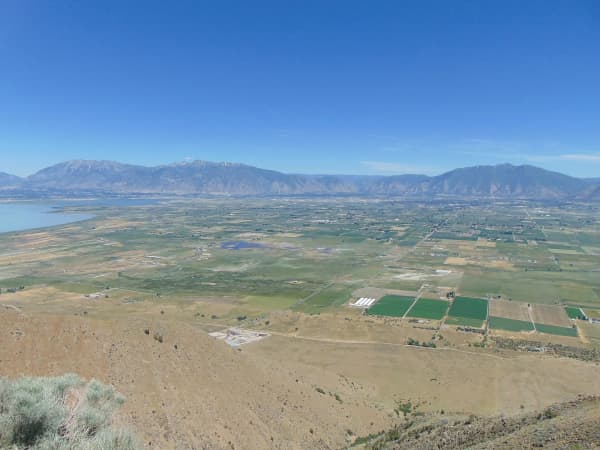
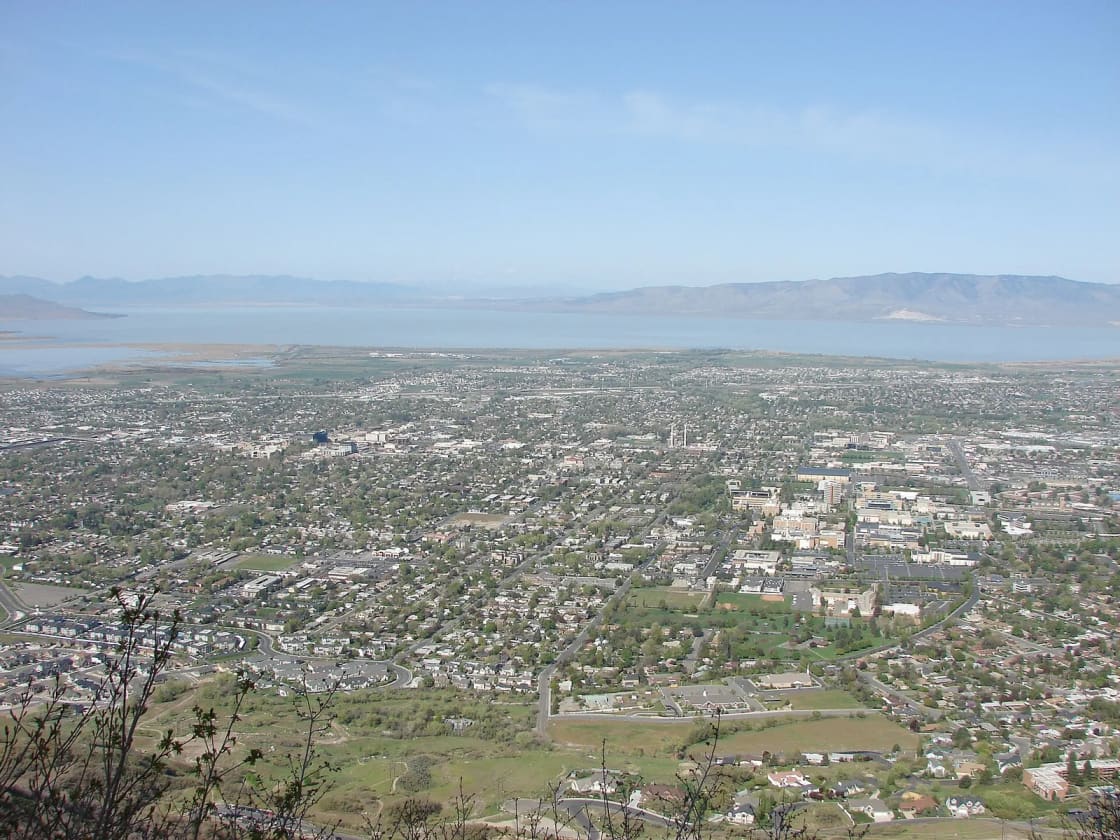
Almost nobody believes this on first hearing. Salt Lake is north, it is bigger, it is the capital, and the drive up I-15 feels flat or faintly downhill. But Salt Lake City averages around 4,226 feet and Provo averages around 4,551, and the reason is sitting in plain view: Utah Lake is nearly 300 feet higher than the Great Salt Lake. The valley Provo occupies is simply a higher basin.
Here is what living at this elevation actually changes, from water temperature to sunburn to what happens to visitors.
The city is not one elevation
Provo is built on a slope, and the difference across it is large enough to matter.
The lakeshore and airport end sits near 4,490 feet, close to the level of Utah Lake itself, where the Provo River finishes an eighty-mile run down from the Uintas.
Downtown and Center Street sit around the commonly quoted city figure.
The bench neighborhoods — the ones stacked against the mountains on the east side — run several hundred feet higher. The Marriott Center on the BYU campus sits at roughly 4,650 feet.
That spread of 150 to 200 feet across the city is why snow sometimes falls on the bench and rains downtown, and why the east side runs a few degrees cooler on a summer evening.
For context, against places you know
Provo is at a genuinely moderate elevation. It is worth anchoring, because "4,500 feet" means different things to different people.
- Denver — the Mile High City — sits about 700 feet higher than Provo.
- Salt Lake City is about 325 feet lower.
- Albuquerque is roughly a thousand feet higher.
- Almost every major coastal city in the United States is effectively at zero.
So Provo is high enough to change physics in ways you will notice, and not high enough to be dangerous by itself. That distinction runs through everything below.
Water boils cooler, and your cooking has to know
Boiling point falls with elevation because there is less atmospheric pressure holding the liquid together. The rough rule is one degree Fahrenheit lost per 500 feet.
At Provo's elevation, water boils around 203°F rather than 212°F.
That nine-degree gap is not a curiosity. Anything cooked by simmering is being cooked at a lower temperature than the recipe assumed, so it takes longer:
- Pasta needs more time than the box says
- Dried beans take considerably longer, and older beans compound it
- Potatoes for mashing need extra minutes
- Hard-boiled eggs need adjusting
- Rice absorbs more slowly
A pressure cooker sidesteps all of it by raising the internal pressure, which is a substantial part of why they are so common in Mountain West kitchens. It is not a regional quirk; it is a correction.
Baking is where it actually bites
Standard high-altitude baking guidance begins around 3,000 feet, and Provo is well past that.
Lower air pressure lets gases expand more aggressively, so leavening works harder and faster. Liquids also evaporate more quickly. The combined effect on a cake is a fast, dramatic rise followed by a collapse, plus a drier crumb.
The usual corrections at this elevation are modest:
- Reduce baking powder or soda slightly
- Reduce sugar slightly — sugar weakens structure
- Add a little extra liquid to offset faster evaporation
- Raise the oven temperature somewhat and shorten the bake, so the structure sets before the rise overruns it
Yeast doughs rise faster. Following a sea-level clock will over-proof them. Judge by size, not by minutes — this is the single most common failure for newcomers to the valley.
Quick breads and cakes need the most correction. Cookies need little. Stovetop cooking needs almost none beyond the timing above.
The sun is genuinely stronger, and this is the underrated one
Ultraviolet radiation increases with altitude because there is less atmosphere overhead to absorb it. A commonly used rule of thumb is roughly ten percent more UV per thousand meters of elevation.
Provo adds two multipliers to that. The air here is dry and often exceptionally clear, which scatters less. And in winter, snow reflects a large fraction of incoming UV straight back up at you.
The practical result is the thing that catches every newcomer: you burn faster here than the temperature suggests. A cool spring day on the Y trail, a cloudy afternoon at the lake, a bluebird February ski day — all produce burns that would not happen at the same temperature at sea level.
Sun protection here is a year-round habit, not a summer one. Sunglasses too — the same UV that burns skin damages eyes.
Dehydration happens faster and quieter
Two things stack at this elevation. The air is dry, so more water leaves through your skin and lungs without you noticing it. And you breathe somewhat faster, which exhales more moisture still.
The result is that dehydration here arrives without the usual warning of feeling hot and sweaty, because sweat evaporates before it accumulates. People end up dehydrated on a mild day, indoors, having done nothing strenuous.
The symptoms get misattributed constantly — headache, fatigue, poor sleep, the general fog visitors describe on day two. A meaningful fraction of what people call altitude adjustment in Provo is straightforward dehydration.
Drink more than you think you need for the first week. It fixes more of the discomfort than anything else does.
What visitors from sea level actually experience
Acute mountain sickness is uncommon below about 8,000 feet, so Provo's valley floor rarely produces it. Visitors do reliably notice four things:
Breathlessness on stairs and hills. Real, temporary, and disproportionate to fitness. It settles over a few days.
Disrupted sleep for the first two or three nights. Common, and unrelated to how tired you are.
Alcohol hitting harder. Widely reported, partly genuine physiology and substantially dehydration. Either way, calibrate down.
A headache on day one or two. Usually fluid, sometimes mild altitude adjustment.
For most visitors this resolves without intervention. Drink water, go easy the first day, and do not schedule the hardest hike for the morning after landing.
Where altitude genuinely becomes a factor
Nothing above is dangerous. The danger is what people do after arriving, because the mountains here climb fast.
- Y Mountain directly above BYU: 8,572 feet
- Provo Peak, inside the city limits: 11,068 feet
- Mount Timpanogos to the north: about 11,750 feet
That means a day hike from the valley floor to a summit is a gain of four to seven thousand feet, achieved in hours, by someone who may have flown in from sea level the day before.
That combination is where altitude illness actually happens in Utah County. Timpanogos in particular collects people every summer who were fit, unprepared for the elevation, and had never experienced it before.
The Y trail alone gains over a thousand feet in about a mile — short, steep, and consistently underestimated by visitors who think of it as a walk. Our hiking guides cover what each of these actually demands.
Athletic performance, and why the effect is real
Endurance performance falls measurably at altitude because less oxygen is available per breath, and the effect is detectable well below the elevations people associate with it.
For local athletes this cuts favorably. Training at 4,550 feet and competing at sea level is a genuine advantage, and it is part of why visiting teams talk about playing in Provo.
For newcomers, expect running paces and cycling times to be worse here than at home for the first several weeks. That is physiology, not deconditioning, and it improves as your blood adapts. Do not try to fix it by training harder in week one.
Engines, tires and sealed containers
Naturally aspirated engines lose power at altitude — roughly three percent per thousand feet is the working rule. At Provo's elevation, that is a real if manageable reduction, most obvious climbing canyon grades or towing a trailer. Turbocharged engines compensate substantially, which is why turbo cars are noticeably more pleasant in the mountains.
Tire pressure shifts with both altitude and temperature, and Provo has large temperature swings. Check pressures more often than you would elsewhere, especially with the seasons.
Sealed containers brought up from sea level expand. Bags of chips inflate, sunscreen bottles spit, and anything pressurized deserves opening over a sink.
Propane and gas appliances may need altitude-specific orifices to burn correctly, which matters if you have brought a grill or a camp stove from a much lower elevation.
Home and health, briefly
Humidifiers are common here for a reason. Dry air at altitude produces nosebleeds, cracked skin and sore throats, particularly in winter when heating dries the air further.
Houseplants dry out faster than their care instructions suggest.
Anyone with a cardiac or pulmonary condition should discuss elevation with their doctor before moving here rather than after. Moderate altitude is well tolerated by most people with these conditions, but "most" is doing work in that sentence and it is a question worth asking specifically.
Newborns and infants adapt without difficulty at this elevation; pediatric altitude concerns generally begin much higher.
Why the number is different depending on where you look it up
Search for Provo's elevation and you will find 4,549 feet, 4,551 feet, and a scattering of other figures, which reasonably makes people wonder which is right.
They are all approximately right, and the discrepancy is not an error. A city elevation is a single number assigned to a place that is not a single elevation — usually taken at a reference point such as a city center, a civic building or a survey marker. Provo climbs roughly 200 feet from lakeshore to bench, so any single figure is a convention rather than a measurement of where you happen to be standing.
The useful version to carry: about 4,550 feet, plus or minus a hundred depending on your neighborhood. For cooking, sun exposure and physiology, that precision is more than sufficient — none of the effects on this page change detectably across a hundred feet.
Where precision does matter is aviation, surveying and engineering, and those disciplines use a specific datum for exactly that reason.
The seasonal version of all this
Elevation is constant; its effects here are not, and they concentrate in ways worth planning around.
Winter is when the UV reflection problem peaks, because snow throws a large share of incoming ultraviolet back upward. Sunburn on a February ski day is the classic version, and it burns the underside of the chin and nose in a way that gives it away instantly.
Spring is the dehydration season for hikers, because temperatures feel mild while the air is at its driest and the trails above town are suddenly accessible again.
Summer stacks heat onto the existing dry-air water loss, which is why heat illness in Utah Valley arrives faster than the thermometer implies. Our Provo weather guide covers the heat and smoke picture.
Autumn is the most forgiving season here, and it is also when the canyon draws the most visitors from lower elevations who have not adjusted to any of this.
What the elevation does not cause
Worth stating, because it gets blamed for things it does not do.
Provo's winter inversions are a valley-shape and weather phenomenon, not an altitude one — cold air pooling in a basin under a warm lid, with the mountains acting as walls. Our Provo weather guide covers what actually drives it.
The hardness of the water comes from limestone geology, not elevation.
The dryness is desert climate, which correlates with elevation here but is not caused by it.
And the temperature is not primarily an elevation story either at these heights. Provo is warmer than Salt Lake in summer despite being higher, because valley geometry and lake effects matter more across a 325-foot difference than the lapse rate does.
The one number to remember for visitors
If somebody is flying in and asks what they should know, it is not the elevation figure — it is the gap.
Provo is 4,549 feet. The trail behind it goes to 8,572. The peak inside the city limits is 11,068.
Arriving in the city is a non-event physiologically. Driving twenty minutes and walking uphill for three hours is not. That single sentence prevents most of the trouble visitors get into here, and it is worth saying out loud to anybody who lands on a Friday and wants to hike Timpanogos on Saturday.
Give them a day. Then give them water.
The short version
Provo is at about 4,549 feet — moderately high, higher than Salt Lake City, and not high enough to hurt you.
In the kitchen: water boils around 203°F, so simmering takes longer, and baked goods need slightly less leavening, slightly less sugar, slightly more liquid and a hotter, shorter bake. Watch yeast dough by size rather than by clock.
On your body: you will dehydrate faster and burn faster than the weather suggests. Both are year-round.
For visitors: expect two or three odd nights and easy breathlessness, then normal.
The part that actually matters: the city is fine and the mountains above it are not. The gap between 4,549 feet and 11,750 is where people get into trouble, and it is a gap you can cross in a single morning.
The first two weeks, and why new arrivals sleep badly
The visitor section above covers what people notice during the day. What surprises new residents more is what happens at night, because almost nobody is warned about it and it arrives when they are least able to interpret it.
Sleep is frequently worse at altitude for the first stretch after arriving, and it is worse in a specific and recognizable way rather than as generalized insomnia. People report falling asleep normally and then waking repeatedly through the night, often with a sense of needing to breathe deeply, and waking in the morning feeling as though they did not really rest. The pattern typically eases over the following days to a couple of weeks as the body adjusts.
This matters for a practical reason. Someone who has just moved here is simultaneously starting a job, unpacking a house, or beginning a semester, and is drawing conclusions about how they are coping. Attributing a bad fortnight of sleep to the move, the stress, or their own inadequacy is the natural reading, and it is often the wrong one.
What actually helps, and what does not:
- Hydration. The dryness section above is not separate from this one. Waking with a dry throat and a headache is a compounding problem, and it is the most fixable variable.
- Go easy on alcohol in the first week. Its effects are commonly reported as stronger here, and it fragments sleep at the best of times. The two together make the adjustment period noticeably worse.
- Do not schedule the hardest physical thing for day two. Give the first few days lighter loading and the adjustment goes better. This applies to athletes and to somebody moving furniture equally.
- Expect it to pass, and notice whether it does. Improvement over one to two weeks is the ordinary pattern.
When it is not just adjustment. Persistent breathlessness, symptoms that worsen instead of easing, severe or persistent headache, chest symptoms, or anything alarming is a reason to talk to a doctor rather than to wait it out. That is doubly true for anyone with an existing heart or lung condition, for people who are pregnant, for infants, and for anyone arriving here from sea level who plans to go substantially higher — into the canyons or the ski terrain — within the first days. Altitude adjustment is normal; illness is not, and the two are not for a stranger on a webpage to distinguish.
For visitors staying only a couple of nights, the honest note is that you may simply not adjust before you leave. Plan for a slightly rougher night than usual, drink more water than feels necessary, and do not read a poor night's sleep as a verdict on the place.
Related guides
- Provo weather and the inversion
- Hiking in Provo and Utah Valley
- Provo's hard water, explained
- Moving to Provo
- Utah Lake, explained
- Car ownership in Utah Valley
- Provo's Noise Ordinance: What 55 Decibels Actually Sounds Like
- Provo for Retirees: The Other Demographic in America's Youngest College Town
- What Provo Can Actually Cite You For: Weeds, Junk Vehicles and the Nuisance Code
- Recycling & Garbage in Provo: The Actual Rules (2026)
- Furniture Shopping in Utah Valley: The Student Cycle, the Delivery Trap & Where to Actually Look
- Where Provo's Water Actually Comes From
- Coworking Spaces & Remote Work in Provo (2026)
- The Fault Under Utah Valley: What the Forecast Actually Says, and What It Leaves Out
- How to Actually Follow Provo City Council (and Be Heard at One)
- Allergies and Asthma in Utah Valley: The Nine-Month Season, and Why the Air Here Makes It Worse
Frequently Asked Questions
What is the elevation of Provo, Utah?
Is Provo higher than Salt Lake City?
Will I get altitude sickness in Provo?
Do I need to adjust baking recipes in Provo?
What temperature does water boil in Provo?
Is the sun stronger in Provo because of the elevation?
Does elevation affect car performance in Provo?
How high are the mountains around Provo?
Why am I sleeping badly since moving to Provo?