
There is a building on 100 South in downtown Provo that has been trading under the name Hines Mansion Bed & Breakfast for three decades, and whose own website now says, in as many words, that it is not a traditional bed and breakfast.
That is not a gotcha. It is the most useful thing a prospective guest can know, because it changes what you should expect on arrival — and because it is a clean illustration of a problem that runs through every listing for every small independent property in this valley: the aggregators are downstream, and they lag.
What the building is
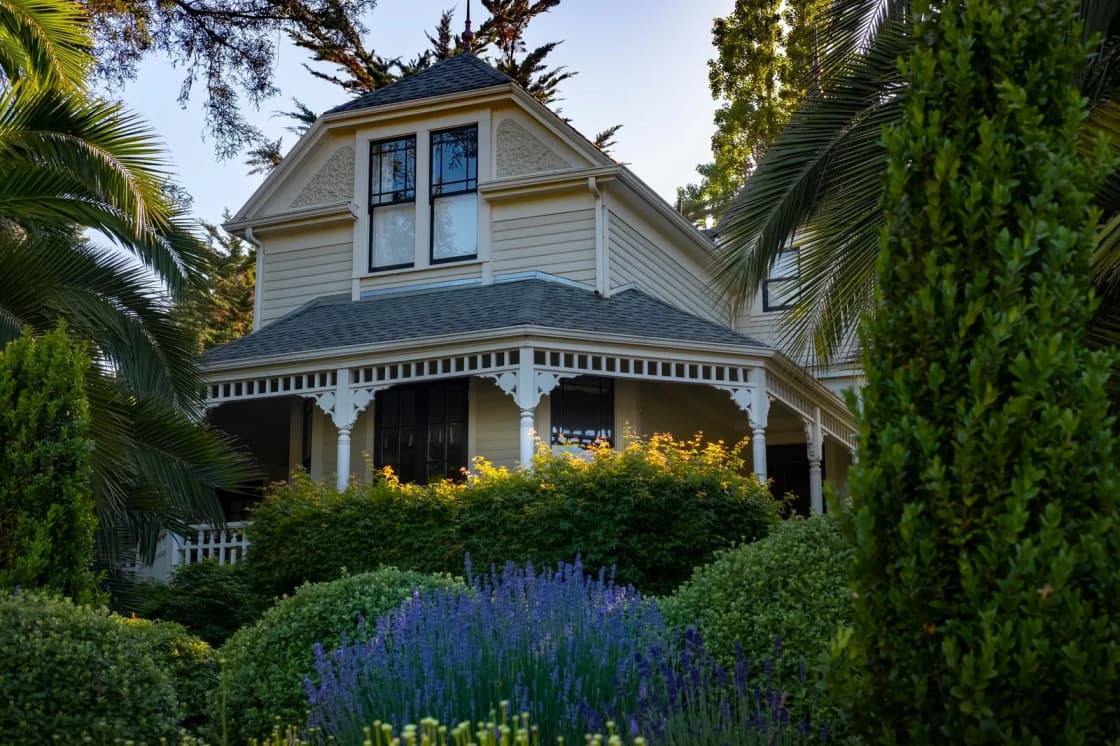
Hines Mansion sits at 383 West 100 South, a few blocks west of Center Street in downtown Provo. It is a preserved Victorian, and it is one of a small number of surviving nineteenth-century residential buildings in a downtown that has been rebuilt repeatedly.
The hospitality chapter starts in 1995, when the mansion was converted into lodging. Everything about the guest experience — the room count, the themed suites, the jetted tubs — postdates that conversion. The building is old. The hotel is not.
The interior anchor is a Victorian parlor with a marble fireplace, which is the room that appears in most photographs and the one that small events tend to be built around.
The room count is published two ways
We are going to be straight about this rather than pick the number that reads better.
- The property's own direct booking engine describes eight guest rooms — "eight unique and distinctive suites."
- Yelp and multiple travel aggregators say nine.
Both figures are in current circulation. The mundane explanation is the likely one: a room was pulled from inventory, converted, or reclassified, and the update propagated to some channels and not others. Small properties change their room mix more often than large ones and have fewer people to push the change out to a dozen listing platforms.
What this means practically is nothing dramatic — book against the live calendar for your dates and the count resolves itself. What it means editorially is that a specific number here would be a fossil within a year, so we are not printing one as fact.
The breakfast question, which is the real story
The property's own FAQ says: a light continental breakfast is offered, and it is not a traditional bed and breakfast.
Set that against what the rest of the internet says:
- The longtime trading name across listing platforms remains Hines Mansion Bed & Breakfast.
- Older listing copy advertises a "delicious hot gourmet breakfast every morning."
- One major booking aggregator answers the direct question — does this property serve breakfast — with a flat no.
- Other current listings describe complimentary breakfast items and a shared kitchen stocked with things like yogurt, granola and pastries, with some guests noting they would like more variety.
Read together, these are not contradictory so much as a snapshot of a business model changing in slow motion. A full cooked-to-order breakfast service is staff-intensive. A stocked kitchen with continental items is not. The property appears to have made that transition, updated its own site, and left thirty years of accumulated third-party copy behind.
The version to plan around: expect self-serve continental items and a kitchen you can use, not a served hot breakfast. If a cooked breakfast is the reason you are booking, ask directly before you book, and ask the property rather than the platform.
The property's own preferred framing — "Provo's luxury micro-hotel" — is the more honest description of what it now is.
The rooms
The inventory is themed rather than numbered, and guests refer to rooms by name. The Ruth Room and the Victorian Rose are among those that surface repeatedly in reviews.
The features that recur across the inventory:
- Private bathroom in each room
- A two-person jetted tub — the single most-mentioned feature in guest reviews
- High-speed wireless and a television
- Victorian styling with high ceilings, period detail, and in some rooms what reviewers describe as concealed or tucked-away bathrooms
The honest caveat from the review record: room sizes vary considerably. Guests in the smaller rooms praise the housekeeping and the detail; guests in the larger ones talk about the space. Look at the specific room, not at the property average.
Cleanliness is the most consistently positive theme across the review record, including from guests in the smaller rooms.
Booking mechanics worth knowing before you arrive
These are the details that cause the most friction, and they are unusual enough to be worth stating plainly.
Check-in is 4:00 p.m. to 5:00 p.m. for in-person arrival. That is a one-hour window, which is short by hotel standards and a real constraint if you are driving in from an airport.
Arriving after 5:00 p.m. is normal, not a problem. The property sends a welcome text on the morning of arrival to the number on the reservation, with self check-in instructions. The thing to get right is that the phone number on the booking has to be one you will actually be reading, which is the failure mode here.
Check-out is 11:00 a.m. Early check-in from 2:00 p.m. and late check-out until 1:00 p.m. have been offered for a small fee.
Quiet hours run 10:00 p.m. to 7:00 a.m.
No pets.
One more inconsistency worth flagging: the phone number is published more than one way across directories. Use the number on the property's own site.
What is actually within walking distance
The location is the strongest objective argument for this property over a highway-adjacent chain hotel, and it holds up.
Within a short walk:
- The Provo City Center Temple
- The Utah Valley Convention Center
- The Provo train station — meaningful if you are arriving by FrontRunner rather than by car
- Center Street, with the densest concentration of independent restaurants in the city
- The Reed Smoot House, another surviving landmark of the same era
BYU campus is roughly a mile and a half out — walkable in good weather, a short drive otherwise.
One aggregator listing is worth a footnote here as a caution about listing data generally: it names both the Provo City Center Temple and the Provo Tabernacle as separate nearby attractions. They are the same building. The Tabernacle was gutted by fire and reconstructed as the temple. A listing that treats them as two destinations is telling you something about how carefully that listing was assembled.
Weddings and events
The property markets itself for small weddings, summer lawn receptions and executive meetings, with the parlor and its marble fireplace as the interior centerpiece and the lawn as the warm-weather option.
Scale is the thing to calibrate. This is an intimate-ceremony and small-reception venue — an elopement, a ring ceremony, a dinner for close family. It is not a large reception hall, and treating it as one will end in a disappointing site visit.
For the full range of Utah Valley options at every size, start with our wedding venue guide, and for sequencing the whole thing, the month-by-month wedding timeline.
Who this property is actually for
Based on how it positions itself and what the review record emphasizes:
A good fit for — couples on an anniversary or honeymoon, weekend getaways, travelers who want a downtown base they can walk from, anyone arriving by train, and guests who specifically want period architecture rather than a standardized room.
A poor fit for — families with young children, groups, pet owners, late-night arrivals who will not read a text, and anyone who needs the predictability of a chain.
For the wider set of lodging options across the city, including the conventional hotels, see where to stay in Provo. For what else is within walking distance of this block, our downtown Provo neighborhood guide covers the surrounding streets.
Why a Victorian mansion survived here at all
Downtown Provo has lost most of its nineteenth-century residential fabric, and understanding why makes this building more interesting than a nice facade.
Provo has been substantially rebuilt more than once. The railroad, the academy that became BYU, and the steel plant each reshaped who lived downtown and what was worth keeping. Grand houses built by nineteenth-century merchants sat in the path of every one of those changes. Most were subdivided into apartments, converted to offices, or removed.
The ones that survive tend to have survived for a specific reason — a preservation designation, an institutional owner, or a use that made restoration pay. Hines Mansion is the third kind. The 1995 conversion to lodging is what justified the money to keep it intact, and it is not a coincidence that the surviving Victorians in this part of town are disproportionately bed and breakfasts, event venues and offices rather than private homes.
That is worth knowing when you look at the block. The Reed Smoot House nearby is another survivor of the same era, and the Provo Tabernacle turned City Center Temple is the most dramatic example of the pattern — a nineteenth-century building that survived because a use was found for it after a catastrophe.
Reading the listings, and why they conflict
This property is a useful case study in something that affects every independent business in the valley, so it is worth spelling out.
Small properties are downstream of their own listings. A chain hotel has a revenue management team pushing accurate data to every channel continuously. An independent nine-room property has an owner, and updating a dozen platforms is a task that competes with running the business.
The result is a predictable decay pattern:
- The property's own website is most current. It reflects what the business believes about itself today.
- The direct booking engine is usually accurate on inventory, because it has to be — it takes real reservations.
- Major aggregators lag by months to years on descriptions and amenities, though they are generally current on price and availability because those feed from the booking system.
- Directory and review sites lag longest, and carry the original listing copy essentially forever. This is where thirty-year-old descriptions live.
Applied here, that ordering resolves most of the contradictions in this article. The property says it is not a traditional bed and breakfast; the directories say it is. Believe the property.
The general lesson for booking anything independent in Utah Valley: check the business's own site last, not first, and let it overrule everything else.
What the neighborhood is like
The block itself is quiet residential, which is part of the appeal and worth setting expectations about.
Within a few minutes on foot: Center Street's restaurant row, the temple, the convention center, the train station, and the downtown core. Provo's downtown has been steadily revitalized and now carries a genuine independent restaurant scene, a couple of music venues and a walkable retail stretch.
What you will not find on the doorstep: a hotel bar, room service, or late-night food delivered to a lobby. Provo's downtown quiets down earlier than a visitor from a larger city expects, and Sunday closures are extensive — a substantial share of restaurants and shops are closed, which catches out weekend guests who arrive Saturday night and plan to explore Sunday morning.
If you are arriving late on a Saturday, buy provisions before you check in.
Parking is available and is one of the practical advantages of a downtown property that predates parking structures — but confirm the arrangement when you book rather than assuming a lot.
Value, honestly assessed
This is a premium-priced property for Provo, and whether it is worth it depends entirely on what you are buying.
You are paying for: architecture and atmosphere that no chain can produce, a two-person jetted tub, a downtown walkable location, quiet, and a property where the staff know which room you are in.
You are not paying for: consistency, a fitness center, a business center, a served hot breakfast, elevators, or the recourse of a corporate service standard when something goes wrong.
For an anniversary or a honeymoon night, that trade is usually a good one, and the review record is strong. For a family of four on a budget trip who need predictability, it is not, and one of the chain properties near the freeway will serve you better and cheaper. Our where to stay in Provo guide covers the full range.
Booking well
A few practical notes that apply specifically to a property of this size and type.
Book direct where you can. With an independent property, the direct channel usually carries the most accurate inventory and gives the owner the full rate, which tends to translate into flexibility if you need something. It is also the only channel where the description is current.
Say why you are coming. Anniversary, honeymoon, birthday. Small properties do things for occasions that a chain cannot, and they can only do them if they know.
Ask about the specific room, not the property. Given the variation in size and layout, the room you are assigned matters more here than at a standardized hotel. If a particular room appeals from the gallery, request it by name at booking.
Confirm the breakfast arrangement if it matters to you, given everything above.
Put a phone number you will actually read on the reservation, because the after-hours check-in depends on it.
Ask about parking when you book rather than assuming.
The short version
- 383 West 100 South, downtown Provo. Converted to lodging in 1995.
- Room count is published as both eight and nine. Book against the live calendar.
- It says it is not a traditional bed and breakfast, despite the name on every listing site. Expect continental items and a guest kitchen, not a served hot breakfast.
- Check-in is a one-hour window, 4:00 to 5:00 p.m., with a text-based self check-in after that. Put a phone number you will read on the reservation.
- Two-person jetted tubs in the rooms; room sizes vary a lot, so choose the specific room.
- No pets. Quiet hours 10:00 p.m. to 7:00 a.m.
- Small weddings and lawn receptions yes; large receptions no.
Related Guides
- Inside Oxford Road Estate: the 26,000-Square-Foot Provo Mansion Stealing the 2026 Parade of Homes
- Lehi Roller Mills: The Footloose Landmark That Quietly Changed Its Name
- Unique Places to Stay in Utah Valley: Historic Inns, Canyon Lodges and the Hines Mansion
- The Bean Museum: Provo's Free Natural History Collection
- Ashton Gardens at Thanksgiving Point: What It Costs, What's Open, and the Waterfall Problem
- Indoor Activities in Provo: Rainy Day & Winter Guide (2026)
- Provo Beach: The Indoor Surf Park at Riverwoods, and How to Do It Without Overspending
- Free Things to Do in Provo (2026)
- Butterfly Biosphere: Utah's Only Butterfly Conservatory
- Peaks Ice Arena: The Olympic Venue Provo Got Because Utah County Held Out
Frequently Asked Questions
Where is Hines Mansion in Provo?
Is Hines Mansion actually a bed and breakfast?
How many rooms does Hines Mansion have?
What are the rooms like at Hines Mansion?
What time is check-in at Hines Mansion?
Can you get married at Hines Mansion?
Are pets allowed at Hines Mansion?
When did Hines Mansion become a hotel?