
More on American Fork: every guide we have published there, in one place.
American Fork is an old city sitting in the middle of the fastest-growing part of the state, and that tension explains most of what a buyer needs to know about it. It is not being built from raw land the way Vineyard or Eagle Mountain are. It is a settled place with a historic grid, a mature tree canopy and a hundred and seventy years of accumulated civic institutions, absorbing growth from all sides at once.
This guide is the area-by-area companion to our broader guide to living in American Fork. Where that page covers the city as a whole, this one covers how the parts differ — and American Fork's parts differ more sharply than most valley cities, because two pieces of geography cut across it.
American Fork at a glance
American Fork was settled in 1850 and incorporated in 1853, and holds one of the longer continuous histories in Utah County. That heritage shows in a walkable historic downtown, established tree-lined streets, and a civic culture unusually rich for the city's size — a symphony, a regional ballet, an arts foundation and a strong high school music program.
The city sits on I-15 with a FrontRunner commuter rail station, which puts both the Silicon Slopes corridor and Salt Lake City within a practical commute. Behind it to the east opens American Fork Canyon, one of northern Utah's most heavily used recreation areas.
Those two things — the transit position and the canyon — are the poles the city organizes itself between.
The one thing to know before you compare neighborhoods
American Fork's neighborhoods are not official designations.
Provo City operates a formal Neighborhood District Program: every resident lives in one of 35 mapped neighborhoods, grouped into five districts, and volunteer boards approved by the City Council give them standing in city governance. Naming your neighborhood in Provo names a civic unit.
American Fork has no such roster. What it has is a mix of subdivision names, landmark geography and informal shorthand. People here orient by the hospital, the canyon, the station and downtown rather than by chartered areas, and those reference points are useful precisely because they are physical rather than administrative.
That has three consequences for a search.
The boundaries are soft. Nobody can tell you authoritatively where one area ends, because there is no authority that defines it.
Names do not carry HOA information. American Fork's covenant-governed housing is concentrated in the newest attached stock near the freeway and station, but you cannot infer that from a name.
Names do not carry school information. In American Fork this matters more than usual, for a reason covered below that catches out even people who have lived in the county for years.
Two pieces of geography that split the city
Most valley cities have one organizing axis. American Fork has two, and they run at right angles to each other.
The hospital corridor runs through the middle of the city. Intermountain's American Fork Hospital anchors a dense band of medical offices, clinics, pharmacies and related services. That corridor generates its own traffic patterns, its own employment base and its own around-the-clock rhythm, and living inside it is a materially different experience from living outside it.
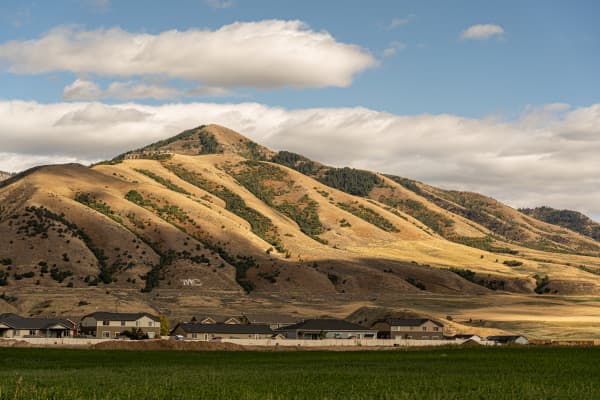
The canyon mouth defines the east side. American Fork Canyon is a genuine regional destination, and the road to it passes through the eastern edge of the city. That gives east-side residents the best recreation access in the county and the recreational traffic that comes with it.
Between those two features and the freeway to the west, the city divides into areas that feel quite distinct from one another despite being a few minutes apart. That is unusual. In much of Utah Valley the difference between two subdivisions is the year they were built. In American Fork the differences are structural.
The areas
The historic grid and downtown
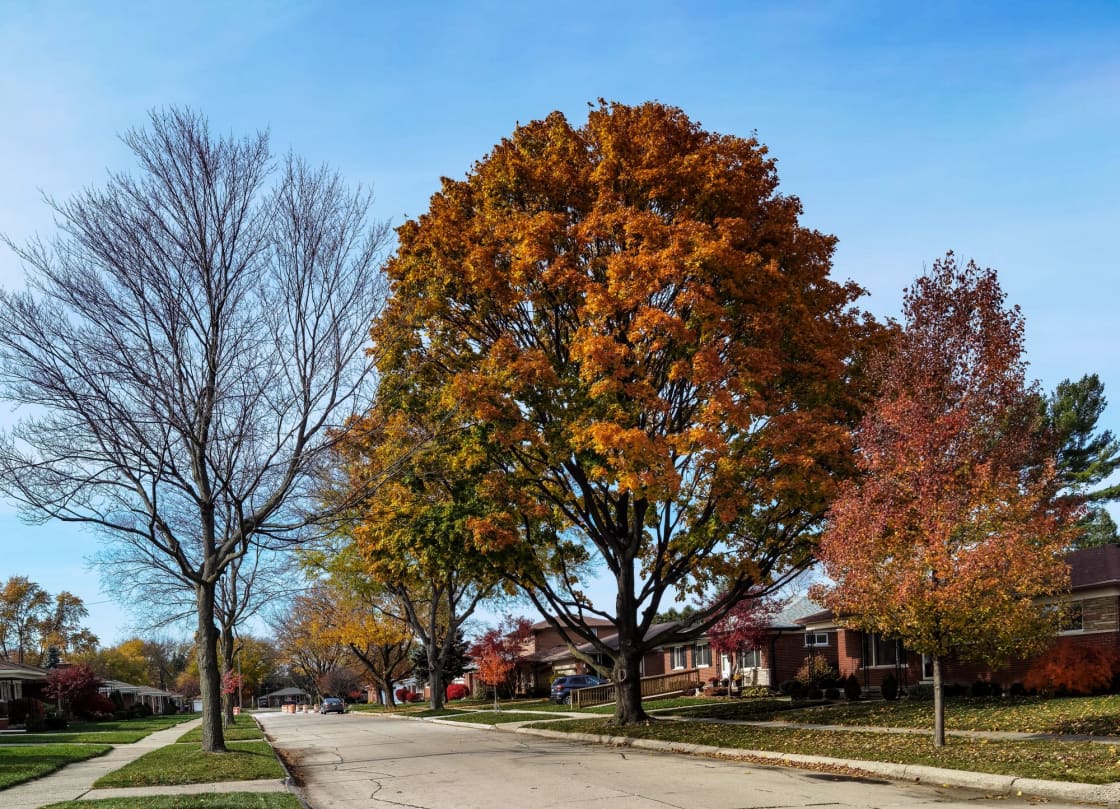
The original settlement, laid out on the wide pioneer grid. Oldest housing in the city — pioneer-era and early-1900s homes on generous lots, with the mature tree canopy that comes with a century of growth.
This is the most walkable part of the north county and the seat of the city's civic life: the library, the older parks, the revitalizing commercial core, the arts institutions. For a certain buyer this is the entire reason to choose American Fork over Lehi.
Suits: buyers who want character and grown-in streets, renovators, people who value walkable civic amenities. Costs you: old-house due diligence — roofs, sewer laterals, additions that may or may not have been permitted, and irrigation-ditch quirks that predate the subdivision era.
The hospital corridor
The band around the medical campus. Convenient in a way that is hard to overstate if you work in healthcare or manage a chronic condition, and well served by everything that clusters around a hospital.
The trade is a corridor that never fully sleeps. Emergency vehicle movement, higher through-traffic and a more commercial streetscape than a purely residential position. Some buyers find that reassuring; others find it wearing. Both reactions are legitimate and neither shows up in a listing.
Suits: healthcare workers, households that value proximity to medical services. Costs you: noise, traffic and a less residential feel.
The east side and the canyon mouth
Rising toward the mountain and the canyon entrance. Highest elevation in the city, best views, best recreation access — Timpanogos Cave, Tibble Fork, the Alpine Loop and the climbing are all effectively local.
Housing here skews newer than downtown, and the streets carry canyon traffic on summer weekends and through autumn color season.
Suits: outdoor households, buyers who want elevation and views. Costs you: canyon traffic; winter grades; the longest reach to the freeway.
The north end, the station and the freeway
Where American Fork's newest housing has gone: townhomes, apartments and attached product clustered toward I-15 and the FrontRunner station, including the transit-oriented development the city is building around the rail line.
This is where the commute case is strongest and where covenants, shared walls and HOA budgets enter the picture.
Suits: commuters to Salt Lake or Silicon Slopes, renters, buyers who want new construction and transit access. Costs you: density, HOA involvement, freeway proximity.
West and south American Fork
The flatter parts of the city, running toward the Lehi line and down toward the lake. More mixed in age and use, generally better value, and the least distinctive in character — which for a buyer working to a budget is often the point.
Suits: value-focused buyers who want American Fork's schools and services without the premium positions. Costs you: less character; furthest from both the canyon and the civic core.
The school district change, and the trap inside it
American Fork is in Alpine School District today. That ends on a known date.
Alpine dissolves on 30 June 2027, with the three successor districts operational 1 July 2027. American Fork joins Alpine, Cedar Hills, Highland, Lehi and the Utah County portion of Draper in the new Aspen Peaks School District.
Here is the part that catches people out.
Sharing a district does not mean sharing a high school. American Fork High School serves American Fork. The bench cities to the east — Highland, Alpine and Cedar Hills — feed Lone Peak High School instead. Those cities will sit inside the same district as American Fork from 2027 and will still sit in different high school boundaries.
This trips up buyers constantly, because the district conversation has been so loud for so long that people have started treating the district as the unit of comparison. It is not. The district determines governance, tax rate and board. The school boundary determines where your child goes, and the two are set by different processes.
If schools are driving your choice between north-county cities, compare assigned schools for the specific address, in the year you buy. Our guide to Alpine's dissolution covers what has been decided and what remains open, and our schools guide covers how valley schools compare more broadly.
Getting around, realistically
American Fork is one of the better-connected cities in Utah Valley: direct I-15 access, a FrontRunner commuter rail station, and UTA bus service, with typical resident commutes in the low twenties of minutes.
The city is leaning into transit rather than away from it, building a mixed-use core around the rail station. UTA's double-tracking work through the corridor is expected to increase peak frequency substantially by around the end of the decade, which — if it lands as planned — would make station proximity a more valuable attribute than it is today.
That is worth weighting in a neighborhood decision, because transit proximity is one of the few housing attributes that tends to appreciate structurally rather than cyclically. A house does not move closer to a station, and a station rarely moves away from a house.
The standard caveat applies: I-15 and the main arterials back up at peak. Between the freeway, the train and a central position, though, American Fork gives commuters genuine flexibility — more than most cities in the valley.
Reading the building eras
American Fork spans more construction periods than most north-county cities, and reading the era tells you more than reading the subdivision name.
Pioneer and early-settlement housing sits on the original grid. Small original footprints, thick walls, and almost always a century of additions layered on. The most characterful stock in the city and the most likely to hold something unexpected behind a wall.
Early-twentieth-century housing fills much of the older core — the deep-porch, built-in-cabinetry stock that grew up alongside the trees that now shade it. This is what gives downtown American Fork its look, and it is the reason the historic grid feels different from anything in Lehi or Vineyard.
Mid-century subdivisions ring the core. Ranch and split-level houses on regular lots, mostly without HOAs, forming what is effectively the city's low-drama family inventory. Systems in this stock are typically on a second or third replacement cycle, which means the expensive items may already have been addressed.
Late-century subdivisions occupy the middle and east, running toward the canyon. More uniform, more predictable, with landscaping that has had time to fill in.
Contemporary attached housing clusters toward the freeway and the station — townhomes and apartments built in the last decade or so, where covenants and shared walls are the norm rather than the exception.
The practical value of reading eras is that the era tells you what to inspect, what to budget for and what the street will look like in a decade. The subdivision name tells you what a marketing team wanted you to feel about it.
The downtown question
American Fork is doing something that most fast-growing Utah cities are not attempting: actively revitalizing an existing historic downtown rather than building a new commercial core from scratch.
That is worth understanding as a neighborhood variable, because it is an active process rather than a finished condition. A revitalizing downtown means new businesses opening in old buildings, construction and street work in progress, and a commercial mix that changes noticeably year over year. Buyers who like a place to be settled sometimes find this unsettling. Buyers who want to be near something getting better rather than something already finished find it the most interesting position in the city.
It also matters because it is the north county's clearest answer to a real problem. Lehi, Saratoga Springs and Eagle Mountain have grown enormously and have very little that functions as a traditional town center — their commercial gravity sits in freeway-adjacent centers built around parking. American Fork already has the bones of a walkable core, with a hundred and seventy years of street pattern and building stock behind it.
Whether that matters to you is a temperament question rather than a financial one. But it is one of the few genuine differentiators between north-county cities that are otherwise converging on a similar product, and it is not visible in a listing.
What differs between these areas
Age of the housing stock. The historic grid and the station district are close to opposite answers, and the difference drives your maintenance budget more than any other factor.
HOA or no HOA. The mid-city family inventory is largely HOA-free. The newest attached product is not. This is the cleanest sorting question in the city.
Whether you are inside the hospital corridor. A genuine lifestyle variable that most guides do not mention at all.
Distance to the canyon versus distance to the ramp. These pull in opposite directions across the city, and almost nobody wants both equally.
Elevation. The east side drives differently in winter than the flat does, and the difference is not trivial.
Living with the canyon
If you are shopping the east side, the canyon deserves more thought than a bullet point.
What it gives you. American Fork Canyon is one of the most heavily used recreation corridors in northern Utah, and living at its mouth converts a regional destination into a local amenity. Hiking, climbing, Timpanogos Cave, Tibble Fork Reservoir and the Alpine Loop drive all become things you can do on a weekday evening rather than plan a Saturday around. For an outdoor household that is a genuine quality-of-life change, and it is fixed in the land rather than subject to a market cycle.
What it costs you. Recreational traffic, concentrated on summer weekends and through autumn color season, moving through the eastern edge of the city to reach the canyon road. It is predictable and it is seasonal, but it is real, and residents plan around it.
What foothill positions carry generally. Elevation means grades, and grades mean winter driving and a plowing order you do not control. Foothill positions across Utah Valley also sit nearer to wildfire exposure than valley-floor ones, which affects vegetation maintenance expectations and how an insurer views the property. Raise that with an agent early rather than discovering it at underwriting.
The honest summary is that a canyon-mouth address is a strong choice for households who will use the canyon and a weak one for households who will not. It is worth being truthful with yourself about which you are, because the premium is real either way.
The civic layer
One thing distinguishes American Fork from its faster-growing neighbors, and it does not appear in any housing metric: the city has a deeper civic and arts infrastructure than its size would predict. A symphony, a regional ballet company, an arts foundation, a competitive high school music program, an established library, and a parks system built up over decades rather than delivered in a single master plan.
That matters for a neighborhood decision in a specific way. Cities that grow very fast tend to accumulate housing before they accumulate institutions, and the gap between the two can run a generation. American Fork inverted the sequence — the institutions were already here when the growth arrived. For households with children, or for anyone who wants somewhere to belong to rather than simply live in, that gap is worth weighing against a newer house elsewhere.
Renting in American Fork
Rental supply here is growing, and it is concentrated where the newest construction is — near the freeway and the station rather than scattered through residential streets. That means the typical American Fork rental is a professionally managed unit in a newer building rather than a basement apartment in a house.
Demand comes primarily from the north-county job market rather than an academic calendar, so leases turn over through the year rather than in the synchronised waves that dominate Provo. You have more flexibility about timing and less pressure to commit far ahead. Our Utah Valley rent guide covers how asking rents order across the region.
What the map doesn't tell you
Old-house due diligence is a different exercise. In the historic grid, budget for a more thorough inspection than a newer city requires: roofs, sewer laterals, permitting history, and irrigation infrastructure that predates modern subdivision standards.
The numbered grid runs from a local origin. American Fork's grid is measured from its own origin point, not Provo's. Streets that appear continuous across a city line renumber underneath you. Our address grid explainer covers why.
Canyon traffic is seasonal and predictable. It peaks on summer weekends and through autumn color. If you are shopping the east side, visit on a Saturday in September before deciding.
The edges have been settled by annexation over time, and addresses near a seam can be administratively surprising — which city responds to a 911 call, which issues a permit, which council you vote for.
The seams, city by city
Toward Lehi, on the west, development runs continuous and the two cities share the Aspen Peaks district from 2027. What changes at the line is municipal: permits, utilities, code enforcement, elections. Our Lehi neighborhoods guide covers that side area by area.
Toward Highland and Cedar Hills, on the east and northeast, the lot sizes grow and the high school changes. Same district from 2027, different school boundary — the trap described above.
Toward Pleasant Grove, on the southeast, the seam crosses a district line as well as a city line from 2027: Pleasant Grove goes to Timpanogos, American Fork to Aspen Peaks. Two adjacent addresses, two different districts.
Toward the lake, on the south, the city runs out into flatter open land with more space and fewer services.
Choosing in one pass
Where do you commute? Salt Lake favors the station district. Silicon Slopes favors the west and north. Local work opens the whole city.
Do you want the canyon or the freeway? American Fork lets you optimize for one, not both. Pick before you shop.
Old or new? The historic grid and the station district are different products, not different price points of the same product.
Which high school? Ask this early, at the address, and do not rely on the district name to answer it. This single question resolves more American Fork search confusion than any other, and it costs a few minutes to answer properly.
For the wider relocation picture, our moving to Utah Valley guide covers settling in, and buying a home near Provo covers the purchase itself.
Related Guides
- Living in American Fork — the full city guide
- Aspen Peaks School District — the district American Fork joins in 2027
- Alpine School District — what the split decided and what is still open
- American Fork Canyon — the back door to the mountains
- Lehi Neighborhoods Guide — the neighbor to the west
- Orem Neighborhoods Guide — the same treatment further south
- Spanish Fork Neighborhoods Guide — the south-valley comparison
- Annexation and city boundaries in Utah County
- The Utah address grid, explained
- American Fork vs. Pleasant Grove — choosing between the two cities
Frequently Asked Questions
What are the best neighborhoods in American Fork Utah?
Are American Fork's neighborhoods official designations?
What school district will American Fork be in after 2027?
Will everyone in Aspen Peaks attend the same high school?
Is living near American Fork Hospital an advantage or a drawback?
Why doesn't this guide publish home prices for American Fork?
Is American Fork a good place to live if I work in Lehi?
What is American Fork Canyon like as a neighbor?
Sources
The facts in this guide were checked against these sources. Hours, fees and rules change, so confirm anything time-sensitive with the source before you go. How we make Provo.com.
- About American Fork | American Fork, UT, American Fork City. Checked October 12, 2026.
- American Fork | History to Go, Utah Department of Cultural and Community Engagement. Checked October 12, 2026.
- ACS 5-Year 2024 Data Profile DP03: American Fork city, Utah, U.S. Census Bureau (via USAFacts Government Data Connector). Checked October 12, 2026.
- Voters approve split of Alpine School District, Eagle Mountain City. Checked October 12, 2026.
- Neighborhood District Program | Provo, UT, Provo City Council. Checked October 12, 2026.
- American Fork Hospital, Intermountain Health. Checked October 12, 2026.