
Provo is not an expensive place to stay, and people still overpay here constantly. The reason is almost never the hotel they chose. It is the week they chose.
Room rates in Utah Valley are driven by a university calendar and a summer event calendar far more than by property quality, and the same room can differ by a factor of three between a Tuesday in February and a Saturday in August. Once you know which weeks those are, finding a cheap room in Provo is straightforward.
The short answer
Rates in Provo are calendar-driven. The cheapest rooms are mid-week, outside the BYU calendar, outside the summer event season. The expensive dates are predictable and worth avoiding: BYU graduation, home football Saturdays, Freedom Festival week around July 4, August move-in and Education Week, and parents weekend.
If your dates are flexible, moving them beats comparing properties. If they are not, book early — on peak dates the valley genuinely sells out.
The dates that wreck a budget
This is the section that saves money, so it is worth being specific.
BYU graduation. Two commencements a year fill Provo and Orem hotels completely. Families book a year out. There is no clever workaround.
Some home football Saturdays — fewer than you would think. Autumn Saturdays with a home game at LaVell Edwards Stadium have a reputation as the reliable rate spike of the fall. When we actually priced the 2026 home slate, only one game moved rates: Notre Dame weekend ran about 27% above a no-game control, while the Halloween and Thanksgiving home games came back at or below an ordinary weekend. If you are budgeting, check which opponent is in town rather than assuming any home Saturday is expensive. Our guide for visiting fans covers the wider logistics.
Freedom Festival week, roughly July 1–5. The Freedom Festival, Stadium of Fire and the whole surrounding program pull enormous numbers into the valley. This is the single busiest lodging week of the year and it is the one people underestimate most, because they think of it as a local holiday rather than a travel event.
August: move-in and Education Week. Student move-in and BYU Education Week land close together and effectively remove the budget end of the market for a stretch of August.
Parents weekend and other university dates. Smaller spikes, same mechanism.
Everything else in the year is comparatively soft.
When it is genuinely cheap
January through early March is the softest window. Utah's winter travel is pointed at ski country to the north and south, and Provo is not on that path — so the valley's hotels run quiet while the state's are busy. Mid-week nights in this stretch are the cheapest rooms you will find here.
Mid-week generally, all year outside the peaks. Sunday through Thursday is materially cheaper than Friday and Saturday.
Late spring after graduation and before summer events, roughly the back half of May into early June, is a good pocket.
Late autumn after football, once home games are done and before the holidays, is another.
Where the cheap rooms actually are
Provo's lodging is not evenly spread, and the geography maps onto price.
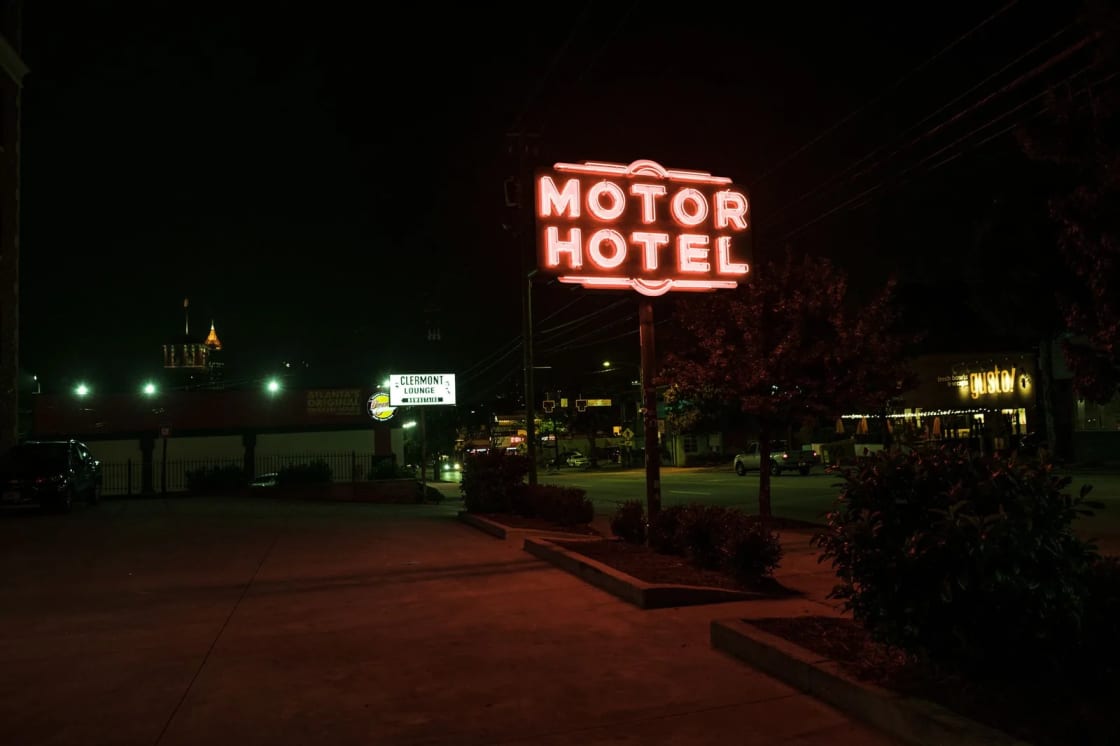
Near the freeway and along the main corridors is where the limited-service chains and older independent motels cluster. This is the budget end and it is perfectly serviceable. You trade walkability for rate.
Near campus carries a premium for obvious reasons, and the premium spikes on university dates. Our guide to hotels near BYU covers that end specifically.
Downtown has grown as a lodging area alongside the convention center, and it is the best located for anything on Center Street — including the Rooftop Concert Series — but it is not where the cheapest rooms are.
Orem, immediately north, frequently prices below comparable Provo properties. The catch is that on BYU peak dates Orem fills too, so the saving compresses precisely when you need it.
Farther south — Springville, Spanish Fork, Payson — is the genuine value play if you have a car and do not mind fifteen to twenty-five minutes each way. On a graduation weekend when Provo is full, this is often where rooms still exist.
What "cheap" gets you here, honestly
Worth setting expectations, because Provo's budget tier has a particular character.
The limited-service chains are what you expect: clean, predictable, breakfast of varying quality, free parking, no surprises in either direction. This is the safe default and most visitors should stop here.
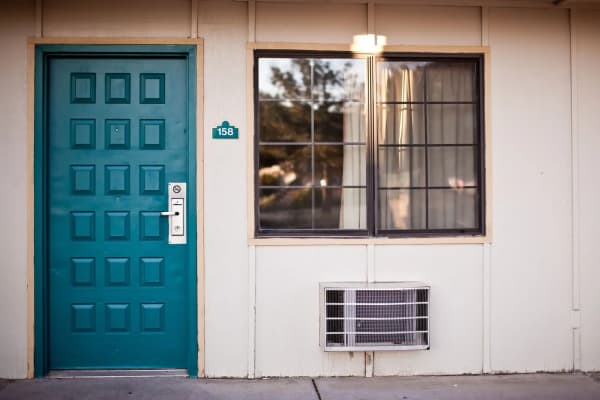
The older independent motels along the corridors are a genuine step down in age and finish. Complaints in reviews cluster around dated rooms, thin walls, tired bathrooms and inconsistent maintenance — not around safety. Provo has low crime by the standards of comparable American cities, and the budget properties are generally unremarkable rather than concerning. Read recent reviews, weight them heavily, and ignore anything more than a year or two old.
What you will not find: a hostel scene. Provo does not have one in any meaningful sense, and travelers arriving with that expectation are disappointed.
Free parking is a real saving, and people forget to count it
Almost every hotel in Provo and Orem includes free parking. In a lot of American cities that line is $25 to $50 a night.
This matters when you are comparing a Provo rate against your intuition from other trips. A $110 room with free parking and free breakfast in Provo is not comparable to a $110 room in a city where you will pay another $40 by morning. The all-in number here is usually close to the sticker.
Resort fees are also rare in this market, though not unheard of — check the total at checkout rather than the nightly rate.
Short-term rentals
Apartments and houses are a real part of the market here, and they change the calculation for some trips.
They tend to win on groups and longer stays, where a kitchen and multiple bedrooms beat several hotel rooms outright. Families in town for a graduation or a week of summer events often do better this way, assuming they book early enough.
They tend to lose on short stays and last-minute bookings, once cleaning fees are amortized over one or two nights.
Two local notes. Regulation of short-term rentals varies by city across Utah County, so a listing's legality and availability can shift; book through a platform with a real cancellation policy. And the same peak dates apply — a rental during Freedom Festival week is subject to exactly the same supply crunch as a hotel.
Getting around without a car
Worth knowing before you trade location for price, because it determines whether a cheap room in the wrong place is actually cheap.
UVX is the valley's bus rapid transit line and it runs frequently along the Provo–Orem corridor, connecting downtown Provo, BYU, and UVU. If your hotel is near the line and your business is on it, you do not need a car. Our UVX guide covers routes and hours.
FrontRunner connects the valley north to Salt Lake City and the airport corridor, which matters if you are flying into SLC rather than Provo.
Off the corridor, though, Utah Valley is a driving place. A cheap room in Springville with no car is a different proposition than a cheap room in Orem near the UVX line. Count the rideshare cost before congratulating yourself on the rate.
Eating cheaply while you are here
The lodging saving compounds if you do not undo it at dinner, and Provo is unusually good for this.
The student population supports a deep inexpensive-food market that most cities this size do not have, and the portions reflect who it is aimed at. Our guides to cheap eats in Provo and kids eat free deals both cover the reliable options.
The other half of the equation: an enormous amount of what makes the valley worth visiting is free. The canyons, the trails, the parks, the farmers market, the Balloon Fest, Colonial Days and most of the summer festival calendar cost nothing. A cheap room plus a free week is a genuinely inexpensive trip.
Flying in: Provo Airport versus Salt Lake City
The airport choice affects the total cost of a Provo trip more than most people expect, and it interacts with lodging.
Provo Airport is genuinely in Provo, minutes from most of the city's hotels. When it serves your route, it removes an hour of driving and a rental-car day from the trip. The catch is that its route network is limited compared with a major hub, and fares can run higher on thinner routes.
Salt Lake City International is roughly 45 minutes north in ordinary traffic and carries far more routes and competition, which frequently means a materially cheaper airfare. The offset is ground transport: a rental car, a shuttle, or FrontRunner plus a connection at the Provo end.
The arithmetic that matters: a cheaper SLC fare is only cheaper after you have added ground transport for the whole trip. For a solo traveler staying on the UVX corridor, FrontRunner makes SLC work. For a family of five who will need a car anyway, the rental was happening regardless and SLC usually wins. Our comparison of PVU versus SLC works the numbers, and getting from SLC to Provo covers the ground leg.
Extended stays and weekly rates
If you are here for a week or more, stop shopping for nightly rates.
Extended-stay properties price by the week and the month, and the per-night figure drops sharply past about five nights. A kitchen also removes a meaningful share of the food budget on a long trip, which is the second half of the saving.
This is a common shape for visits to Provo specifically — people come for a semester start, a summer internship, a medical stay, or a stretch of family business, and those are exactly the trips where nightly hotel pricing is the wrong instrument. Short-term rentals compete hard in this window too.
The one caution: verify whether housekeeping, laundry and parking are included, since extended-stay properties vary more on those than standard hotels do.
What the seasons actually feel like
Since the cheap weeks are winter weeks, it is worth knowing what you are buying.
Winter in Provo is cold and often clear, with snow in the valley and considerably more in the canyons. The valley also gets winter inversions — a temperature layer that traps air and degrades air quality for stretches of days, which is worth knowing if anyone in your group has respiratory issues. Roads are well managed; canyon roads are a different matter and want proper tires.
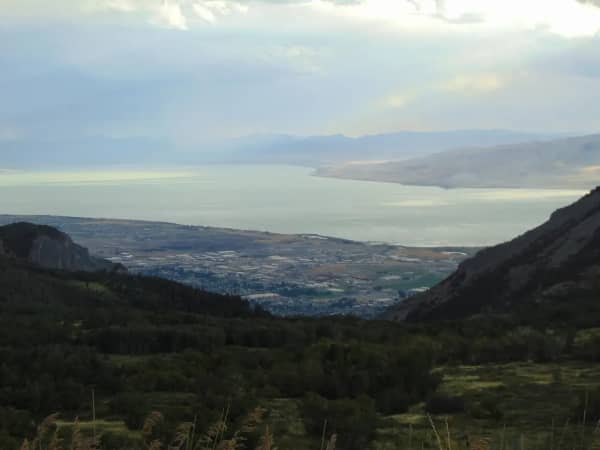
Spring is unstable and beautiful, with the mountains still white behind a green valley. This is arguably the best-value season for scenery per dollar.
Summer is hot and dry, with afternoon highs regularly in the nineties, cool mornings, and the entire event calendar packed into it. It is the most expensive season and the most eventful.
Autumn is the one locals recommend without hesitation: warm days, cold nights, and canyon color through late September and October. Football Saturdays are expensive; the mid-weeks around them are not.
If you are traveling for a BYU event
A specific note, because a large share of visitors to Provo are here for exactly one reason.
Assume the peak-date rules apply in full and book as early as the event is known. For graduation this means as soon as the date is published, not when travel plans firm up. Families who wait routinely end up in the south valley or in Orem paying more than a Provo room would have cost in January.
Consider staying slightly out and driving in. On event weekends the difference between a room near campus and a room fifteen minutes south can be substantial, and the traffic pattern on those days makes the drive less painful than it sounds because everyone is going to the same place at the same time.
Book refundable where you can. University dates move occasionally, and a non-refundable rate on a shifting date is a bad trade for a modest discount.
Accessibility and family rooms
Two practical constraints that narrow the budget field more than most travelers anticipate.
Accessible rooms are limited in number at any given property and go first on busy dates. If you need one, this converts an ordinary booking into a peak booking — reserve early even for a soft week, and confirm the specifics directly with the hotel rather than trusting a booking-site icon.
Rooms for larger families are the other pinch. Much of Provo's budget inventory is two-queen rooms with a stated occupancy of four, and families of five or six find their options thin quickly. The usual answers are a suite at a higher rate, two rooms, or a short-term rental — and for groups of five or more the rental is very often the cheapest of the three.
Cribs and rollaways are commonly available and commonly limited. Ask when booking, not at check-in.
Booking strategy, briefly
Three things that actually move the number, in order of impact.
Move your dates. A Tuesday instead of a Saturday, or a week either side of a university event, does more than any other single action. This is the whole game.
Widen your map. Include Orem and the south valley in the search, not just Provo. The drive is short and the inventory is real.
Book early for peaks, late for troughs. Peak dates reward booking months ahead because supply runs out. Ordinary dates often reward waiting, because unsold rooms get discounted. Applying the wrong strategy to the wrong window is the most common mistake.
One thing that does not move the number much: exhaustive comparison across booking sites. The spread between platforms on a given property is usually small compared with the spread between weeks.
The honest assessment
Provo is a cheap place to stay if you are willing to be slightly flexible and a moderately expensive one if you are not, and there is very little middle ground.
The traveler who does well here books a mid-week night in a limited-service chain along a corridor, pays a modest rate with free parking and breakfast included, and spends the savings on nothing because most of what they came for is free.
The traveler who does badly arrives on the Fourth of July weekend having booked in June, pays a premium for a room in Payson, and concludes Utah Valley is expensive. It is not. It was full.
If you want something with more character than a corridor chain and are willing to pay a little more for it, the other end of the market is worth a look — our guide to unique places to stay in Utah Valley covers the historic inns and the genuinely unusual options.
The rule that moved the real number to the front of the page
This guide has long advised comparing what you actually pay at checkout rather than the nightly rate. That advice is still sound, but the reason has changed. Since May 12, 2025, a federal rule has required the number shown to you up front to be the comprehensive one — so a large gap between the first figure and the last is now a compliance question rather than merely an annoyance.
The rule is the FTC's Rule on Unfair or Deceptive Fees, 16 C.F.R. Part 464. Its reach is narrow and, for a hotel guide, precisely on target: § 464.1 defines a covered good or service as live-event tickets or short-term lodging, and expressly includes temporary sleeping accommodations at a hotel, motel, inn, short-term rental, vacation rental "or other place of lodging."
What "total price" means when a hotel says it
§ 464.1 defines total price as the maximum total of all fees or charges you must pay for the room and any mandatory ancillary good or service, with three permitted exclusions: government charges, shipping charges, and charges for optional extras you select. Everything else that is unavoidable belongs in the advertised figure.
§ 464.2(b) then requires that figure to be displayed more prominently than any other pricing information. A prominent nightly rate beside a faint all-in total is the arrangement the subsection was written against.
FTC staff guidance supplies the two lodging examples that matter most here. A resort charging a nightly rate plus a mandatory resort fee per day must include the resort fee in the total price. And a vacation rental that adds a cleaning fee you must pay in addition to the nightly rate must include the cleaning fee in the total price.
There is a sharper example still, and it is the one worth memorizing. Staff describe a hotel that automatically charges a resort fee at check-in but waives it if a guest notices and challenges it. That fee is mandatory under the rule, for two stated reasons: a reasonable consumer would expect use of the hotel's facilities to be part of the stay, and charging it automatically effectively limits the guest's ability to consent. A fee that disappears when you push back is not optional; it is a mandatory fee with a complaints process.
What may still be left out — and what has to happen next
Utah sales tax and the county's transient room tax are government charges, so a total price that excludes them is compliant. That is why the number you see and the number you are charged can legitimately differ.
But the rule controls what happens after the exclusion. § 464.2(c)(1) requires the nature, purpose and amount of any excluded charge to be disclosed clearly and conspicuously before you consent to pay, and to identify what the charge is for. § 464.2(c)(2) requires the final amount of payment to be disclosed at the same stage. In practice: taxes may be added late, but they must be named, quantified and totaled before the payment button — not after it.
§ 464.3 covers the rest. Misrepresenting the nature, purpose, amount or refundability of a charge is a separate violation. Staff give an example worth recognizing on a booking page: an "environmental fee" charged by a hotel that does not actually use it for sustainability or conservation.
Three ways to use this while booking a cheap room here
Compare two up-front totals, not two nightly rates. That is now the comparison the rule is designed to make possible, and it is the only one that survives contact with differing fee structures. On a one- or two-night stay a fixed per-stay fee lands hardest, which is exactly the short-trip case.
Treat an unexplained line as a question, not a fact. The rule entitles you to the purpose of a charge, not just its existence, and staff guidance specifically discourages undifferentiated labels.
Remember what the rule does not cover. It reaches short-term lodging, not housing. FTC staff draw the line explicitly: long-term or other rental housing involving an ongoing landlord-tenant relationship, short-term lease extensions, and temporary corporate housing offered on long-term lease terms all sit outside it. There is no fixed length of stay in the rule; the character of the arrangement decides. So a monthly extended-stay booking may or may not be covered, and the deposit-and-fee structure of an actual lease is governed by Utah landlord-tenant law instead.
Rates, fee practices and which properties charge what all change; verify the total with the property or platform before booking rather than relying on any guide. For lodging further south in the county, see Spanish Fork hotels.
Frequently Asked Questions
When are hotels cheapest in Provo?
What are the most expensive dates to visit Provo?
Is it cheaper to stay in Orem than Provo?
Are there hostels in Provo?
How far in advance should I book a Provo hotel?
Do Provo hotels include breakfast and parking?
Is it safe to stay in a cheap motel in Provo?
What is the cheapest way to visit Provo overall?