
More on The North Bench: every guide we have published there, in one place.
Alpine is where Utah Valley runs out of room.
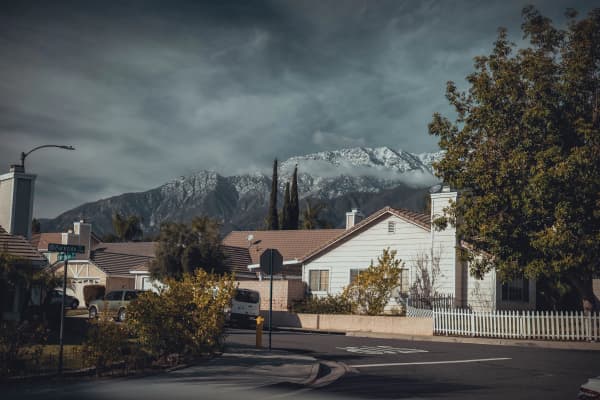
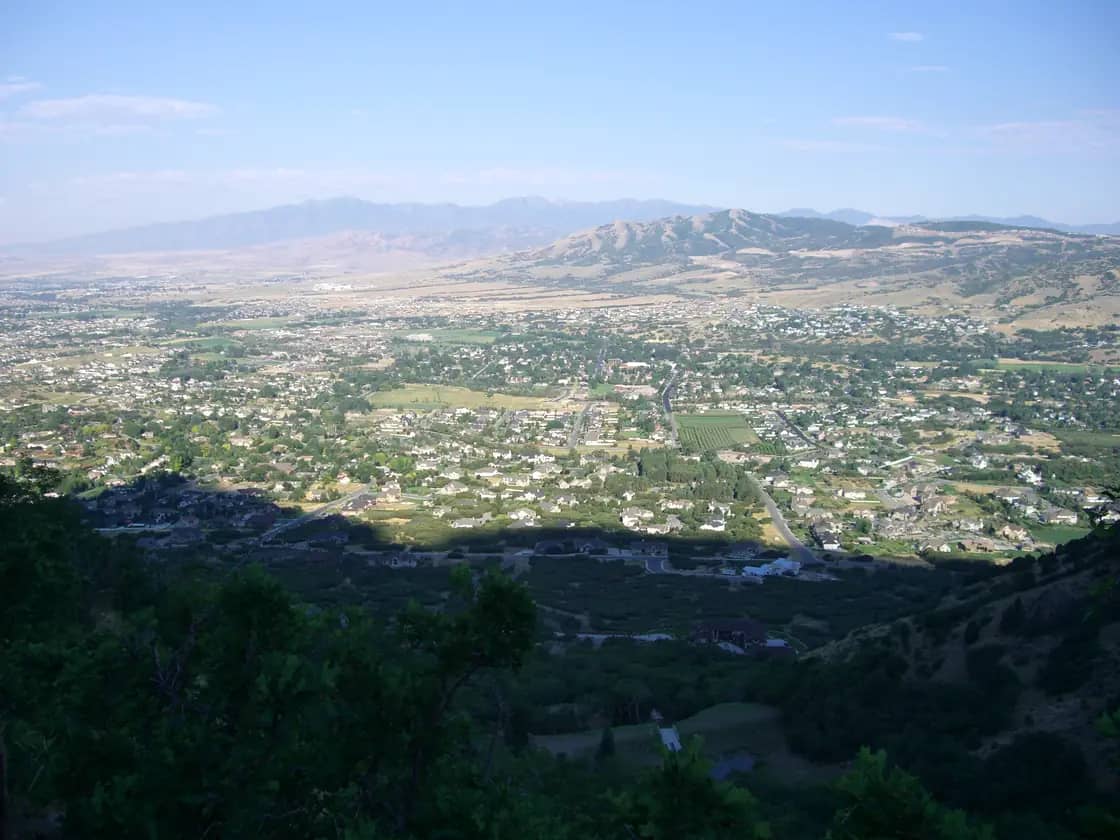
Drive north through American Fork, turn east, and the road climbs until the subdivisions stop and the mountains take over. That's Alpine — a small city pressed into the northeastern corner of the valley, sitting several hundred feet above the valley floor with the Lone Peak Wilderness rising directly behind it.
It is not a convenient place to live, and almost nobody who lives there considers that a criticism. Alpine is what you choose when you'd rather drive ten extra minutes for groceries than give up the view out the kitchen window.
Here's what it's like.
The short version
Alpine had 10,251 residents at the 2020 census, and sits high enough on the bench that the weather is noticeably different from Provo. It was settled in 1850 and incorporated in January 1855, making it one of the older communities in the county, though almost nothing about its current housing stock suggests it.
What draws people:
- Immediate mountain access — trailheads into the Lone Peak Wilderness within the city, and the mouth of American Fork Canyon minutes away.
- Large lots and custom homes in a market with very little tract housing.
- Quiet, low-density, low-crime small-city feel.
- Proximity to Silicon Slopes without living in it.
What to weigh:
- Cost. This is one of the most expensive markets in the county.
- Almost no commercial base. You will drive to American Fork or Highland for essentially everything.
- Real winter. More snow than the valley floor, on steeper roads.
- Distance from Provo and the south valley.
A town the mountains shaped
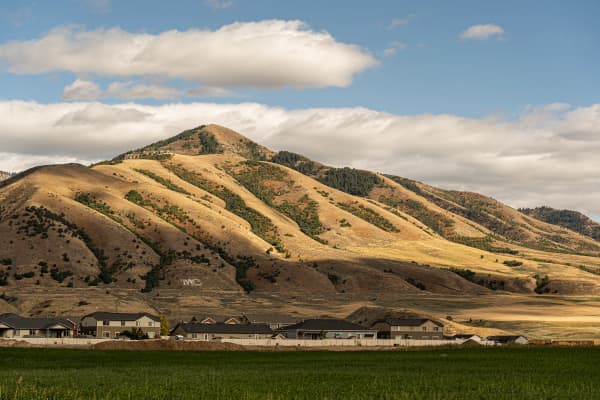
Alpine's boundaries were drawn by geography more than planning. The city occupies a pocket at the base of the Wasatch, bounded by mountains on the east and north and by Highland to the south. That containment is why Alpine hasn't sprawled the way Lehi or Saratoga Springs have — there simply isn't much flat land left, and what remains is expensive.
The upshot is a city that has stayed small while everything around it multiplied. Utah County added hundreds of thousands of people over the past few decades; Alpine added a few thousand. Residents tend to like it that way, and city politics here reflect a consistent preference for slow, low-density growth.
The median age is about 38.7, with roughly 29% of residents under 18 (American Community Survey, 2020-2024), well above Utah County's median age of about 25.8. That reflects a market where buying in generally requires established income.
Housing in Alpine
Alpine is a premium market, full stop.
The housing stock skews heavily toward larger lots and custom or semi-custom homes, much of it built from the 1990s onward as the city filled in its available benches. Homes back up to foothills, and mountain views are the standard rather than the premium upgrade. There is very little condo, townhome, or starter inventory — a buyer looking for an entry point into Utah County will not find it here.
Because these are larger, more distinctive properties, the market can move more slowly than the faster-turning inventory in nearby growth cities. That cuts both ways: less competition on a given listing, but a smaller pool of comparable homes to choose from.
Due diligence here looks different than it does in a master-planned growth city. With custom homes on bench terrain, the questions run to how a hillside lot drains, what the winter snow load and plowing reality is on the upper streets, and how a one-of-a-kind house will eventually resell in a market with few true comparables. Formal HOAs matter less than in the subdivision cities; the character of Alpine is maintained more by lot size and zoning than by covenants, though newer pockets do carry them — check the specific property rather than assuming either way.
One more thing that belongs in a buying decision here even though it isn't about houses: Alpine's schools are mid-transition, with the city joining the new Aspen Peaks School District in 2027 — the schools section below covers it, and our guide to the district split explains the whole three-district picture.
Buyers who love the feel but not the price typically look at Highland or Cedar Hills immediately south and east — same mountains, same schools, generally somewhat lower entry costs — or at Mapleton on the south end of the valley for a similar large-lot character.
To see what's currently listed across the valley, our real estate marketplace covers homes, rentals, and student housing, and the buying a home in Utah Valley guide walks through the process.
Schools: a district in transition
This is the most important thing for families to understand about Alpine right now, and it applies to much of north Utah County.
Alpine is currently in the Alpine School District — long the largest district in Utah. That district is being dissolved. Following a 2024 ballot measure, it is splitting into three, and Alpine will belong to the new Aspen Peaks School District, alongside American Fork, Cedar Hills, Highland, Lehi, and a portion of Draper.
The key dates: the new districts become operational July 1, 2027, serving students for the 2027-28 school year. New school boards were elected in November 2025 and have been working through naming, staffing, and policy since.
Alpine students have traditionally attended Lone Peak High School, which also serves Highland and Cedar Hills and has a strong athletic and academic reputation.
Two honest cautions. First, boundaries can shift during a transition of this scale, and a district split of this size has no recent precedent in Utah. Second, individual school assignment for a specific address should always be verified directly rather than assumed — that's true anywhere, and doubly true here for the next two years. Our best schools in Provo and Orem guide covers the broader valley picture.
Recreation: the actual reason people move here
Alpine's selling point is that the outdoors starts at the edge of town.
Lone Peak Wilderness rises directly behind the city, with trailheads accessible from Alpine itself, and Lambert Park, with city-owned trails on the edge of town, sits below them; our north bench things-to-do guide covers both. Lone Peak is one of the more demanding summits on the Wasatch Front, and its Hamongog route starts at Alpine's Schoolhouse Springs trailhead, while the Dry Creek Trailhead at the end of Grove Drive leads to Horsetail Falls and on to Box Elder Peak, and the surrounding terrain offers everything from short evening walks to serious all-day objectives.
American Fork Canyon is minutes away — the gateway to Timpanogos Cave, the Alpine Loop scenic drive, and the Timpooneke trailhead for the Mount Timpanogos summit. Living in Alpine means the valley's marquee hike is a fifteen-minute drive, not an expedition.
Winter recreation is close too. Skiing at Sundance is reachable over the Alpine Loop in season, with the Cottonwood Canyons and Park City resorts within reasonable range to the north.
For a full picture of what's around, the complete Provo hiking guide and things to do in Utah Valley cover the valley's recreation in depth.
Winter is a real consideration
Prospective buyers from outside Utah consistently underestimate this one.
Alpine gets more snow than the valley floor, in a season that tends to start earlier and end later.
Practically, that means:
- More shoveling and plowing than neighbors lower in the valley.
- Steeper residential roads, which matter a great deal in a storm.
- A strong case for all-wheel drive and proper winter tires.
- A longer, colder winter overall.
Most residents consider this a fair trade. But it's worth walking a prospective street in February rather than only in June.
Getting around and the commute
Alpine has no freeway access of its own. Commuters descend through Highland or American Fork to reach I-15, adding a few minutes on both ends of every trip.
Rough drive times, traffic depending:
- Silicon Slopes / Lehi: 15–25 minutes
- American Fork: 10 minutes
- Provo: 25–35 minutes
- Salt Lake City: 40–55 minutes
- Salt Lake City International Airport: roughly 45–60 minutes
That geography makes Alpine an excellent fit for the Lehi and Draper tech corridor and a longer daily haul for anyone working in Provo, at BYU, or further south. Our FrontRunner commuting guide covers rail options for the Salt Lake commute, with American Fork and Lehi the nearest stations.
Public transit within Alpine itself is limited — this is a car-dependent city, and planning for two vehicles per household is realistic.
Shopping, dining, and daily life
Alpine has very little in-city commercial development, and that's intentional.
For groceries, restaurants, and services, residents drive to American Fork or Highland, both close. The Shops at Riverwoods and Orem's retail corridor are 20 minutes south; Lehi's rapidly expanding commercial base is similar to the north.
Our north bench restaurant guide is honest about how little sits inside Alpine itself and where to drive instead; the valley's wider dining scene is covered in our best restaurants guide and the north-county-focused best restaurants in Lehi.
What Alpine has instead is community infrastructure: city parks, well-used trails, an active recreation program, and the kind of neighborhood density where people know each other. It's a town that runs on Little League and neighbors rather than on retail.
Who provides your utilities
Alpine sits in Rocky Mountain Power territory, which places it on the private-utility side of a divide that runs right through Utah County.
The distinction matters more than it sounds. Six cities in this valley own their electric utilities outright — Provo, Lehi, Springville, Spanish Fork, Payson and Salem — and in those places rate decisions are made by an elected city council, with the wholesale supply handled through joint agencies the cities themselves govern. In Alpine, electricity is bought from a regulated investor-owned utility and rate changes are argued before the Public Service Commission. Neither model is straightforwardly better for a household. Public power cities can point to local control and, in several cases, competitive average bills; Rocky Mountain Power brings the scale, the crews and the capital of a very large system. But it is a real structural difference between Alpine and the towns twenty miles south, and it shows up in who you can complain to.
Alpine is also not a UTOPIA Fiber city, which is worth flagging because neighboring Cedar Hills is. The open-access municipal fiber network that gives Cedar Hills, Lindon, Orem, Pleasant Grove and Payson residents a choice of competing providers on city-owned infrastructure stops at Alpine's boundary. Internet here is a private-provider market, and service quality varies noticeably between the older streets and the newer benches.
Water is the utility Alpine residents argue about most, and for good reason in a foothill city with large lots and long summers. Properties may draw on both treated culinary water and untreated secondary water for irrigation, and whether a given parcel has a secondary connection is a property-level fact rather than a city-level one. Utah's statewide metering law is steadily changing the economics of the second pipe. Our guide to secondary water and water shares sets out the shares, the buyer's checklist and the deadline.
Natural gas is Enbridge Gas Utah, the utility formerly known as Questar and then Dominion Energy Utah.
Who responds when you call 911
Alpine does not run its own police or fire department. It shares one.
The Lone Peak Public Safety District provides police, animal control and fire services, operating from Civic Center Drive in Highland. The district is a joint arrangement, governed by a board drawn from its member cities, with a fire chief and a police chief reporting to it. For Alpine residents, the day-to-day experience is a local department — Lone Peak Police describe themselves as serving the Alpine and Highland communities specifically, and the scale is small enough that officers know the ground.
The membership is not as tidy as the name suggests, and this trips people up. Alpine and Highland share both police and fire through the district. Cedar Hills' own page says its fire and emergency medical services come through a contract with the American Fork Fire Department, even though some official pages describe Lone Peak as covering all three communities. If you are comparing the three north-bench cities, this is a real difference in how each is governed and billed, not a technicality.
The financing formula between the member cities has been an active subject at the district board, which has worked through the interlocal agreement covering how fire costs are split. That is unusually visible for a public-safety arrangement — agendas and minutes are posted to the state public meeting notice site — and anyone weighing a move to Alpine who cares about staffing, response times or where the budget is heading can read the board packets rather than guess.
One geography note specific to Alpine: the city's canyon-adjacent position means wildland fire and remote-area medical access are genuine operational concerns, and the district equips for canyon and wildland response accordingly. For what winter and canyon proximity mean day to day, see the sections above.
Library access, which is not what you expect
Alpine has no city library, and new residents are often surprised by it.
Utah County runs no county-wide library system, so library access is a city-by-city matter and Alpine has chosen not to fund a building. What it has instead is the Utah County Bookmobile, which the city says visits every two weeks on Tuesdays and is free to Alpine residents, with stops that have included Creekside Park, a senior living community and a church parking lot. Sign up at the vehicle itself and the card also opens the Libby digital collection.
The second option is worth knowing because it comes with money attached. Alpine residents may buy a nonresident card at the Highland City Library, and Alpine reimburses its residents for part of that cost — a subsidy many residents do not know about. Confirm the current fee with Highland directly before paying: the city's own pages have published it as both $70 and $90 a year, which is a good reason to ask rather than assume. Our guide to libraries in Utah County explains why the fees exist at all.
Who Alpine is right for
A strong fit if: you want mountain access from your front door, you have the budget for a premium market, you work in Lehi or Draper, and you value quiet over convenience.
Look elsewhere if: you need walkable amenities, you're buying your first home, you commute daily to Provo or south county, or a long snowy winter sounds like a burden rather than a feature.
Consider next door: Highland for a similar feel with more services, Cedar Hills for a somewhat more accessible entry point, American Fork for full amenities and freeway access, or Mapleton for comparable character at the valley's south end.
If you're weighing several Utah Valley cities against each other, our city guides cover every community in the valley, and the moving to Provo guide handles the practical side of relocating here — utilities, timing, and what to expect in your first year.
Alpine asks you to drive a little farther for everything. What you get back is a town where the trail starts where the pavement ends.
Related Guides
- Aspen Peaks School District: A Parent's Guide to Utah County's New Largest District
- School Boundaries and Open Enrollment in Utah Valley: How to Actually Change Schools
- Which School District Am I In? Utah County Before and After the Alpine Split
- Who Decides What in Utah Valley — Alpine's ten bodies and where each posts
- Highland, Alpine and Cedar Hills neighborhoods
- Two high schools, one district: Lone Peak vs American Fork High
Frequently Asked Questions
Is Alpine, Utah a good place to live?
How big is Alpine, Utah?
What school district is Alpine in?
Does Alpine get more snow than the rest of Utah Valley?
What is the commute like from Alpine?
Is Alpine expensive?
Who provides police and fire services in Alpine?
Is Alpine on municipal power or Rocky Mountain Power?
Sources
The facts in this guide were checked against these sources. Hours, fees and rules change, so confirm anything time-sensitive with the source before you go. How we make Provo.com.
- 2020 Decennial Census P1 (Alpine city), U.S. Census Bureau. Checked October 12, 2026.
- SUB-EST2025 Utah places, U.S. Census Bureau. Checked October 12, 2026.
- ACS 5-year 2024 S0101 Age and Sex, U.S. Census Bureau. Checked October 12, 2026.
- Alpine City History, Alpine City. Checked October 12, 2026.
- Fire / Ambulance, City of Cedar Hills. Checked October 12, 2026.
- Cedar Hills: Alpine School District split results, City of Cedar Hills. Checked October 12, 2026.