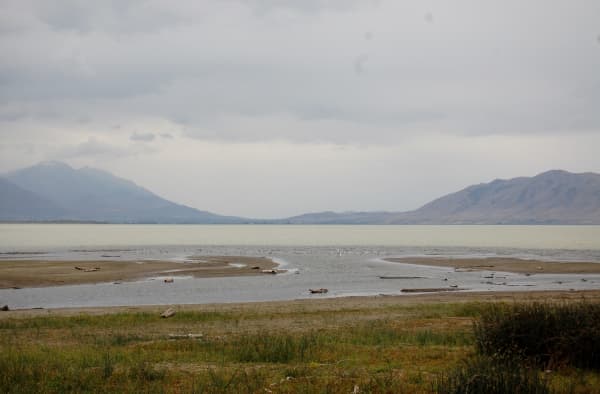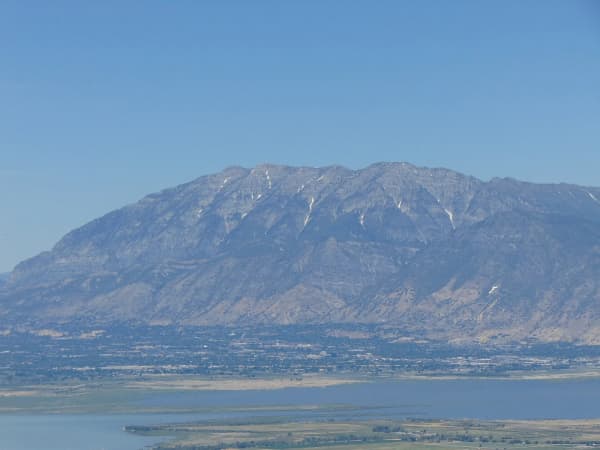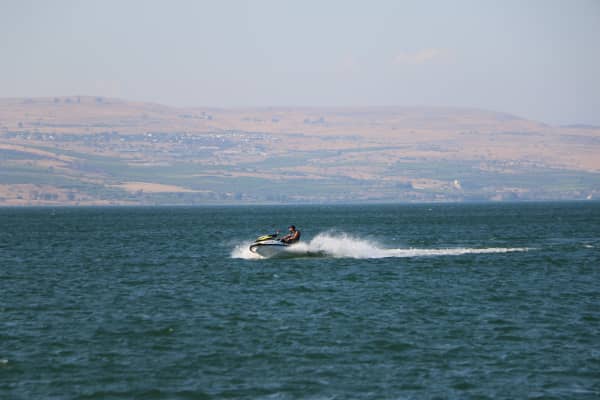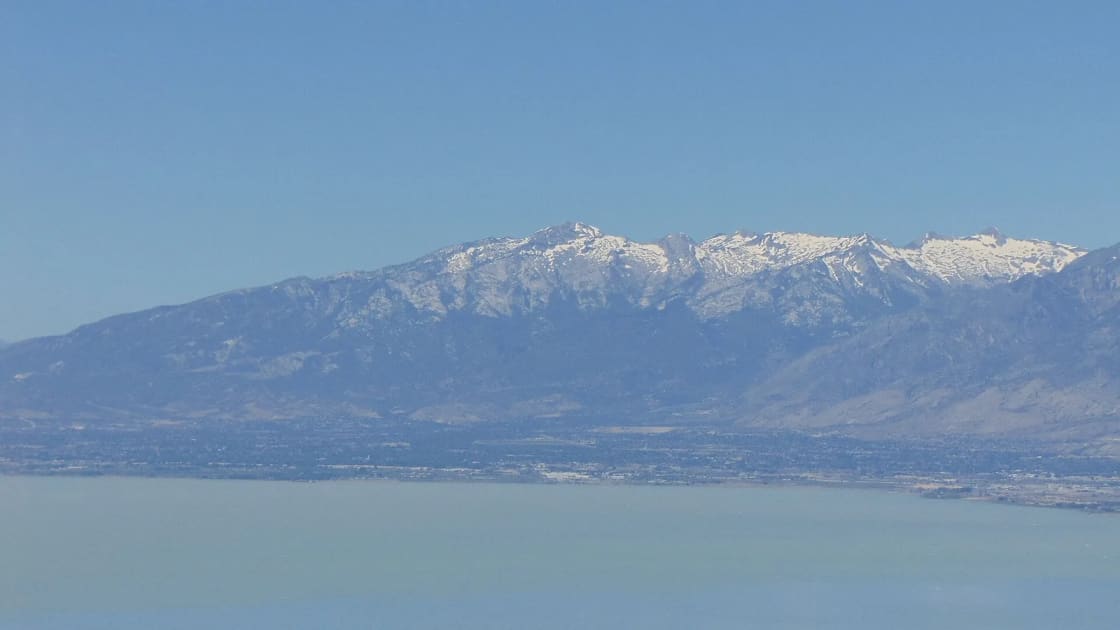

Most people's mental picture of Utah Lake is the northern shore — Utah Lake State Park, the Provo marina, the busy launches at American Fork and Lindon. The south end is a different lake entirely: quieter, more agricultural, backed by West Mountain, and mostly populated by people fishing.
Lincoln Beach is the access point for that half. It is a Utah County park at the tip of a peninsula formed by the northern end of West Mountain, and it has had a genuine resurgence — the county installed a boat ramp, a floating dock and a pavilion, upgrading what had been an afterthought into a real facility.
It is also the site on Utah Lake with the longest history of harmful algal bloom advisories, which means the single most useful thing this page can tell you is check conditions before you drive. Everything else follows from that.
The basics
Address: 4700 Lincoln Beach Road, Spanish Fork Managed by: Utah County — 801-851-8600 Hours: typically early morning to late evening, seven days a week, including Sunday — one of the few recreation sites in the county that does not close on Sundays Drive time: roughly twenty-five minutes from Provo, fifteen from central Spanish Fork
What is there: a boat ramp, a floating dock at the jetty, a sand beach, a pavilion, picnicking, restrooms, and a campground with hookups. Adjacent wetlands make it one of the better birdwatching spots on the lake.
Check the advisory first. Every time.
This is not boilerplate. Lincoln Beach has a specific and repeated history with cyanobacteria, and it matters more here than at most access points.
As of early August 2026, Utah Lake is under a lake-wide harmful algal bloom warning advisory covering every marina and beach. The Utah County Health Department posted warnings at individual sites through July — including Lincoln Marina Beach, the Saratoga Springs marina picnic area, American Fork Marina and the Lindon marinas — before conditions escalated to the full lake in late July.
That is the situation as this guide is written, and it will change. Conditions on this lake move week to week, which is exactly why the advisory system exists and why a static webpage should not be your source.
Check the Utah Department of Environmental Quality's recreational water quality map before you drive. The county's own advisory identifies it as the authoritative source. State crews visit priority waterbodies based on health risk and verified reports, prioritizing waters at risk for cyanobacteria and waters with high recreational use, so the map genuinely updates.
What an advisory actually means
Utah runs a three-tier system, and the tiers mean different things in practice:
- A Health Watch is the lowest level.
- A Warning Advisory means a threshold has been exceeded and a bloom or waterborne pathogen is likely present. Contact recreation — swimming, waterskiing — is not advised. Motorized boating and sailing are generally still considered fine, provided you avoid cutting through visible scum, because doing so can throw toxins into the air.
- A Danger Advisory means the bloom is very large or toxin levels are high, and the waterbody is often closed outright.
Lincoln Beach has been through all three. In one past summer the beach and marina were closed entirely after testing found cyanobacteria at many multiples of the recreational danger threshold, and it reopened only after a month of falling counts — and then remained under a warning into the autumn.
Our Utah Lake guide covers the science properly, including the counterintuitive finding that this lake's worst blooms tend to form when the water gets clearer rather than murkier.
What to do about it
When in doubt, stay out is the phrase state officials repeat, and it is the correct rule.
- Do not swim in water that looks like pea soup, paint, or has a scum or foam layer
- Do not let children play with scum at the shoreline
- Keep dogs out of the water entirely — pets are the most frequent victims, and rinse them immediately if they do get in
- Fishing is generally still permitted under a warning; clean fish thoroughly and discard skin and guts
- Never drink or boil lake water — boiling releases more toxins, not fewer
- Shower after contact, and wash hands before eating
If you or a pet have been exposed, the Utah Poison Control Center is 800-222-1222. Suspected blooms can be reported to the state's 24-hour spill line, 801-536-4123 — photographs help.
What the site is actually like
Advisory permitting, Lincoln Beach is a pleasant and genuinely quiet place, and the reasons people like it are consistent.
It is not crowded. This is the primary draw. Anglers and boaters choose it specifically to avoid queuing at a ramp, and even on summer weekends it rarely feels packed the way the northern marinas do.
The sand is soft, which sounds trivial and is not — much of Utah Lake's shoreline is mud, reeds or rock. Families with young children mention the sand specifically.
The mountain backdrop is excellent. You are sitting under West Mountain looking north across the widest part of the lake, and on a still evening it is one of the better views in the county.
The wetlands are the sleeper attraction. Immediately to the right of the launch there is a wetland area that paddlers describe as full of birds and fish. For anyone with a kayak and an interest in wildlife, that is a better reason to come than the beach is. See kayaking and paddleboarding around Provo for launch logistics.
Fishing is the main event. It is a well-known catfish spot, and a large share of the people you see on any given day are there for that rather than for the water. Fishing near Provo covers the lake's species and regulations.
The honest downsides
The bugs. Visitors are unanimous and slightly traumatized about this. Midges and mosquitoes near the wetlands are heavy, and they are worst around dusk on still evenings — which is otherwise the prettiest time to be there. DEET-based repellent generally works, with the usual caveat that results vary. Wind and cold both suppress them.
The smell, some days. Utah Lake in high summer, particularly in a sheltered bay, can have an odor. Visitors mention it without it ruining their day, but it is worth expecting.
The wind, and the storms you cannot see coming. This is the most practically important warning in the reviews. West Mountain blocks your view of approaching weather. A boater on this part of the lake can be caught out by a storm that would have been visible for twenty minutes from the northern shore. Utah Lake is shallow and gets rough fast. Watch the forecast rather than the horizon.
Facilities are functional, not plush. The restrooms get good marks for cleanliness and are heated, which campers appreciate. There is no food, no rentals and no staff presence of the kind you get at a state park.
Camping
Lincoln Beach Campground sits alongside the day-use area with sites offering electric and water hookups, restrooms and a lakeside setting under the mountain.
The reviews are more mixed than the day-use park's, and the criticism is specific:
Reported rates have run around forty dollars a night, which multiple campers consider high for a plain lakeside site with no amenities beyond hookups. That view is consistent enough to take seriously.
The hookups can be awkward. One camper describes having to turn the rig around to reach the dump connection after only managing water and power on the first orientation. Another reports arriving on a reservation with electric and finding it not working, with no camp host on site and no answer on the phone. Arrive with a plan B.
The setting is genuinely good — clean heated bathrooms draw repeated praise, and the mountain-and-water backdrop is the reason people book.
The birds are loud. Rooftop-tent campers in particular report being kept awake. This is a wetland; that is what wetlands sound like at dawn.
For alternatives, see camping near Provo.
Winter, and a warning about the ice
Lincoln Beach in winter is a genuinely different place — empty, cold, and with the bugs entirely gone.
Regular visitors report that because this is a sheltered bay rather than open water, the surface here sometimes freezes smooth enough to skate on, which is not typical of Utah Lake generally.
Treat that as folklore rather than an invitation. No agency inspects, measures or certifies ice on Utah Lake. The lake is shallow and its ice thickness varies enormously over short distances, currents and springs undermine it invisibly, and a shallow lake's ice is not safer than a deep one's simply because the water beneath is shallower — cold water incapacitates a swimmer within minutes regardless of depth. If you go out on it, you are doing so entirely on your own assessment, and the honest advice is not to.
Winter is, however, an excellent time to visit the shore for birdwatching and photography. The light on West Mountain in December is the best it gets, and you will likely have the place to yourself.
A little history, because the name is older than the park
Lincoln Beach was a recreational hotspot on Utah Lake a century ago — not a quiet county park but a genuine destination, in the era when Utah Lake resorts drew crowds by rail and road from across the valley.
That era ended the way most lakeside resort eras ended: changing tastes, changing transport, and in Utah Lake's case a long decline in the lake's reputation driven by carp, turbidity and the industrial history along its shores. For decades the south shore was a place you launched a boat from if you happened to live nearby.
The resurgence is recent and deliberate. Utah County has invested in the site, adding the boat ramp, floating dock and pavilion that make it a functional park rather than a gravel pull-off. It is a small piece of a much larger shift — the lake itself has been the subject of two decades of carp removal and June sucker recovery work, and the trajectory of the water quality data has been positive even as the summer bloom advisories continue. Our Utah Lake history piece covers the resort era and the long decline in full, and the Utah Lake guide covers the recovery.
The frustrating part, and the reason this page leads with the advisory: the recurrence of algal blooms at exactly this site has repeatedly undermined those investments. A county builds a ramp and a dock, and the beach spends part of the summer under a warning. Both things are true at once.
Getting there
From Provo, the simplest route is south on I-15 to Spanish Fork, then west toward the lake and north around the base of West Mountain to the peninsula. Allow roughly twenty-five minutes from downtown Provo and about fifteen from central Spanish Fork.
The final stretch is rural — farmland, irrigation ditches and a road that narrows as it approaches the water. It is paved and passable in any vehicle, and it does not feel like it is going anywhere until it does. Trailer towing is straightforward; the awkward part is the parking area rather than the approach.
There is no public transit anywhere near it, and no services on the last several miles. Fill the tank and buy food in Spanish Fork, not on the way out.
If you are making a day of it, the south county has more than people expect — see things to do in Spanish Fork and things to do in Payson for what else is nearby, and the Nebo Loop Scenic Byway if you want to turn a morning at the lake into a full day heading up into the mountains.
How it compares to the rest of the lake
Utah Lake State Park, ten minutes from downtown Provo, is the developed default — a marina, multiple ramps, a swimming beach, pavilions, restrooms, paved paths and an entrance fee. Go there for facilities and a first visit.
Lindon Marina is the north-east option, with a persistent address confusion worth knowing about before you drive.
The Provo River Delta and Skipper Bay is the newest and most interesting access on foot, with trails, an observation tower and non-motorized launches.
Lincoln Beach is the one you choose when you want the lake without the crowd — for fishing, for a quiet launch, for wetland paddling, or to camp beside the water.
The west shore, toward Saratoga Springs and Eagle Mountain, is quieter still but with far more informal access.
Planning a visit
Check the DEQ recreational water quality map first. Nothing else on this page matters if the site is under a danger advisory.
Then check the forecast, particularly if you are launching a boat. West Mountain hides weather.
Bring insect repellent unless it is windy or freezing.
Bring food and water. There is nothing on site.
Go early or late for the light and the quiet, and accept the bug trade-off at dusk.
Sunday works, which makes it unusual in this county — most municipal and commercial recreation here closes. If you want a Sunday outdoors in Utah County, the lake and the canyons are the answer, and Lincoln Beach is one of the quieter versions of it.
Bring shade if you want any. The pavilion is the only reliable cover, and on a busy Saturday it will be taken. There are no mature trees along the shoreline to speak of, and this is open water under an unfiltered Utah sun at 4,500 feet.
Pack out what you bring in. There is no concession, no vendor and limited waste collection, and a lightly staffed county park depends entirely on visitors clearing up after themselves.
Conditions, advisories, fees and campground rates all change through the season. Verify current water quality and county park information before making the drive, especially between June and early autumn when bloom advisories are most likely.
Who is liable for a public beach, which is a shorter list than you would think
Lincoln Beach is publicly owned and publicly managed, and both of those facts cut against you rather than for you if something goes wrong here.
Utah's Governmental Immunity Act — Title 63G, Chapter 7 of the Utah Code — starts from the position that a governmental entity and its employees are immune from suit for any injury resulting from a governmental function, and that the immunity survives unless it has been expressly waived somewhere in the chapter. Utah Code § 63G-7-101 puts it plainly, and adds that even where immunity is waived elsewhere, it comes back if the injury arises out of one of the conditions the Act specifically retains.
One of those retained conditions is written for exactly this shoreline. Utah Code § 63G-7-201 provides that a governmental entity, its officers and its employees are immune, and immunity is not waived, for any injury arising out of or resulting from a natural condition on publicly owned or controlled land.
The lake bed is a natural condition. The drop-off, the mud, the wind that gets up in the afternoon, the algae, and the temperature of the water in April are all natural conditions on publicly owned land. No county or state entity owes you a duty about any of them, and no amount of signage or its absence changes that.
Where the line actually falls: latent versus patent
The interesting question at a developed site is what happens with the things that are not natural — the boat ramp, the restroom block, the parking area, the dike road out to the point.
Two provisions face each other. Utah Code § 63G-7-301 waives immunity for injury caused by a defective, unsafe, or dangerous condition of a highway, road, culvert, bridge or "other structure located on them," and of a public building, structure, dam, reservoir, or other public improvement. That is a real waiver and it reaches ramps and roads.
But Utah Code § 63G-7-201 retains immunity, and expressly overrides that waiver, where the injury arises from a latent dangerous or defective condition of the same list of things.
So the distinction that decides the case is whether the defect was latent — hidden, not discoverable by reasonable inspection — or patent. A visibly broken ramp edge sits on the waiver side. A concealed structural failure in the same ramp sits on the immunity side. It is a counter-intuitive result, since the hidden defect is the more dangerous one, and it is settled.
Several other retained immunities in the same section touch a site like this one: the management of flood waters, and the construction, repair or operation of flood or storm systems. On a lake whose surface elevation is actively managed, that is not a hypothetical category.
If you ever do have a claim, the clock is the whole game
Utah Code § 63G-7-402 bars a claim against a governmental entity unless a written notice of claim is filed within one year after the claim arises. One year, not the ordinary personal-injury limitation period, and the notice must go to the specific officer named in Utah Code § 63G-7-401 — for a county, the county clerk; for the state, the attorney general.
Utah Code § 63G-7-403 then runs the rest of it. The entity has sixty days to acknowledge receipt in writing; you may not file suit until sixty days after the notice; and you must commence the action within two years after the claim arises.
Miss the one-year notice and the merits never get looked at. That is the single most useful thing on this page for anyone who has an actual problem at a public recreation site in Utah County, and almost nobody knows it.
Related Guides
- Deer Creek & Jordanelle Reservoirs: A Provo Guide to Both Lakes (2026)
- 30 Best Things to Do in Utah Valley (2026)
- 25 Best Date Night Activities in Utah Valley (2026)
- Birdwatching at Utah Lake and the Provo River Delta
- Boat, Jet-Ski and Paddle Rentals Near Provo
- Utah Lake Algal-Bloom Season, Explained
Frequently Asked Questions
Where is Lincoln Beach on Utah Lake?
Can you swim at Lincoln Beach?
Is there a boat ramp at Lincoln Beach?
Can you camp at Lincoln Beach?
Is the fishing good at Lincoln Beach?
Are there a lot of bugs at Lincoln Beach?
Does Lincoln Beach freeze in winter?
Is Lincoln Beach worth visiting?