Utah County builds more new homes than almost anywhere in the state, and a lot of first-time buyers here buy new. The process is different from buying a resale home in ways that cost money if you don't see them coming: the starting price isn't the price, the lender with the biggest incentive isn't always the cheapest, and the city inspector isn't working for you.
This guide walks through it in order, from the model home to the keys. Builder details come from builders' own websites, mostly read on October 20, 2026 for our builder profiles; incentives change weekly, so treat each as an example, not an offer.
| Stage | The question that matters |
|---|---|
| 1. Shortlist | Which builders and communities fit, and how long have they been building here? |
| 2. Price the real house | What's the price of this lot, this plan and these options, in writing? |
| 3. Read the contract | Deposits, timelines, escalation, and what happens if the builder or you can't close |
| 4. Financing | Is the incentive worth more than a lower total cost elsewhere? |
| 5. Design center | What's standard, what's an upgrade, and what's cheaper to do later? |
| 6. Build and inspect | Who's checking quality, and when? |
| 7. Walkthrough and close | What's on the punch list, and when will it be fixed? |
| 8. Year one | Warranty claims, the property tax jump, landscaping |
Step 1: Shortlist builders and communities
Utah County has production builders (who build many homes from a set of plans in a community), semi-custom builders (who let you change more) and custom builders (who build your design on your lot). Our guide to who builds houses in Utah Valley explains the three, and our builder profiles cover the big ones active here, including Ivory Homes, Edge Homes, Holmes Homes, Fieldstone Homes and D.R. Horton.
Verify the license. Utah's Division of Professional Licensing lets you look up a contractor's license in a couple of minutes. Our builders guide shows how.
Look at the community, not only the house. HOA fees and rules, the school boundaries, how much of the community is still to be built, and what's planned on the empty land next door. Our guide to HOAs in Utah County covers reading the governing documents.
Step 2: Price the real house
The number on the sign is a starting point. The real price is built from four pieces:
- The base price of the plan. Builders publish these by community and plan.
- The lot premium. An extra charge for a particular lot (bigger, a view, a corner, backing onto open space). Edge Homes notes that its interactive community maps don't include lot premiums. Ask for the premium on each lot you like.
- Structural options. Extra bedrooms, a finished basement, a bigger garage, a covered patio. These are chosen early because they change the build.
- Design-center selections. Flooring, cabinets, counters, fixtures, appliances. See Step 5.
Ask for one written price for the exact lot, plan and options before you sign anything. Compare builders on that number, not on starting prices.
Spec homes (already under construction or finished, with selections made) skip most of this. They're often priced to sell and can close quickly, but you take the finishes as they are.
Step 3: Read the purchase contract
Builders use their own contracts, and they're written for the builder. Before you sign, find:
- The deposit or earnest money, how much, when it becomes non-refundable, and what it's applied to.
- Design-center deposits, often separate and often non-refundable once ordered.
- The completion date, whether it's an estimate or a commitment, and what happens if it slips.
- Price changes, whether the builder can raise the price for materials or other costs before closing.
- Your contingencies, such as financing or selling your current home, and their deadlines.
- The warranty, what it covers and for how long. Our builder warranties guide explains Utah's statutory deadlines.
- What happens if you can't close, and what happens if the builder can't.
Our guide to buyer agency agreements in Utah covers whether to bring your own agent, and how the agent gets paid when a builder is the seller.
Step 4: Financing and the preferred-lender incentive
Builders here commonly offer incentives tied to their preferred or affiliated lender. Examples from builders' own websites in October 2026:
| Builder | What its site advertised (Oct. 20, 2026) |
|---|---|
| Fieldstone Homes | All offers available only through its preferred lender, First Colony Mortgage; incentives vary by community and can end without notice |
| Ivory Homes | A temporary 3/2/1 rate buydown on select homes through Momentum Loans |
| Candlelight Homes | A 4.99% fixed rate example on a rambler, with a seller contribution of up to $52,000 toward closing costs |
| Arive Homes | A $30,000 incentive at Goodwin Acres in Spanish Fork; a 2/1 buydown plus $15,000 at Vistas Townhomes in Lehi, each for a limited time |
| Woodside Homes | Special financing on select homes |
From each builder's own website as read for our builder profiles; limited-time offers change often.
What federal law says. Under the Real Estate Settlement Procedures Act rules (12 CFR 1024.15), a person who refers you to an affiliated settlement service provider must give you a written disclosure and can't require you to use that provider. The rule's definition of "required use" (12 CFR 1024.2) says offering a package or discount for using multiple services isn't a required use, as long as the package is optional, the discount is a true discount below prices otherwise available, and it isn't made up by higher costs elsewhere in the transaction.
In plain terms: a builder can't make you use its lender to buy the house, but it can offer you a better deal if you do. Your job is to find out whether that deal is better.
How to compare:
- Get a Loan Estimate from the builder's preferred lender with the incentive.
- Get a Loan Estimate from at least one other lender for the same loan amount, term and type.
- Compare total cost: rate, points, lender fees and what the incentive covers. A temporary buydown lowers the payment for one to three years, then the rate goes to its full level.
- Ask the builder what the incentive is worth if you use your own lender. Sometimes there's a smaller credit; sometimes nothing.
Rate locks and completion dates. Construction slips, and a short lock on a house that finishes months later can expire. Ask about extended locks and float-down options at application. Our mortgage lender guide explains how to read the Loan Estimate.
First-time buyer programs. Utah has state programs that can help with a down payment or a new-construction purchase; our guide to new construction vs resale covers them, and down payment assistance in Utah has the details.
Step 5: The design center
After you sign, you'll pick finishes at the builder's design center. This is where budgets grow.
- Know what's standard. Ask for the standard features list for your plan, and see the standard finishes in person, not just the model home, which is usually full of upgrades.
- Spend on what's hard to change later. Structural choices, electrical (outlets, lighting, wiring for a future car charger), plumbing locations, insulation and windows are expensive or impossible to change after move-in.
- Skip what's easy to change later. Paint, light fixtures, faucets, some flooring and window coverings can often be done for less after closing.
- Get every selection and price in writing, with the total and how it changes your loan amount and appraisal.
- Watch the deadlines. Selections are due on a schedule, and late changes can cost extra or delay the build.
Step 6: The build and the inspections
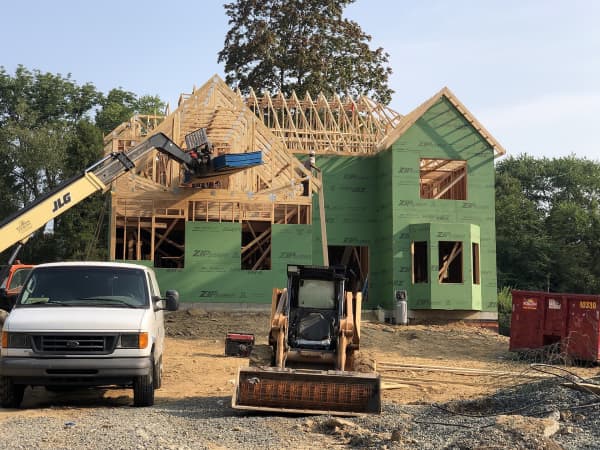
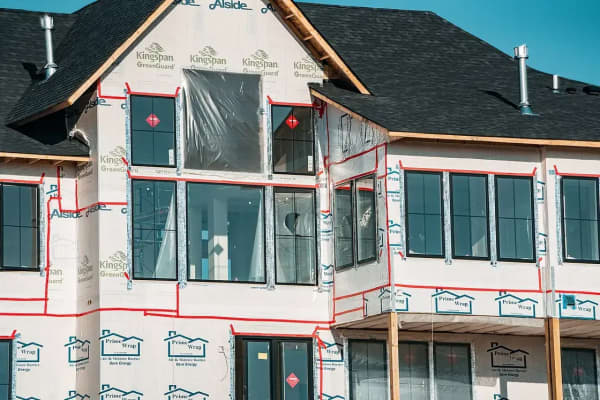
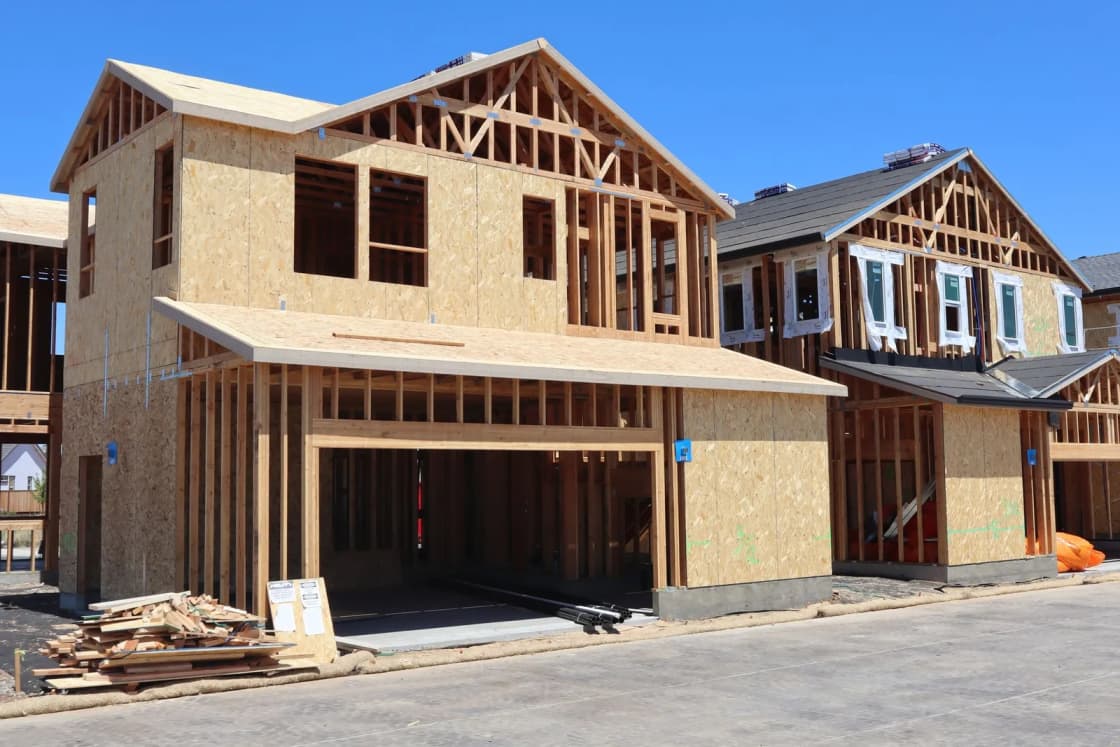
The general order: excavation and foundation, framing, rough-in for plumbing, electrical and HVAC, insulation and drywall, interior finishes, exterior and grading, then final inspections and the certificate of occupancy. The city inspects at stages, but those inspections check code compliance, not workmanship, and they aren't done for you.
Hire an independent inspector twice:
- Pre-drywall, when the framing, wiring, plumbing and ductwork are still visible.
- Before the final walkthrough, to build your punch list.
Ask the builder before you sign whether it allows independent inspections and at what stages. Pay special attention to grading and drainage near the foundation, which is finished late and quickly. Our guide to home inspections and appraisals covers what an inspector checks.
Visit the site, with the builder's permission and following its safety rules, and take photos at each stage.
Step 7: The walkthrough and closing
- The walkthrough is your chance to list everything that's wrong or unfinished: scratches, paint, doors that stick, missing hardware, grading. Bring your inspector's report.
- Get the punch list in writing with dates for each fix, and know which items will be done before closing and which after.
- The final appraisal and loan depend on the certificate of occupancy. Don't schedule your move until the closing date is firm.
Step 8: Year one in a new home
- Warranty claims. Builders commonly ask for claims in writing and often schedule a check-in near the end of the first year. Keep a list from the day you move in. Our builder warranties guide covers Utah's deadlines and the Residence Lien Recovery Fund.
- The property tax jump. Utah assesses property as of January 1, so a home that wasn't finished then may be taxed the first year as a partly built house or a lot, and the second year's bill can be much higher. If it's your primary home, make sure the residential exemption is in place. Our guide to a first-time buyer's year one covers the tax bill and the exemption.
- Landscaping and fencing, often not included in new subdivisions, and governed by HOA rules and city water rules. Many Utah County cities have secondary water; see our secondary water guide.
- Impact fees are already in your price, but they explain part of why new homes cost what they do; see our impact fees guide.
The questions to ask every builder
- What's the written price for this lot, this plan and these options?
- What's the lot premium on each lot I'm considering?
- What's standard, and can I see the standard finishes?
- What incentives are offered, which require your lender, and what's offered if I use my own?
- What's the deposit, when is it non-refundable, and what about design-center deposits?
- What's the estimated completion date, and what happens if it slips?
- Can the price change before closing?
- Do you allow independent inspections, and at which stages?
- What does the warranty cover, for how long, and how do I file a claim?
- What's still to be built in this community, and what's planned nearby?
Related guides
- Master-planned communities: Holbrook Farms
- Master-planned communities: Wander
- Master-planned communities: Overland
- Who builds houses in Utah Valley
- New construction vs resale
- Builder warranties in Utah
- HOAs in Utah County
- How much house can you afford on a Utah County salary
- The Utah Valley Parade of Homes
Frequently Asked Questions
Does a builder's starting price include the lot and upgrades?
What is a lot premium?
Do I have to use the builder's lender?
Are builder incentives worth it?
Should I get an inspection on a brand-new house?
What happens to my rate lock if the build runs late?
Why is the first year's property tax bill so low on a new home?
How long do I have to report a construction defect in Utah?
Sources
The facts in this guide were checked against these sources. Hours, fees and rules change, so confirm anything time-sensitive with the source before you go. How we make Provo.com.
- 12 CFR 1024.15 Affiliated business arrangements, Consumer Financial Protection Bureau. Checked November 1, 2026.
- 12 CFR 1024.2 Definitions (required use), Consumer Financial Protection Bureau. Checked November 1, 2026.
- Utah Code 59-2-103 Rate of assessment of property, Utah State Legislature. Checked November 1, 2026.
- Utah Code 78B-2-225 Actions related to improvements in real property, Utah State Legislature. Checked November 1, 2026.
- Residence Lien Recovery Fund, Utah Division of Professional Licensing. Checked November 1, 2026.