Most Sunday guides to Provo answer one question: what is open. For a family that keeps Sunday as a Sabbath, that is the wrong question, and in Utah Valley it is not a niche one. The day's conventions here are set by Latter-day Saint practice, most households in most neighborhoods observe some version of them, and the question a parent is really asking on a Saturday night is a different one: what can we do tomorrow that fits the day?
This guide is built for that parent. It sorts the valley's Sunday options by where families usually draw their lines rather than by opening hours, and it assumes you already know where your own family draws them. If you are visiting, or your household does not keep the day, our guide to Sunday in Provo is the one you want; it covers what opens, what closes and where to eat. This page is about the hours between church and dinner.
The Shape of the Day
Sunday for a Latter-day Saint family is organized around a two-hour block of meetings. The Church moved from three hours to two in January 2019 and paired the shorter block with a home-study curriculum, Come, Follow Me, meant to move some of the teaching from the chapel to the kitchen table. The block changed shape again on September 6, 2026. Sacrament meeting still runs 60 minutes, but the second hour now holds a 25-minute Sunday School class and a 25-minute quorum or class meeting every week instead of alternating them, and Primary for children runs 55 minutes. Where local circumstances call for it, a ward may begin with the classes and end with sacrament meeting.
What matters for planning is when your block falls. Most meetinghouses in Utah County are shared by several wards, so start times are staggered through the day, and a ward's slot can change from one year to the next. A morning ward frees the whole afternoon. An afternoon ward frees the morning and compresses everything else, and a 1 p.m. start with small children means the morning is mostly about getting everyone fed, dressed and out the door in one piece.
Either way, a Sunday here tends to have three windows:
- Before church, which is short for a morning ward and long for an afternoon one.
- The afternoon, the hours between church and Sunday dinner. Most of this guide is about this window.
- The evening, when the light lasts in summer and the valley goes very quiet.
Where the Lines Usually Fall
Families keep the Sabbath differently, and nothing in this guide is a ruling on how anyone should. But the local conventions are recognizable enough to sort by, and it helps a newcomer to know what the neighbors are likely doing.
Almost everyone's yes. Worship, rest, family, visiting relatives and neighbors, walks, scripture study, family history, writing letters, and service that looks like helping rather than like an event.
Almost everyone's no, among families who observe. Shopping, eating out, paid entertainment, league games and practices, and yard work. The practical consequence is Saturday: the gas tank, the groceries, the canyon pass and any reservation get handled the day before.
The gray zone, where families differ. A hike versus a walk. A long canyon drive versus a short one. The playground. Swimming. A museum, on the rare occasion one is open. Some families treat the outdoors as fully compatible with the day; others keep Sunday deliberately smaller and slower than Saturday. Both are common in the same ward, and neither family thinks the other is doing it wrong.
Sabbath-keeping is not only a Latter-day Saint practice here, either. The valley's Catholic, Protestant and other congregations keep Sunday in their own ways, and our guide to faith communities in Provo covers the range. The options below work for any family that wants a quieter day.
Temple Grounds: The Sunday Walk Everyone Agrees On
Latter-day Saint temples are closed on Sundays, but their grounds are open to anyone, member or not, and a walk on temple grounds is a Sunday habit for a great many valley families. It needs no ticket, costs nothing, works for any age, and it fits the day on any family's reading of it. Sunday also turns out to be the quietest day on the grounds. With the temple closed there are no wedding parties gathering for photographs outside, which on a Saturday can fill the walkways.
Utah County has six operating temples, and each makes a different kind of walk. Our temple visitor guide covers them in detail; in brief:
- Provo City Center Temple, downtown at Center Street and University Avenue. The temple was rebuilt inside the shell of the Provo Tabernacle, which burned on December 17, 2010, and the story of the fire and the rebuild makes one of the best conversations a family can have while walking the block. Downtown is nearly empty on a Sunday afternoon, which is part of the pleasure.
- Mount Timpanogos Utah Temple, in American Fork, dedicated in October 1996.
- Payson Utah Temple, the southern anchor, dedicated in 2015, with long views north up the valley.
- Orem Utah Temple, dedicated in January 2024 on Orem's west side.
- Saratoga Springs Utah Temple, dedicated in August 2023 on a hillside above the northwest shore of Utah Lake.
- Lindon Utah Temple, the newest, dedicated on May 3, 2026.
One wrong turn to avoid: the 1972 Provo temple on the east bench, now the Provo Utah Rock Canyon Temple, closed on February 24, 2024 for a full reconstruction. Our explainer on the new Provo temple covers what is being built there. A navigation app asked for "Provo temple" can still send a carload of children to a construction fence.
The etiquette is what you would expect at any active place of worship: quiet voices, children close by, and the walkways treated as someone's sacred space rather than as a park. Photographs outside are fine.
The Sunday Drive, Utah Valley's Oldest Sunday Habit
Before there were Sunday guides there was the Sunday drive, and in this valley it has never gone out of style. A canyon road has no opening hours, nothing to book and nothing to buy if the tank was filled on Saturday, and for a family with a napping toddler it solves two problems at once.
Provo Canyon, all year. The easiest drive and the one that never closes for the season. A short way up US-189 is Bridal Veil Falls, where a paved, stroller-friendly path gives a view of the 607-foot waterfall, and farther up the canyon are the picnic areas at Vivian Park. Our Provo Canyon guide covers the rest of the road.
The Alpine Loop, in season. The classic, over the shoulder of Mount Timpanogos between Provo Canyon and American Fork Canyon. SR-92 closes to through traffic for the winter, from roughly November until late May or June depending on the snowpack, and our Alpine Loop guide follows the gates. Two practical notes for a Sabbath-keeping family. The American Fork Canyon side is a designated recreation fee area, and a pass is required when you stop at a developed site such as a trailhead or picnic area; a federal America the Beautiful or interagency pass is honored in its place. Buy it before Sunday or carry the annual pass. And Cascade Springs, reached by a side road off the loop, is the valley's best Sunday nature walk: its lower loop is paved and boardwalk and is the accessible portion, while the upper trails are steeper and involve stairs.
The Nebo Loop, from Payson. The long scenic byway at the south end of the valley, with its own seasonal gates; our Nebo Loop guide explains the openings and closings.
The Kyhv Peak overlook. The winding paved climb up what was long called Squaw Peak Road, renamed along with the peak in 2022, to a panorama of the whole valley. Our Kyhv Peak guide covers the road and the view.
The south end of Utah Lake. The quiet drive, through farmland to the shore our Lincoln Beach guide describes, where the evening light on the water is the reason to go.
Timing matters more than the route. Canyon trailheads fill on summer Sunday afternoons, exactly when every family released from church has the same idea, so the evening window, after dinner with the light still up, is often the better drive. Winter takes away the Alpine Loop and the Nebo Loop and leaves Provo Canyon as the drive, and canyon conditions change fast enough that it is worth checking the road before loading the car.
Family History, at Home and at the Center
If one activity was made for a Sabbath afternoon, it is family history, and it costs nothing. FamilySearch accounts are free, the family tree lives online, and a phone or a laptop at the kitchen table is enough to spend an afternoon attaching records, photographs and stories to the people in it.
The best Sunday version is not the one at a screen. It is the visit to a grandparent with a list of questions and a phone set to record: how they met, where they lived, what school was like, what they ate, what their own grandparents were like. Those recordings can go into the tree beside the photographs, and an afternoon spent that way tends to become the Sunday a family remembers. Young children can color a pedigree chart, sort a box of old photographs by decade, or hunt for the oldest face in the album. Teenagers are often the fastest at the online work, and many take to indexing, the volunteer transcription of historical records that makes them searchable for everyone.
Family history centers are a weekday follow-up rather than a Sunday stop. The largest in the valley, the FamilySearch library on the second floor of BYU's Harold B. Lee Library, sits on a campus that closes on Sundays, and the smaller centers in meetinghouses keep their own hours. Our guide to family history centers in Utah Valley explains what they offer and why some records can only be viewed there.
A family-history Sunday can also be a walk. Provo City Cemetery, where many of the city's early settlers are buried, is a quiet place to look for the oldest dates on the older headstones, and it turns history into something a child can see and touch. Our guide to Memorial Day in Utah Valley explains the valley's cemetery tradition, which is the same instinct on a bigger day.
Parks, Paths and the Walk That Is Not a Hike
For families who keep Sunday small, the practical middle ground is the walk: flat, close to home, and over before anyone is tired. The valley is well built for it.
The Provo River Parkway runs from Provo Canyon down to Utah Lake, paved the whole way, and a stretch of it at eight on a Sunday morning, before an afternoon ward, is one of the quietest hours the city offers. In the north county, the paved Murdock Canal Trail does the same job along the benches. For small children, our hikes for kids under 8 applies what we call the stroller test, which also happens to be a good test of whether a trail is a Sunday walk or a Saturday hike.
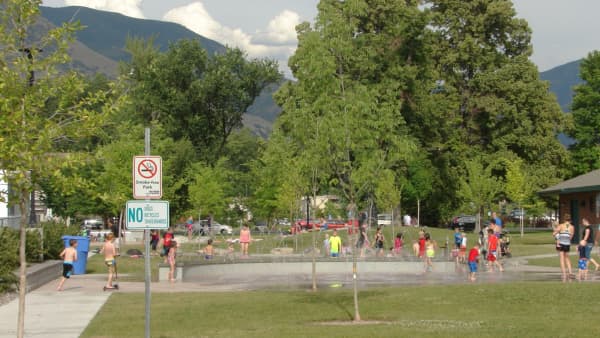
Playgrounds and city parks are open on Sunday, and the big ones are worth the drive; our guide to destination playgrounds covers the best of them beyond Provo and Orem. For something close to the nature center the day otherwise lacks, the new 260-acre wetland at the Provo River Delta is a birding walk at the edge of the lake. Read that guide's section on access before you go, because the delta is run by three agencies and the rules are not the same everywhere on it.
Music & the Spoken Word, From Provo
The Tabernacle Choir's weekly broadcast, Music & the Spoken Word, is a live 30-minute program every Sunday at 9:30 a.m. on Temple Square, and attending it in person is a Sunday-morning outing with nearly a century of tradition behind it. Two things a family driving from Provo needs to know have changed.
First, tickets are now required. Since May 17, 2026, the choir has asked for free reservations to attend, made through TempleSquare.org or the Temple Square app, and with the Conference Center closed the broadcast is held in the Salt Lake Tabernacle. Doors open at 8:15 a.m. The choir asks guests to be seated by 9, holds reserved seats until 9:15, and begins a short welcome and pre-show at 9:10. A standby line forms for anyone without a reservation, but capacity is limited. The broadcast is for guests 8 and older, and the choir provides a designated viewing area for families with younger children. Watch for exceptions: on General Conference Sunday, October 4, 2026, the broadcast runs immediately before the Sunday morning session, and a conference ticket is required instead.
Second, FrontRunner does not run on Sundays, so the trip from Utah County is a drive. Allow the better part of an hour to downtown Salt Lake City plus time for parking and security, which in practice means leaving Provo around 7:30. The outing fits best with an afternoon ward: Temple Square in the morning, home for lunch, church at one.
If the drive is too much, the broadcast streams live on the choir's YouTube channel and its website, and watching together at 9:30 has long been part of Sunday morning in many valley homes. Our guide to Temple Square in December from Provo covers the choir's Christmas season.
Service and Visiting
Some of the best Sundays are spent on other people, and the unlisted kind of service fits the day best: the widowed neighbor who would welcome company, the family that just moved in and knows no one, the grandparents at a care center, the friend recovering from surgery. A plate of cookies baked on Saturday gives a child a reason to knock on a door.
Utah Valley also has a particular Sunday institution, the missionary farewell or homecoming. A young man or woman leaving on a mission, or just back from one, typically speaks in their home ward's sacrament meeting, friends and extended family come from across the valley to hear them, and an open house at the family's home often follows. Our guide to missionary farewells and homecomings explains the customs. Writing to missionaries is another Sunday habit, and a local one, since the Church's Missionary Training Center is in Provo; our MTC visitor guide explains what families can and cannot do there.
For organized projects, JustServe and the United Way of Utah County's volunteer portal carry most of what is posted locally, and our volunteer service guide covers how to use them. Sunday tends to suit the quieter kind.
At Home: The Afternoon Nobody Photographs
Most Sabbath-keeping families spend most of the day at home, and the home half deserves planning too.
Sunday dinner is the big meal of the week in many valley homes, often with grandparents or cousins at the table, and cooking it together is part of the day's rhythm. Come, Follow Me gives families a weekly reading that many work through on Sunday. Beyond that the ideas are old ones: a family walk after dinner, a board game or a puzzle that stays out all afternoon, letters to missionaries and faraway grandparents, music, and a nap nobody apologizes for. Some families keep a box of quiet toys or books that only comes out on Sunday, which makes the day feel different to a four-year-old in a way no explanation does.
When the Weather Says No
Sunday is the hardest day in Utah County for indoor options, and a wet or bitterly cold one needs a plan. BYU's museums are closed. So is the Harold B. Lee Library, and so is the Provo City Library. Thanksgiving Point's attractions in Lehi have historically been closed on Sundays too, and rec center pools vary by city, with several closing entirely.
The honest answer is home, or the car. A snowy Sunday in Provo Canyon is beautiful from the road, the temple grounds are lovely under fresh snow, and a family-history afternoon was made for bad weather. On summer Sundays the problem inverts: the valley floor is hot by early afternoon, so the walks belong in the first hours of the morning or after dinner. On winter inversion days, when the air quality turns red, the outdoor options drop away; our Provo weather guide explains the inversion season.
A Sunday by Age
Under five. Build the day around the nap, which usually means the drive happens during it. The temple grounds and the paved path at Bridal Veil Falls both work with a stroller, and a box of Sunday-only toys earns its keep.
Five to eleven. The Primary years, and the best age for family-history games, the cemetery walk, a pedigree chart to color, and the Cascade Springs boardwalk in summer. Old enough to help with a service visit and to remember it afterward.
Teenagers. The most likely to push back on a slow Sunday and the most capable of its best parts: indexing, recording a grandparent's story, writing to friends on missions, and the early drive to Music & the Spoken Word. Friends' homecoming talks fill their social calendar on many Sundays.
The whole family, one plan. Church in the morning; Sunday dinner at two; a drive up Provo Canyon to Bridal Veil Falls at five, with the light going gold on the canyon walls; the temple grounds on the way home; an hour of family history before bed. Nothing in that plan needs a wallet.
If You Are New Here
A family moving to Utah Valley from somewhere Sunday is a shopping day will notice the quiet within a week, and it helps to know that it is voluntary and neighborly rather than enforced. Grocery stores, hospitals, national chains and hotels still open. If you would like to attend a Latter-day Saint service, any meetinghouse welcomes visitors, and our temple visitor guide explains the difference between a chapel, where weekly worship happens, and a temple.
Whatever your family decides, do the Saturday checklist: fill the tank, buy the groceries, buy the canyon pass, reserve the choir tickets, charge the phone for the family-history afternoon. If you want a suggestion picked for you, our Sunday activity generator chooses one by who is coming and how much effort the day can take. For the version of Sunday that includes restaurants, see restaurants open on Sunday in Provo.
The Short Version
Plan Sunday around your church block and do the buying on Saturday. The temple grounds are open to everyone and quietest on Sunday, and Utah County has six of them; skip the Rock Canyon site, which is under reconstruction. Provo Canyon is the year-round Sunday drive, the Alpine Loop and Nebo Loop are summer and fall drives, and American Fork Canyon needs a pass bought ahead. Family history is the Sabbath afternoon's natural activity, at home or at a grandparent's kitchen table. Music & the Spoken Word has required free tickets since May 2026, and FrontRunner does not run on Sunday. Indoors, almost everything is closed, so a rainy Sunday is a home day, which is rather the point.
Related Guides
- Things to Do in Provo on a Sunday
- Utah Valley's Temples: A Visitor's Guide
- Family History Centers in Utah Valley
- The Alpine Loop Scenic Drive
- Bridal Veil Falls
- Hikes for Kids Under 8 Near Provo
- Destination Playgrounds of Utah Valley
- Missionary Farewells and Homecomings
- Sunday Activity Generator
- Utah Valley for Families
Frequently Asked Questions
What can a Sabbath-keeping family do on a Sunday in Utah Valley?
Are temple grounds open on Sunday?
Can we attend Music & the Spoken Word from Provo?
What are the best Sunday drives near Provo?
Is family history a good Sunday activity?
What is open indoors on a rainy Sunday?
How long is church on Sunday for Latter-day Saints now?
Our family does not keep the Sabbath. Is this guide for us?
Sources
The facts in this guide were checked against these sources. Hours, fees and rules change, so confirm anything time-sensitive with the source before you go. How we make Provo.com.
- Alpine Scenic Loop Backway, USDA Forest Service, Uinta-Wasatch-Cache National Forest. Checked October 12, 2026.
- The Provo Temple Will Reopen as the Provo Utah Rock Canyon Temple, Newsroom, The Church of Jesus Christ of Latter-day Saints. Checked October 12, 2026.
- General Handbook, 29. Meetings in the Church, The Church of Jesus Christ of Latter-day Saints. Checked October 12, 2026.